Aamir Khan makes this college comedy funny and affecting, despite a slow start and an excess of helpful advice. Rajkumar Hirani’s faith in friendship carries it through, though the editing and music can be needlessly insistent.
3 Idiots is a funny, generous college comedy that makes its case for a less punishing education system at rather greater length than it needs. Rajkumar Hirani wants the laughter to make that case approachable, and for much of the film it does. The friendship between Rancho, Farhan and Raju gives the discussion of learning and ambition a reason to matter beyond the classroom. At 171 minutes, though, the film grants itself considerably more time than its fairly straightforward advice requires.
Aamir Khan is the principal reason to stay with it. As Rancho, the inventive engineering student, he makes an enthusiasm for learning seem attractive without requiring us to share the enthusiasm for engineering. His confidence can make the character seem too conveniently equipped to demonstrate the film’s point; we are seldom left in much doubt about whose attitude Hirani favours. But Khan is funny enough to keep the instruction entertaining, and warm enough to make his influence on the friendship credible.
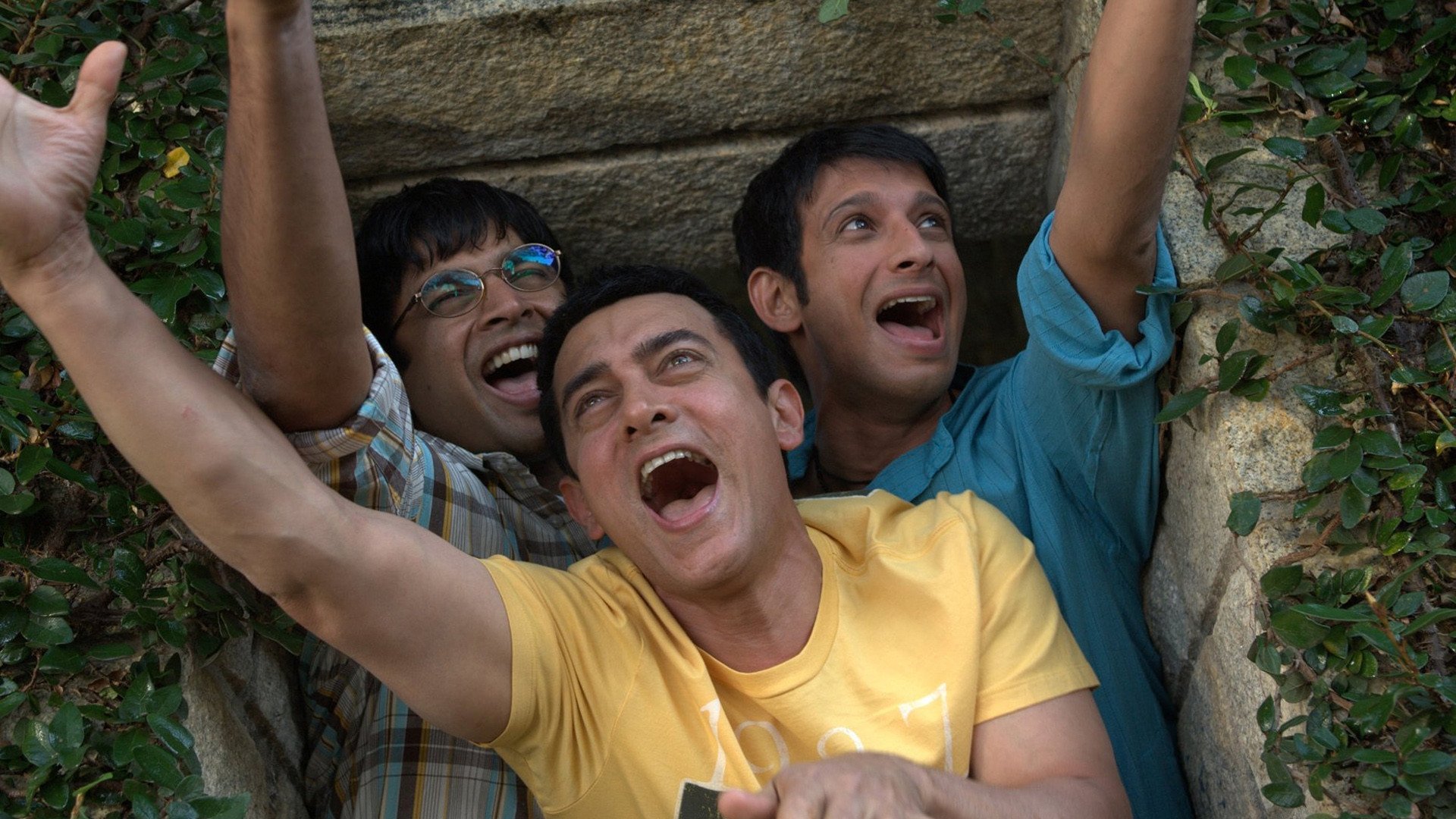
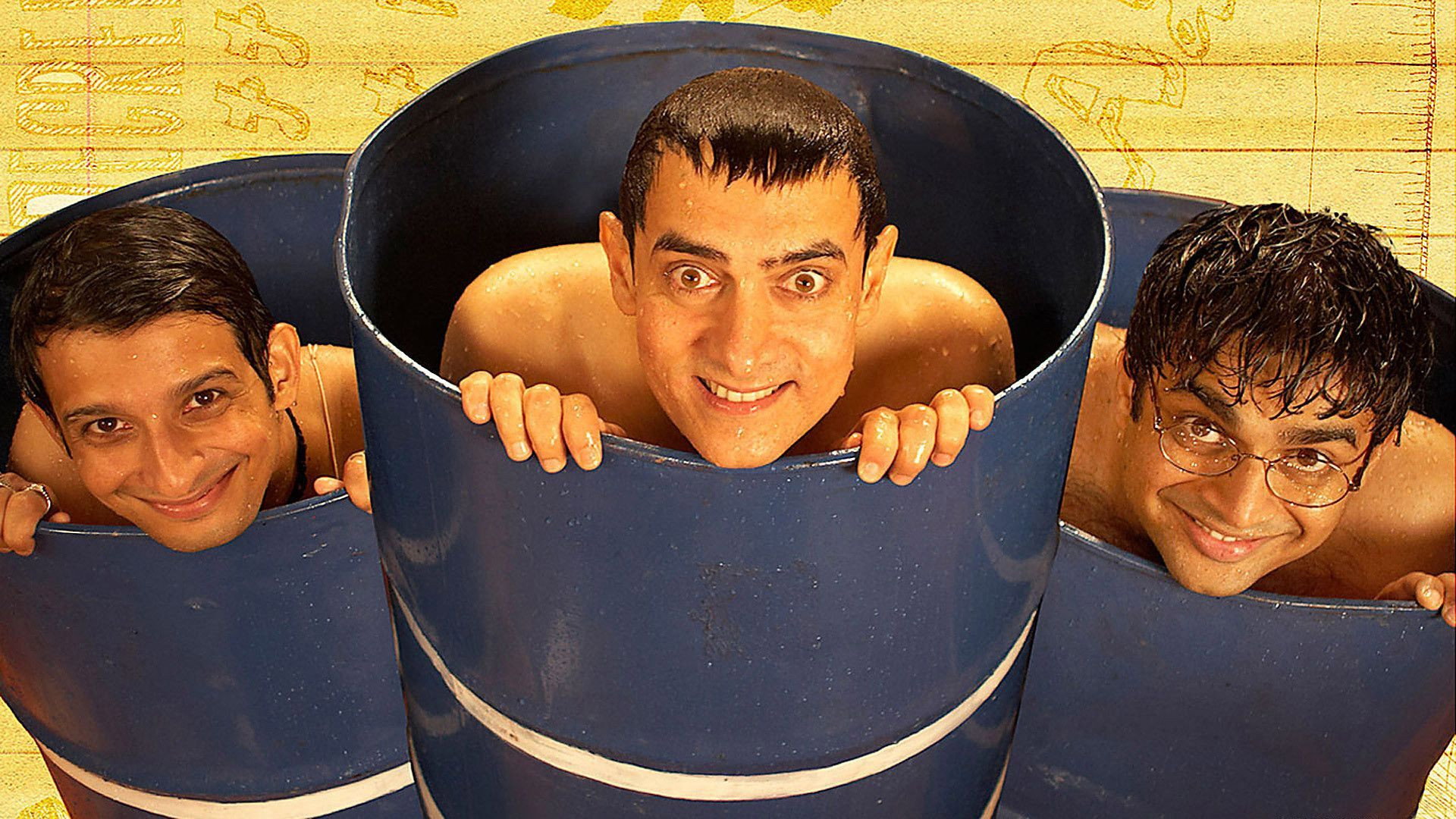
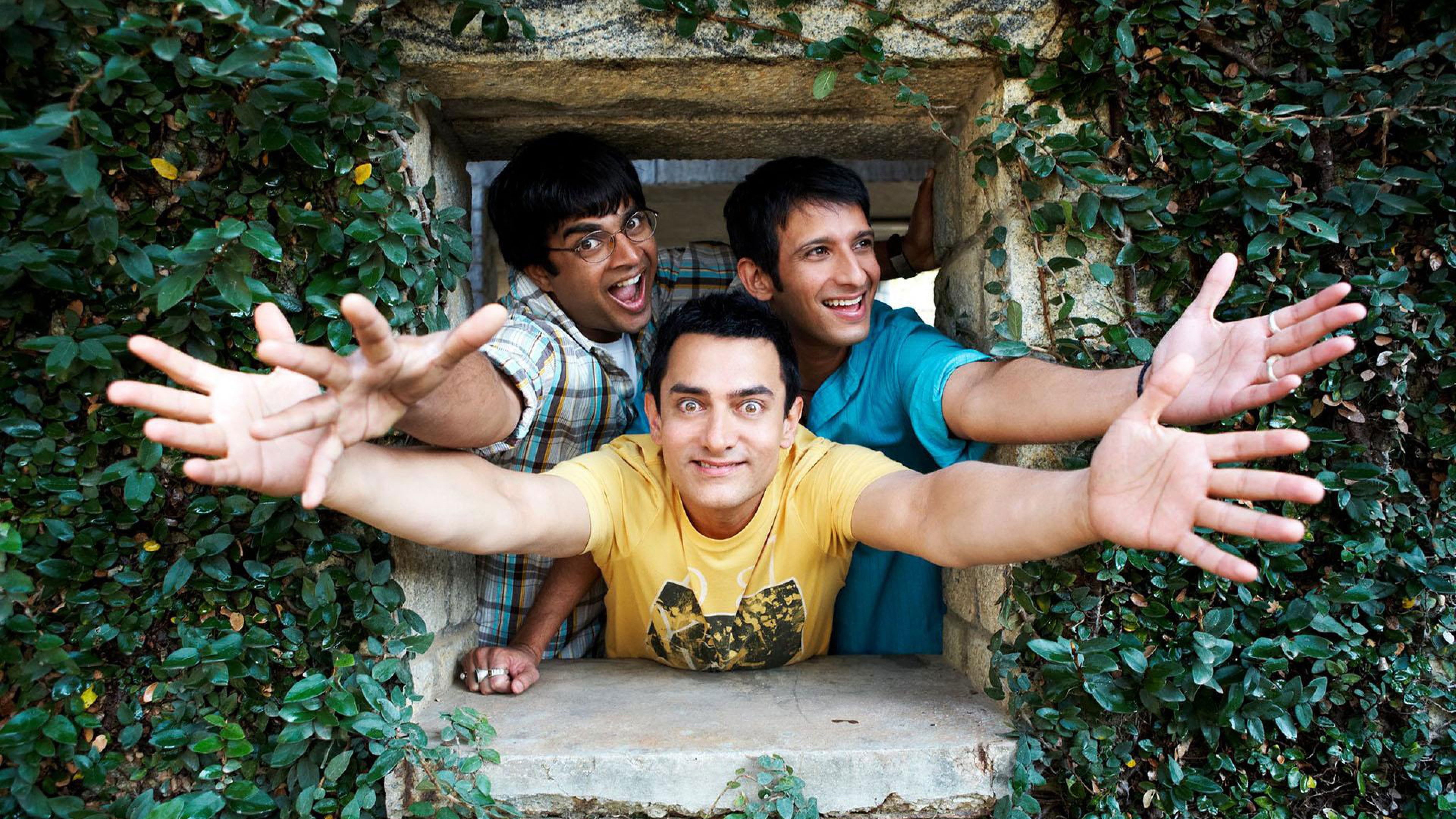
R. Madhavan’s Farhan and Sharman Joshi’s Raju matter because this advice has to mean something to people other than the man dispensing it. The supporting performances are less consistently assured than Khan’s, but the friendship remains convincing enough to carry the serious passages. We were moved by the friends’ encouragement of one another: their willingness to take one another’s hopes seriously makes the educational pressure feel personal. Hirani allows that affection to be expressed plainly, without treating kindness as an embarrassment.
C.K. Muraleedharan’s photography makes the college feel like a place where friendship can flourish, which matters in a film so concerned with what education gets wrong. Production designers Rajnish Hedao and Sumit Basu give the student setting enough credibility to support the serious passages without making the comedy seem out of place. Their work is useful and unobtrusive, leaving the actors to hold our attention. The surroundings persuade us that these people could spend time together, even when the writing makes their conversations sound suspiciously instructive.
The screenplay is less disciplined. Abhijat Joshi, Hirani and Vidhu Vinod Chopra give the film a clear and worthwhile concern, but spend too long getting it moving and too often underline what the friendship has already made clear. Hirani also edits, and the jumps in time interrupt the early momentum when we are still finding our way into the characters. A sharper cut would have helped both the jokes and the serious material; the slow opening asks for patience before the film has earned much of it.
The music by Shantanu Moitra, Sanjay Wandrekar and Atul Raninga adds to the unevenness. Its insistence can make an emotional passage feel less spontaneous, and the shifts between comedy and earnestness are sometimes pushed too hard. We do not need a college comedy to be restrained, and the film’s willingness to be openly sentimental is often a virtue. We do need it to recognise when the actors have already done enough, particularly when Khan can make the point without further help.
College comedy offers plenty of opportunities for easy mockery, so Hirani’s interest in helping these students grow is welcome. He takes their hopes seriously, even when he is making their behaviour funny, and that gives the friendship some weight. This is worth an evening for anyone fond of expansive, sentimental comedy, provided repeated advice does not bring back too many unwelcome classroom memories. Allow it the full evening; an early alarm the following morning would be a mistake.