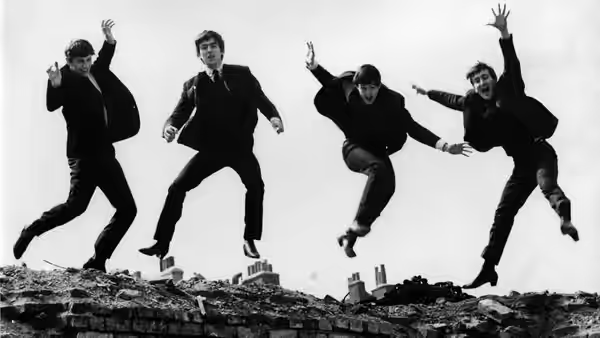
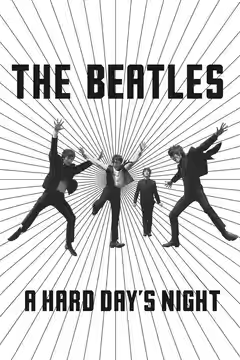
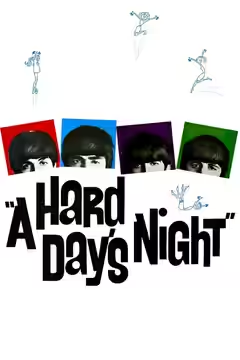
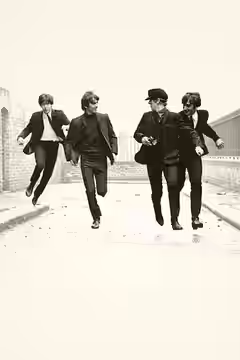
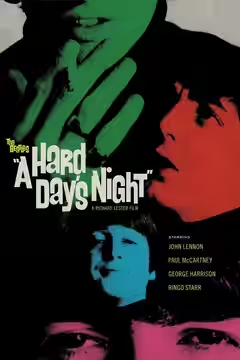
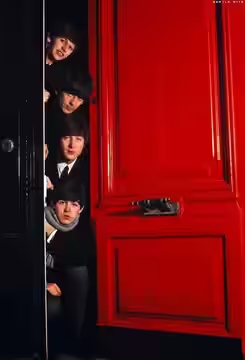
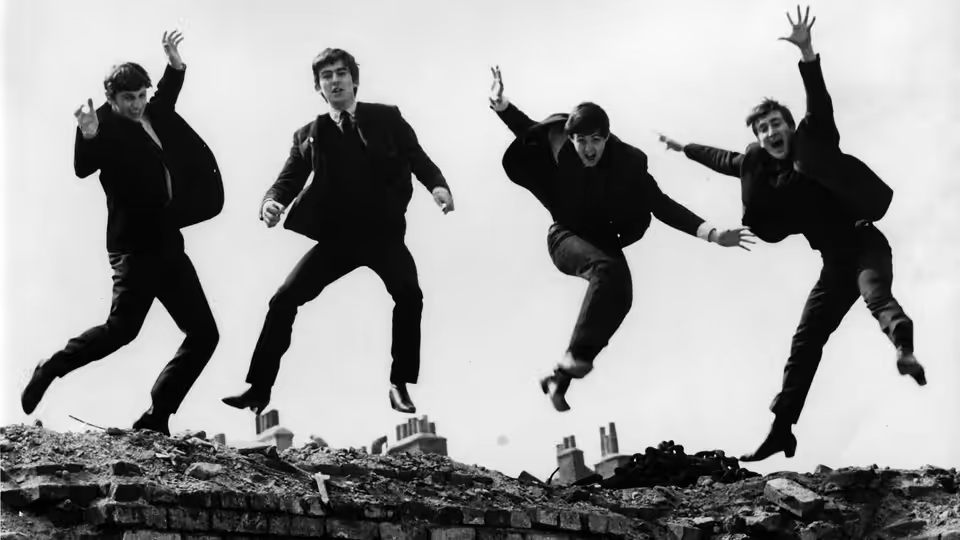
The Beatles leap above a city skyline
Film review

A Hard Day's Night

1964 · Directed by Richard Lester · 1h 28m

In a sentenceFour young men spend 88 minutes trying to get out of a room, and the film is at its best the moment they do

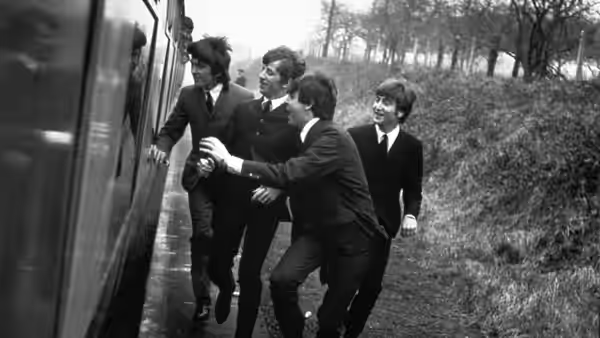
Two days in the life of a pop group at the height of their fame. John (John Lennon), Paul (Paul McCartney), George (George Harrison) and Ringo (Ringo Starr) run through a railway station with screaming fans behind them and board a train bound for a live television broadcast. With them are their road managers Norm (Norman Rossington) and Shake (John Junkin), and Paul’s grandfather (Wilfrid Brambell), who has been brought along to be kept out of trouble and immediately starts some. In the carriage they annoy a stuffy commuter (Richard Vernon); at the hotel they are told to stay in and answer fan mail; at a reception they field questions from journalists who have not listened to a note. The broadcast is looming, and its director (Victor Spinetti) is already panicking.

Fi1m review

Richard Lester’s first Beatles film is quick, black and white and built out of almost nothing: a train, a hotel, a television studio and four young men who cannot be left alone. It has barely a plot and does not need one.

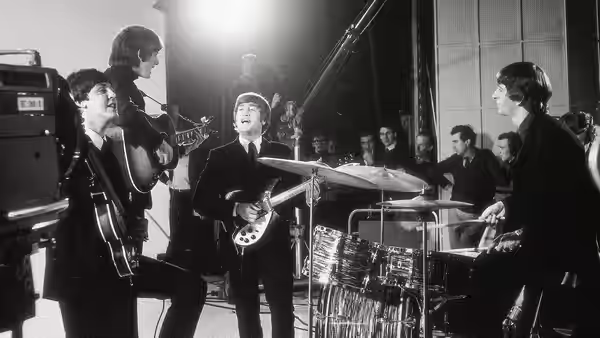
Richard Lester’s A Hard Day’s Night reached British cinemas on 7 July 1964, when the four men in it were the most photographed people in the country. Alun Owen’s script does not invent a story for them. It gives them two days of their own lives instead: a dash through a railway station with fans at their heels, a train, a hotel they are not allowed to leave, a room full of journalists and a rehearsal for a live television broadcast. Nobody falls in love and nobody learns anything. It is 88 minutes long, it is funny almost throughout, and we recommend it to anyone who has ever liked a pop song. The one part that has not travelled well is Paul’s grandfather, and we will come to him.

Gilbert Taylor shoots it in black and white with cameras that move as if a newsreel crew had got in through a side door. The screaming girls at the station are filmed the way you would film a fire. Indoors the light is flat and grey and the rooms are small, and the band spend most of the film in them, being told to wait. John Jympson cuts on the beat when there is a song and a fraction before the punchline when there is not.

The sequence everyone remembers is Can’t Buy Me Love. The four of them find a fire escape, run down it into an empty field and jump about in it for three minutes while the camera watches from a helicopter and the film speeds up and slows down for no reason but pleasure. We grinned like children and did not stop until the song did. The reason is plain enough: it is the first time in the film they are outdoors and nobody is looking at them. Critics have been saying for decades that the pop video begins here, and the claim holds up.

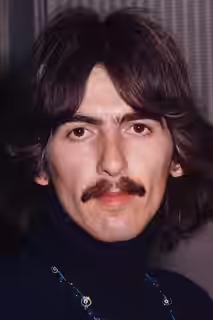
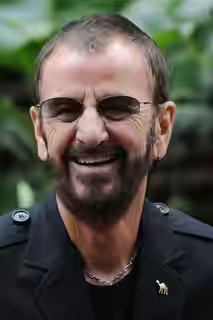
Owen writes each of them a voice. John (John Lennon) gets the sharpest lines; Anna Quayle’s Millie recognises him, argues him out of being himself and walks off satisfied. George (George Harrison) has the best single scene, in an advertising man’s office, where he is asked what he thinks of some shirts and tells him. Ringo (Ringo Starr) is the one the script is kind to, a small worried man who reads books so people will think he is deep. Paul (Paul McCartney) has the least to do and does it pleasantly. Julie Harris keeps all four in the same dark suits from first scene to last, so they look like a set of something, which is how everyone else in the film treats them.

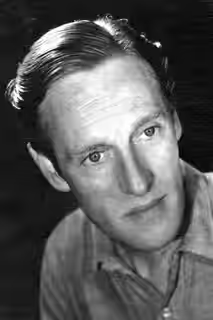
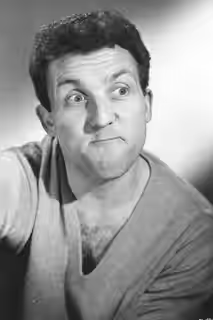
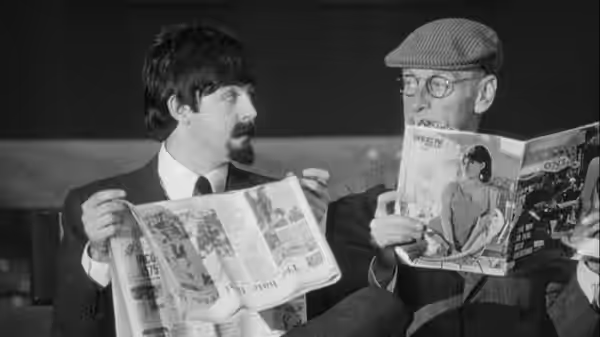
The grown-ups are the other joke. Norman Rossington’s Norm and John Junkin’s Shake are the road managers, forever counting heads and coming up one short. Victor Spinetti’s T.V. Director sweats through a jumper and speaks to the band as though they were weather. Richard Vernon’s Man on Train shuts the window, turns off the radio and announces that he fought the war for their sort, and is told they bet he is sorry he won. That is in the first ten minutes, and it tells you what the film thinks of the country it was made in.

Then there is Grandfather. Wilfrid Brambell plays him, straight from Steptoe and Son, and the running gag is that he is “very clean”. He is written as a mixer, and the trouble is always the same trouble: he wanders off, somebody has to fetch him, and the film stops while they do. By the middle stretch he has crowded the band out of their own picture. The girls, meanwhile, exist to be chased, grabbed at and left, and two or three scenes of that made us wince. Whether the band will make the broadcast is the plot, and nobody has ever doubted it.

It is a comedy about being kept in rooms, and every window in it has a face pressed against the glass. We came out happier than we went in, and sorrier for them than we had expected.

Watch it with the sound up and nobody talking. At 88 minutes it is over before anyone on the sofa has reached for their phone.

Critical consensus AI synthesised

84
Positive
12
Mixed
2
Negative
0

Most critics take to A Hard Day’s Night warmly, and none dislike it: twelve of fourteen reviews are positive and the remaining two are mixed. The praise gathers around Richard Lester’s direction, in particular the quick, rhythmic editing and restless camerawork that stitch the songs to the slapstick, and around how naturally the Beatles come across on screen. Several reviewers remark on how modern the film still feels half a century on, and a few credit it with shaping the music video as we now know it.

The spread is narrow and the reservations are mild. The Guardian finds the film larky and quaint, its chaos occasionally tipping into something a little depressing, though it holds that Lennon’s sharp, humorous face remains fascinating. Film Comment reads it as a challenge to the pop myth of spontaneity rather than a celebration of it. Variety, reviewing on release, reserves particular praise for Wilfrid Brambell as Paul’s grandfather, a performance later critics mostly pass over.

Radio Times
★★★★★ · David Parkinson
100

Parkinson regards the film as a mold-breaking musical comedy that helped shape the modern music video. He praises its satire of the Beatles’ public treatment and its inventive blend of slapstick and spectacle.

Read the full review →
Slant Magazine
13 January 2022 · ★★★★★ · Jake Cole
100

The review praises the film’s anarchic energy and Criterion’s strong 4K upgrade. It singles out the sharper contrast and detail, especially in the climactic TV-studio sequence.

Read the full review →
Time Out
30 June 2014 · ★★★★★ · Tom Huddleston
100

Huddleston presents the reissue as strikingly modern even half a century later. The available description highlights its unusually contemporary feel, though the full review text is unavailable.

Read the full review →
Empire
4 September 2015 · Bob McCabe
90*

The review is strongly positive, calling the film a brilliant evocation of Beatlemania and a fascinating portrait of Britain. It especially praises how naturally the Beatles come across and the strength of the songs.

Read the full review →
RogerEbert.com
90*

The page identifies this as a Great Movies retrospective, indicating a strongly favorable verdict. The blocked page does not reveal what the critic specifically praises.

Read the full review →
Los Angeles Times
3 July 2014 · Kenneth Turan
85*

Turan finds the film still dazzling and high-spirited fifty years later. He especially praises Lester’s inventive mix of music and imagery, brought to life by the Beatles’ on-screen energy.

Read the full review →

Straight answers AI written, from our review

Is A Hard Day's Night worth watching?
A Hard Day's Night is worth watching for anyone who has ever liked a pop song, and we scored it 86. It runs 88 minutes, has barely a plot and is funny almost throughout, with Gilbert Taylor's black and white camerawork chasing the band as if it were news. The one part that has aged badly is Wilfrid Brambell's Grandfather, whose wanderings stop the film whenever someone has to fetch him.
How long is A Hard Day's Night, and what is it rated?
A Hard Day's Night runs 1h 28m. It is a comedy and music film.
Where can I watch A Hard Day's Night in Peru?
A Hard Day's Night is not on any streaming or rental service in Peru at the moment. It is available in 4 other countries; change your country at the top of the page to see where. Availability is checked daily.
How does A Hard Day's Night compare to This Is Spinal Tap?
A Hard Day's Night is the brighter and quicker of the two, and This Is Spinal Tap is the crueller. Richard Lester's film follows a real band at the height of its fame, being kept in rooms and escaping when it can; Rob Reiner's mock documentary invents a metal band and lets the hotel corridors defeat them slowly. We recommend both, the Beatles film for pleasure and the Reiner for the joke of watching it curdle.

Cast

Awards

Academy Awards, 1965

Nominated
Best Score, Adaptation or Treatment
Nominated
Best Writing, Original Screenplay

If you liked this, try…

  1. Help! (1965) · not on Fi1m yetThe colour sequel, sillier and slacker, but the songs and the faces still carry it.

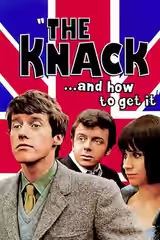
  2. The Knack ...and How to Get It (1965) · not on Fi1m yetLester without the Beatles, same jump cuts, same London, rather more nerve.

  3. Dont Look Back (1967) · not on Fi1m yetDylan in England being rude to journalists; the same cage, no jokes.

  4. Head (1968) · not on Fi1m yetThe Monkees take Lester’s template and set fire to it, deliberately and oddly.

  5. This Is Spinal Tap (1984, Fi1m 91)Everything the Beatles endured in hotel corridors, replayed as slow disaster twenty years on.