Film review

A Letter to Three Wives

1949 · Directed by Joseph L. Mankiewicz · 1h 43m · MPA NR

In a sentenceThree marriages, one letter, and the sharpest woman in town is the one we never see

RomanceDramaMystery

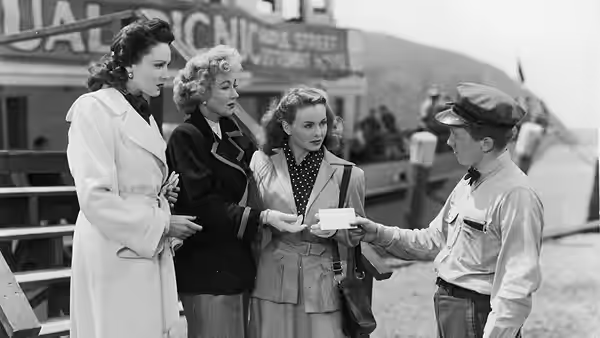
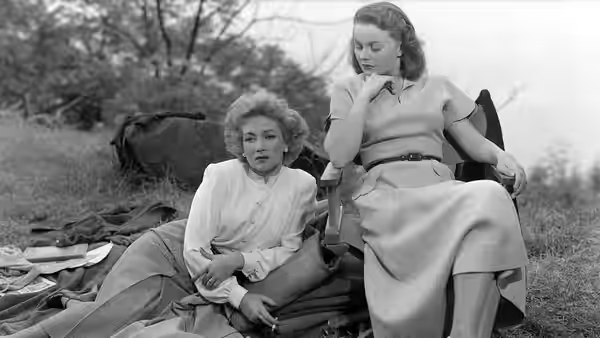
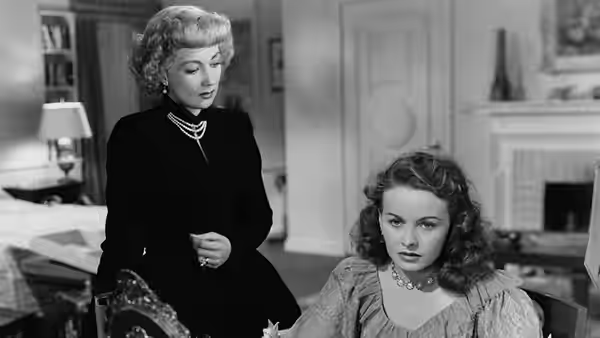
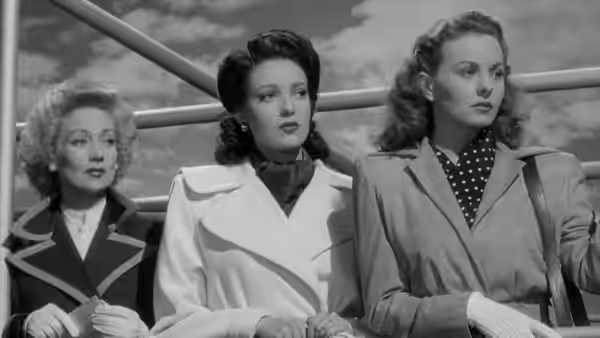
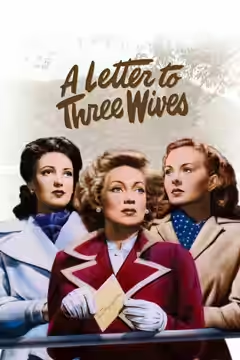
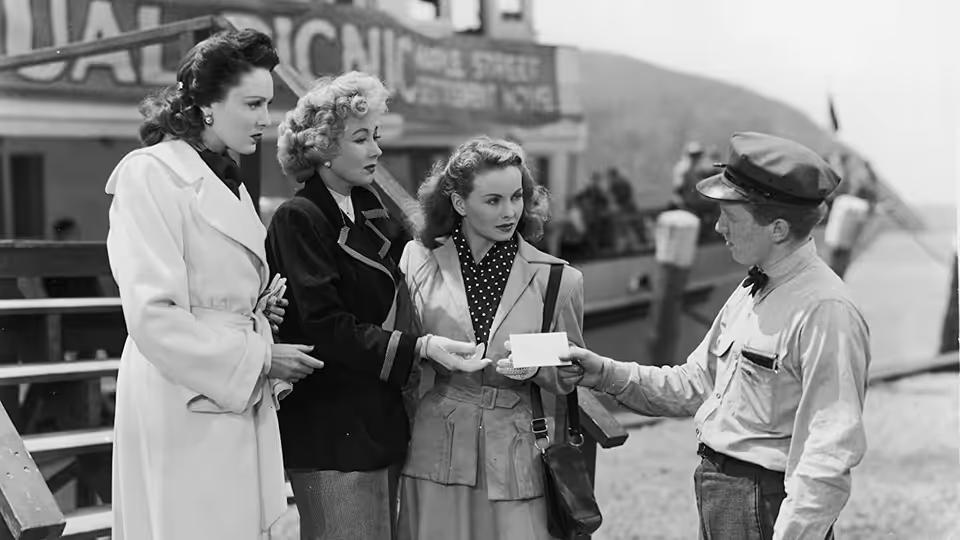
Three women in a well-off commuter town are about to spend a day on the water, chaperoning a boatload of children for charity. Deborah Bishop (Jeanne Crain) is the newest arrival, a farm girl who married Brad (Jeffrey Lynn) in the navy and still feels she does not belong. Rita Phipps (Ann Sothern) writes for radio and earns more than her schoolteacher husband George (Kirk Douglas). Lora Mae Hollingsway (Linda Darnell) grew up beside the railway tracks and married Porter (Paul Douglas), the man who owns the department store. As the boat leaves, a letter arrives from Addie Ross, a woman they all know, saying she has left town that morning with one of their husbands. It does not say which. The day passes, and each wife goes back over her marriage.

Plays from YouTube when you press play; nothing loads from them until then.

Fi1m review

Joseph L. Mankiewicz turns a small-town guessing game into a shrewd, talky comedy about money and marriage. The first of its three stories is thin and it explains itself too often, but Linda Darnell and Paul Douglas make the third one worth the whole evening.

Joseph L. Mankiewicz likes people who talk, and A Letter to Three Wives is built so that they can. Three women in a well-off town set off for a day’s charity outing with a boatload of children, and a letter is handed to them at the landing. It is from Addie Ross, a woman they all know and all keep an eye on, and it says she has left town that morning with one of their husbands. It does not say which. The film then goes back over each marriage in turn while the boat is out, and the result is shrewd, funny and occasionally sour, better in its second half than its first, and worth an evening for anyone who likes to hear a script that has been worked at.

Mankiewicz wrote it himself, from a novel by John Klempner, and the cleverest decision is one of absence. Addie never appears. We hear her, in Celeste Holm’s amused, needling narration, and we see the other women turn their heads when her car goes by, but she is never on screen. She is the woman every husband compares his wife to and every wife compares herself to, and the film is right to keep her as a voice. J. Watson Webb Jr. cuts back to the boat between the three stories, briefly, so that the guessing never quite stops.

The first story is the weakest. Deborah (Jeanne Crain) is a farm girl who met Brad (Jeffrey Lynn) in the navy and now has to face the country club in a dress she already knows is wrong. Crain plays the nerves well enough, but the episode is mostly about her being frightened of a room, and Lynn is given so little that we struggled afterwards to describe him. It is the necessary set-up, and it feels like it.

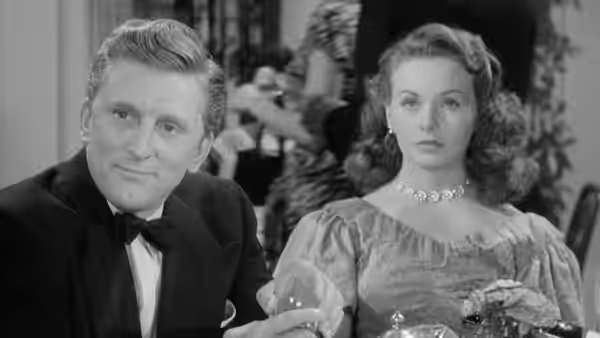
The second is sharper. Rita (Ann Sothern) writes radio serials and her husband George (Kirk Douglas) teaches school for a fraction of her salary, and the story turns on a dinner for her sponsor, Mrs Manleigh (Florence Bates), and the husband who trails after her (Hobart Cavanaugh). Sothern is quick and dry and manages to make a woman apologising for her own success look like a woman with a spine. Douglas gets the speech Mankiewicz plainly wanted to make himself, about what radio advertising does to the people who listen to it. It is a good speech. It is also a speech, and the film stops so that he can deliver it.

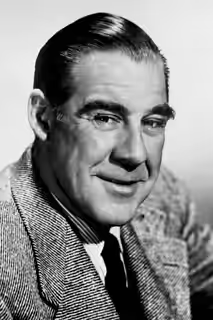
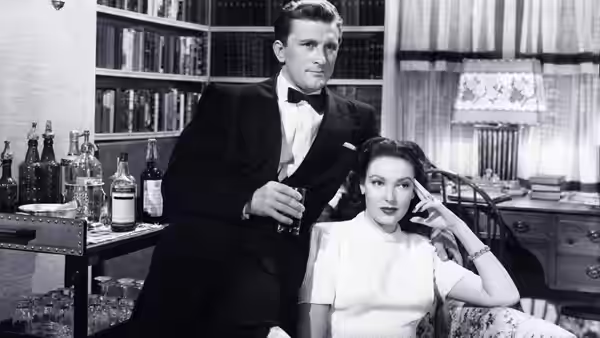
The third story is the one people remember, and they are right. Lora Mae (Linda Darnell) lives with her mother (Connie Gilchrist) and sister Babe (Barbara Lawrence) in a house so close to the railway that the crockery jumps every time a train goes past, and she has decided to marry Porter Hollingsway (Paul Douglas), who owns the department store where she works. The courtship is a negotiation, and both parties know it. We laughed at the first train and were not laughing by the third, because Darnell does her lipstick through it without a flicker and Arthur Charles Miller holds on her face while the house shakes, and what we were watching was a woman who had decided never to live like this again. Paul Douglas, in his first film, plays Porter as a loud man who knows exactly what he is buying and is ashamed to want it. Kay Nelson dresses Lora Mae in clothes that climb a rung with each scene.

Miller shoots the two houses so that the difference is the point: the Finney kitchen is cramped and lit from one lamp, the Hollingsway place is all polished floor and empty air. Alfred Newman’s music is used mostly to carry us in and out of the flashbacks, and it does so without pushing. What pushes is the writing. Mankiewicz cannot leave a scene until someone has said what it meant, and by the last half hour we could feel the lesson being written on the board.

One critic has called the film conformist, and we half agree. It mocks these marriages for a hundred minutes and then, we will not say how, decides they are worth keeping. A year later Mankiewicz made All About Eve, which does the same trick with a colder eye and a better villain. This is the rehearsal, and a good one. At 103 minutes it is brisk, and it is best watched with someone who will make a different guess about the husband than you do.

Critical consensus AI synthesised

78
Positive
5
Mixed
1
Negative
0

Most critics like A Letter to Three Wives, and the praise gathers around Joseph L. Mankiewicz’s writing. The reviews single out the screenplay’s structure, three consecutive flashbacks hung on the question of which husband has gone, as the thing that keeps the film moving, and several call it the first film in which Mankiewicz’s own voice, frank about money and class, is properly heard. Celeste Holm’s unseen, honeyed narration is admired, as is the opening sequence. Among the cast, Paul Douglas, in his first film, and Linda Darnell draw the most notice; more than one critic finds their courtship episode the best of the three.

The reservations are few and mostly about age. The Skinny is the lone mixed voice, finding the film well handled but, seen now, conformist and preoccupied with possessions. Nobody disputes the craft or the performances. The spread is fairly narrow, running from a solid three stars to two near-raves, with the warmest notices coming from both the earliest and the most recent viewings.

The New York Times
25 September 2014 · Stephen Holden
90*

The film is a masterpiece of civilized postwar comedy and a delicious, bittersweet guessing game, with flashbacks revealing the wives' marital backstories from their perspectives.

Read the full review →
Variety
31 December 1947 · Variety Staff
90*

The picture is standout in every aspect thanks to the unique story and nifty screenplay; Paul Douglas makes a fine film debut as the blustering tycoon, and the rest of the cast is equally strong.

Read the full review →
Time Out
10 September 2012 · TM
80*

The critic praises the film's marvellously cinematic opening sequence with its venomously honeyed narration by Celeste Holm and the perceptive flashbacks exploring the wives' marital worries. Overall it is deemed absolutely irresistible, blending glitteringly funny and touchingly dumb elements.

Read the full review →
Film Comment
· Kent Jones
70*

This 1949 film is the first to demonstrate Mankiewicz’s personal approach to cinema, creating sparkling yet bittersweet, intricately structured multi-character comic dramas with frankness about class and money. The structure of three consecutive flashbacks builds suspense effectively, particularly in the courtship sequence featuring Paul Douglas and Linda Darnell.

Read the full review →
The New Yorker
22 January 1949 · John McCarten
70*

The marital woes of a country-club set provide the theme, and the film does credit to Mankiewicz; the third episode with Paul Douglas and Linda Darnell becomes a wonderful affair, with strong performances throughout.

Read the full review →
The Skinny
29 June 2015 · ★★★ · Lewis Porteous
60

Like All About Eve, this is a whip-smart melodrama adapted from Cosmopolitan fiction that earned Mankiewicz Oscars, but it is set in small-town America and focuses on affluent housewives fearing abandonment by their husbands. The picture is brilliantly handled in building understanding of its characters, yet time has rendered it unattractively conformist and materialistic.

Read the full review →

Cast

Awards

Academy Awards, 1950

Nominated
Best Picture
Won
Best Director
Won
Best Writing, Adapted Screenplay

If you liked this, try…