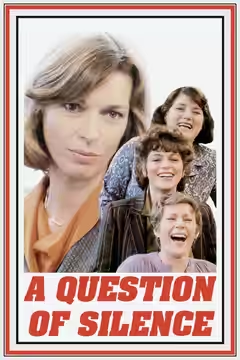
Marleen Gorris’s first film is a courtroom drama that will not argue its case in court. Three strangers kill a shopkeeper and a psychiatrist tries to find out why. It is plainly made, occasionally as blunt as a pamphlet, and still able to make a room uncomfortable.
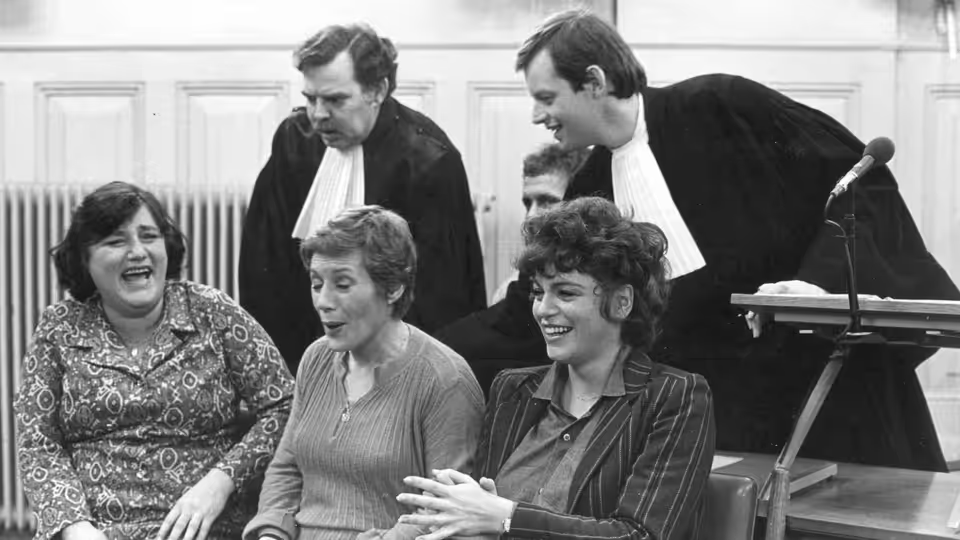
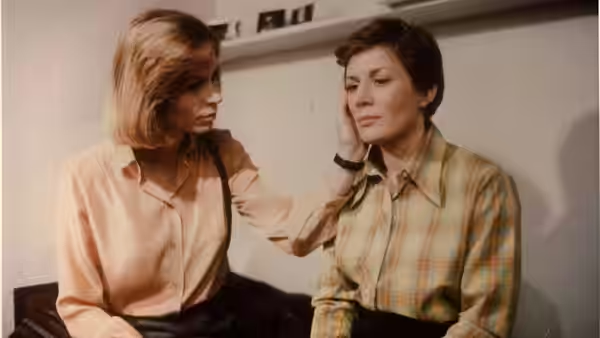
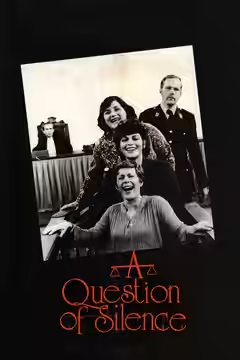
Marleen Gorris wrote and directed A Question of Silence in 1982, and it is her first film. The setup is a crime picture turned inside out. We know who did it from the start: Christine M. (Edda Barends), a housewife; Annie (Nelly Frijda), a waitress; Andrea (Henriëtte Tol), a secretary. We know what they did, which was to kill the owner of a dress shop, together, without having met before that afternoon. What we do not know is why, and neither does Janine van den Bos (Cox Habbema), the psychiatrist sent to find out whether they are sane enough to be tried.
Hans van Dongen’s editing does most of the structural work. The film moves between Janine’s prison interviews and short pieces of the women’s lives before the shop: Christine at a kitchen table with small children while her husband walks past without a word; Annie behind a counter being talked at by customers; Andrea in a meeting, making a suggestion that is ignored and then repeated by a man and accepted. The shop itself comes back in fragments, a rail of dresses, a hand on a sleeve, and the full scene is kept from us for a long while.
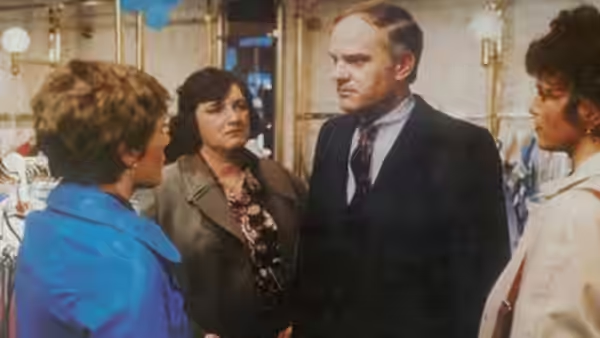
Frans Bromet shoots all of this flat and unfussy, in the even light of Dutch television drama, and that plainness is the right choice. The boutique is bright and lined with mirrors; the interview rooms are grey and bare; the van den Bos house is comfortable and lit like a catalogue. Jany Temime’s costumes let us tell the three women apart before they speak, Christine in a shapeless housecoat, Annie in her work apron and a cardigan, Andrea in the suits of a woman who is paid less than she is worth.
When the killing is finally shown, it horrified us, and not because of what is on screen, which is not much. It is the calm that does it. Nobody runs, nobody shouts, the women do not look at one another, and the whole thing has the pace of shoppers deciding on a blouse. We sat very still and were aware of doing so. Gorris has understood that the most frightening violence on film is the kind that looks like an ordinary task.
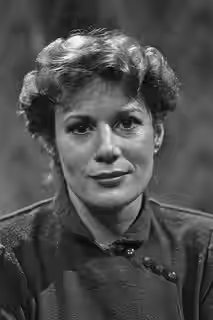
The performances are uneven in a way that suits the material. Barends does almost nothing and holds the screen by refusing to give Janine, or us, a single usable expression. Frijda’s Annie is the film’s only comedy, loud and unembarrassed, and her interviews are the ones we looked forward to. Tol plays Andrea as the brain of the piece, answering each of the psychiatrist’s questions with a better question. Habbema, though, is the one carrying it. Janine begins certain and professional, and over the film her certainty comes apart, mostly at her own dinner table, where Brugman’s Ruud explains her case to her every evening and she gradually stops replying.
The film’s weakness is that its men are one man. The prosecutor (Erik Plooyer), the judge (Hans Croiset), the inspector (Kees Coolen), Andrea’s employers and Christine’s husband are all condescending in the same key, and none is allowed a decent minute. Gorris would say that is the point, and in 1982 she had reason to make it loudly. It still costs the film something. A drama with only one side is a speech, and there are stretches here, especially in the flashbacks, where the speech is delivered twice in case we missed it the first time. Most critics have been cooler on the film than we are, and we suspect this is where they part from us; we think the boutique scene and Habbema’s slow unravelling buy the film the right to its bluntness.
Gorris went on to make Antonia’s Line (1995), which is warmer and more forgiving. This is the angrier film and, we think, the more interesting one. It borrows the shape of the courtroom picture and then declines to stage the trial as a contest, because it does not believe the contest is fair. We will not describe how it ends. Watch it with someone you are prepared to disagree with, because you will, and the film is counting on it.