Edward Berger’s German-language return to Remarque is superbly made and hard to sit through in the way it means to be. But it has cut the novel’s people down to bodies in mud and added a cabinet drama it did not need.
Erich Maria Remarque’s novel has been filmed in English twice and in German, until now, never. Edward Berger, who directs and shares the screenplay with Ian Stokell and Lesley Paterson, sends Paul Bäumer (Felix Kammerer) and his school friends to Northern France in 1917 and keeps them there for 147 minutes. It is a serious, punishing, handsomely built film. We recommend it, with reservations we will get to.
The opening is the best thing in it. A soldier we do not know climbs out of a trench and dies. His body goes onto a cart, his tunic goes into a laundry, women scrub the blood out and sew up the holes, a name tag is cut from the collar, and the tunic is handed across a counter to Paul, who finds the stranger’s name still inside and is told it was too small for its last owner. Sven Budelmann cuts this without a line of dialogue for several minutes and it made us cold before anyone we cared about had been shot at. The film has said everything it is going to say and it has taken six minutes.
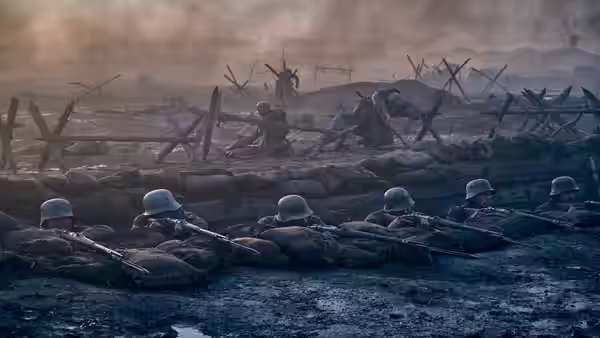
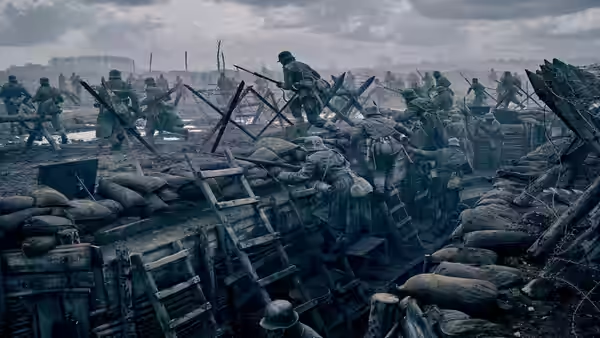
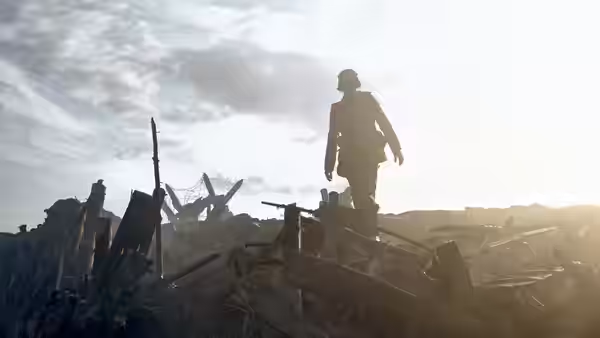
James Friend shoots the war in green-grey, from a long way up and a long way back, so that the men are small and the mud goes on to the horizon. Christian M. Goldbeck’s trenches are flooded to the knee and his dressing stations are barns with the roofs blown off. Lisy Christl puts the boys in uniforms a size wrong, which is right. Hauschka’s score is three notes on a distorted harmonium, like a door being forced, and the first time it comes in we sat up. By the tenth it is a cue for something terrible, and the film uses it as one.
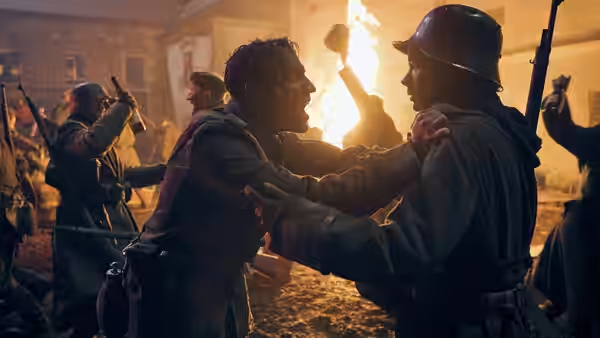
The terrible things arrive on schedule. In the film’s central assault, tanks come out of the fog with men in flame-throwers walking behind them, and Paul lies under a corpse while the ground around him burns. We were horrified. The sound department drops the music, the screams are close and the fire is closer, and Berger holds the wide shot long enough that we could see exactly how many were not getting up. It is as frightening a battle sequence as we have seen in some years and it does not flinch from what a shovel does to a face.
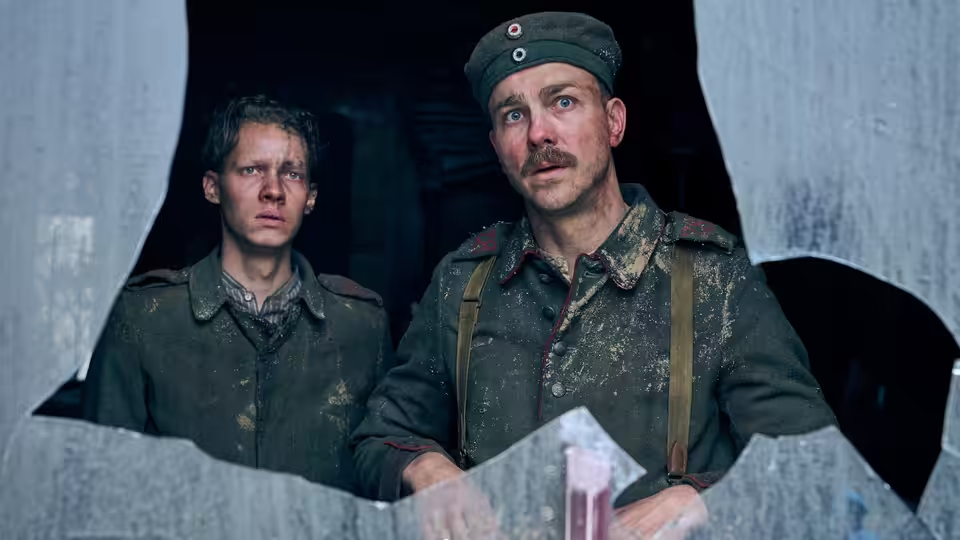
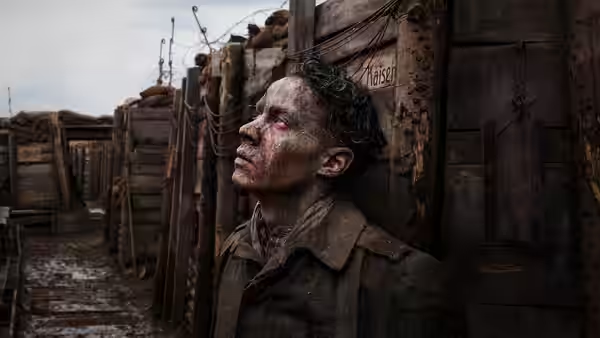
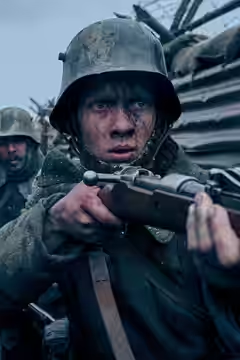
Kammerer is a round-faced, open boy at the start and Friend photographs him getting hollowed out, one close-up at a time. He is given almost nothing to say, which is the film’s choice and not his fault, and he manages a great deal with the way he looks at his own hands. Albrecht Schuch, as Kat, supplies what warmth there is: a cobbler who cannot read, steals a goose from a farmhouse in the dark and shares it out like a father at Christmas. Aaron Hilmer, Moritz Klaus and Edin Hasanović are good faces in the mud. They are not much more than faces, and that is the trouble.
Remarque’s book is full of people. It has a schoolmaster who talks the boys into the war, a drill sergeant they take revenge on, a spell of leave at home where Paul finds he cannot talk to his mother, a long stretch in a hospital. Berger has cut all of it. What is left is the front and the men dying on it, and by the second hour we had stopped being able to tell the friends apart except by who was still alive. Into the space the novel’s people used to fill, the film puts Daniel Brühl as Matthias Erzberger, riding to a railway carriage in a forest to ask Thibault de Montalembert’s General Foch for an armistice, and Devid Striesow as General Friedrichs, eating well in a château and talking about honour. These scenes are well played and they give the film a clock and a villain. The book refused to supply either. Its whole argument was that nobody in particular did this.
Set against the other trench films of the last few years, it is grimmer than 1917 and less inventive, and its long looks at trees and fog owe something to the older war pictures it plainly admires. Set against the 1930 Lewis Milestone version, which let its boys talk, it is far more brutal and a good deal less sad. Watch it on the largest screen in the house and not late at night, because it does not let go for some time afterwards. The 15 certificate is a kindness.