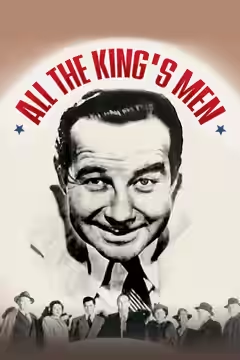
Robert Rossen’s version of the Robert Penn Warren novel gives Broderick Crawford a part he fills to the edges and gives its first hour to the making of a demagogue. The second hour has years to cover in too few minutes, and it shows.
Robert Rossen wrote, produced and directed this adaptation of Robert Penn Warren’s novel, and he made one large decision at the start: the book belongs to the reporter Jack Burden, the film belongs to Willie Stark. For its first hour All the King’s Men is about as good as American cinema has been on how a decent man goes into politics and what politics does with him. Its second hour has too much story and too little time, and it hurries.
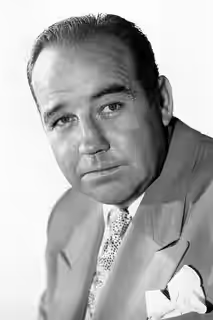
Broderick Crawford plays Willie first as a joke, a stiff backwoods man with a prepared speech and nothing behind it, the sort of candidate a crowd talks over. He is honest, he means it, and he is dull. Then Sadie Burke (Mercedes McCambridge) tells him, over a bottle, what the men who put him on the platform really think of him, and the next morning he throws the prepared speech away and talks to the farmers as one of them. Crawford does not raise his voice so much as put his weight behind it. We felt the pull of that speech, we wanted him to win, and a moment later we noticed how quickly we had stopped asking what he would do with the winning.
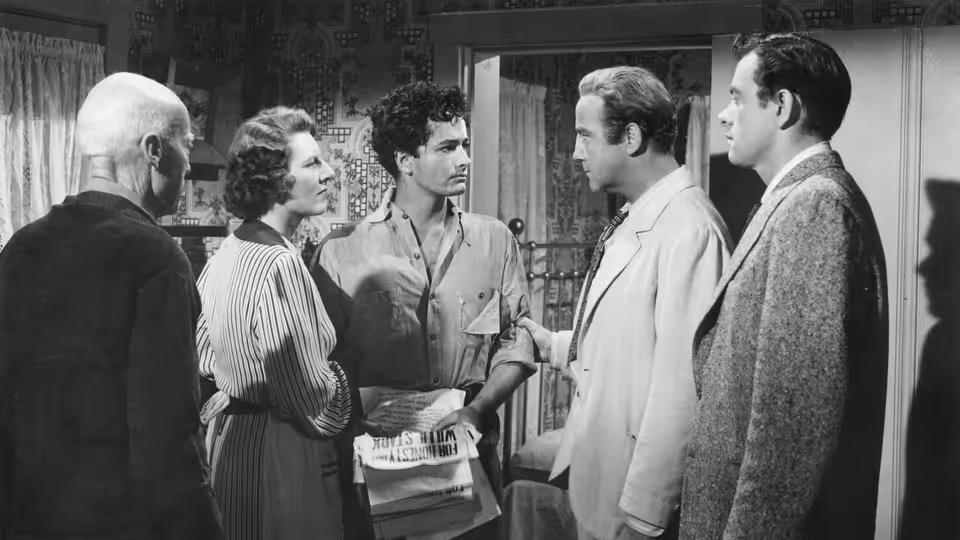
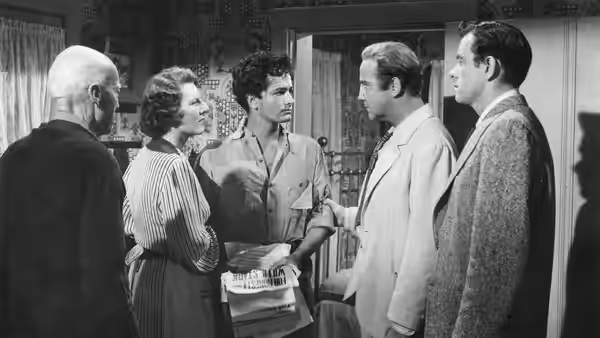
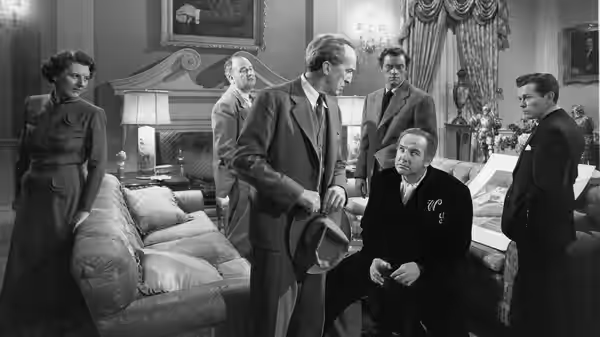
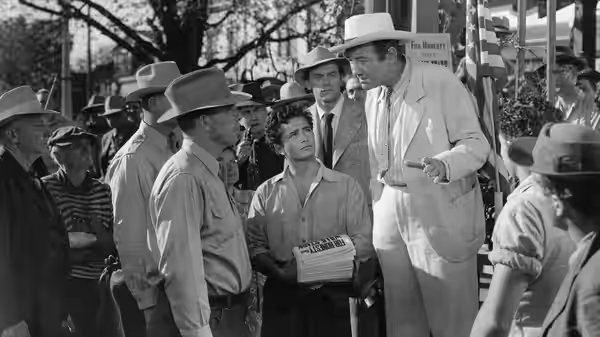
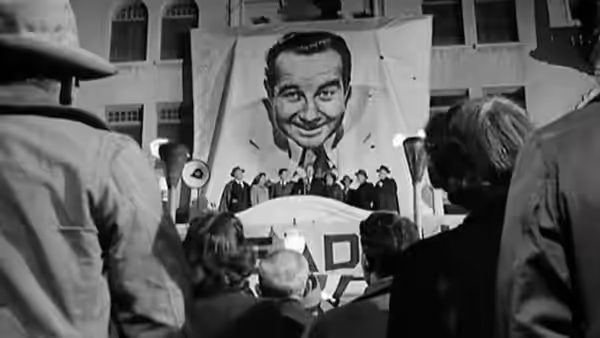
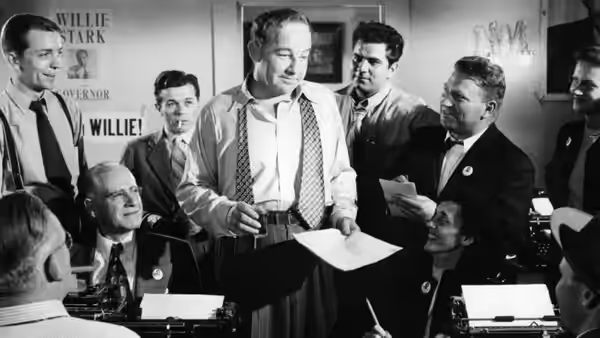
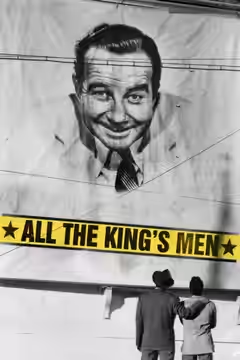
Burnett Guffey shot much of it on location in flat, hard daylight, and the rallies are full of faces that plainly came from the town rather than a casting office: men in braces squinting at the platform, women with babies and paper fans. It looks like a newsreel, which is the point, because the man on the platform has learned that a newsreel is what wins. Al Clark cuts the campaign as a rising tide of posters, motorcades and loudspeakers, so that Willie’s face spreads across the state faster than his promises do. Once he is in the governor’s mansion Guffey lights him from below and lets the rooms go dark around him, and the sweating amateur of the rallies becomes a shape in a doorway.
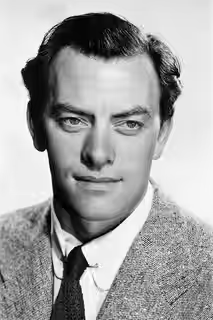
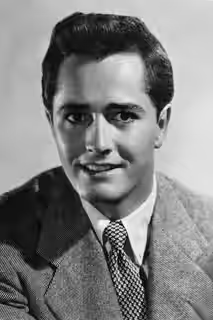
McCambridge is the other reason to watch. Sadie smokes, drinks, tells Willie the truth when nobody else will and loves him without any hope of it doing her good, and McCambridge plays all four at once with a lift of the chin and a cigarette. Ralph Dumke’s Tiny Duffy is the machine made flesh, a man who changes sides in the time it takes to relight a cigar. John Derek, as the son Tom, gives the boy the father’s swagger with the substance taken out.
The trouble is Jack. John Ireland plays him as a watcher, which is what the novel asks, but a watcher on the page has a mind we can hear and a watcher on screen has a face at the edge of the frame, and Ireland’s face is not given much to do. Joanne Dru’s Anne Stanton and Shepperd Strudwick’s Adam belong to the old money Willie is set against, and Rossen never has the minutes to make that world feel like more than a set of good manners. Louis Gruenberg’s score arrives with brass whenever a headline is printed, and it is louder than it needs to be. Jean Louis puts Dru in gowns that tell us she has moved up in the world before anyone says so.
The second half has too much novel in it. Years pass in a montage of headlines, and things the book takes chapters to prepare land here in a scene apiece: a hearing, a football match, a family scandal. The last half hour is melodrama, and although Rossen keeps it moving, we wanted him to stop and let the damage register. There is a turn near the end we will not describe. It is well staged, and it is over before we could feel it.
Rossen went on to make The Hustler (1961), where he gave one man in one room all the time he needed. Here he had a whole state and 109 minutes, and it was not enough. See it for Crawford, for McCambridge and for the first hour, which is as sharp about the making of a strongman as anything we know. It carries a U certificate, and it will be among the darker things you have watched under that letter.