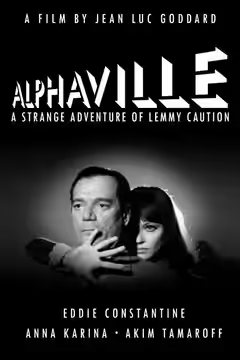
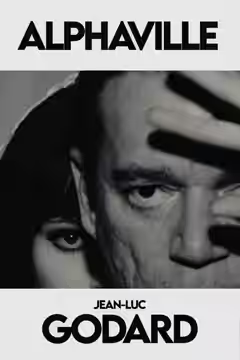
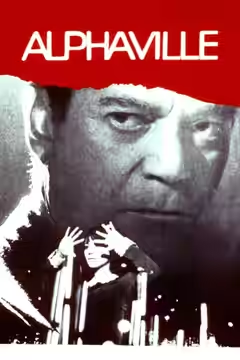
Godard’s science-fiction noir was shot in real Paris at night with no sets, and it still looks like nowhere else. It is funny, strange and beautifully lit, and it sags whenever the computer starts lecturing, which is more often than we would like.
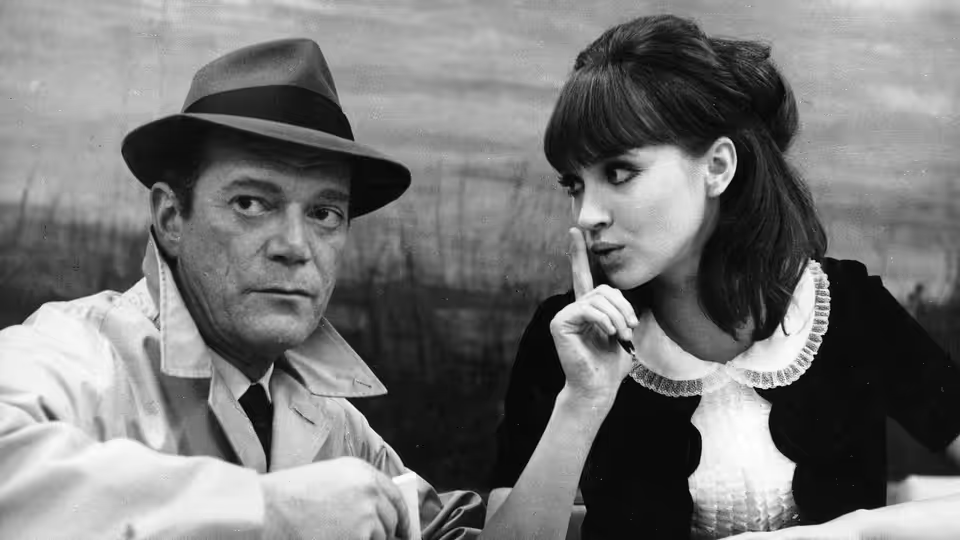
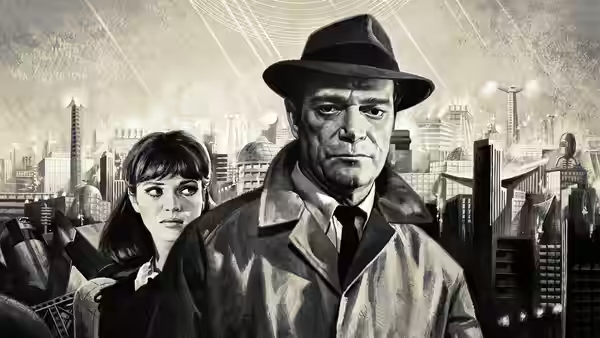
Jean-Luc Godard made a film about the future without building a single set. Alphaville is Paris in 1965 after dark: glass office blocks, hotel corridors, motorway underpasses, a swimming pool. Into it walks Lemmy Caution, a pulp secret agent Eddie Constantine had already played in a run of cheap French thrillers, in a trench coat, with a camera and a gun. The joke is that a hard-boiled hero has wandered into a philosophy seminar, and for long stretches the joke works.
It is a good film and a lopsided one. When Godard trusts the pictures, it is as sharp and odd as anything he made in that decade. When he hands the microphone to Alpha 60, the computer that runs the city, it becomes a lecture, and a lecture delivered in a croak that is hard on the ear. We recommend it, and we recommend a certain patience.
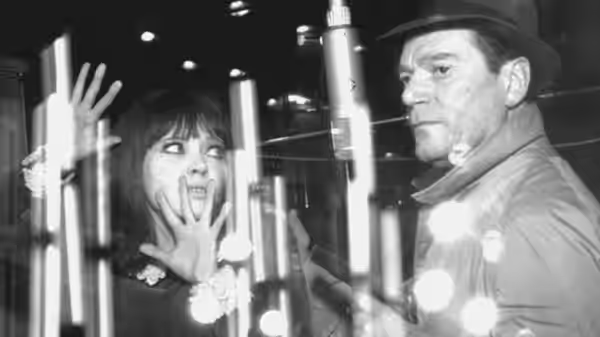
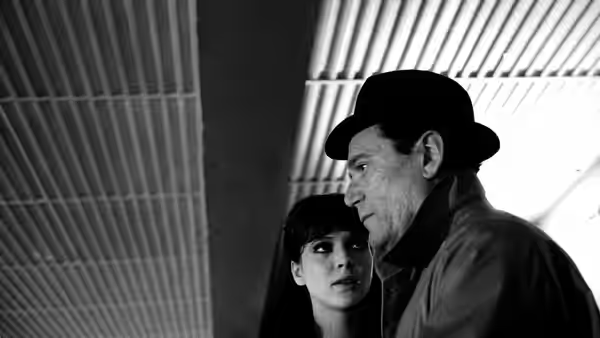
The pictures belong to Raoul Coutard. He shot at night with available light, and the result is a city of white neon, black glass and faces lit from below by desk lamps. A corridor scene has Caution and Natacha walking through light that pulses on and off, so the two of them appear and vanish in step. Coutard films a modern building at night and it looks like a machine breathing. Pierre Guffroy’s production design is credited, and his job here seems to have been choosing which real rooms to point the camera at; the choices are right every time, especially the hotel corridors, which are long, bare and lit like an interrogation.
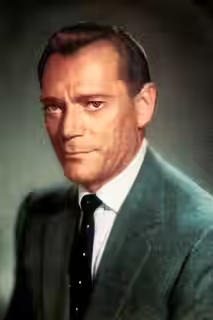
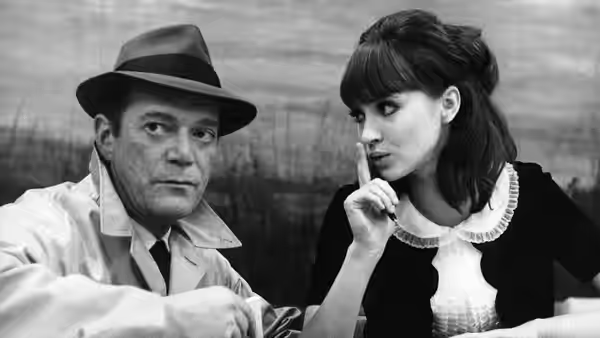
Constantine is the film’s anchor and its best gag. He has a face like a boxer who has lost more than he has won, and he plays Caution completely straight, hitting people, drinking, photographing everything with a flash that goes off like a gunshot. We laughed out loud at the first punch, and then at the second, because Godard cuts them so abruptly, with Agnès Guillemot slicing away before the man has finished falling. Paul Misraki’s score does the same trick: brass stabs from a spy film, arriving late and too loud, then a small melancholy theme for Natacha that keeps coming back.
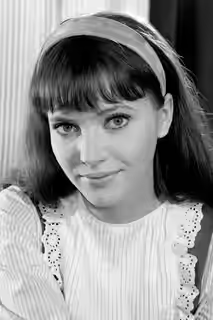
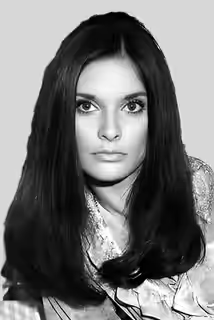
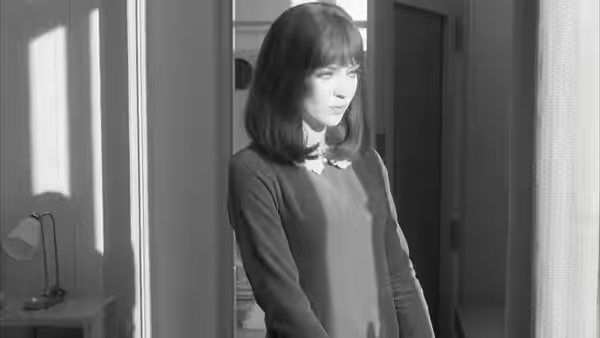
Anna Karina is the reason the film has a heart. Natacha has grown up in a city where the words for feeling have been deleted, and Karina plays her as someone reaching for a shelf that is not there. She recites the phrases the state gives her, “I’m very well, thank you, not at all”, with a brightness that curdles the more you hear it. When Caution hands her a book of Paul Éluard’s poems, she reads it the way a child reads a menu in a foreign language. It moved us more than we expected, because Karina never asks for sympathy; she just looks puzzled, and slowly less so.
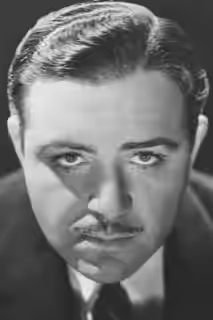
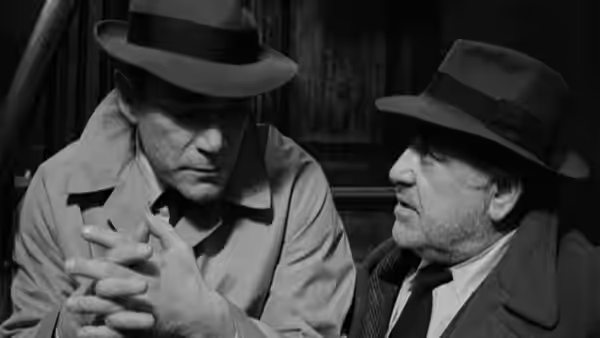
Akim Tamiroff, as the ruined agent Dickson, gets one long scene in a fleapit hotel and makes a full character out of a cough and a bottle. Howard Vernon’s von Braun is barely in it, which is a pity. Jean-Pierre Léaud turns up for a few seconds as a breakfast waiter, and anyone who knows Godard’s other films will smile. The scene that unsettled us is the public execution at the swimming pool, staged as sport, with an audience in evening dress applauding and synchronised swimmers finishing the job. It is done in flat daylight, without music for once, and the ordinariness is what got under our skin. We will not say who is on the diving board.
The trouble is the talk. Alpha 60 speaks in a voice that sounds like gravel being poured through a drain, and it speaks a great deal, about time, about logic, about the death of the poetic. Some of this is meant to be absurd and some of it Godard plainly believes, and the film does not always know which. The middle half hour is where most viewers will check the clock. It is 99 minutes long and feels longer there.
The English-dubbed version made a poor first impression on some critics in 1965, and we can see why: Constantine’s rasp and Karina’s uncertainty are half the point. See it in French with subtitles, late, with the lights off. The city outside your window will look different afterwards.