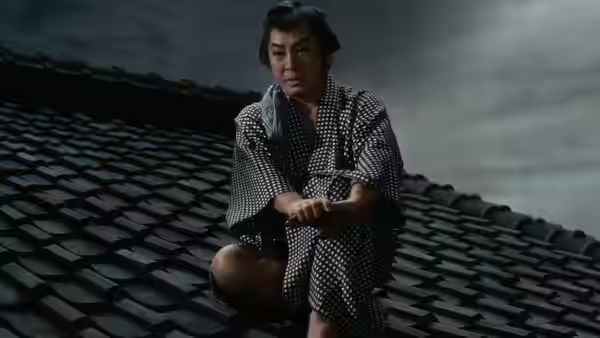
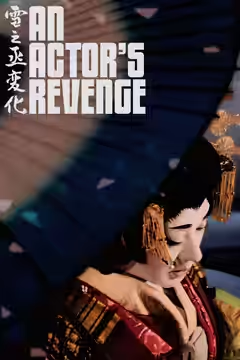
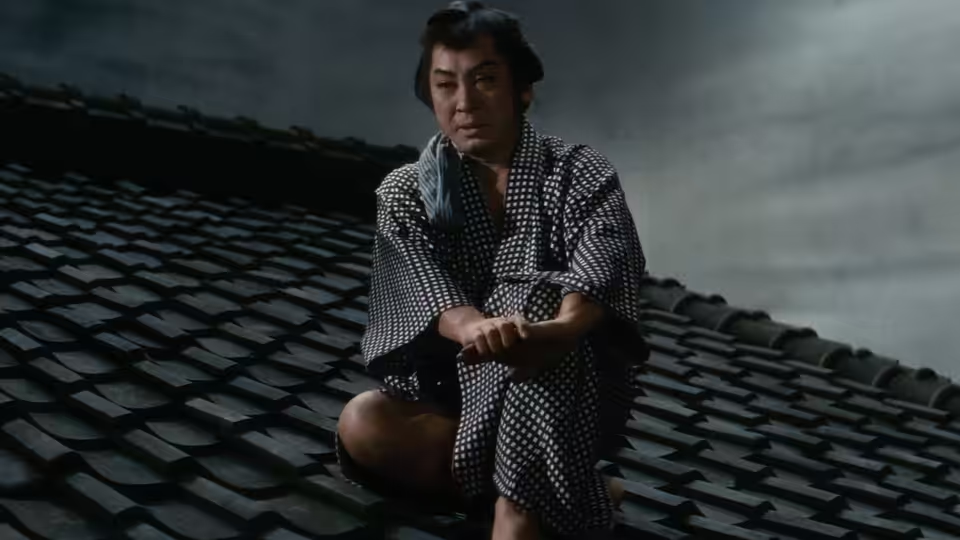
Yukinojo Nakamura (Kazuo Hasegawa) kneels on a tiled rooftop in patterned robes
Film review

An Actor's Revenge

1963 · Directed by Kon Ichikawa · 1h 54m

In a sentenceRevenge served in full make-up, under a single spotlight, to a jazz score

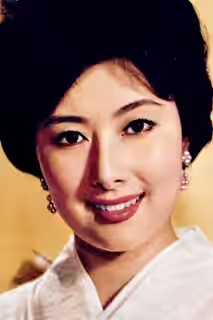
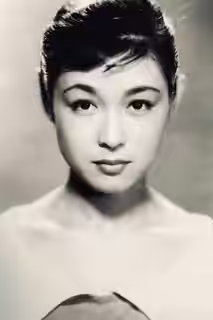
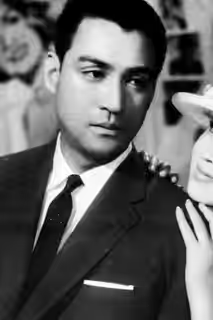
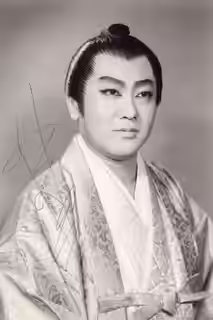
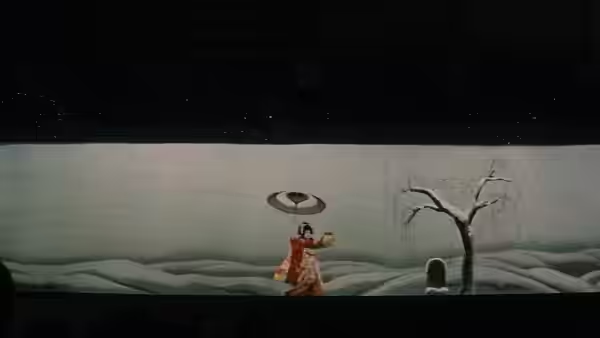
Edo, the 1830s. Yukinojo Nakamura (Kazuo Hasegawa), an onnagata, a male actor who plays women’s roles, arrives in the capital with the kabuki troupe of his master Kikunojo Nakamura (Chūsha Ichikawa). Playing a snow scene on the first night, he looks out into the audience and sees the three men who ruined his parents in Nagasaki when he was a child: a powerful lord and two merchants, Kawaguchi-ya (Saburo Date) and Hiromi-ya (Eijirō Yanagi). The lord’s daughter Namiji (Ayako Wakao), a favourite of the shogun, has fallen for the actor from her box. Yukinojo decides to reach the father through the daughter. Watching from the rafters is Yamitaro the thief (Hasegawa again), and beside him Ohatsu (Fujiko Yamamoto), a thief who has taken her own fancy to the actor.

Fi1m review

Kon Ichikawa’s revenge melodrama, set among the kabuki theatres of old Edo, is staged like a play and shot like a dream, and Kazuo Hasegawa is remarkable in two parts at once. The scheming in the middle goes slack; the pictures never do.

Kon Ichikawa’s An Actor’s Revenge is a revenge melodrama that never once pretends it is not a play. The story is an old one: Kazuo Hasegawa had played Yukinojo before, in Teinosuke Kinugasa’s 1935 version, and Kinugasa shares the screenplay credit here with Daisuke Itō. Ichikawa’s idea is to take the warhorse and do it in colour and widescreen with every wire showing. The sets are flats, the moon is a lamp, the street outside the theatre is as painted as the stage inside it, and a thief sits above the action telling us what to make of it. We have seen a good many films that borrow from the theatre. This one moves in.

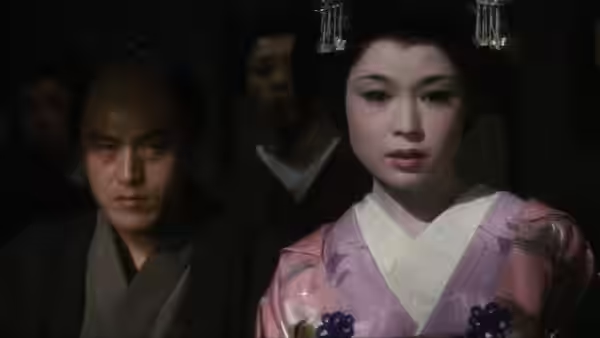
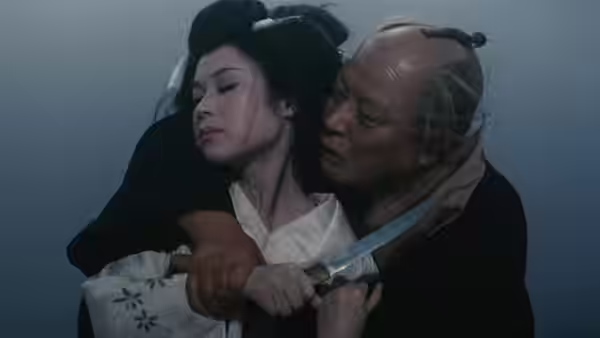
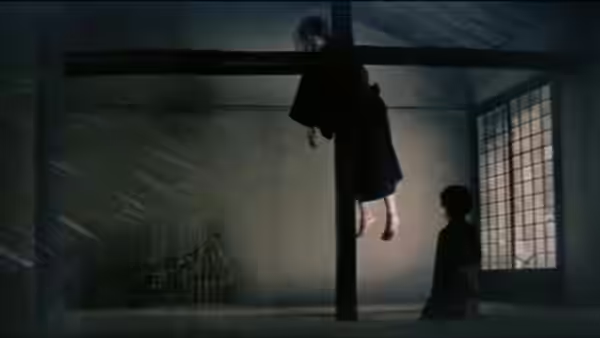
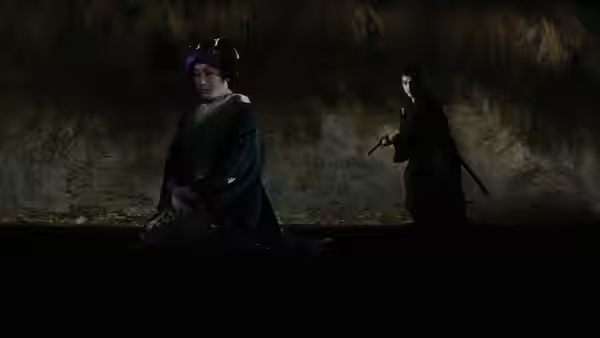
Setsuo Kobayashi photographs most of it against black. A figure stands in a single pool of light and the rest of the wide frame is nothing at all, so that when Yukinojo crosses a garden at night he seems to be walking across the inside of his own head. Yoshinobu Nishioka’s sets stop where the light stops. A sword fight is played in a bare square of moonlight; a country road is a strip of ground, a painted sky and a wind machine. Shigeo Nishida cuts straight from the stage to the memory the stage has set off, so that Yukinojo’s dead parents arrive in the middle of a snow scene with no dissolve to warn us. It ought to look cheap, and it does not, because the light is always exactly where Kobayashi wants it.

Hasegawa is doing two things at once and doing both well. As Yukinojo, the onnagata, he keeps his voice high and level and his steps small, on stage and off, and lets you see the performance being held in place by will. As Yamitaro the thief he is loud, broad and delighted with himself, and his running commentary is the film’s way of admitting that revenge plots are absurd and worth watching anyway. The device could have been a nudge in the ribs. Hasegawa plays the thief as a man who wishes he had a grievance this good.

What got at us was not the avenger but the girl. Ayako Wakao’s Namiji is the daughter of the man Yukinojo most wants ruined, and he decides to reach the father through her. Wakao plays her with no guile at all, a young woman who thinks she has met someone kind, and the scenes in which Yukinojo courts her in a woman’s robe and a woman’s voice, meaning every word as a lie, upset us more than anything the film does to the men he hates. Ichikawa does not soften this. Nor does he point at it. He lets Wakao’s face do the pointing.

Then there is the music. Masao Yagi and Tamekichi Mochizuki mix shamisen with a jazz combo, so that a samurai crosses a bridge at night to a walking bass. We laughed the first time it happened, and then stopped, because the score is doing the thief’s job: reminding us that this is a show and that we are in on it. Yoshio Ueno dresses the thieves in dark working cloth and the theatre in every colour the dye-house had, and Fujiko Yamamoto’s Ohatsu, the thief who has taken a fancy to the actor, gets the best coat in the film and knows it.

The middle is where the film goes slack. Yukinojo’s plan against the merchants Kawaguchi-ya (Saburo Date) and Hiromi-ya (Eijirō Yanagi) runs on rice, prices and rumour, and Ichikawa is far less interested in it than in the light falling on it, so we lost the thread for a stretch and did not much mind. The lesser thieves, Naritoshi Hayashi’s Mukuzu and Ichikawa Raizō VIII’s Hirutaro, are there for comedy the film could spare. Eiji Funakoshi’s Heima Kadokura, a swordsman who wants Yukinojo dead, is a threat the script keeps remembering and forgetting.

Ichikawa had made The Burmese Harp and Fires on the Plain before this, sober films about soldiers, and nothing in them prepares you for a director this happy to be caught playing. It is a 15 certificate, at 114 minutes, and it needs a dark room: half the frame is black and a lamp behind you will fill it. Watch it in one sitting and let the jazz in.
Critical consensus AI synthesised

80
Positive
3
Mixed
1
Negative
0
Slant Magazine
21 February 2018 · ★★★★½ · Chuck Bowen
90

Bowen praises the film as an astonishing, bleak, sensual revenge melodrama deserving greater recognition. He singles out its vivid fusion of kabuki, cinema, and theatrical visual artifice.

Read the full review →
The New Yorker
90*

The critic gives the film an enthusiastic assessment, praising its vivid theatrical-cinematic style. Hasegawa’s sexually ambiguous performance as Yukinojo is singled out as a marvel.

Read the full review →
Variety
31 December 1962 · Variety Staff
75*

The review finds the film entertaining and praises its blend of theatrical styles. It singles out the visually delightful outdoor sets and Kazuo Hasegawa’s performance.

Read the full review →
Time Out
· TR
64*

The available page confirms a review, but its critical verdict is unavailable. The metadata only describes Yukinojo’s revenge premise, without identifying any praised or criticized element.

Read the full review →

Straight answers AI written, from our review

Is An Actor's Revenge worth watching?
An Actor's Revenge is worth watching for anyone who can enjoy a revenge story staged openly as theatre, and we scored it 85. Kazuo Hasegawa is remarkable in two parts at once and Setsuo Kobayashi's lighting is the reason to see it. The scheming in the middle goes slack, and it needs a dark room.
How long is An Actor's Revenge, and what is it rated?
An Actor's Revenge runs 1h 54m. It is a drama film.
Where can I watch An Actor's Revenge in Chile?
An Actor's Revenge is not on any streaming or rental service in Chile at the moment. It is available in 3 other countries; change your country at the top of the page to see where. Availability is checked daily.
How violent or frightening is An Actor's Revenge, and is it suitable for children?
An Actor's Revenge carries a UK 15 certificate and is a melodrama rather than a horror or an action film. Its violence amounts to a sword fight or two in stylised light, and what unsettled us was the cold-blooded courting of an innocent young woman, not the bloodshed. It is not for children, though older teenagers with patience for kabuki staging will be fine.
How does An Actor's Revenge compare to Ugetsu?
An Actor's Revenge and Ugetsu are both period Japanese films built on striking images, but Ichikawa's is a bright, knowing melodrama that revels in its own artifice, while Mizoguchi's is a patient, solemn ghost story. We think Ugetsu is the more quietly affecting film and Ichikawa's the more fun. Choose Mizoguchi for stillness, Ichikawa for colour, jazz and a thief commenting from the rafters.
What should I watch after An Actor's Revenge?
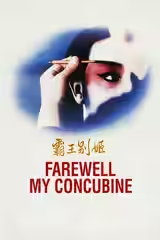
After An Actor's Revenge, try Ugetsu (1953, Fi1m 89): Mizoguchi’s ghost story, where the mist does what Ichikawa’s black does. Then Farewell My Concubine (1993, Fi1m 85): Chinese opera, a man who plays women, and fifty years of consequence; and The Red Shoes (1948, Fi1m 92): Powell and Pressburger let the ballet swallow the film; nobody did it better.

Cast

If you liked this, try…

  1. Ugetsu (1953, Fi1m 89)Mizoguchi’s ghost story, where the mist does what Ichikawa’s black does.

  2. Kwaidan (1964) · not on Fi1m yetFour ghost tales under painted skies, artifice worn even more openly than here.

  3. Double Suicide (1969) · not on Fi1m yetShinoda films a puppet play with the puppeteers left in the frame.

  4. Farewell My Concubine (1993, Fi1m 85)Chinese opera, a man who plays women, and fifty years of consequence.

  5. The Red Shoes (1948, Fi1m 92)Powell and Pressburger let the ballet swallow the film; nobody did it better.