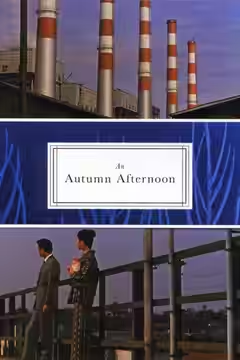
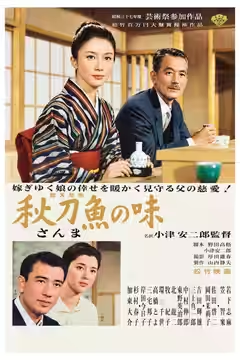
Ozu’s last film returns to the widower and the daughter he must give away, and it is warm, funny and quietly sad. The comedy about refrigerators and golf clubs wears thin; Chishū Ryū’s face does not.
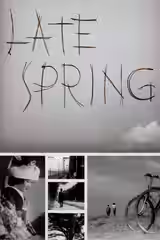
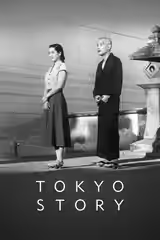
Yasujirō Ozu made this film in 1962 and did not make another; he died the following year. He had told the story before, most famously in Late Spring in 1949, with the same actor, Chishū Ryū, as the widowed father who must give up his daughter. He tells it again here in colour, with more drinking and more jokes, and we think it is as good as most people say. Not quite the equal of Tokyo Story, but close enough that the argument is not worth having.
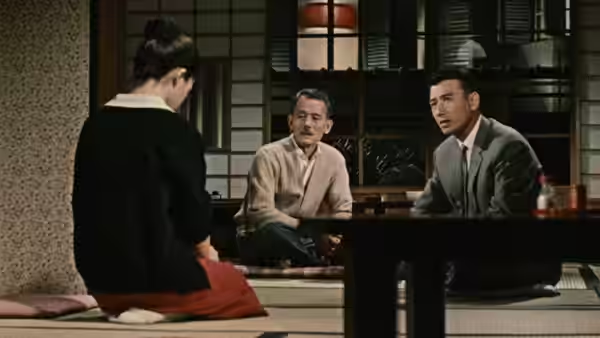
Shuhei Hirayama (Ryū) works in an office, goes home to a house run by his daughter Michiko (Shima Iwashita), and spends his evenings eating and drinking with two old schoolfriends. One of them, Kawai (Nobuo Nakamura), has decided that Michiko should be married and will not let the subject drop. The other has taken a wife younger than his own children and is teased about his pills. The joke, which Ozu and his co-writer Kōgo Noda never underline, is that a young woman’s future is being settled by men in a restaurant while she is at home doing the ironing. Nobody asks her. When somebody finally does, it is late, and the question has only one acceptable answer.
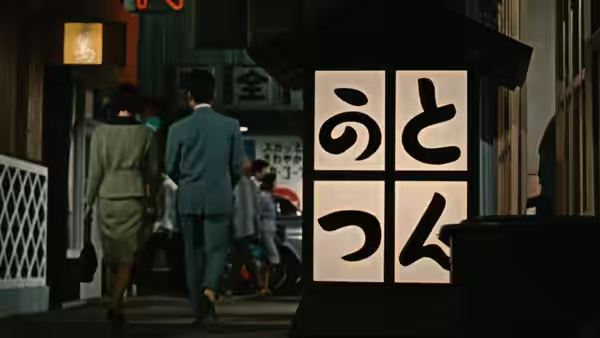
The scene that caught us comes early. The friends hold a reunion for their old teacher, Sakuma (Eijirō Tōno), whom they used to call the Gourd. He gets drunk, they laugh at him, and then they drive him home to the noodle shop he now runs in a poor part of the city. We had been laughing too. Then his daughter came out from the back of the shop, middle-aged and unmarried and plainly worn down by him, and we stopped, and felt something close to shame. Hirayama feels it too, and the rest of the film is him trying not to become that man.
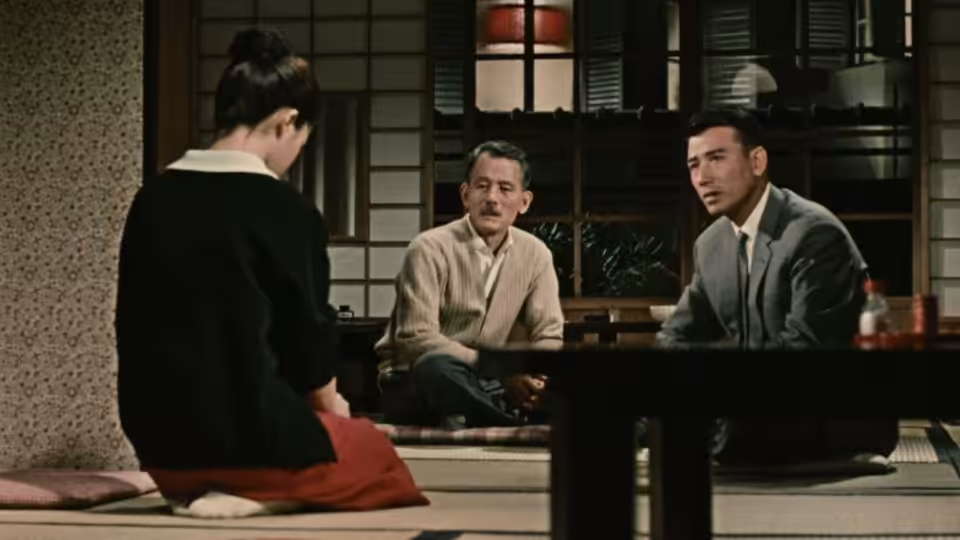
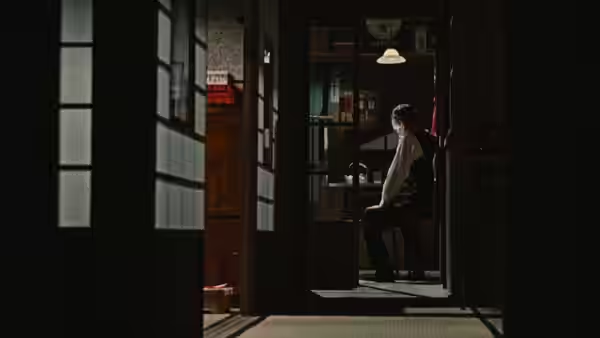
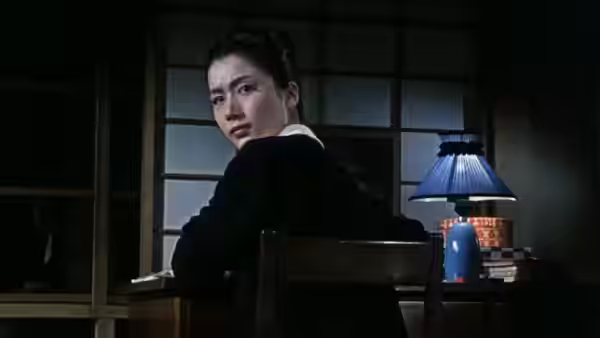
Yûharu Atsuta’s camera sits low, about where a person kneeling would look from, and it does not move. Rooms are framed dead straight, doorways within doorways, and the colour is mostly grey and brown, so that a single red kettle or a red-and-white chimney stands out like a shout. Minoru Kanekatsu’s sets do as much as the script: identical offices, identical bars, a corridor in the Hirayama house that we come to know better than our own. Yoshiyasu Hamamura cuts away between scenes to empty rooms, factory stacks and a hallway with nobody in it, and holds them a few seconds longer than you expect. Takanobu Saitō’s score is light strings, almost a nursery tune, and it keeps playing over things that are not light at all.
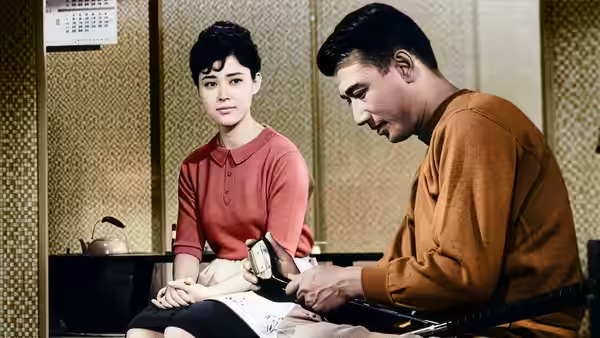
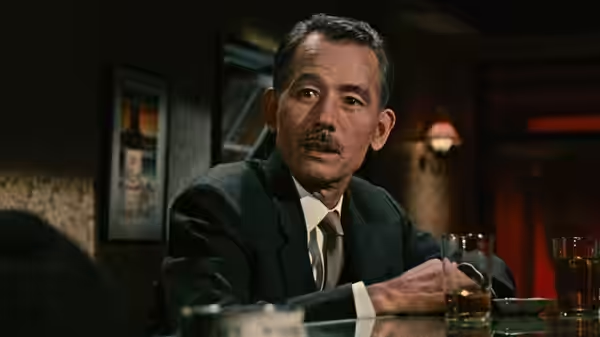
Ryū barely raises his voice. He nods, says “mm”, pours another drink, and the performance lives in how long he takes to answer. Iwashita has a harder job, because the script gives Michiko very little to want out loud. She is at her best in a scene where she is told bad news second-hand and Ozu lets her stand quite still and say almost nothing. Around them, Keiji Sada and Mariko Okada play the married son Koichi and his wife Akiko as a couple whose great crisis is a refrigerator and a set of golf clubs. Kyôko Kishida, as Madame Kaoru behind a bar Hirayama keeps returning to, gets one long look from him that explains why he does.
The flaws are real. The young couple’s money squabbles are broad and repeated, and the second time round they feel like padding. A strand about a man Hirayama served with in the war, and a military march that gets played in a bar, is funnier than it is sad, and we are not sure the film knows which it wanted. And anyone who has seen Late Spring will find nearly every beat familiar. Ozu was remaking his own work on purpose, but that does not make it less of a remake.
The original title refers to a fish that is never eaten on screen, which is Ozu’s kind of joke. The film ends where a story like this has to end, and he holds the last scene longer than is comfortable. It runs 113 minutes. Watch it early in the evening rather than late, and not alone if you can help it.