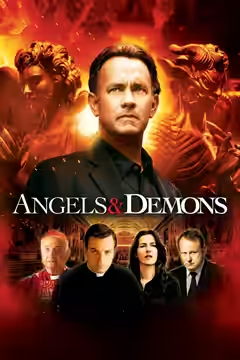
Ron Howard’s second Dan Brown film is faster and better looking than the first, and for stretches the hunt through Rome’s churches works as plain clockwork suspense. It is also loud, silly and unable to stop explaining itself.
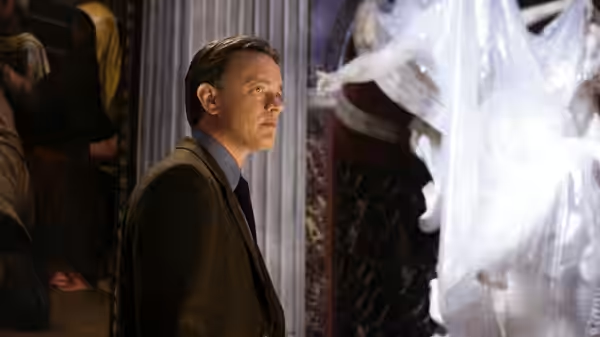
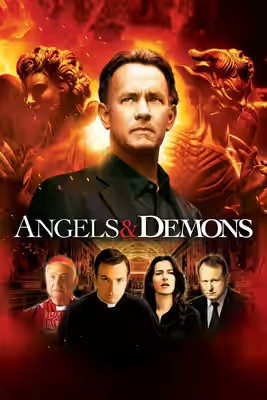
Ron Howard has made a second film from a Dan Brown novel, and this one has learned from the first. The Da Vinci Code, in 2006, stood its characters in front of paintings and had them talk. Angels & Demons gives Robert Langdon (Tom Hanks) a clock. A Pope has died, four cardinals have been taken, a canister of antimatter is losing power under the Vatican, and a killer has promised one body an hour from eight until midnight. David Koepp and Akiva Goldsman’s script is built around that deadline, and whenever it keeps to it the film moves.
The hunt is the good part. Mike Hill and Daniel P. Hanley cut between Langdon in a police car and the cardinals locked in conclave, and they let Hans Zimmer’s score do the hurrying. Zimmer writes a propulsive string figure with a choir laid over it, and it plays under every scene outside the Vatican walls, so that even a man reading a manuscript appears to be running.
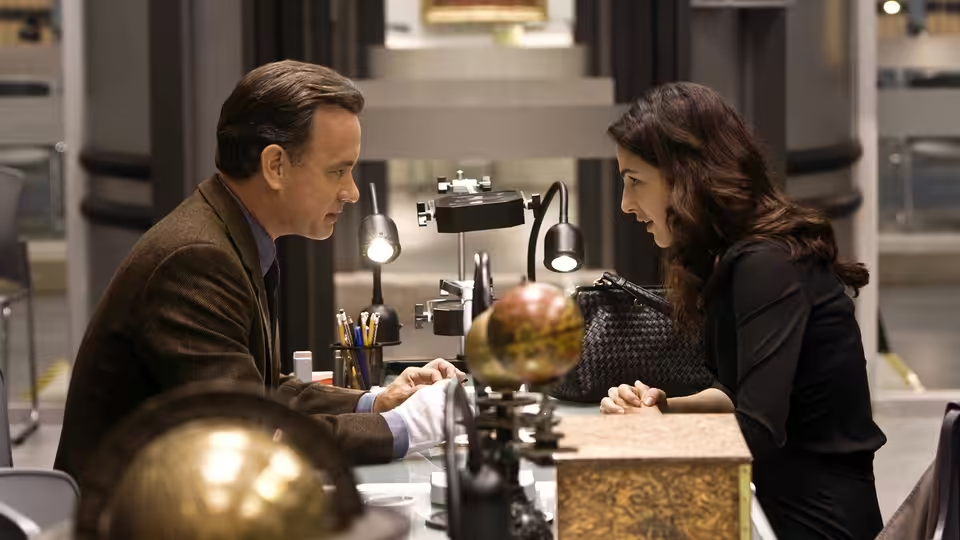
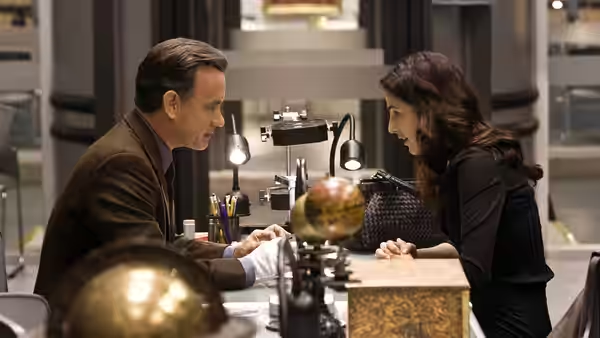
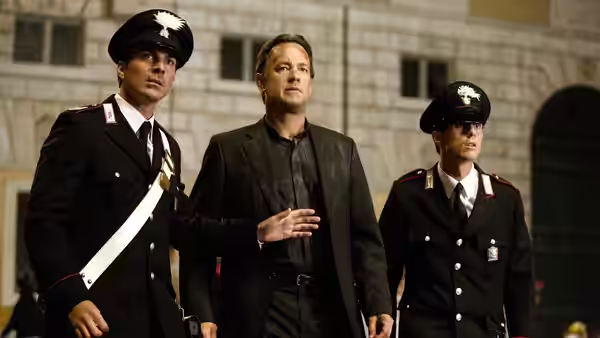
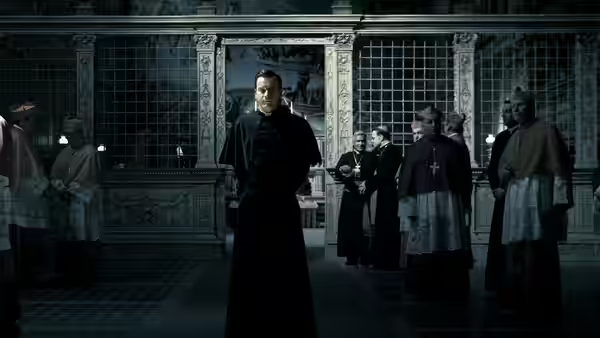
Allan Cameron and Salvatore Totino make it handsome. Cameron’s Sistine Chapel is lit by candles and by the orange of the city through its high windows; his Vatican Archives are a glass vault inside a stone one; the churches on Langdon’s trail are shot at night, wet cobbles and a single lamp. Totino keeps the camera low in the squares so that the fountains and the angels loom over the people beneath them. It stays handsome long after it has stopped making sense.
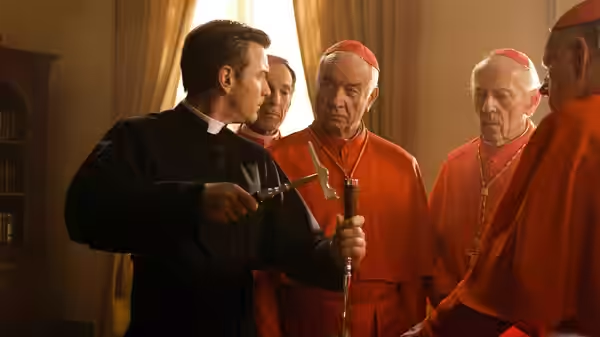
At the first church, the killer brands a cardinal with a glowing iron and leaves him choking on earth. It horrified us, more than a 12A thriller has any right to, because Howard shoots it straight: an old man’s bared chest, the hiss of the metal, Hanks arriving too late and having to look. Then the film moves on, because the brand is a clue, and each murder is a puzzle with a body attached. It wants us to shudder at the Church’s old cruelties and then uses a dying man as a crossword clue.
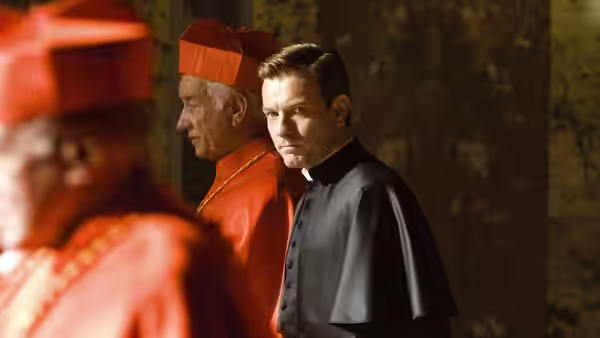
Hanks is relaxed, which suits him and undoes the film. His Langdon is a professor pleased to have been asked, and he never seems to believe anybody will die. Ewan McGregor, as the camerlengo Patrick McKenna, does the real acting. He plays the late Pope’s secretary as a soft-spoken, sincere young priest, and his address to the cardinals on what the Church has to fear from science is the one scene where somebody appears to mean the film’s argument. Ayelet Zurer, as the physicist Vittoria Vetra, carries canisters and reads Latin and has no life of her own. Pierfrancesco Favino’s Inspector Olivetti is the most believable man on screen, and the script uses him as a driver.
The trouble is the talking. Koepp and Goldsman cannot let a clue stand. Langdon must explain the Illuminati, the Path of Illumination, the four elements and a sculpted angel’s pointing hand, at a run, in sentences nobody has time to question. The science is nonsense, and the film’s subject, faith against reason, is announced in speeches and never dramatised in a choice anybody makes. By the second hour we were bored, and when the pattern repeated at the next church we were cross about being bored, because the parts of a good thriller are all here and the makers kept stopping to lecture us.
Howard is a tidy director and this is tidy work. Every reversal arrives on time, and at 139 minutes it does not outstay its welcome as the first film did. But none of it is tense. A puzzle thriller runs on the audience being half a step ahead of the hero; here Langdon is three steps ahead and says so, and we watch him be right.
The second half takes turns we will not describe, one of them a set piece above the Vatican that is the only moment the film finds the size it wants. If you liked the first film, this is a better one and you will have a decent evening. If you did not, nothing here will change your mind, though you may admire the candles.