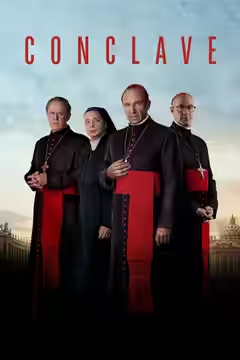
Edward Berger’s papal election thriller is handsome, quick and well acted, with Ralph Fiennes doing careful work as the cardinal who has to run it. It is a potboiler that wants to be taken for a meditation, and the ending gives the game away.
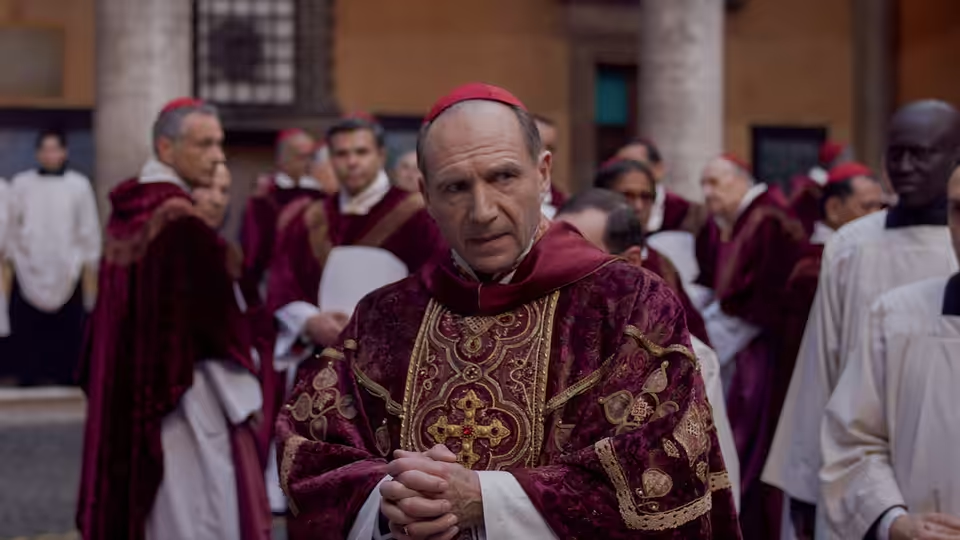
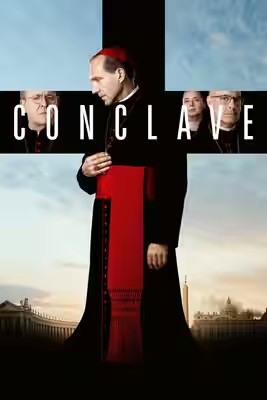
Edward Berger’s last film was All Quiet on the Western Front, which was loud. Conclave is the opposite sort of film, and he is better at it. Adapted by Peter Straughan from Robert Harris’s novel, it takes place almost entirely inside the Vatican in the days after a pope dies, and its idea of action is a man in red walking quickly down a corridor. The cardinals are locked in until they have chosen. Cardinal Lawrence (Ralph Fiennes), who as dean has to run the thing, would rather be anywhere else.
It is a good evening’s entertainment, and not the serious film about faith its music keeps telling us it is. Fiennes does the best work in it by doing the least. Before the first vote he gives a homily arguing that certainty is the enemy of unity and that a pope who never doubted would be no use to anyone, and it is written and played so that we cannot tell whether he means it or is campaigning. He plays Lawrence as a man permanently about to say something and deciding not to.
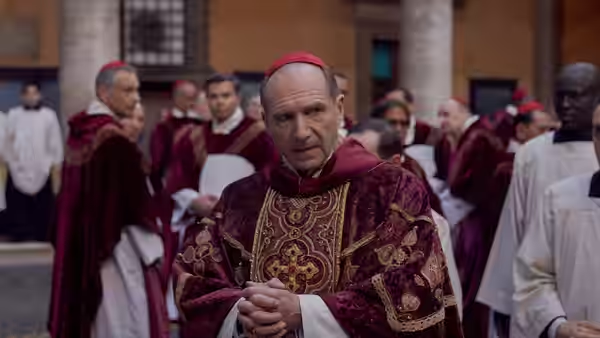
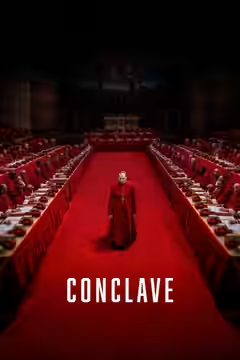
Stéphane Fontaine shoots the place as an institution rather than a cathedral. The cardinals sleep in a residence Suzie Davies has designed as a hotel with the warmth taken out: tiled corridors and hard overhead light. The image people remember is an overhead shot of the cardinals crossing a courtyard in the rain under white umbrellas, scarlet underneath, moving like something in a dish. Lisy Christl’s costumes do much of the film’s arguing. The red is the only colour in most rooms, and when the dead pope’s flat is sealed with plastic sheeting and tape the film looks like a crime scene.
Volker Bertelmann’s score is a scraping, nervous thing, strings plucked and bowed close to the bridge so they sound like wire under strain. The votes are the best sequences. Nick Emerson cuts them as procedure: a slip of paper, a name read aloud, a needle threaded through the ballot, a face in the second row doing arithmetic. We were more gripped by a man reading names off folded paper than we have been by most chases, because Berger and Emerson trust us to keep count.
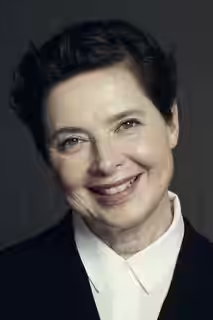
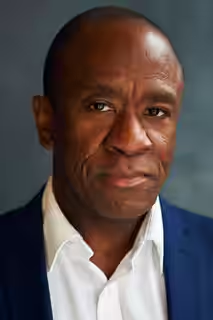
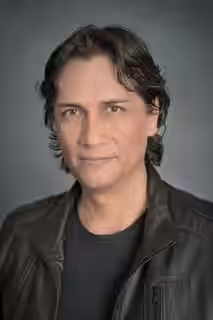
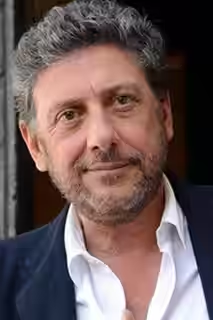
The candidates are cast to be recognised at a glance. Stanley Tucci’s Bellini is the liberal who says he does not want it and hates that he does. John Lithgow’s Tremblay smiles at everyone and is the only man in the building who never sweats. Sergio Castellitto’s Tedesco wants the Mass in Latin and vapes in the courtyard. Lucian Msamati’s Adeyemi is asked whether the Church is ready for him. Carlos Diehz, as the cardinal nobody knows, does almost nothing and is watched by everyone. Isabella Rossellini has perhaps four scenes as Sister Agnes, and the one in which she reminds a room of men that God gave the nuns eyes and ears too is the only time the film lands a blow on the institution rather than on a man in it.
Now the complaint. Straughan’s script moves the election along by revelation. Each round something turns up: a document, a rumour, a lie found out. It is airport-novel machinery, and good, but the film keeps stopping to tell us it is about doubt, and doubt is never allowed to be the problem. The problem is always a secret, and secrets get discovered. The second half takes a turn we will not describe. At the last reveal we laughed out loud, and not entirely with the film. It is a bold idea handled as a punchline.
Most critics are a little warmer than we are. It is rare to see a thriller this tidy, and the pleasure of watching good actors in good rooms is real. Set it beside the 1970s conspiracy films it resembles and it is shorter, prettier and less angry.
It is a 12A and there is nothing in it you could not show a bishop. Watch it in company, because the arithmetic is more fun done aloud, and do not expect to remember the plot in a fortnight. You will remember the umbrellas.