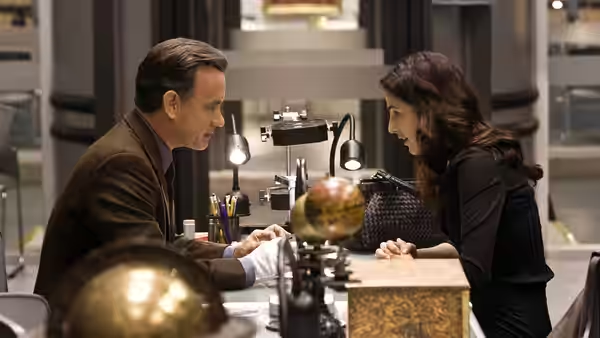
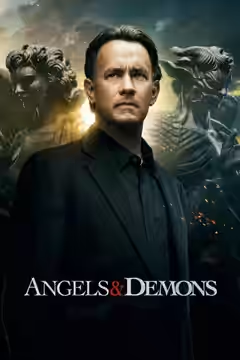
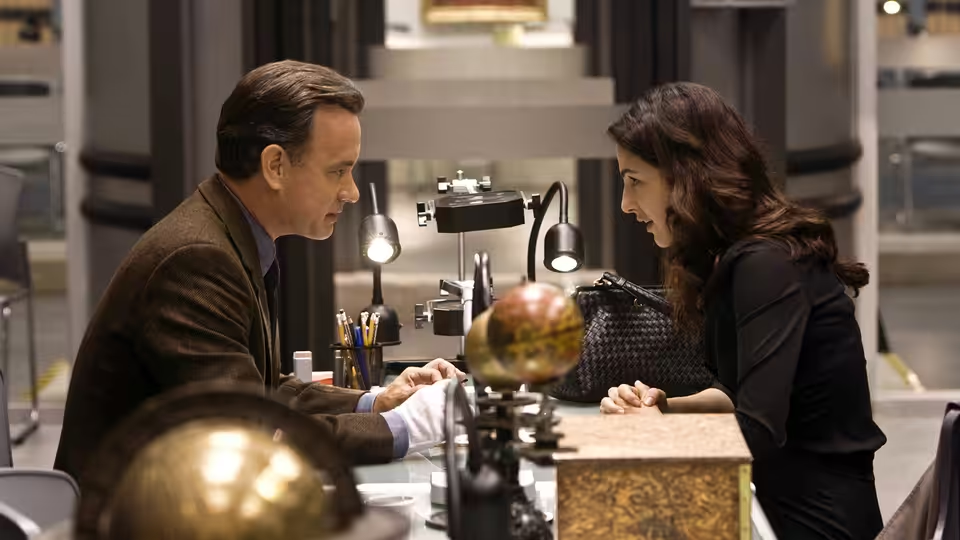
Robert Langdon (Tom Hanks) and Vittoria Vetra (Ayelet Zurer) confer over an artifact in a laboratory
Film review

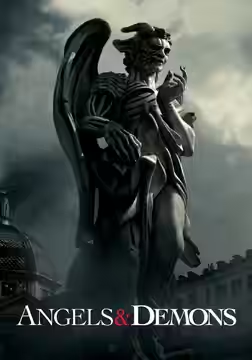
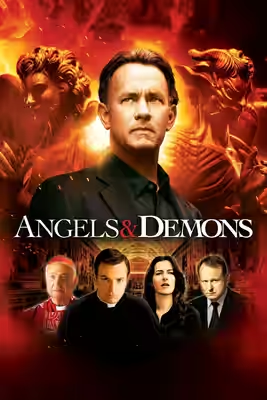
Angels & Demons

2009 · Directed by Ron Howard · 2h 19m

In a sentenceA bomb under the Vatican, four cardinals on a timer, and still Tom Hanks stops to explain the statues

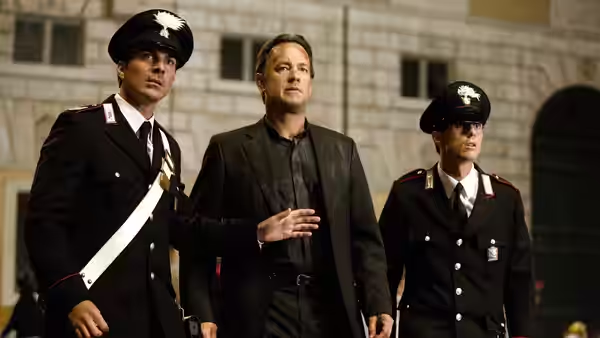
Rome, the days after the death of a Pope. As the cardinals gather for the conclave that will choose his successor, the four favourites to succeed him are kidnapped, and a canister of antimatter stolen from the CERN laboratory in Geneva is hidden beneath the Vatican, its battery due to fail at midnight. The Church summons Harvard symbologist Robert Langdon (Tom Hanks), who recognises the kidnappers’ mark as that of the Illuminati, a brotherhood Rome believed it had destroyed centuries ago. With physicist Vittoria Vetra (Ayelet Zurer), the late Pope’s camerlengo Patrick McKenna (Ewan McGregor), Swiss Guard Commander Richter (Stellan Skarsgård) and Inspector Olivetti (Pierfrancesco Favino), Langdon has from eight o’clock until midnight to follow a trail of clues through the churches of Rome before the cardinals are killed, one each hour.

Plays from YouTube when you press play; nothing loads from them until then.

Fi1m review

Ron Howard’s second Dan Brown film is faster and better looking than the first, and for stretches the hunt through Rome’s churches works as plain clockwork suspense. It is also loud, silly and unable to stop explaining itself.

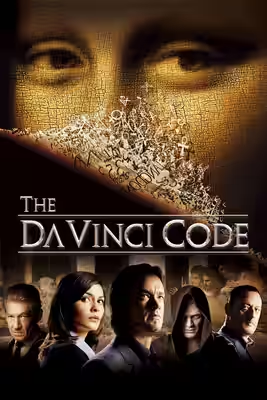
Ron Howard has made a second film from a Dan Brown novel, and this one has learned from the first. The Da Vinci Code, in 2006, stood its characters in front of paintings and had them talk. Angels & Demons gives Robert Langdon (Tom Hanks) a clock. A Pope has died, four cardinals have been taken, a canister of antimatter is losing power under the Vatican, and a killer has promised one body an hour from eight until midnight. David Koepp and Akiva Goldsman’s script is built around that deadline, and whenever it keeps to it the film moves.

The hunt is the good part. Mike Hill and Daniel P. Hanley cut between Langdon in a police car and the cardinals locked in conclave, and they let Hans Zimmer’s score do the hurrying. Zimmer writes a propulsive string figure with a choir laid over it, and it plays under every scene outside the Vatican walls, so that even a man reading a manuscript appears to be running.

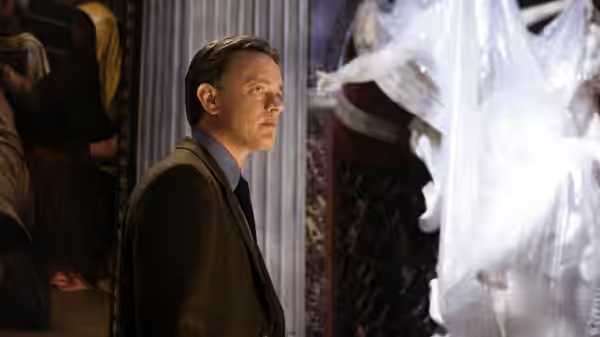
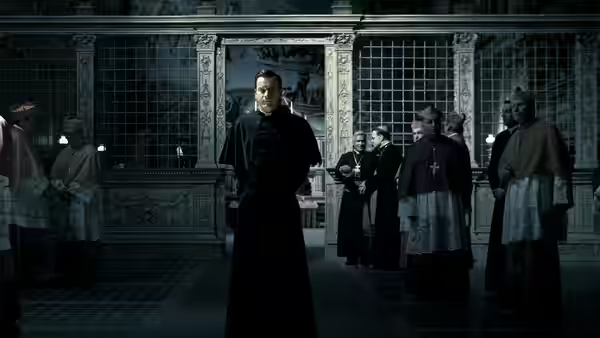
Allan Cameron and Salvatore Totino make it handsome. Cameron’s Sistine Chapel is lit by candles and by the orange of the city through its high windows; his Vatican Archives are a glass vault inside a stone one; the churches on Langdon’s trail are shot at night, wet cobbles and a single lamp. Totino keeps the camera low in the squares so that the fountains and the angels loom over the people beneath them. It stays handsome long after it has stopped making sense.

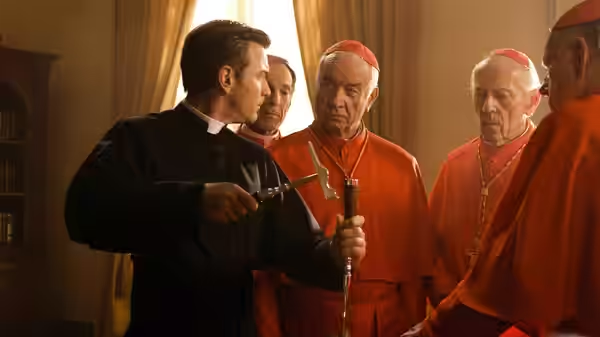
At the first church, the killer brands a cardinal with a glowing iron and leaves him choking on earth. It horrified us, more than a 12A thriller has any right to, because Howard shoots it straight: an old man’s bared chest, the hiss of the metal, Hanks arriving too late and having to look. Then the film moves on, because the brand is a clue, and each murder is a puzzle with a body attached. It wants us to shudder at the Church’s old cruelties and then uses a dying man as a crossword clue.

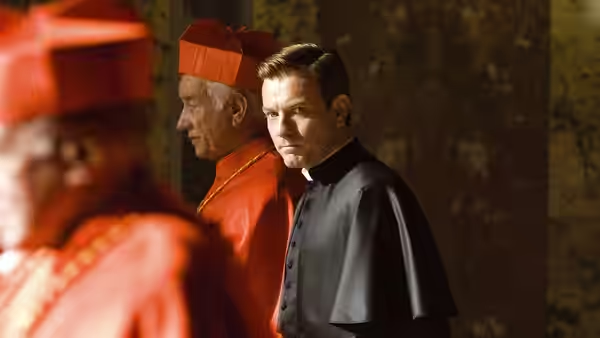
Hanks is relaxed, which suits him and undoes the film. His Langdon is a professor pleased to have been asked, and he never seems to believe anybody will die. Ewan McGregor, as the camerlengo Patrick McKenna, does the real acting. He plays the late Pope’s secretary as a soft-spoken, sincere young priest, and his address to the cardinals on what the Church has to fear from science is the one scene where somebody appears to mean the film’s argument. Ayelet Zurer, as the physicist Vittoria Vetra, carries canisters and reads Latin and has no life of her own. Pierfrancesco Favino’s Inspector Olivetti is the most believable man on screen, and the script uses him as a driver.

The trouble is the talking. Koepp and Goldsman cannot let a clue stand. Langdon must explain the Illuminati, the Path of Illumination, the four elements and a sculpted angel’s pointing hand, at a run, in sentences nobody has time to question. The science is nonsense, and the film’s subject, faith against reason, is announced in speeches and never dramatised in a choice anybody makes. By the second hour we were bored, and when the pattern repeated at the next church we were cross about being bored, because the parts of a good thriller are all here and the makers kept stopping to lecture us.

Howard is a tidy director and this is tidy work. Every reversal arrives on time, and at 139 minutes it does not outstay its welcome as the first film did. But none of it is tense. A puzzle thriller runs on the audience being half a step ahead of the hero; here Langdon is three steps ahead and says so, and we watch him be right.

The second half takes turns we will not describe, one of them a set piece above the Vatican that is the only moment the film finds the size it wants. If you liked the first film, this is a better one and you will have a decent evening. If you did not, nothing here will change your mind, though you may admire the candles.
Critical consensus AI synthesised

46
Positive
1
Mixed
8
Negative
10

Most critics find Angels & Demons a brisker, more energetic film than The Da Vinci Code, and most of them still do not much like it. The praise clusters on the look of the thing: the reconstructions of Baroque Rome, the production design and the cinematography are mentioned approvingly even by reviewers who are otherwise unimpressed. Ewan McGregor’s performance as the pope’s secretary is singled out more than once, and Hans Zimmer’s score gets a nod.

The reservations are about the plot. Reviewers call the film overstuffed, heavy on exposition and rushed in its puzzle-solving, with leaps of logic that undercut the pace it is praised for, and several say its ideas about science and religion go nowhere. The spread is wide. The Hollywood Reporter is alone in calling it thrilling and warm-hearted; NME finds it formulaic and without a point of view; The New Yorker goes further and calls it exploitative, religious ritual turned into a creep show.

The Hollywood Reporter
4 May 2009 · The Associated Press
75*

The critic finds the sequel more thrilling and briskly paced than its predecessor, with a warm-hearted finish. They praise the simplified story and the spectacular reconstructions of Baroque Rome.

Read the full review →
RogerEbert.com
13 May 2009 · Roger Ebert
64*

The page could not be read, so its verdict and any specific praise or complaint cannot be verified. The available text contains only a browser-check message.

Read the full review →
Screen Daily
5 May 2009 · Mike Goodridge
64*

The review's verdict cannot be determined from the accessible page. No praised or criticized element is visible.

Read the full review →
The New York Times
15 May 2009 · A.O. Scott
64*

The page did not provide the review text, so its verdict cannot be established. No specific praise or complaint can be verified from the accessible content.

Read the full review →
Total Film
6 May 2009 · ★★★ · Neil Smith
60

The critic finds the sequel a kinetic but mechanical improvement on its predecessor, though it remains overstuffed and pompous. Hans Zimmer’s dynamic score and the busy set-pieces are singled out for praise.

Read the full review →
The AV Club
14 May 2009 · C · Tasha Robinson
57

Robinson finds the film an exhausting, overlong thriller whose clue-solving and implausible leaps of logic undermine its pace. She praises the sumptuous production design, cinematography, and beauty of Rome, but says they become oppressive over the film’s length.

Read the full review →

Straight answers AI written, from our review

Is Angels & Demons worth watching?
Angels & Demons is a mixed film, handsome and fast but silly and over-explained, and we scored it 54. The hunt through Rome's churches works as plain clockwork suspense for stretches, and Ewan McGregor does the real acting. Those who liked The Da Vinci Code will have a decent evening; anyone who did not will find nothing here to change their mind.
How long is Angels & Demons, and what is it rated?
Angels & Demons runs 2h 19m. It is a thriller and mystery film.
Where can I watch Angels & Demons in Croatia?
Angels & Demons is streaming on HBO Max in Croatia, and it is also available to rent from Amazon Prime Video from HRK 3.99. Availability is checked daily; the links above go straight to each service.
How violent or frightening is Angels & Demons, and is it suitable for children?
Angels & Demons carries a 12A certificate, and one scene pushes at it: a cardinal is branded with a glowing iron and left choking on earth, shot straight and without flinching. The murders are puzzles with bodies attached, so there is a death roughly every hour of story. We would keep younger children away; teenagers used to thrillers should manage.
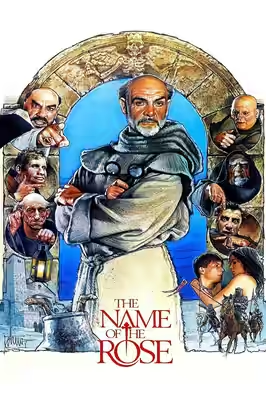
How does Angels & Demons compare to The Name of the Rose?
Angels & Demons is the faster and louder of the two, a timed hunt through Rome with the clues explained at a run, while The Name of the Rose is a slower medieval mystery that lets its puzzles breathe. The older film is the better one, warmer and more intelligent, though its investigation sometimes drags. Choose Howard's film for pace, Connery's for an abbey worth getting lost in.
Is Angels & Demons based on a true story or a book?
Angels & Demons is based on the novel by Dan Brown, not on a true story; the Illuminati plot, the stolen antimatter and the Path of Illumination are fiction, and the review notes the science is nonsense. You do not need to have read the book, since Langdon explains every clue aloud, often more than once.
What should I watch after Angels & Demons?
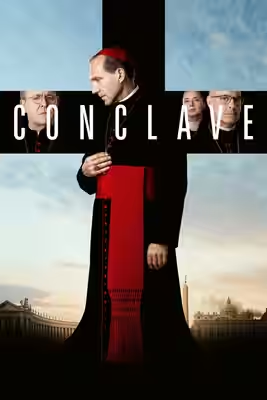
After Angels & Demons, try The Name of the Rose (1986, Fi1m 77): Monks, murders and a monastery library, with the puzzles allowed to breathe. Then Conclave (2024, Fi1m 76): The election of a Pope done as a proper drama, with no antimatter required; and The Da Vinci Code (2006, Fi1m 42): The first Langdon film: slower and sillier, but the one everybody argues about.

Cast

If you liked this, try…

  1. The Name of the Rose (1986, Fi1m 77)Monks, murders and a monastery library, with the puzzles allowed to breathe.

  2. Conclave (2024, Fi1m 76)The election of a Pope done as a proper drama, with no antimatter required.

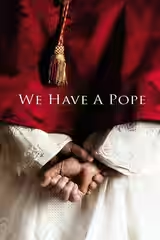
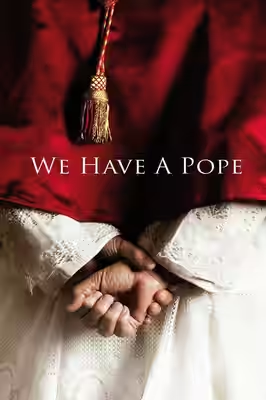
  3. Habemus Papam (2011) · not reviewed yetNanni Moretti’s gentle Italian comedy about a new Pope who simply cannot face the job.

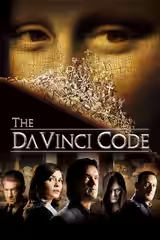
  4. The Da Vinci Code (2006, Fi1m 42)The first Langdon film: slower and sillier, but the one everybody argues about.

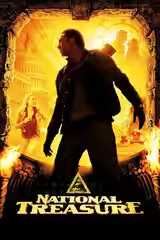
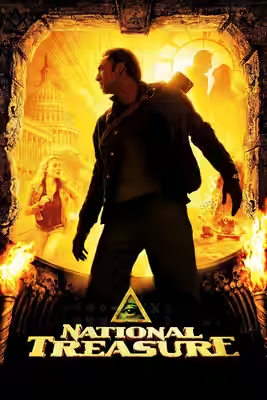
  5. National Treasure (2004, Fi1m 52)The same clue-hunting game, played by people who know how daft it is.

Free account

Know what to watch tonight

Two lists that know where things are streaming, collections you can share, your own score beside ours, and Discover that remembers what you have seen.

  • Want to see, sorted by what is streaming now
  • Seen, with your score out of ten
  • No adverts, ever