Aki Kaurismäki follows a sacked miner south in a roofless Cadillac and is finished in 73 minutes. It is dry, plain and unexpectedly tender, and we would send almost anyone to it with one warning: its people show nothing, and you must meet them halfway.
Aki Kaurismäki’s Ariel begins with a mine closing in northern Finland and is over in 73 minutes, and it does not waste one of them. It is a film about Finns at the bottom of the pay scale who say little and are let down a great deal, and it is a good place to start with Kaurismäki. We would send almost anyone to it, with one warning we will come to.
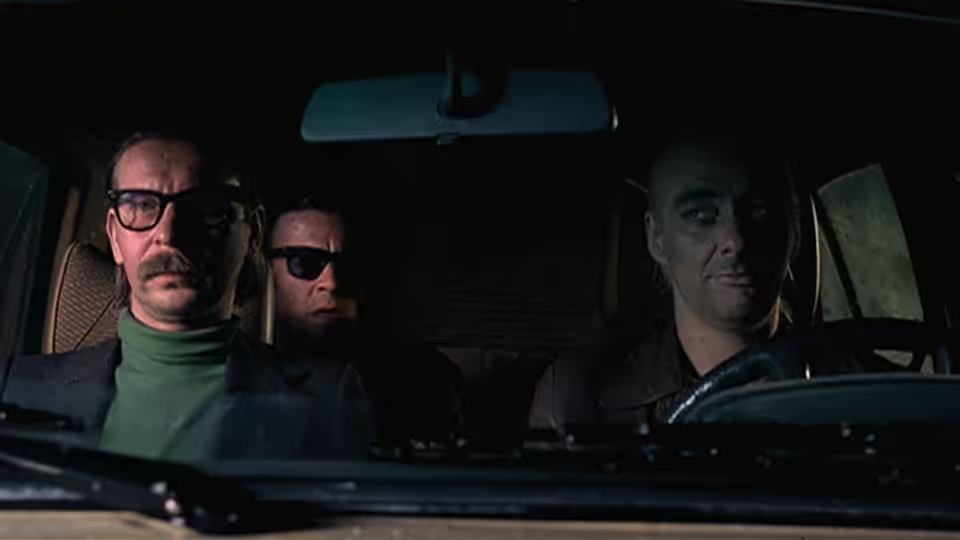
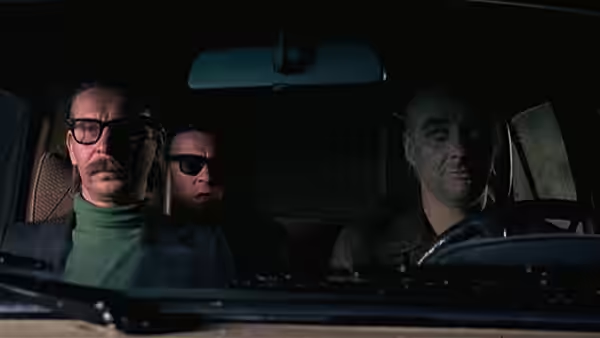
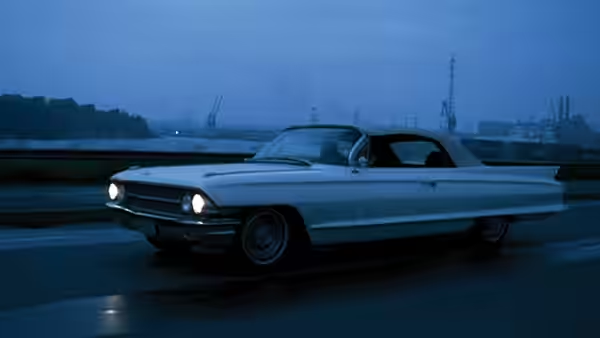
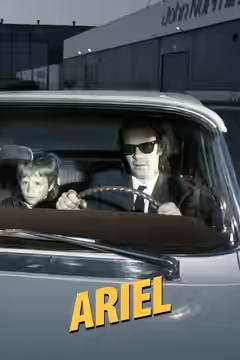
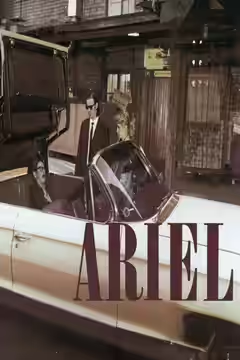
Taisto Kasurinen (Turo Pajala) is told over a loudspeaker that the mine has shut. His father (Erkki Pajala) sits him down in a café, hands him the keys to a white Cadillac convertible, tells him to head south, and excuses himself to the lavatory, from which he does not return. The Cadillac’s roof will not go up, so Taisto drives the length of the country with snow on the seats, wearing the jacket he will wear for the rest of the film. We laughed at the roof, and we laughed at the father’s exit, which is staged as a man stepping out for a moment, and then we felt ashamed of ourselves. We suspect that is the intended order.
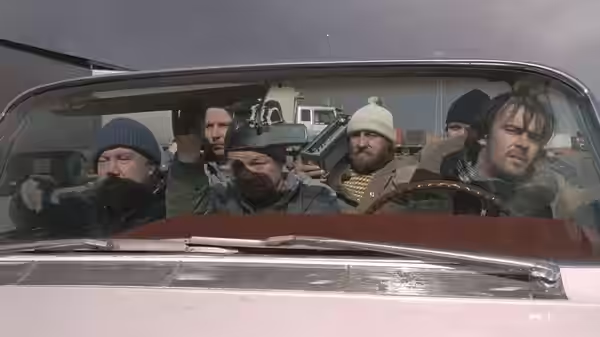
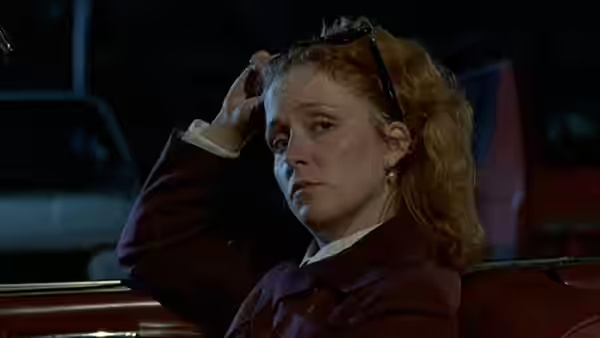
In Helsinki he is robbed of everything but the car by a mugger (Matti Jaaranen), takes casual work at the harbour, and is fined for parking by Irmeli Pihlaja (Susanna Haavisto), a traffic warden with a small son, Riku (Eetu Hilkamo). Their courtship takes about four lines of dialogue. He asks; she says yes; nobody smiles. It moved us far more than we were braced for, because Kaurismäki has cut away every gesture actors normally use to signal love, and what is left, two tired people deciding to try, is enough. Hilkamo plays the boy as a small, unimpressed adult, and he is funny.
Pajala has a long face that does almost nothing, and the film is built on it. He takes the sack, the robbery and the weather with the same faint nod, and by the half-hour mark that nod has become expressive; you can read a whole day’s disappointment in how slowly it arrives. Haavisto matches him. Matti Pellonpää, as Mikkonen, a man Taisto meets once his luck has properly gone, gives him a courtesy so weary it is almost tender.
Timo Salminen shoots it in hard, flat colour: grey streets, brown rooms, and then one red jacket or one blue door that carries the whole frame. He keeps the camera still and lets people walk into the shot and out of it, so that the empty room they leave behind is part of the scene. Risto Karhula furnishes rooms with a table, a bed and a radio and no more, and Tuula Hilkamo dresses everybody as if they own one outfit, which they do. Raija Talvio cuts each scene a beat before another editor would let it start, so that we are always arriving after the decision has been taken. The music is credited to Olavi Virta, Taisto Tammi and Pyotr Ilyich Tchaikovsky, among others, and it is warmer than any face on screen.
The warning. Kaurismäki’s people show almost nothing, and if you need a face to tell you what to feel you will find this cold and possibly smug. It is neither, but it does ask something of you. The crime plot that takes over in the second half is also thinner than the first half deserves. It is handled with a shrug, the way everything is handled, and a shrug is a less interesting response to a gun than to a parking ticket. There is a stretch of perhaps ten minutes where the deadpan runs on its own momentum.
Then it recovers, and the last movement is among the most quietly hopeful things Kaurismäki has made, in a way we will not describe. See it in a cinema if one is showing it, where the long stares have room. At home, keep your phone in another room. It does not repeat itself, and at 73 minutes there is nothing to skip.