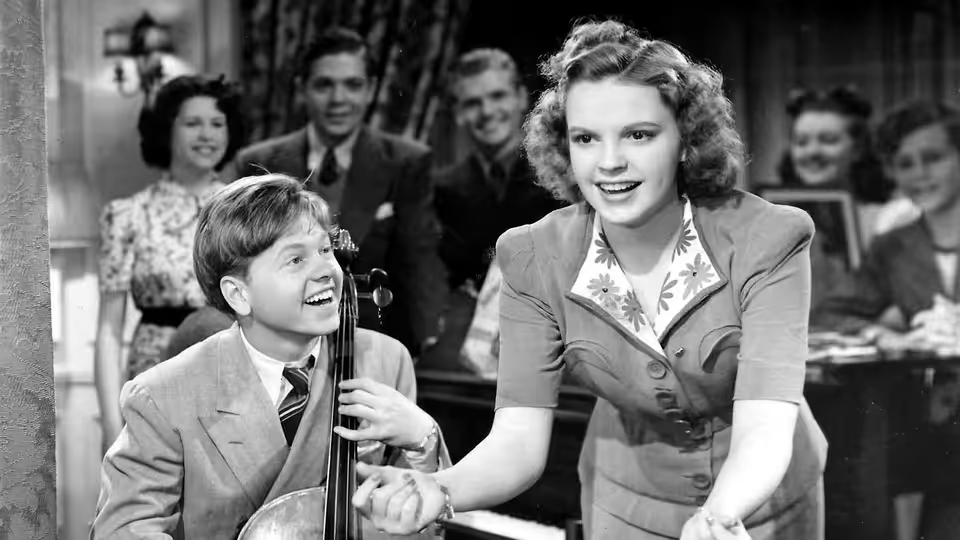
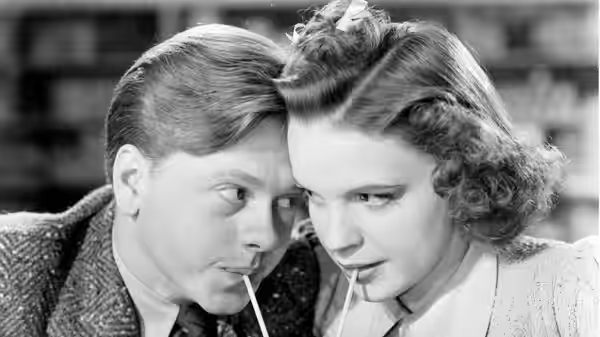
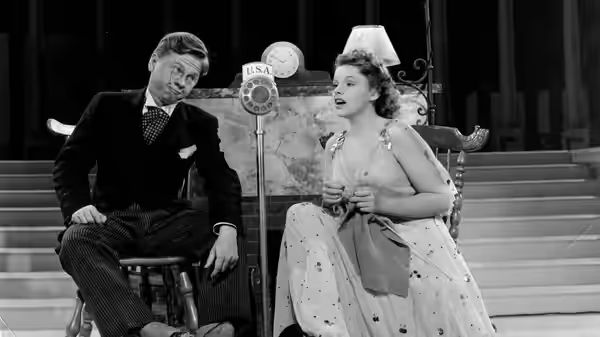
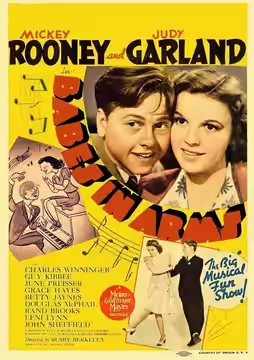
Mickey Rooney and Judy Garland make Babes in Arms worth considering despite its tired story. The musical numbers offer reliable pleasure, but the screenplay depends too heavily on the stars to keep things interesting.
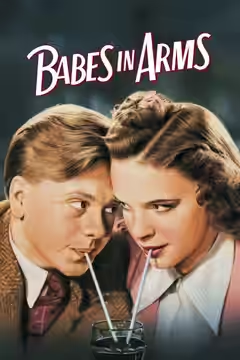
We would recommend Babes in Arms chiefly to anyone who already enjoys Mickey Rooney and Judy Garland. Busby Berkeley’s musical comedy is agreeable when they have our attention, and much less persuasive when the story asks for it back. Its 93 minutes contain enough entertainment to justify an interested look, but not enough to make the familiar plotting disappear. The stars have quite a lot of compensating to do.
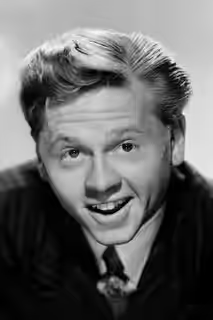
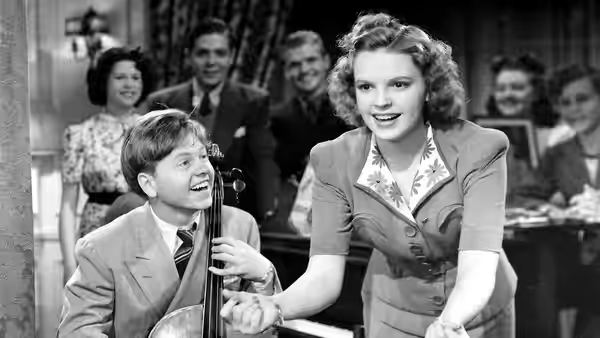
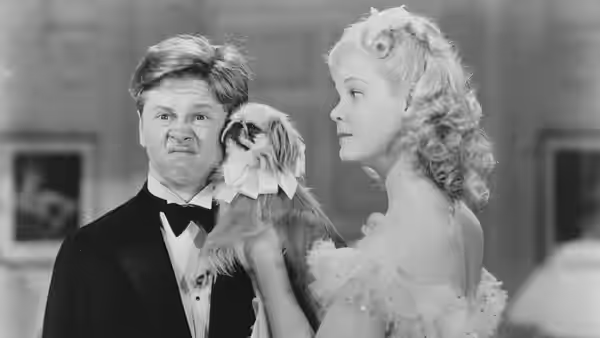
Mickey Rooney’s Mickey Moran is the main reason to persevere. His versatility gives the comedy a useful supply of surprises, even when the material itself offers few. We laughed at the precision of his comic timing. He makes the performance look worth attending to, which matters in a film where familiarity can so easily become an excuse to stop trying. That energy is welcome, though the screenplay relies on it too heavily.
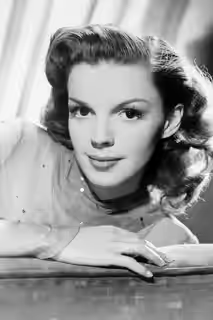
Judy Garland’s Patsy Barton is an engaging partner for him, and their pairing is the film’s most dependable pleasure. She holds our attention without making every moment feel like a competition for it. That matters beside a performer as eager to entertain as Mickey Rooney. The temptation is to forgive the writing because we enjoy their company; after a while, however, the film asks for that favour once too often.
Kay Van Riper and Jack McGowan’s screenplay is the weakness. A musical does not need an unfamiliar story, but it does need enough purpose between numbers to stop us waiting for the next one. Here, the plotting feels like work undertaken to earn another helping of entertainment. Frank Sullivan’s editing cannot entirely disguise that wait, and the pace feels less assured whenever the performers have fewer chances to hold us.
Ray June’s cinematography does not give us a stronger reason to stay than the cast does. The visual presentation is serviceable, but we seldom find ourselves attending to it for its own sake. For a musical, that is a limitation. A little more visual wit might have made the stretches without a number feel less like something we had to get through. A familiar story can survive if the images offer enough invention; here, the pleasure remains concentrated in the people performing, and the film feels smaller whenever their appeal has to carry everything.
The music, credited to Georgie Stoll and George Bassman, fares better. The numbers give the film its clearest sense of pleasure, and they provide relief from the dutiful feeling of the plot. We wanted the writing around them to be as engaging, particularly when it had such willing performers available. This is a musical for those happy to accept a thin story in exchange for good company; anyone seeking equal satisfaction from both should lower their expectations.