Bill Condon’s musical remake has warmth, strong songs and an appealing cast, but too much explaining between the numbers. Emma Watson and Dan Stevens give the romance more life than the crowded spectacle.
Bill Condon’s Beauty and the Beast is a pleasant musical remake that keeps interrupting its pleasures to add explanations. The songs still do their work, and the central pairing has enough warmth to make the romance worth following. But at 129 minutes, this live-action version feels too padded for a story whose appeal is so direct. We would recommend it to someone who wants the familiar music and a sympathetic Belle, with fair warning about the leisurely pace.
Bill Condon stays close to the 1991 animated film, while screenwriters Stephen Chbosky and Evan Spiliotopoulos supply extra history for characters who were already easy enough to understand. Giving people more to say about their past can deepen a romance, and some of the additional attention to Belle and the Beast helps. Too often, though, an explanation delays the next exchange we actually want to hear. The extra dialogue makes the story longer without making its people much clearer.
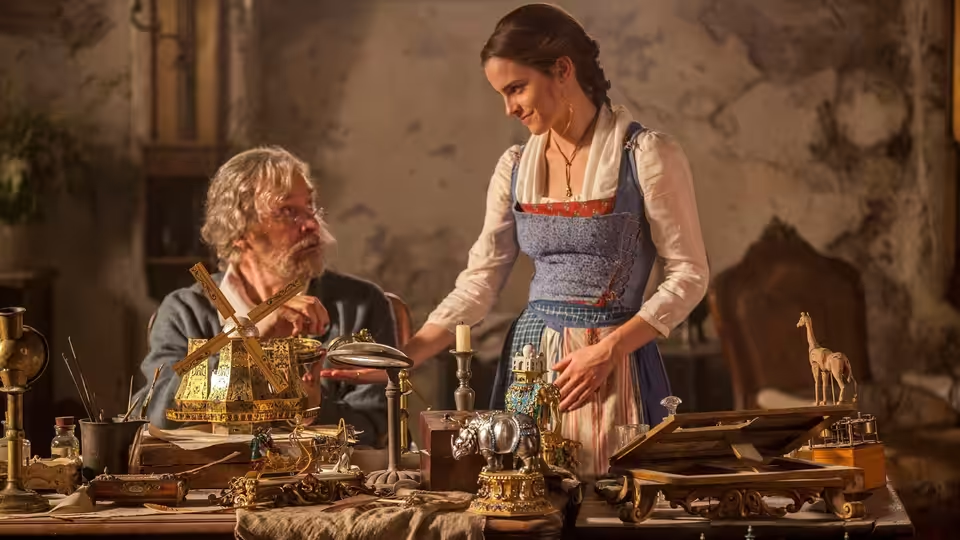
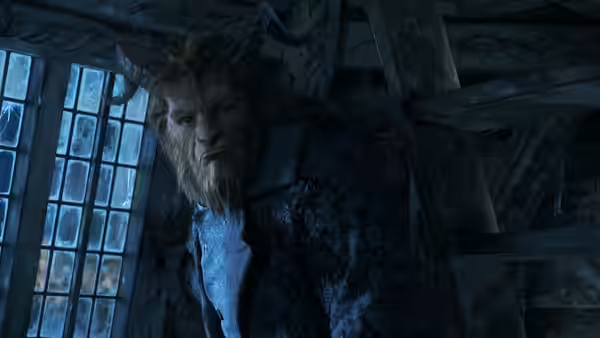
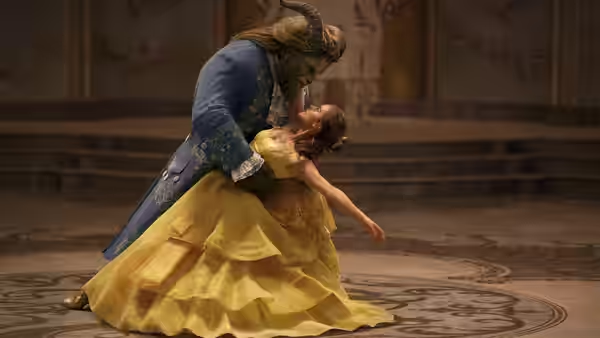
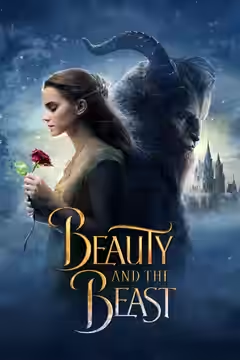
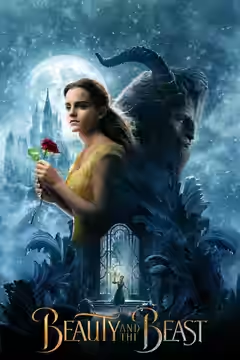
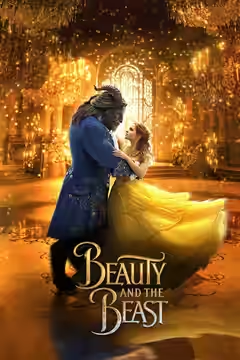
Emma Watson gives Belle a firm sense of her own wishes, and we believe her independence before the film has finished making its case. Dan Stevens brings a useful melancholy to the Beast, finding gentleness without removing all the awkwardness. We were touched by their growing ease together; the hesitant affection gives us something to care about amid all the decoration. The digital effects can make the Beast difficult to believe in, but Dan Stevens gives us enough feeling to keep following him.
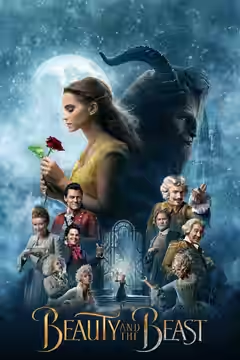
The supporting cast has fewer complications to negotiate. Luke Evans plays Gaston with a confidence the film could use more often, and Josh Gad’s LeFou helps keep their scenes moving. Ewan McGregor, Ian McKellen and Emma Thompson give Lumière, Cogsworth and Mrs. Potts enough personality to compete with their elaborate digital bodies. There is warmth in the voices that the busy effects cannot quite reproduce on their own.
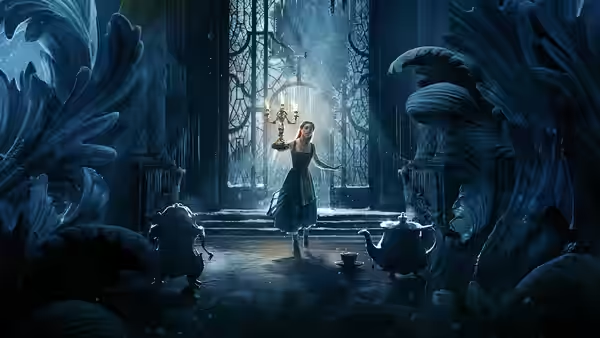
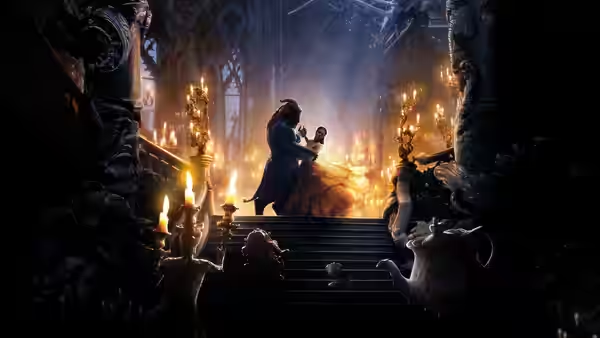
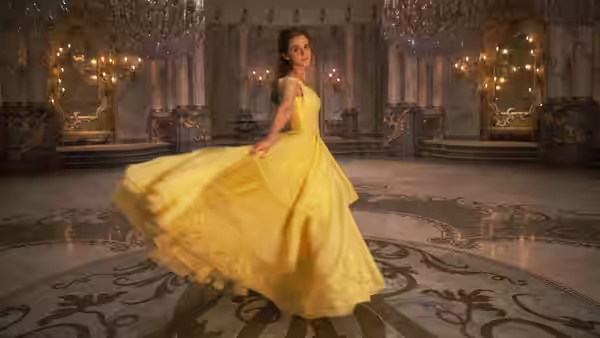
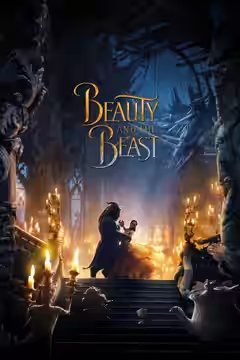
Sarah Greenwood’s production design supplies so much gilt and rococo detail that the eye is seldom allowed to rest. We can admire the care and still wish for a less crowded view of the people. Tobias A. Schliessler’s cinematography keeps those elaborate surroundings readable, though the continual richness leaves little room for a change of mood. The décor is impressive, but it also competes with the actors in scenes that would benefit from less distraction.
Alan Menken’s music is the strongest reason to accept all this fuss. ‘Be Our Guest’ gives the enchanted household a musical number big enough to accommodate its collective personality, and here the extravagance feels welcome. The added songs are less memorable, however, and editor Virginia Katz cannot make the additional backstories feel necessary simply by keeping them orderly. Between the musical numbers, the film has a habit of slowing down just when we are ready to move on.
For a family musical, it spends a surprising amount of time explaining what its characters have already made clear. We would have welcomed more trust in the songs, and in the audience’s ability to recognise loneliness without a full account of its causes. If familiar music is the main attraction, there is enough here for a comfortable evening; impatience is a sensible reason to choose something else.