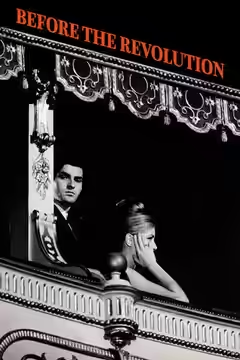
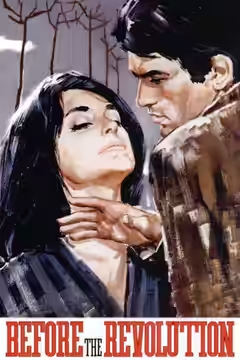
This is a young man’s film about a young man, and it shows in the best and worst ways: restless, handsome, over-talkative and alive. Adriana Asti’s Gina is the reason to see it; the speeches are the reason to keep a finger near the pause button.
Before the Revolution is a young man’s film, and Bernardo Bertolucci, who wrote and directed it, makes no attempt to hide that. That is not a complaint. This is a film about a young man who has read a great deal and lived rather little, made by a young man in much the same position, and its virtues and its faults come out of the same bag. It is restless, handsome, over-talkative and alive, and we would rather have it than the tidier film a more careful director would have made from the same material.
The material is a well-off provincial family. Fabrizio (Francesco Barilli) is its son, expected to marry Clelia (Cristina Pariset), and has decided instead to be a Marxist. He takes lessons in it from Cesare (Morando Morandini), a schoolteacher who has been in the Party long enough to have stopped hoping for much. Then his aunt Gina (Adriana Asti) arrives from Milan for Easter, and the film, which had been about politics, becomes about her. The two subjects never quite fit together, and Bertolucci does not pretend they do.
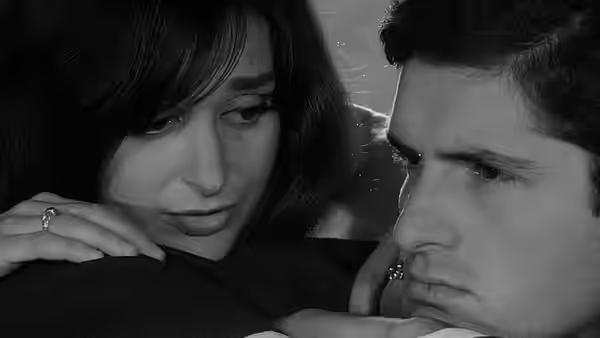
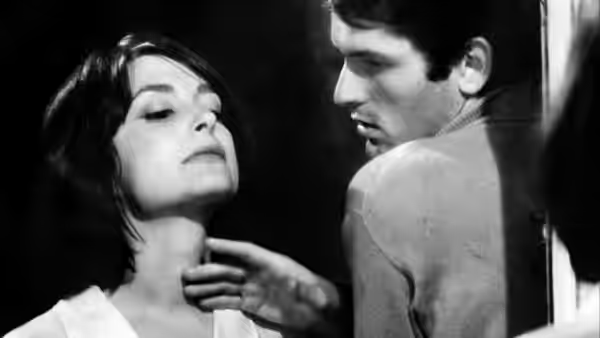
Asti is the reason to see it. Gina is jittery and funny and frightened, a woman who has come to the country to get away from something and finds a nephew who will listen to her for hours. Asti plays her as someone who knows exactly how badly this will end and goes ahead anyway. We expected to be embarrassed by the affair and found instead that we were sad for both of them, and the reason is that Bertolucci never once films it as a scandal. It is shot as what it is: two unhappy people in a large house with heavy furniture, who have each found the only person in it who talks to them.
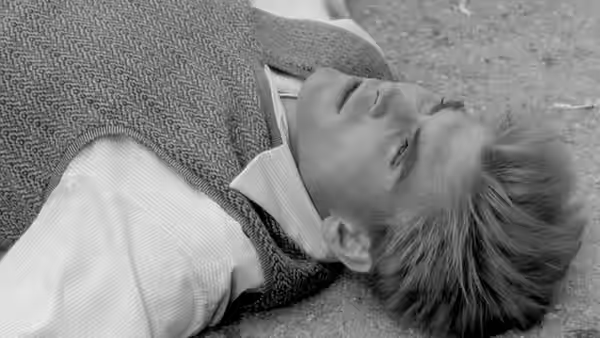
Barilli is less good, or the part is. Fabrizio talks the way clever 20-year-olds talk, in paragraphs, about history and the bourgeoisie and what he owes to whom, and there are stretches where the film simply lets him. We wanted someone to open a window. Cesare, who has heard it all before, is the film’s one adult, and Morandini gives him a tired patience that says more about the Party than any of Fabrizio’s speeches do.
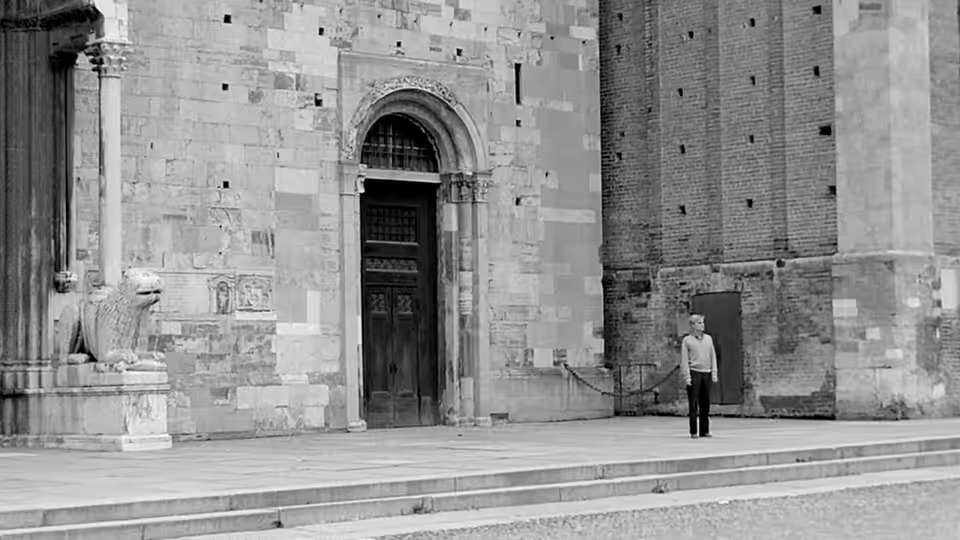
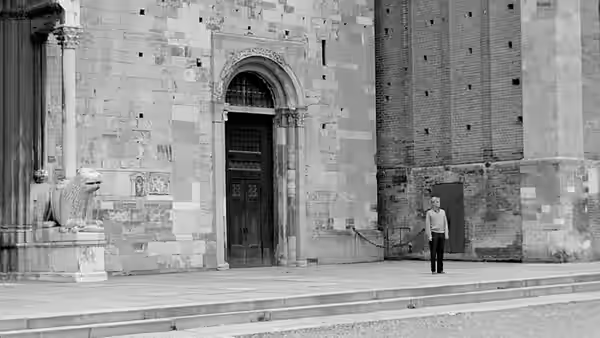
Aldo Scavarda shoots it in a black and white that is soft on faces and hard on stone, and his camera will not keep still; it circles Gina in the bedroom, drifts off across a street in the middle of a conversation, and comes back to find the people have moved. Roberto Perpignani cuts as if he were being paid by the jolt: scenes end early, shots repeat, a gesture is shown twice from two angles for no reason except that it looked good both times. Some of this is showing off. Some of it is the only honest way to film a young man who cannot finish a thought. Ennio Morricone’s score, spare strings and a crooned ballad, is the one element that behaves itself, and Federico Forquet dresses Gina in city black among the family’s pale country clothes so that you can spot her from the back of any room.
The best sequence has nothing to do with either the affair or the Party. Fabrizio’s family visits Puck (Cecrope Barilli), a landowner, who walks them along the riverbank and talks about the land that is about to be sold from under him and the birds that will go with it. It is a long scene, mostly one old man talking, and it is the moment when the film stops arguing and starts looking. Vittorio Cafiero and Angelo Canevari’s work on the family house is of a piece with it: rooms too big for the people in them, a class that has stopped noticing how much it owns.
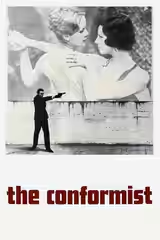
Set against what Bertolucci made later, this is the sketchbook. The handsome, weak young man, the politics used as a substitute for a life, the camera that cannot sit down: all of it turns up again in The Conformist, done with discipline. Here it is done with nerve instead, and nerve is not nothing.
Watch it with a pot of coffee and a tolerance for young men explaining things. At 111 minutes it is a shade long, and it knows exactly how it will end, because the title has already told you.