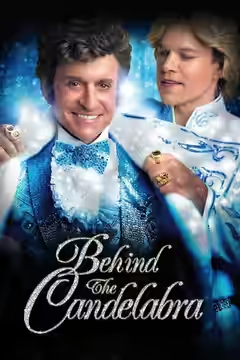
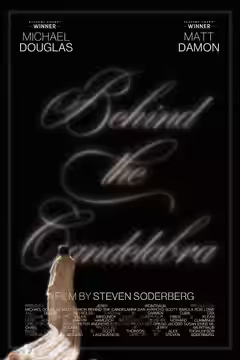
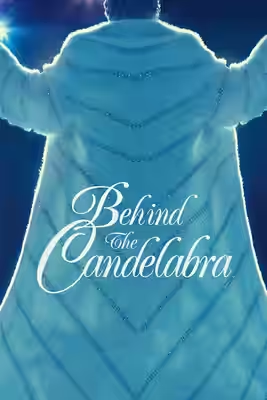
Behind the Candelabra poster

Behind the Candelabra

2013 · Directed by Steven Soderbergh
1h 58mDramaRomance15
81
Fi1m score
82
Critics · 12
Audience · not yet

Where to watch in the UK

Checked 10 September at 22:29. Prices and availability change; the service’s page is the last word.

Synopsis

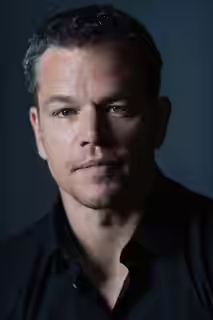
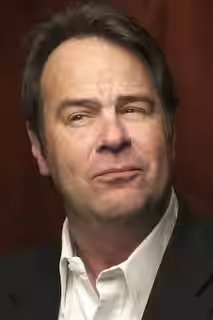
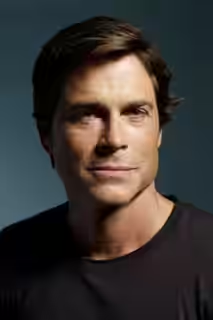
Late 1970s. Scott Thorson (Matt Damon), a young man out of foster care with no fixed plans, is taken by a friend, Bob Black (Scott Bakula), to see Liberace (Michael Douglas) perform in Las Vegas. Backstage, the pianist takes an interest. Within weeks Scott has moved into Liberace’s house, all mirrors, marble and candelabras, as companion, chauffeur and rather more. Liberace’s manager, Seymour Heller (Dan Aykroyd), keeps the public story straight. Dr Jack Startz (Rob Lowe), a plastic surgeon, arrives with ideas about faces. Steven Soderbergh directs, shoots and edits Richard LaGravenese’s screenplay, adapted from Thorson’s own memoir of the five years the two men spent together.

Fi1m review

In a sentenceA love story with a mirrored ceiling, and only one of them is ever looking up

Michael Douglas plays Liberace soft, watchful and entirely in control, Matt Damon lets himself be remade in another man’s image, and Steven Soderbergh shoots the whole affair without a smirk. The second half follows a well-worn path, but it is a fine one.

Steven Soderbergh made Behind the Candelabra for American television, and it was billed at the time as his last film. Over here it went into cinemas, on 7 June 2013, and it deserved the bigger screen. It is a story about a famous man and the young man he bought, and Soderbergh, who also shot and edited it, tells it without a smirk. Not once does the camera invite us to laugh at Liberace behind his back. Whatever the film finds funny, and it finds a great deal funny, it lets Liberace be in on the joke.

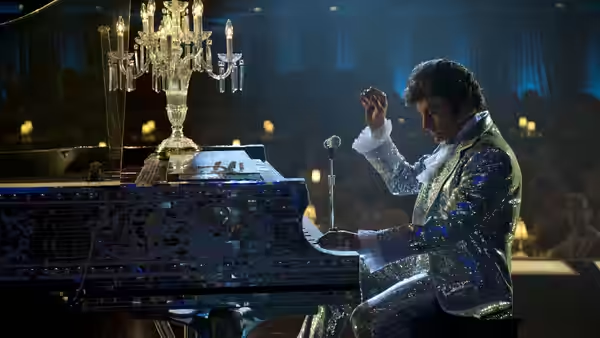
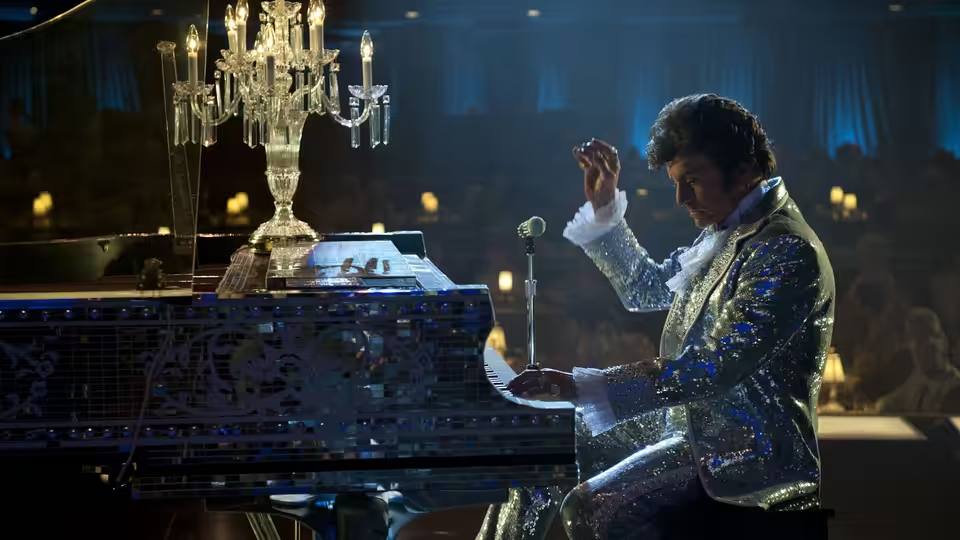
Michael Douglas is the reason to see it. He does not do an impression. The voice is a soft, coaxing purr with the vowels pushed forward, and the smile comes on and off like a stage light, but what he is playing is a man who has spent a lifetime working out what each person in front of him wants and what it will cost. Watch him at the piano at home, playing for one guest as if for two thousand. The moment that caught us off guard comes in a bedroom, when the hairpiece comes off and Douglas, bald and blinking, asks Scott not to look. It moved us more than we expected, because for a second nobody is performing, and the film has taught us by then how rare that is in this house.

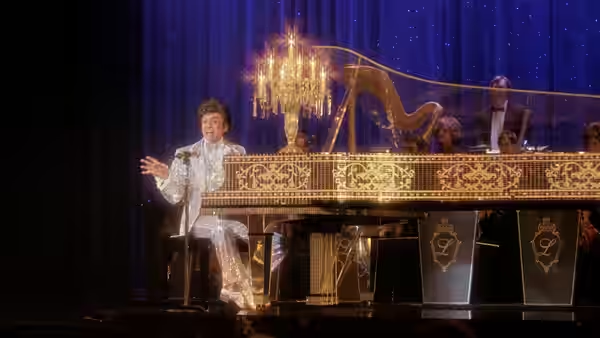
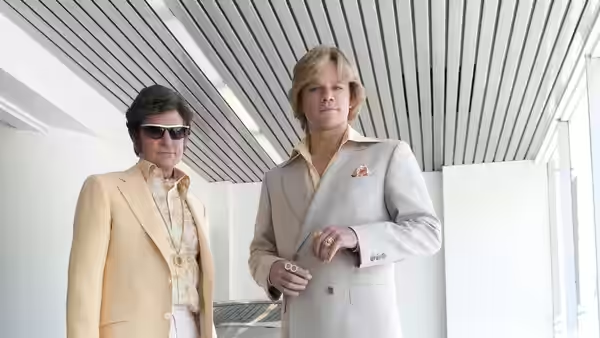
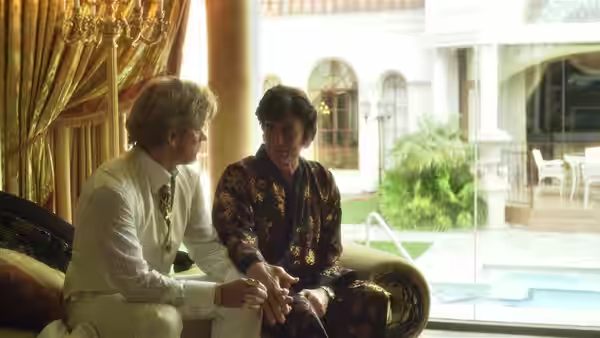
Matt Damon is plainly too old to be playing a boy barely out of foster care, and neither he nor Soderbergh pretends otherwise. It works because the film is about being remade, and Ellen Mirojnick’s costumes do half the acting: Scott arrives in denim, is put into matching white suits, and ends up onstage in a rhinestone chauffeur’s uniform, his own face steadily turning into a copy of the one beside him. Howard Cummings fills the house with mirror, marble and gilt so that there is nowhere to stand without seeing yourself. Soderbergh, working as his own cinematographer, lights it all warm and gold rather than harsh. He lets it be beautiful, because Liberace thought it was beautiful, and so, for a while, does Scott.

The supporting cast are used sparingly and well. Dan Aykroyd’s Seymour Heller, the manager, treats Liberace’s private life as a scheduling problem and is right to. Scott Bakula, as the friend who makes the introduction, has the wariness of a man who has seen this before. Rob Lowe plays Dr Jack Startz, the plastic surgeon, with a face pulled so tight it appears to have been ironed, and we laughed every time he spoke, then felt slightly ashamed, since the joke is a man selling other people the thing he has done to himself. Cheyenne Jackson has a few scenes as Billy Leatherwood, the young man Scott replaces, and he does not need more than a few.

Richard LaGravenese’s script, adapted from Scott Thorson’s memoir, is witty and clean, and in its second half it goes where stories of kept young men usually go. We will not spell out where. None of it is badly done and all of it is expected. Scott stays a little blank, too: we know what is done to him and less about what he wanted, and Damon, good as he is at looking dazzled, cannot fill in what the script leaves out. Marvin Hamlisch’s score keeps its head down and leaves the field to the piano, which is right, though it means the music never tells us anything Liberace’s own does not. Soderbergh, cutting his own footage, ends scenes a line before you expect. It keeps 118 minutes moving. It also keeps us at arm’s length, and by the last reel we were admiring the film rather than aching with it.

Against Soderbergh’s own work it sits high. It has the speed of Out of Sight and the interest in what things cost that runs through Magic Mike, and it is warmer than either. Most critics have taken it as one of his best, and we would not go quite that far, but we would not argue hard.

It was made for television, and it looks better than most films that were not. Watch it at home with the lights down and the sound up, so the piano fills the house. That is how Liberace would have wanted it, and for once he would have been right.
Critical consensus AI synthesised

82
Positive
11
Mixed
1
Negative
0

The reviews cluster tightly around the two lead performances. Nearly every critic singles out Michael Douglas as Liberace, several calling it one of his finest turns, and most pair him with Matt Damon’s Scott Thorson as a partnership that plays the affair straight rather than for stereotype. Soderbergh’s direction draws steady praise for wit and economy, for turning a television budget into deliberate visual choices, and for letting the camp sit alongside something sadder: claustrophobia, control, loneliness. The spread is narrow. What reservations exist are about depth rather than execution. The New York Times finds the film short on heart and heat, with little chemistry between the leads, and Collider thinks the story familiar and the relationship predictable, offering nothing new. The Los Angeles Times, otherwise warm, says it simplifies too much. Most critics do not share these doubts, and the dissenters are American rather than British.

Slant Magazine
26 May 2013 · ★★★½/4 · Chris Cabin
88

The critic praises the film as powerful, funny, and emotionally rigorous, noting its exploration of control and show business through strong performances by Douglas and Damon.

Read the full review →
Empire
20 May 2013 · Dan Jolin
85*

The critic calls the film a magnificent, rhinestone-studded encore with fearless, transformative performances from Michael Douglas as Liberace and Matt Damon as Scott Thorson. Soderbergh turns TV-budget limitations into intriguing visual choices while letting the script and leads shine.

Read the full review →
Film Comment
· Violet Lucca
85*

Soderbergh's portrait of Liberace offers a wealth of riches in its star performances and expert camerawork. The film stands as one of the best mainstream releases of its decade despite its made-for-cable origins.

Read the full review →
Vulture
24 May 2013 · Matt Zoller Seitz
85*

The critic finds it an impressive work that feels like a great old Hollywood film, with wrenching emotional impact and elegant purposefulness from Soderbergh and the cast.

Read the full review →
IndieWire
27 May 2013 · B+ · Anne Thompson
83

The critic highlights Douglas and Damon shining in a funny, poignant melodrama that showcases Soderbergh's direction of the Liberace story.

Read the full review →
Evening Standard
12 June 2013
80*

The critic finds the HBO-made film highly entertaining, with Matt Damon and Michael Douglas on top form in unexpected roles and a literate screenplay that respects the relationship while delivering witty lines. Soderbergh avoids parody in depicting Liberace's excesses and the production values capture the palatial kitsch effectively.

Read the full review →

Cast

Matt Damon
Scott Thorson
Dan Aykroyd
Seymour Heller
Scott Bakula
Bob Black
Rob Lowe
Dr. Jack Startz
Tom Papa
Ray Arnett
Paul Reiser
Mr. Felder
Bruce Ramsay
Carlucci

Stills

If you liked this, try…

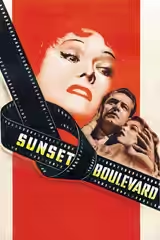
Sunset Boulevard poster

Sunset Boulevard

1950 · The original kept young man and fading star, and it has aged better than either.

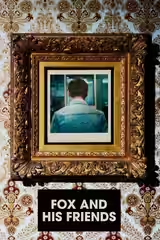
Fox and His Friends poster

Fox and His Friends

1975 · Fassbinder’s working-class winner is bled dry by richer lovers; the same story without the sequins.

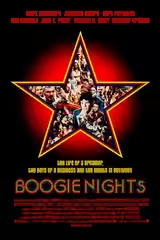
Boogie Nights poster

Boogie Nights

1997 · Another surrogate family built on show business, warmer and louder, and it ends worse.

The Duke of Burgundy poster

The Duke of Burgundy

2014 · Two women, one house, and a careful study of who really holds the leash.

Magic Mike poster70

Magic Mike

2012 · Soderbergh’s other film about bodies for sale, shot in Florida orange rather than Vegas gold.