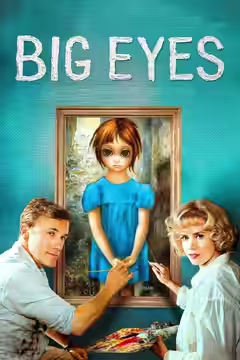
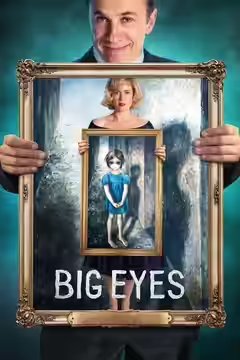
Tim Burton gives Big Eyes an appealing softness, and Amy Adams makes Margaret Keane’s struggle matter. The brisk storytelling and Christoph Waltz’s overplaying keep a worthwhile drama from becoming a particularly searching one.
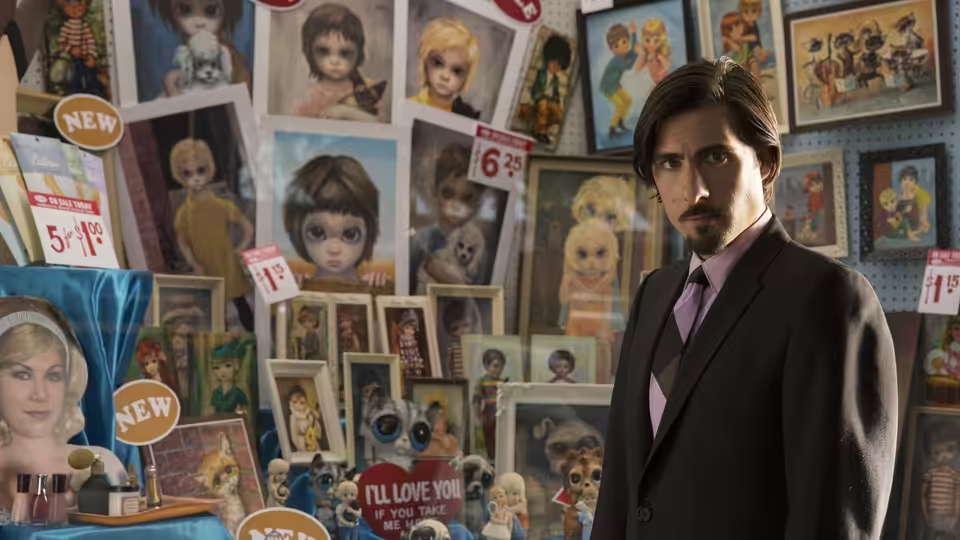
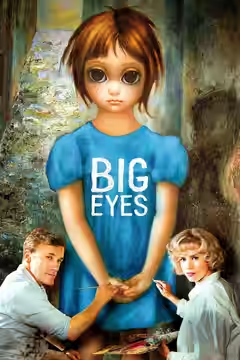
Big Eyes is an engaging but limited drama about a painter denied credit for her own work. Tim Burton takes Margaret Keane seriously, which matters when her enormous-eyed figures are so easy to dismiss, and Amy Adams makes her worth caring about. We can see why this story attracted him: the pictures sit comfortably within the film’s soft, almost cartoonish appearance. He is less convincing when he tries to make the exploitation funny.
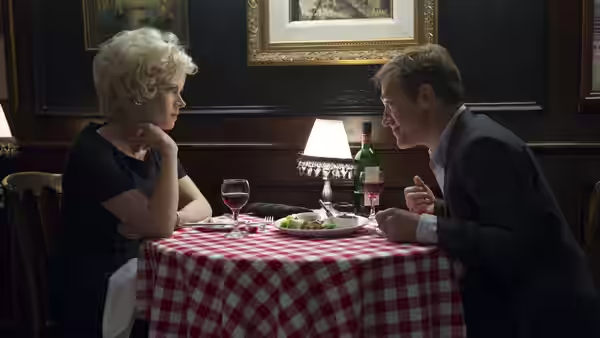
Margaret makes the pictures; Walter Keane sells them. That division gives the screenplay by Larry Karaszewski and Scott Alexander plenty to investigate: whose talent is valued, who controls the proceeds, and how a painter learns to accept being overlooked. Instead, the film moves briskly through the dispute over authorship without spending enough time on Margaret’s thinking. The story is easy to follow, but the woman at its centre remains less fully understood than she should.
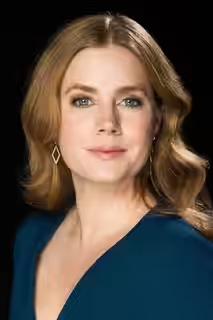
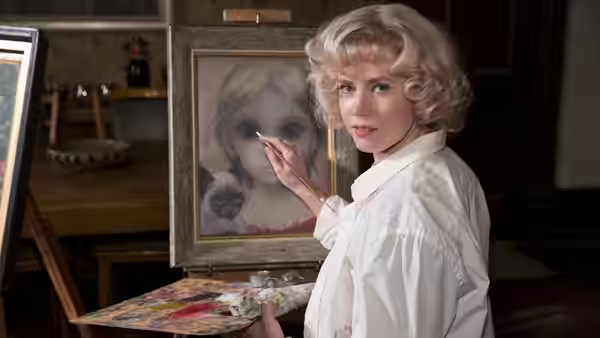
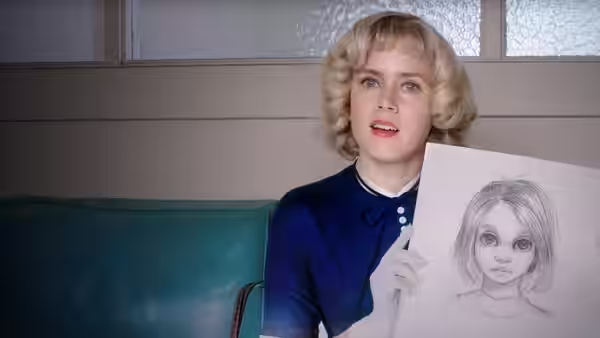
Amy Adams supplies much of what the writing leaves out. Her Margaret is anxious without becoming merely helpless, and the performance suggests someone who has to work up to asserting herself. We were moved by her struggle to claim the paintings, because Amy Adams makes the wish to be acknowledged feel difficult even to express. The film needs that hesitancy: it helps us understand how knowing the work belongs to her might not be enough to make her say so.
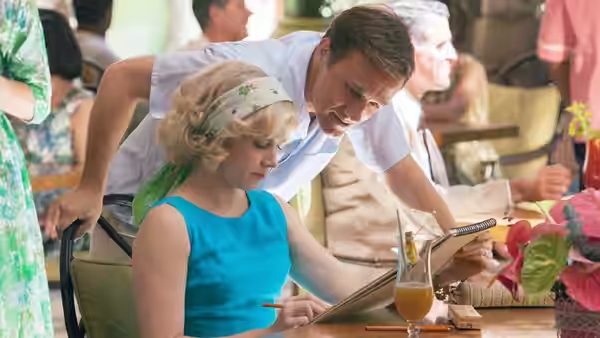
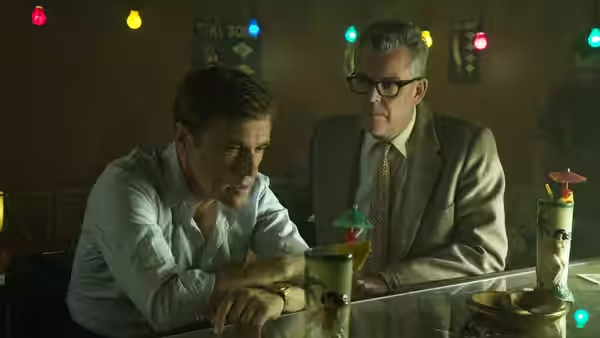
Christoph Waltz gives Walter far more room than the drama can comfortably accommodate. His broad performance can be entertaining, but it repeatedly distracts from Margaret. A film about a woman’s work being overshadowed needs to be careful about giving the man so much attention, and Tim Burton does not always seem to notice the problem. We need to understand the hold Walter has; being repeatedly shown that he is overbearing does not do that.
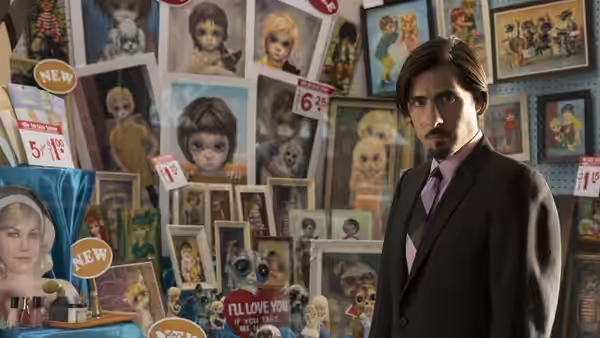
Bruno Delbonnel’s cinematography is a stronger reason to stay. The soft, heightened images suit the painted faces, while Rick Heinrichs’s production design makes mid-century San Francisco an inviting place to spend time. The pictures are allowed to look touching, unsettling or faintly ridiculous without the film insisting that we settle on one response. That freedom is welcome, and it means we need not share Margaret’s taste to care about what happens to her work.
Joseph C. Bond IV keeps the editing brisk, although the transitions sometimes feel hurried and the film rarely settles long enough to complicate an impression. Danny Elfman’s score helps the emotion along, but it cannot reconcile the uneasy shifts between Margaret’s distress and Walter’s comedy. The narration adds another distraction when the performances already have enough competing demands on our attention. At 106 minutes, the film is not overlong; it could simply spend its time more usefully.
The familiar biographical formula is a poor fit for the oddness of the pictures. We would have welcomed a longer look at why Margaret keeps making them and why other people want them on their walls. Amy Adams provides enough reason to stay for anyone interested in artists and the business conducted around them. Go for her, and expect to spend some of the evening wishing everyone else would quieten down.