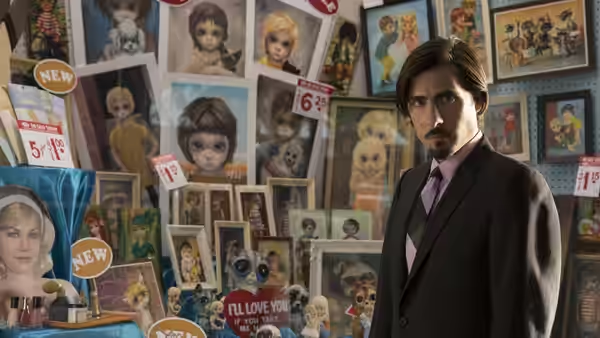
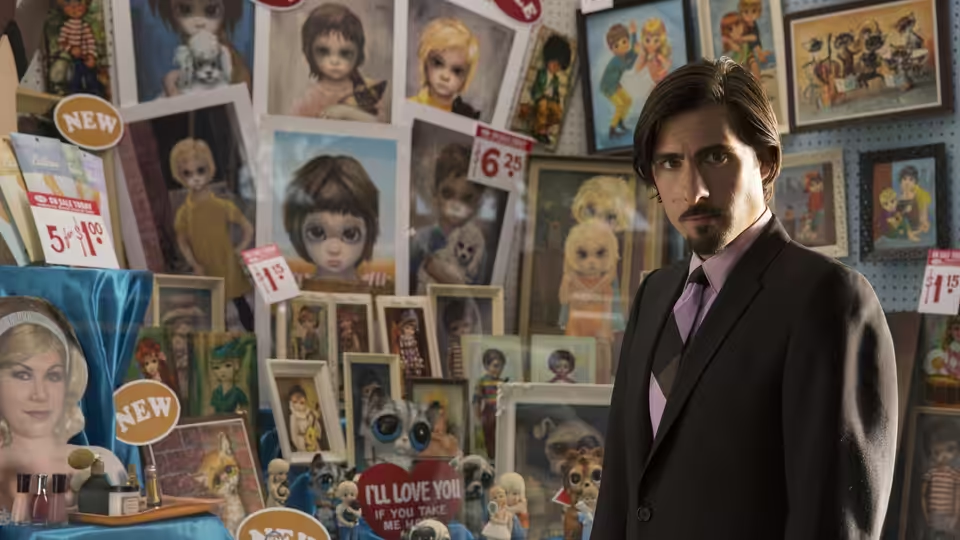
Ruben (Jason Schwartzman) stands among Big Eyes paintings and artwork in a gallery
Film review

Big Eyes

2014 · Directed by Tim Burton · 1h 46m · IFCO 12A

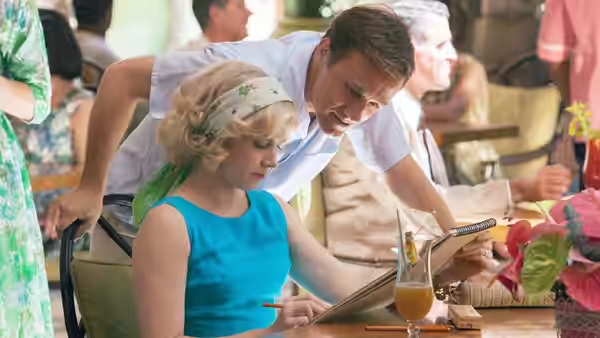
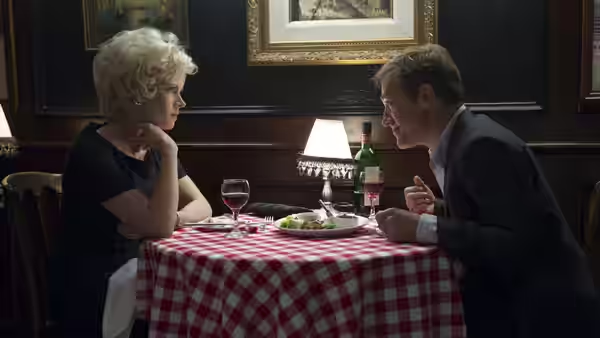
In a sentenceAmy Adams tries to get a word in while Christoph Waltz appears to be addressing the next street

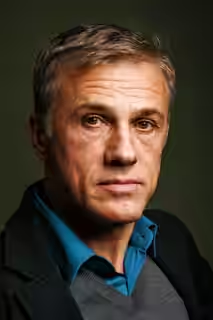
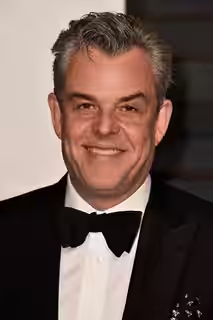
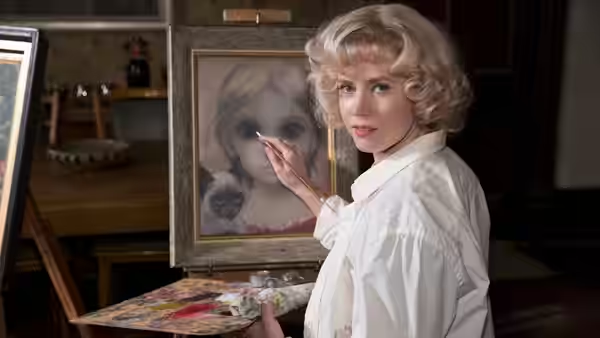
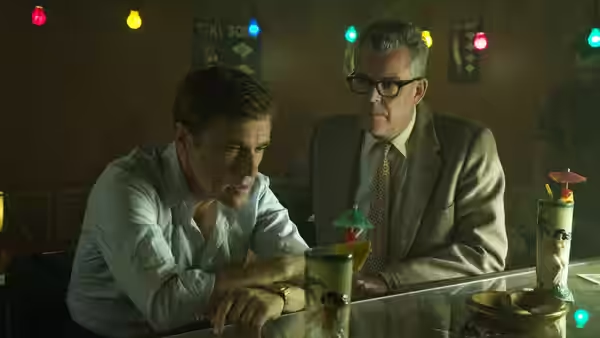
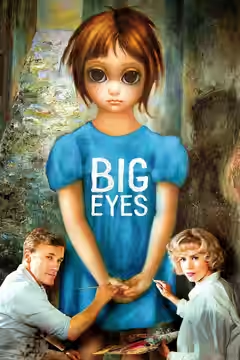
In mid-century San Francisco, Margaret Keane (Amy Adams) paints figures with enormous eyes. Walter Keane (Christoph Waltz) sells her work, and the pictures find buyers while their creator struggles for recognition. Around them are Dick Nolan (Danny Huston) and a public willing to buy the paintings. Margaret wants to be acknowledged as the artist, but the man promoting her pictures stands between her and that recognition. As the paintings attract attention, questions of who makes them and who gets the credit become inseparable from the business of selling them.

Plays from YouTube when you press play; nothing loads from them until then.

Fi1m review

Tim Burton gives Big Eyes an appealing softness, and Amy Adams makes Margaret Keane’s struggle matter. The brisk storytelling and Christoph Waltz’s overplaying keep a worthwhile drama from becoming a particularly searching one.

Big Eyes is an engaging but limited drama about a painter denied credit for her own work. Tim Burton takes Margaret Keane seriously, which matters when her enormous-eyed figures are so easy to dismiss, and Amy Adams makes her worth caring about. We can see why this story attracted him: the pictures sit comfortably within the film’s soft, almost cartoonish appearance. He is less convincing when he tries to make the exploitation funny.

Margaret makes the pictures; Walter Keane sells them. That division gives the screenplay by Larry Karaszewski and Scott Alexander plenty to investigate: whose talent is valued, who controls the proceeds, and how a painter learns to accept being overlooked. Instead, the film moves briskly through the dispute over authorship without spending enough time on Margaret’s thinking. The story is easy to follow, but the woman at its centre remains less fully understood than she should.

Amy Adams supplies much of what the writing leaves out. Her Margaret is anxious without becoming merely helpless, and the performance suggests someone who has to work up to asserting herself. We were moved by her struggle to claim the paintings, because Amy Adams makes the wish to be acknowledged feel difficult even to express. The film needs that hesitancy: it helps us understand how knowing the work belongs to her might not be enough to make her say so.

Christoph Waltz gives Walter far more room than the drama can comfortably accommodate. His broad performance can be entertaining, but it repeatedly distracts from Margaret. A film about a woman’s work being overshadowed needs to be careful about giving the man so much attention, and Tim Burton does not always seem to notice the problem. We need to understand the hold Walter has; being repeatedly shown that he is overbearing does not do that.

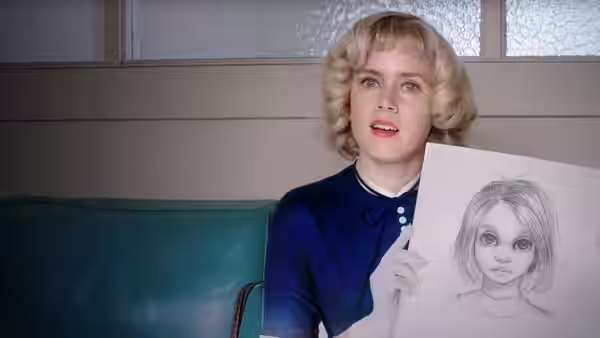
Bruno Delbonnel’s cinematography is a stronger reason to stay. The soft, heightened images suit the painted faces, while Rick Heinrichs’s production design makes mid-century San Francisco an inviting place to spend time. The pictures are allowed to look touching, unsettling or faintly ridiculous without the film insisting that we settle on one response. That freedom is welcome, and it means we need not share Margaret’s taste to care about what happens to her work.

Joseph C. Bond IV keeps the editing brisk, although the transitions sometimes feel hurried and the film rarely settles long enough to complicate an impression. Danny Elfman’s score helps the emotion along, but it cannot reconcile the uneasy shifts between Margaret’s distress and Walter’s comedy. The narration adds another distraction when the performances already have enough competing demands on our attention. At 106 minutes, the film is not overlong; it could simply spend its time more usefully.

The familiar biographical formula is a poor fit for the oddness of the pictures. We would have welcomed a longer look at why Margaret keeps making them and why other people want them on their walls. Amy Adams provides enough reason to stay for anyone interested in artists and the business conducted around them. Go for her, and expect to spend some of the evening wishing everyone else would quieten down.
Critical consensus AI synthesised

60
Positive
11
Mixed
12
Negative
5

The consensus on Big Eyes is mixed, leaning towards modest approval. Amy Adams attracts the most consistent praise for giving Margaret Keane sympathy, anxiety and a growing resolve, even when critics find the surrounding drama thin. The period design, San Francisco imagery and Burton’s attention to Keane’s paintings also earn approval. Several reviews welcome his move towards more grounded storytelling; The Guardian finds an insightful account of Margaret’s struggle to claim authorship.

The divide is over how deeply the film explores that struggle, with verdicts ranging from thoughtful and engaging to dramatically inert. Reservations cluster around conventional storytelling, shallow characterisation and an unsettled tone. Christoph Waltz is particularly divisive: The Hollywood Reporter praises his performance, while Variety finds him overpowering. Many reviews argue that the film raises questions about art, exploitation and recognition without examining them closely enough, though its warmer notices find substance in those same themes.

Screen Daily
14 November 2014 · Tim Grierson
80*

The critic sees the film as one of Burton’s most thoughtful and accomplished works in years. He singles out Burton’s successful move away from fantasy, horror and science fiction.

Read the full review →
The Guardian
28 December 2014 · Mark Kermode
80*

Kermode finds the film an insightful, grown-up return to form for Burton. He praises Amy Adams’s sympathetic portrayal of Margaret Keane and the film’s account of her struggle to claim authorship.

Read the full review →
Evening Standard
19 December 2014 · Charlotte O'Sullivan
75*

O'Sullivan finds the biopic nimble and distressing, and a welcome change of pace for Tim Burton. She singles out the film's magnetic big-eyed imagery and its playful ambiguity about whether Keane's art is grotesque or gorgeous.

Read the full review →
RogerEbert.com
24 December 2014 · ★★★/4 · Matt Zoller Seitz
75

The review regards the film as an engaging account of artistic creation and exploitation. It singles out Amy Adams’s performance as a key strength.

Read the full review →
The AV Club
23 December 2014 · B- · A.A. Dowd
70

Dowd finds the film an underwhelming, overly square biopic, despite some surface pleasures. He praises its mid-century San Francisco atmosphere but criticizes the passive portrayal of Margaret and distracting narration.

Read the full review →
The Hollywood Reporter
14 November 2014 · Todd McCarthy
70*

McCarthy finds the film nimble and enjoyable, though less strange and resonant than Burton’s Ed Wood. He singles out Amy Adams and Christoph Waltz’s performances, along with the period design and San Francisco cinematography, for praise.

Read the full review →

Straight answers AI written, from our review

Is Big Eyes worth watching?
Big Eyes is worth considering if you enjoy dramas about artists, and we score it 64 out of 100. Amy Adams makes Margaret Keane’s struggle for recognition moving, but we find the brisk storytelling leaves her insufficiently explored, while Christoph Waltz’s overplaying distracts from the woman whose work matters most.
How long is Big Eyes, and what is it rated?
Big Eyes runs 1h 46m and is rated 12A by the IFCO in Ireland. It is a drama film.
Where can I watch Big Eyes in Ireland?
Big Eyes is available to rent from Apple TV from €3.99. Availability is checked daily; the links above go straight to each service.
How violent or frightening is Big Eyes, and is it suitable for children?
Big Eyes has a UK 12 certificate, so it is not suitable for children under 12; we would steer younger viewers elsewhere. Margaret’s distress and Walter’s overbearing behaviour are the concerns we identify, but we cannot give a more specific warning about violence or frightening material from those details alone.
How does Big Eyes compare to Ed Wood?
Big Eyes is the more limited drama beside Ed Wood, which we recommend for its humour, kindness and greater room for an artist’s eccentricity and failure. Both show Tim Burton’s sympathy for misunderstood artists, but Big Eyes suits those drawn to the struggle for recognition, while Ed Wood offers a fuller treatment of stubborn artistic hope.
What should I watch after Big Eyes?
After Big Eyes, try Ed Wood (1994, Fi1m 84): Another misunderstood artist, given more room for eccentricity, failure and stubborn hope. Then The Red Shoes (1948, Fi1m 92): For a more feverish account of artistic talent and the people claiming it.

Cast

If you liked this, try…

  1. Ed Wood (1994, Fi1m 84)Another misunderstood artist, given more room for eccentricity, failure and stubborn hope.

  2. Séraphine (2008) · not on Fi1m yetA painter’s working life receives the patient attention Margaret sometimes goes without.

  3. The Wife (2017) · not on Fi1m yetAnother woman’s authorship disappears behind a man’s reputation, with a sharper marital focus.

  4. Camille Claudel (1988) · not on Fi1m yetArtistic ambition and an unequal relationship receive a more sustained, bruising examination.

  5. The Red Shoes (1948, Fi1m 92)For a more feverish account of artistic talent and the people claiming it.