Scott Cooper’s account of Whitey Bulger and the FBI man who protected him has a frightening Johnny Depp at its centre and not much around him. Four or five scenes are as tense as the genre gets; the rest is a list of things that happened.
Scott Cooper’s Black Mass tells how the FBI’s Boston office made a deal with the most dangerous man in South Boston and then protected him for years. The film has a frightening performance at its centre, four or five properly tense scenes, and a long middle in which men in rooms tell each other what we have just watched. We came out impressed by Johnny Depp and unable to say what the film made of him.
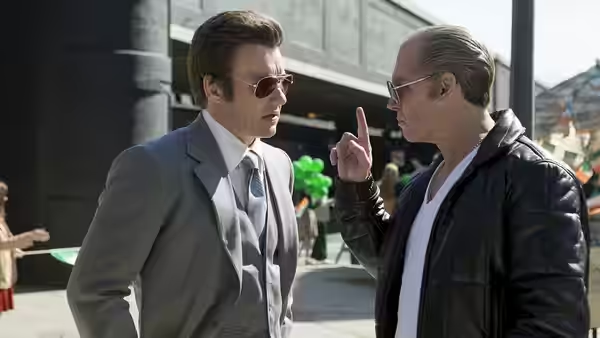
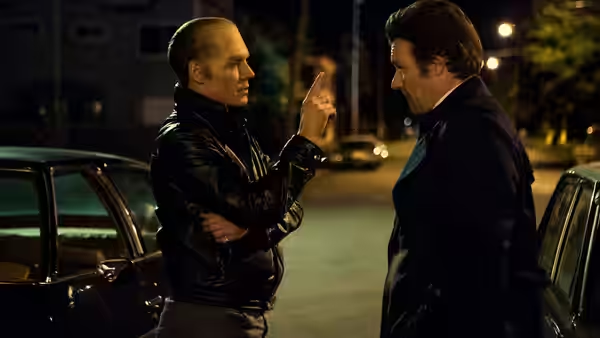
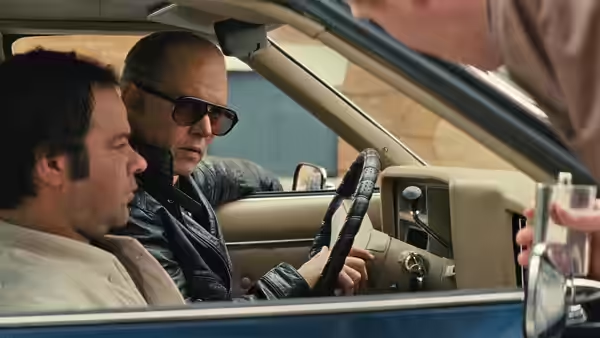
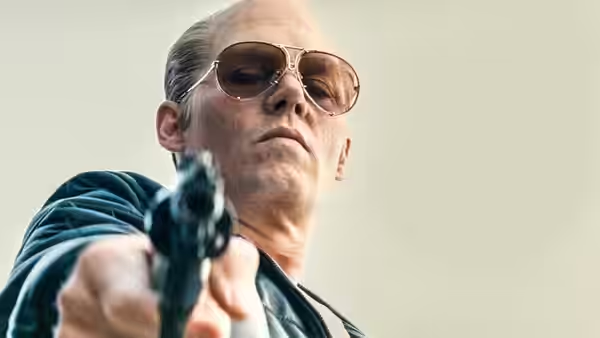
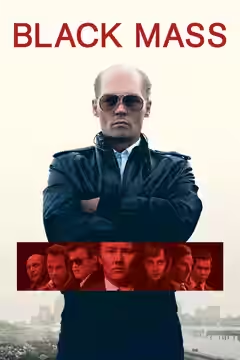
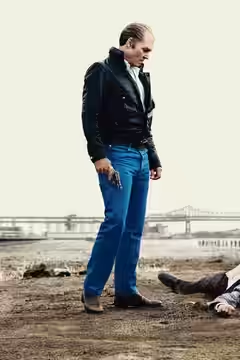
Depp plays James ‘Whitey’ Bulger under a thinning slick of hair, grey teeth and pale blue contact lenses that make his eyes look like something kept in a jar. Once he starts to talk, quietly, the face stops mattering. He plays Bulger as a man who never hurries, who carries an old woman’s shopping up her steps, who tells his small son that if nobody saw a thing it did not happen. There is no bid for our sympathy. It is the stillest work Depp has done in years.
Two scenes show what the film could have been. In one, Bulger comes to dinner at the home of John Morris (David Harbour), the FBI supervisor who has been taking his money, admires the steak and asks for the marinade recipe. Morris calls it a family secret, then gives it up, and Bulger asks softly what else he would give up if someone asked nicely. In the other, Connolly’s wife Marianne (Julianne Nicholson) goes to bed to avoid a party and Bulger follows her upstairs to ask how she is feeling. We were properly frightened both times, because nobody raised a voice. Cooper holds on Depp’s face and lets the silence sit. He does not do it often enough.
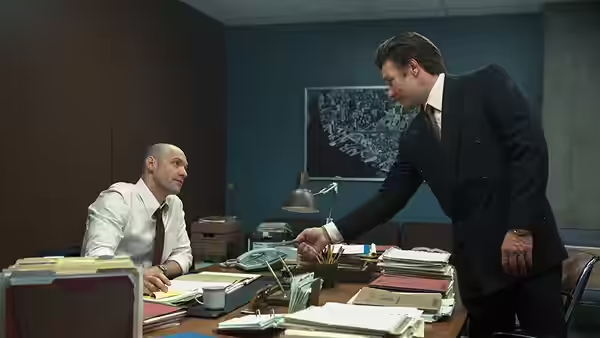
The story belongs to John Connolly, and Joel Edgerton knows it. Connolly grew up on the same streets as the Bulgers, and Edgerton plays him as the kid still waiting for the older boys to let him in: loud in the office, lit up whenever Whitey calls him Johnny, blind to what the deal costs. Kasia Walicka Maimone’s costumes do much of the work, moving him from a plain Bureau suit to wider lapels and open collars as the favours pile up. But the screenplay, by Jez Butterworth and Mark Mallouk, would rather tell us he is in trouble than let us watch it happen. His superiors, played by Kevin Bacon and Adam Scott, warn him in one scene after another. Nicholson gets three scenes and makes them count. Dakota Johnson, as Bulger’s girlfriend Lindsey Cyr, gets fewer. Benedict Cumberbatch plays Billy Bulger, a state senator with a gangster for a brother, and the script gives him functions to attend and an accent that comes and goes.
Masanobu Takayanagi shoots Boston in brown and grey, kitchens lit by one lamp, streets under cloud. It looks right, and it looks the same in every scene, so the years pass without the picture changing and we were often unsure which decade we were in. Stefania Cella’s bars and triple-decker houses are properly worn. Junkie XL’s score is low strings and not much else; it has one mood and stays in it. David Rosenbloom cuts between the past and a grey interview room where Kevin Weeks (Jesse Plemons) talks to federal agents, and Weeks keeps explaining things the scenes have already shown.
Past the hour the killings arrive on a schedule: a man, a car, a shot, a cut to the interview room, the next man. None of them shocked us, because we have never been told what Bulger wants beyond the next thing in front of him. Martin Scorsese already made a Bulger film, The Departed (2006), as a thriller with invented names. Cooper has the real names and the real deal and has made something slower and flatter. He is good with actors and good with silence. He has not yet found a script with a shape.
See it for Depp, for the dinner and for the bedroom. It carries a 15 certificate and runs 123 minutes, and perhaps twenty of those are the reason to sit through the rest.