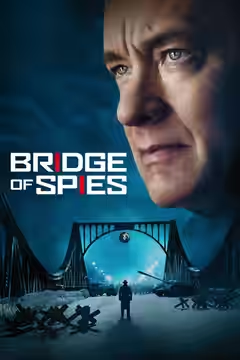
Spielberg’s Cold War thriller is handsome, patient and better company than most films this serious. Hanks is dependable and Rylance is quietly remarkable; the sugar in the last twenty minutes is the price, and it is worth paying.
Brooklyn, 1957. A quiet man in a hat paints his face from a mirror, takes the subway and collects a hollow nickel from under a bench, and by the end of the first reel the FBI has him. Rudolf Abel (Mark Rylance) is a Soviet spy. James B. Donovan (Tom Hanks) is an insurance lawyer who has not tried a criminal case in years, handed the brief because it will look better if the accused loses fairly. Steven Spielberg has made a film about a man who declines to lose on purpose, and for most of its 141 minutes it is good company.
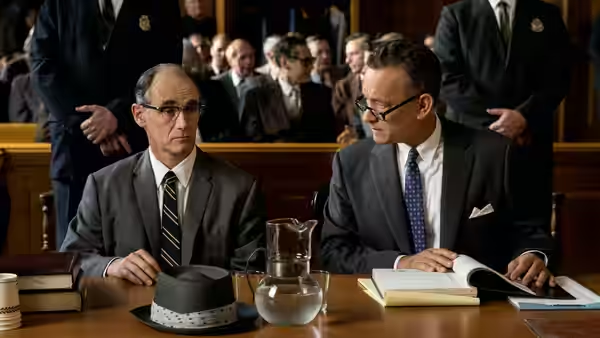
The script, by Matt Charman with Ethan Coen and Joel Coen, is at its best when two men are in a room and one of them wants something. Rylance plays the spy as a man who decided long ago how much of himself to show and will not revise the figure now: a mild voice, a slight stoop, a habit of asking “would it help?” whenever Donovan suggests he might be worried. He barely raises his eyes, and every scene he is in slows to his pace. It is a small performance, and it is the reason to see the film.
Hanks makes decency look like stubbornness rather than a halo. His Donovan is a haggler. The opening scene has him arguing an insurance claim down from five incidents to one, and the same instinct keeps him pressing Abel’s appeal when everyone around him would rather he stopped. Alan Alda’s Thomas Watters Jr., the senior partner who gave him the case, watches like a man realising he has hired the wrong sort of good lawyer. The home scenes are thinner; Amy Ryan’s Mary Donovan is given worry and a kitchen and little else, and Billy Magnussen’s junior, Doug Forrester, is mostly there to be told things.
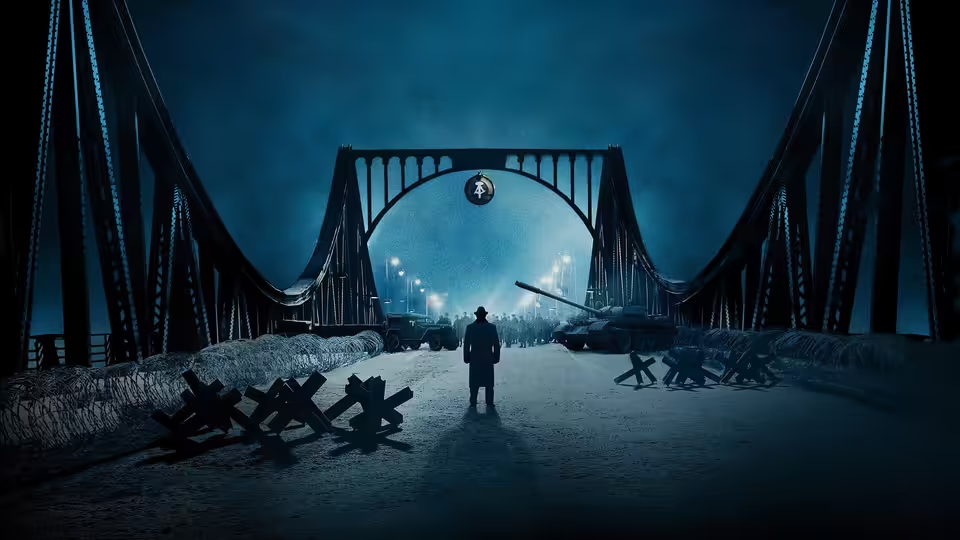
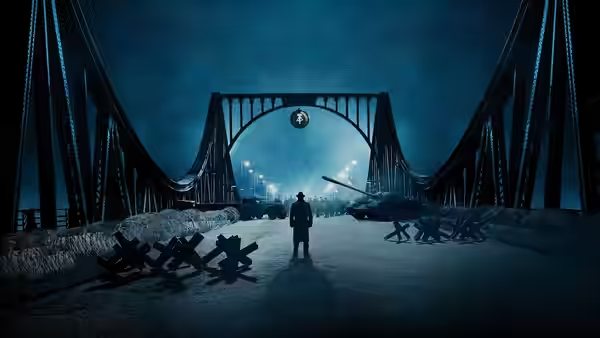
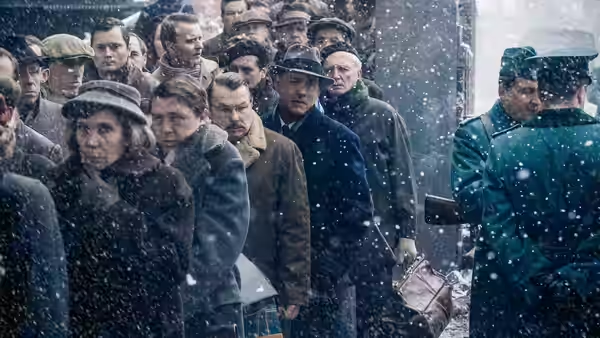
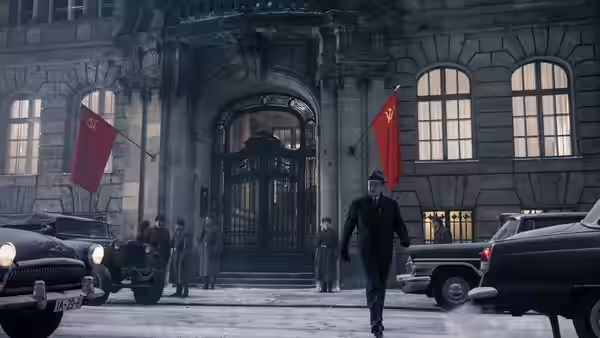
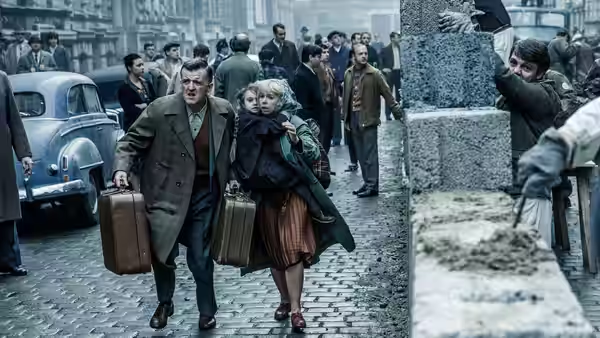
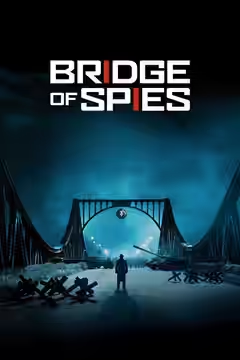
It is handsome. Janusz Kamiński shoots Brooklyn through so much haze that the windows glow and the rain looks lit from inside, and Berlin in flat greys and sodium orange, with snow that never looks fresh. Adam Stockhausen’s East Berlin is rubble, wire and half-finished concrete, the wall running through the back of shots about something else. Kasia Walicka Maimone dresses Donovan like a man who buys one good overcoat a decade. Michael Kahn cuts the courtroom stretches briskly, so the legal argument never turns into a lecture.
Two moments got at us properly. Austin Stowell’s Francis Gary Powers is shot out of the sky in a brief sequence of spinning, falling and fumbling for a poison pin, and we gripped the chair. Later, Donovan sits on a Berlin train and watches people run at the wall, and what happens to them, and Hanks does nothing with his face, which is right. Thomas Newman’s score, which holds back for long stretches, arrives with strings soon after, and we noticed we were being asked to feel something we already felt.
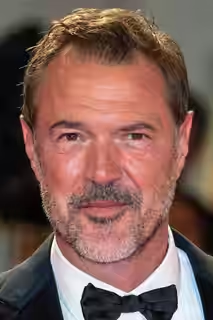
That is the film’s habit and its limit. The Berlin half, in which Donovan negotiates a swap for Powers and finds Sebastian Koch’s Wolfgang Vogel, an East German lawyer, wanting a different deal, is knotty, cold-weather storytelling, and we will not describe where it goes. But Donovan is never wrong, never frightened for longer than a scene, never tempted. Everyone who doubts him is shown to be smaller, usually within the same conversation. And when the story is done, the film keeps going, scene after scene, until a point we grasped an hour earlier has been made four times.
Lincoln (2012) had the same interest in how a decent outcome gets haggled out of imperfect people, and let its hero be a manipulator. Munich (2005) let its hero be sick with doubt. Donovan is allowed neither, and the film is smaller for it. It is still worth your evening: two hours of grown-ups talking, beautifully lit, with one actor at the edge of the frame we kept leaning forward to catch. Watch it at home with the lights off, because Kamiński’s haze wants a dark room, and expect to be asking each other “would it help?” for a week.