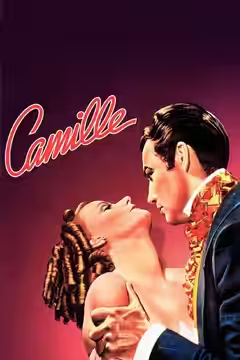
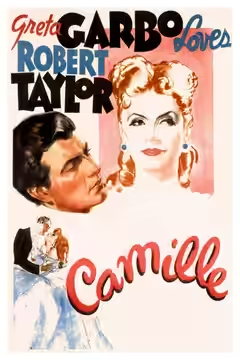
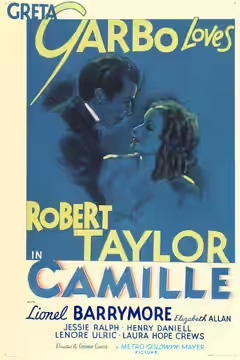
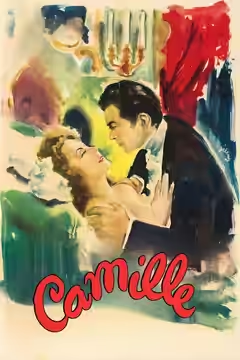
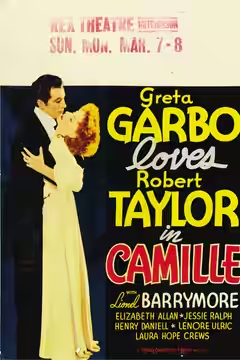
Greta Garbo makes this formal romance funny, vulnerable and moving, with George Cukor giving her room to work. Some stiff supporting performances and over-insistent music get in the way, but never enough to spoil it.
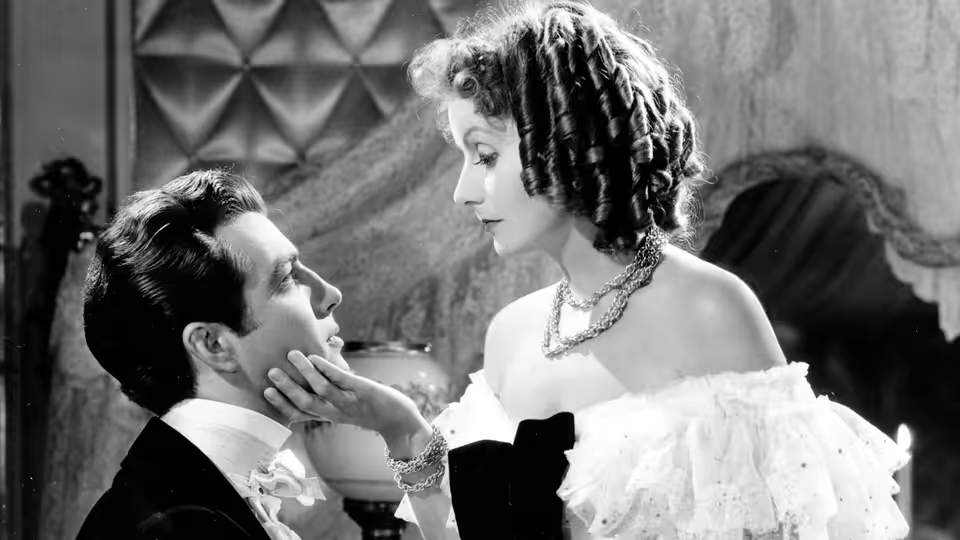
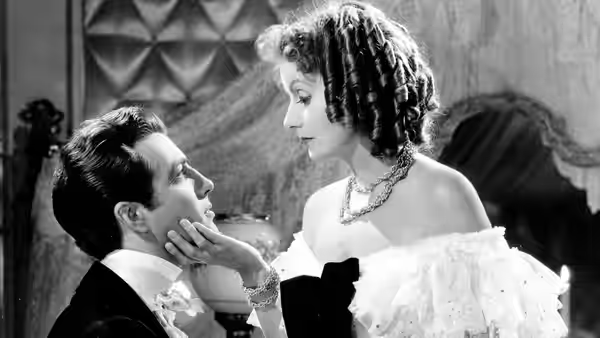
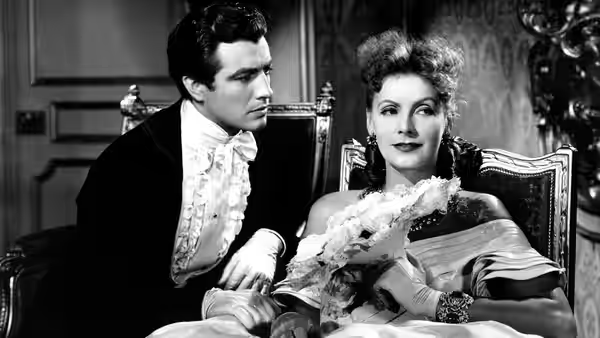
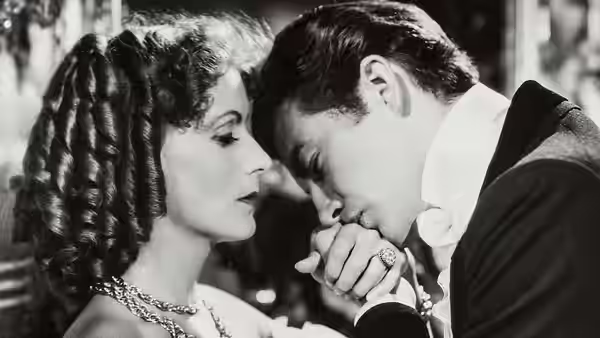
George Cukor’s Camille is a moving romance whose leading performance survives some rather stiff company. Greta Garbo makes Marguerite Gautier intelligent, amused and capable of guarding a feeling without hiding it from us. She gives the film enough human awkwardness to keep its grand emotions credible. We recommend it for her, with the warning that several of the other performances seem much more anxious to be taken seriously.
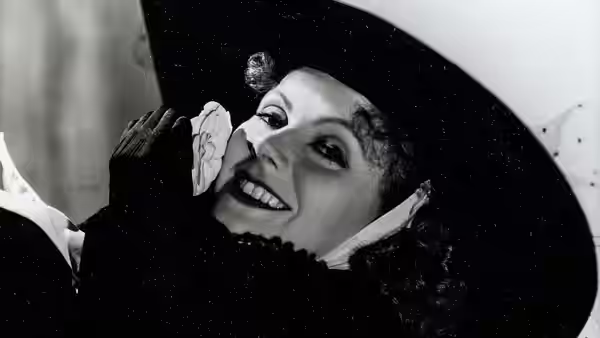
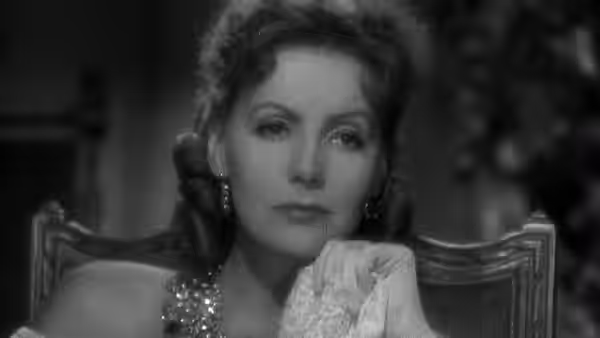
Her humour is important. The quick changes in a smile suggest someone deciding how much warmth she can afford to show, and her composure can look like hard work. We were moved by the fatigue she lets us see beneath that effort, because it makes Marguerite seem vulnerable without making her helpless. She remains interesting when she is simply listening, which is fortunate in a film where people have quite a lot to explain about their feelings.
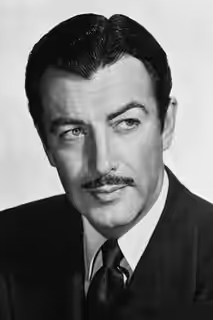
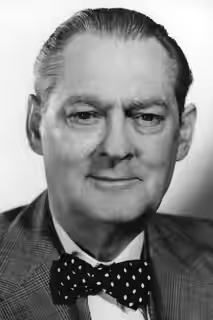
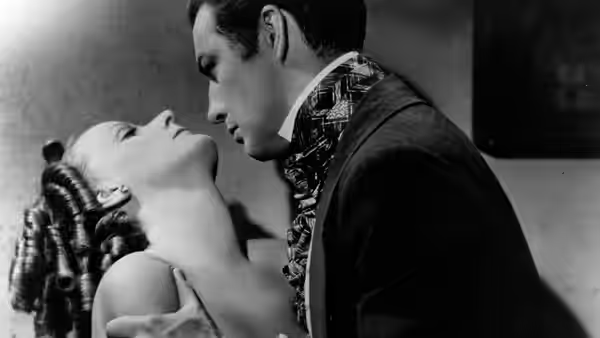
Robert Taylor’s Armand Duval has an earnestness that suits the romance, though his stiffness leaves too much of the emotional work to his co-star. Henry Daniell is more effective as Baron de Varville: his coolness gives the leading performance something firm to work against. Lionel Barrymore, as Monsieur Duval, is the larger difficulty, bringing such weight to his delivery that the drama briefly feels supervised. When every phrase arrives already marked as important, there is little left for us to discover in the exchange.
The cinematography, credited to William H. Daniels and Karl Freund, understands the value of keeping our attention on a face. The flattering softness allows small changes of expression to register without making each one an event. Adrian’s costumes contribute to the film’s dressed-up finish, and the handsome decor gives the performers plenty to compete with. We occasionally found ourselves looking at the clothes when we ought to have been listening, though that is more often a problem with the dialogue than with the clothes.
Margaret Booth’s editing is most persuasive when it allows a reaction to finish before moving on. The pace can feel stately, yet hurrying these performances would lose much of what makes them worth watching. Herbert Stothart’s music is less helpful when its insistence tells us how seriously to take an emotion that is already clear in the leading performance. That is a familiar problem in romantic melodrama, and here it is an irritation rather than a reason to give up on the film.
James Hilton, Zoë Akins and Frances Marion’s screenplay adapts a novel by Alexandre Dumas fils, and some of its formal speeches resist being spoken naturally. The direction is more persuasive with the shifts between amusement and seriousness, allowing the actors to find feelings that the dialogue sometimes labours to explain. Within the conventions of romantic melodrama, that attention to the performers matters more than any attempt to disguise the story’s formality. Give it an unhurried evening, with some tolerance for people who speak more formally than they need to.