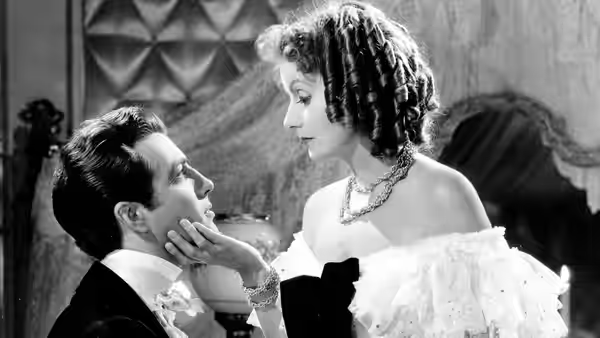
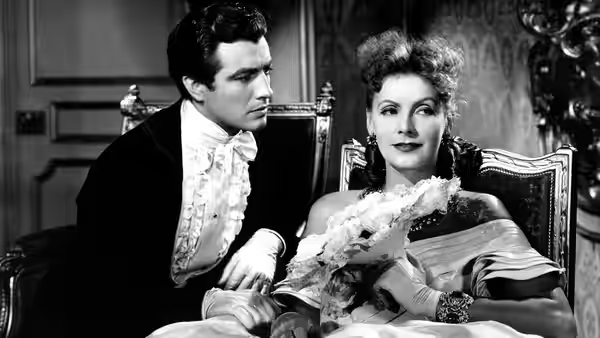
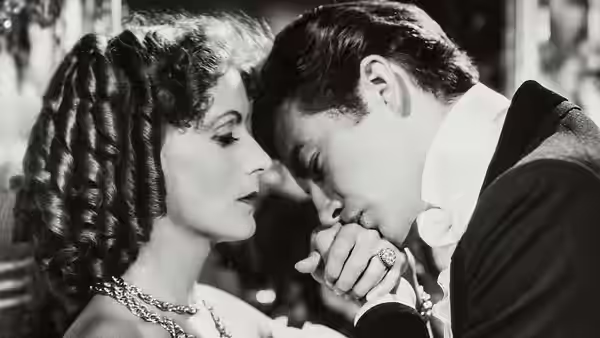
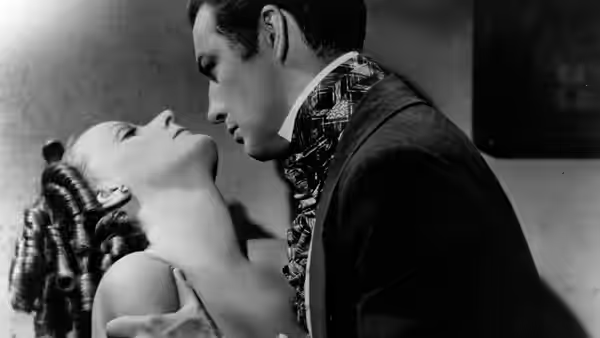
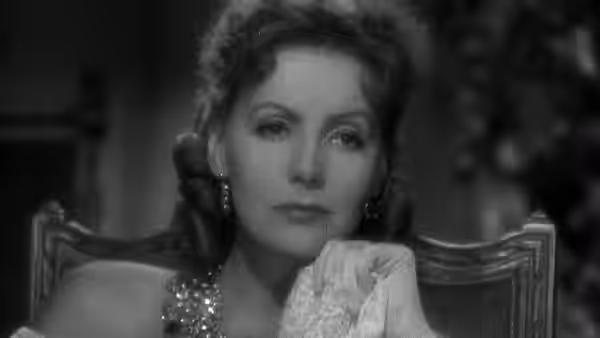
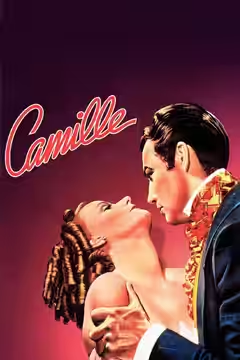
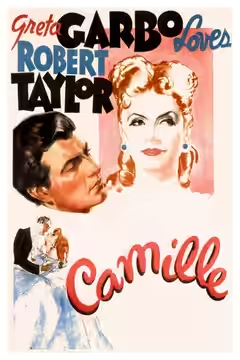
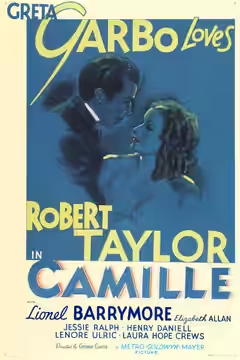
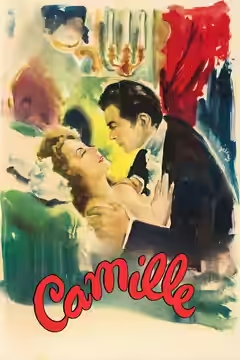
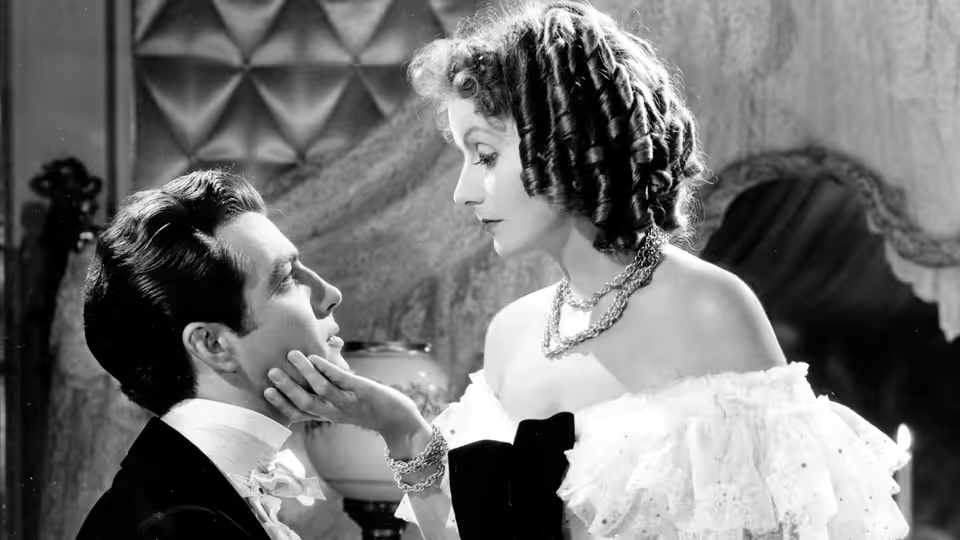
Marguerite Gautier (Greta Garbo) cups Armand Duval’s face in an elegant room
Film review

Camille

1936 · Directed by George Cukor · 1h 49m

In a sentenceGreta Garbo makes a doubtful smile worth more than another speech about love

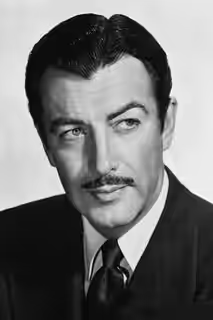
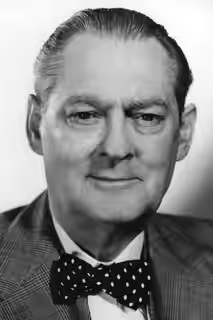
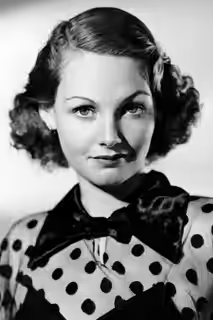
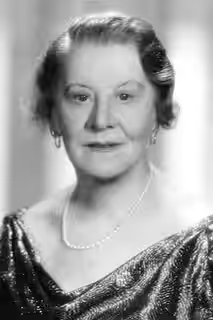
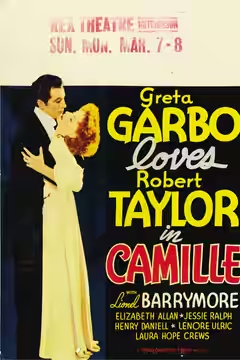
Marguerite Gautier (Greta Garbo) and Armand Duval (Robert Taylor) are the central figures in this historical romance. The characters around them include Monsieur Duval (Lionel Barrymore), Baron de Varville (Henry Daniell), Prudence Duvernoy (Laura Hope Crews) and Nanine (Jessie Ralph). Nichette (Elizabeth Allan), Olympe (Lenore Ulric) and Gaston (Rex O’Malley) also appear in the story. George Cukor directs this 109-minute adaptation of a novel by Alexandre Dumas fils, with James Hilton, Zoë Akins and Frances Marion credited for the screenplay.

Plays from YouTube when you press play; nothing loads from them until then.

Fi1m review

Greta Garbo makes this formal romance funny, vulnerable and moving, with George Cukor giving her room to work. Some stiff supporting performances and over-insistent music get in the way, but never enough to spoil it.

George Cukor’s Camille is a moving romance whose leading performance survives some rather stiff company. Greta Garbo makes Marguerite Gautier intelligent, amused and capable of guarding a feeling without hiding it from us. She gives the film enough human awkwardness to keep its grand emotions credible. We recommend it for her, with the warning that several of the other performances seem much more anxious to be taken seriously.

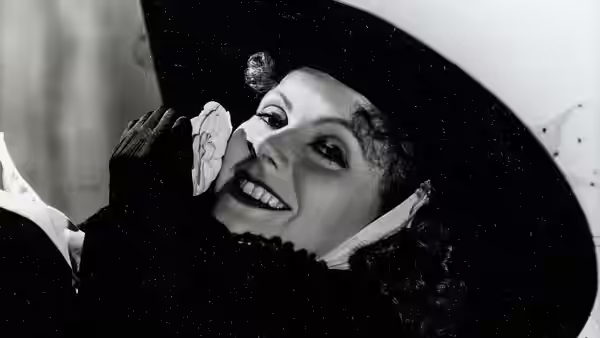
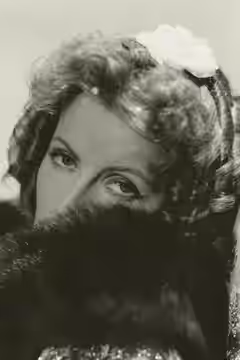
Her humour is important. The quick changes in a smile suggest someone deciding how much warmth she can afford to show, and her composure can look like hard work. We were moved by the fatigue she lets us see beneath that effort, because it makes Marguerite seem vulnerable without making her helpless. She remains interesting when she is simply listening, which is fortunate in a film where people have quite a lot to explain about their feelings.

Robert Taylor’s Armand Duval has an earnestness that suits the romance, though his stiffness leaves too much of the emotional work to his co-star. Henry Daniell is more effective as Baron de Varville: his coolness gives the leading performance something firm to work against. Lionel Barrymore, as Monsieur Duval, is the larger difficulty, bringing such weight to his delivery that the drama briefly feels supervised. When every phrase arrives already marked as important, there is little left for us to discover in the exchange.

The cinematography, credited to William H. Daniels and Karl Freund, understands the value of keeping our attention on a face. The flattering softness allows small changes of expression to register without making each one an event. Adrian’s costumes contribute to the film’s dressed-up finish, and the handsome decor gives the performers plenty to compete with. We occasionally found ourselves looking at the clothes when we ought to have been listening, though that is more often a problem with the dialogue than with the clothes.

Margaret Booth’s editing is most persuasive when it allows a reaction to finish before moving on. The pace can feel stately, yet hurrying these performances would lose much of what makes them worth watching. Herbert Stothart’s music is less helpful when its insistence tells us how seriously to take an emotion that is already clear in the leading performance. That is a familiar problem in romantic melodrama, and here it is an irritation rather than a reason to give up on the film.

James Hilton, Zoë Akins and Frances Marion’s screenplay adapts a novel by Alexandre Dumas fils, and some of its formal speeches resist being spoken naturally. The direction is more persuasive with the shifts between amusement and seriousness, allowing the actors to find feelings that the dialogue sometimes labours to explain. Within the conventions of romantic melodrama, that attention to the performers matters more than any attempt to disguise the story’s formality. Give it an unhurried evening, with some tolerance for people who speak more formally than they need to.
Critical consensus AI synthesised

3 of 6
Positive
2
Mixed
1
Negative
0
Empire
30 March 2006 · David Parkinson
90*

Parkinson finds the adaptation genuinely moving, with Garbo’s performance driving its emotional power. He praises her nuanced portrayal and calls Lionel Barrymore’s performance one of the film’s few failings.

Read the full review →
Radio Times
★★★★ · Peter Freedman
80

The review praises Garbo’s performance as the doomed heroine and calls the film sumptuous. It singles out her celebrated death scene as especially memorable.

Read the full review →
Time Out
· MSu
65*

The available page text does not reveal the critic’s verdict. Its description singles out the film’s decor, adaptation, direction, and cinematography.

Read the full review →

Straight answers AI written, from our review

Is Camille worth watching?
Camille is worth watching for Greta Garbo’s funny, vulnerable performance, and we score it 82 out of 100. We recommend it to anyone with a taste for unhurried romantic melodrama, though some stiff supporting performances, formal speeches and over-insistent music make Garbo do more than her share of the work.
How long is Camille, and what is it rated?
Camille runs 1h 49m. It is a drama and romance film.
Where can I watch Camille in New Zealand?
Camille is not on any streaming or rental service in New Zealand at the moment. It is available in 11 other countries; change your country at the top of the page to see where. Availability is checked daily.
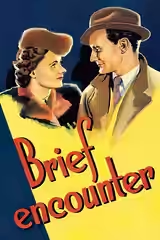
How does Camille compare to Brief Encounter?
Camille is the more formal, dressed-up romance; we recommend Brief Encounter more strongly for its restrained performances and painfully ordinary conversations. Garbo gives Camille humour and vulnerability despite some stiff company, while Brief Encounter makes falling in love feel ordinary and frightening, though Alec is less fully drawn.
Is Camille based on a true story or a book?
Camille is adapted from a novel by Alexandre Dumas fils, with James Hilton, Zoë Akins and Frances Marion credited for the screenplay. We find its appeal in Garbo’s readable shifts between amusement and vulnerability, rather than anything requiring familiarity with the book, though some formal speeches resist natural delivery.
What should I watch after Camille?
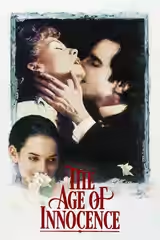
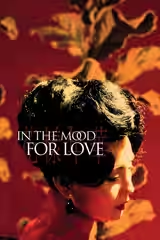
After Camille, try Brief Encounter (1945, Fi1m 90): For restrained performances that make an ordinary conversation feel almost unbearable. Then The Age of Innocence (1993, Fi1m 86): For the small acts of cowardice that can determine a love affair; and In the Mood for Love (2000, Fi1m 91): For glances and pauses that carry more weight than declarations ever could.

Cast

Awards

Academy Awards, 1938

Nominated
Best Actress

New York Film Critics Circle Award for Best Actress, 1937

Won
New York Film Critics Circle Award for Best Actress

If you liked this, try…

  1. Brief Encounter (1945, Fi1m 90)For restrained performances that make an ordinary conversation feel almost unbearable.

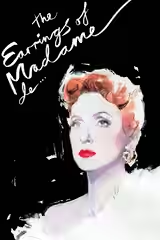
  2. The Earrings of Madame de... (1953) · not on Fi1m yetFor jewellery, wounded pride and feelings that refuse to remain politely hidden.

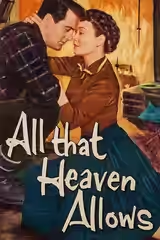
  3. All That Heaven Allows (1955) · not on Fi1m yetFor another romance where social respectability makes cruelty sound entirely reasonable.

  4. The Age of Innocence (1993, Fi1m 86)For the small acts of cowardice that can determine a love affair.

  5. In the Mood for Love (2000, Fi1m 91)For glances and pauses that carry more weight than declarations ever could.