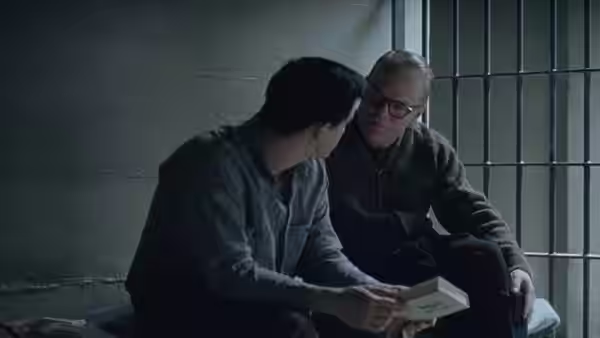
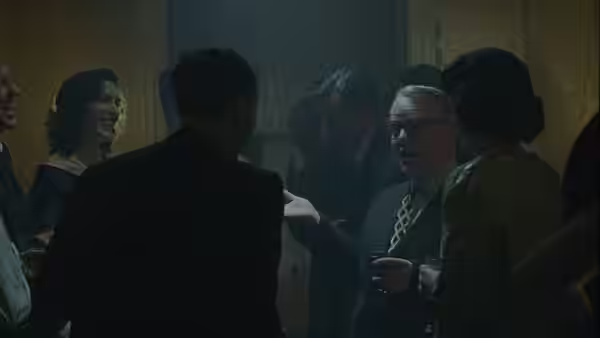
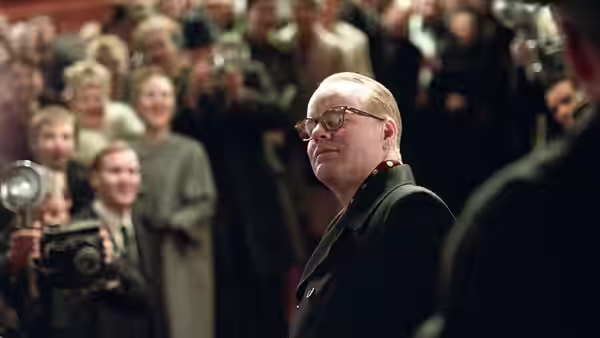
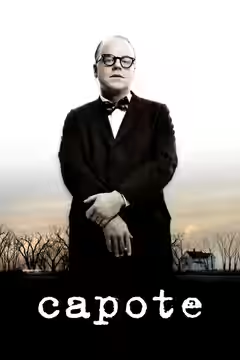
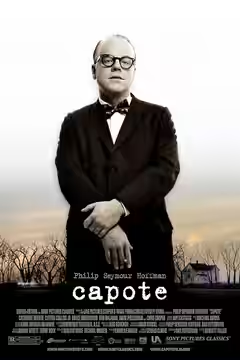
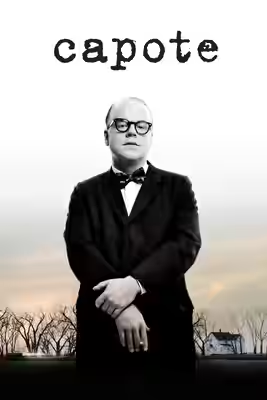
Truman Capote (Philip Seymour Hoffman) smoking a cigarette while holding a cocktail
Film review

Capote

2005 · Directed by Bennett Miller · 1h 54m · RO 18+

In a sentenceTruman Capote would make excellent dinner company, provided nobody told him anything

Truman Capote (Philip Seymour Hoffman) begins researching the material that will become In Cold Blood. The New York City writer enters the lives of people connected to a murder case, finding that access depends on the confidence he can win. Among those around him are Harper Lee (Catherine Keener), Perry Smith (Clifton Collins Jr.) and Alvin Dewey (Chris Cooper). As Capote gathers material, the demands of his book become entangled with his relationships. He must negotiate what he wants to know, what others are willing to tell him, and what they expect from him in return.

Plays from YouTube when you press play; nothing loads from them until then.

Fi1m review

Bennett Miller’s Capote is an absorbing, superbly acted study of a writer exploiting other people’s trust. Philip Seymour Hoffman makes him painfully human, though the screenplay gives his failings more attention than his talent.

Bennett Miller’s Capote is an absorbing, often uncomfortable film about a writer who believes the importance of his book can excuse what he does to people. Dan Futterman’s screenplay keeps its attention on the relationships behind In Cold Blood, rather than attempting to fit a whole life into a feature. That concentration works, even if it gives us less insight into Capote’s writing than we wanted. Miller understands how much depends on making the writer attractive company before asking us to distrust him.

Philip Seymour Hoffman makes Truman Capote’s voice an active part of every encounter. The peculiar cadence can invite intimacy, demand attention or make self-pity sound almost reasonable, sometimes within the same exchange. We laughed at his confidence in company, then felt uneasy about how readily we had warmed to him. Hoffman makes his interest in other people seem flattering enough that we understand why they might confide in him. His performance keeps the calculation visible without making every expression of affection seem false.

Catherine Keener’s Harper Lee is especially useful here: her comparative reserve gives us a chance to stop listening to Capote and consider him. Keener never needs to compete with Hoffman’s vocal performance to hold our attention. Clifton Collins Jr., as Perry Smith, brings vulnerability to a film that could otherwise become too absorbed in its central actor. Their presence helps Miller keep other people’s needs in view, even when Capote would prefer to talk about his own.

Adam Kimmel’s cinematography keeps the performances clear and the atmosphere subdued; the lack of visual fuss suits a story in which listening matters so much. Jess Gonchor’s production design makes the period setting convincing without turning it into an invitation to admire the furnishings. Neither contribution distracts us from the small changes in Hoffman’s manner. The sober surroundings also make Capote’s need to be noticed more conspicuous, which is useful in a film so concerned with his effect on other people.

Christopher Tellefsen’s editing keeps the research moving without hurrying past the discomfort of the conversations. There is room to register both Capote’s charm and the pressure he puts on other people. Mychael Danna’s score is effective in its restraint, adding unease without trying to settle our feelings about the man. The pace and the music leave Hoffman free to be funny, needy and unpleasant without treating each change as a separate dramatic event.

The reservation is that Futterman returns to Capote’s selfishness more often than he deepens our understanding of it. The screenplay gives us ample reason to question his conduct, but less sense of the work that makes his ambition worth examining in the first place. We wanted a closer account of how this man writes, particularly when the film is so attentive to how he persuades. A biographical drama need not cover a whole life, and the concentration on one book is sensible. Even within those limits, Miller sometimes makes the moral judgement too easy for us.

Hoffman keeps Capote’s loneliness credible, even when his behaviour tests our sympathy. He makes the film moving without requiring us to excuse the man. At 114 minutes, it is concentrated enough for the discomfort to linger without becoming exhausting. See it with someone prepared to argue about how much a good book can excuse.


Critical consensus AI synthesised

79
Positive
16
Mixed
0
Negative
1

Almost every critic puts Philip Seymour Hoffman first. The reviews agree that his Capote, the voice, the gestures, the appetite for attention, carries the film, and several think it the reason the film works at all. Beyond the performance, the praise settles on subject rather than style: most critics read it as a study of a writer whose great book costs him his self-respect, and they credit Bennett Miller’s controlled direction and Dan Futterman’s script with keeping that moral question in view without lecturing.

Where they part is on how much the film understands its subject. Several reviews, the British ones especially, find Capote drawn as a literary vampire and admire the portrait while doubting it goes anywhere new. Slant Magazine goes further, calling the film a brisk character assassination that lists his ruthless acts without any insight into his talent as a writer. That is the only outright dissent; the rest of the spread is narrow, running from warm to very warm.

Empire
27 January 2006 · Kim Newman
90*

The critic calls the film outstanding and praises its focus on the creation of In Cold Blood as a work of art. Hoffman’s performance as Capote is highlighted as miraculously well-cast and central to the film’s success.

Read the full review →
Evening Standard
10 April 2012 · Derek Malcolm
90*

The film is a guilt-edged triumph driven by Philip Seymour Hoffman's precise and compelling performance as Truman Capote, which brings the eccentric writer vividly to life. The critic singles out Hoffman's skill in portraying the character's odd glory and ambition while noting the film's controlled direction and exploration of contrasting Americas.

Read the full review →
RogerEbert.com
20 October 2005 · Roger Ebert
90*

The film is a powerful study of a writer whose great achievement requires the surrender of his self-respect. It focuses on the moral conflict at the heart of Capote's work on In Cold Blood and the precise, uncanny performance of Philip Seymour Hoffman.

Read the full review →
Screen Daily
14 September 2005 · festival review
90*

Hoffman delivers a galvanising, awards-worthy embodiment of Capote at his peak; Miller achieves a tender, macabre view of the parasitic artist-subject connection in his debut feature.

Read the full review →
The Times
23 February 2006
90*

Bennett Miller's thriller is a perfectly crafted study of a moral bankrupt, with Hoffman delivering a magical, uncanny performance as the repellent yet compelling Capote.

Read the full review →
Variety
2 September 2005 · festival review · David Rooney
90*

The mesmerizing performance of Philip Seymour Hoffman dominates every scene in this unsettlingly intimate account of Capote's obsessive research. Director Bennett Miller and screenwriter Dan Futterman's penetrating study enthralls in every aspect, tracing the double edge of literary achievement and its shattering personal cost.

Read the full review →

Straight answers AI written, from our review

Is Capote worth watching?
Capote is worth watching for anyone who enjoys a patient, uncomfortable character study, and we scored it 84. Philip Seymour Hoffman makes Truman Capote charming enough that we warmed to him and then felt uneasy about it, which is the point. Our reservation is that the screenplay dwells on his selfishness more than on the writing that made him worth examining.
How long is Capote, and what is it rated?
Capote runs 1h 54m and is rated 18+ by the RO in Romania. It is a crime and drama film.
Where can I watch Capote in Romania?
Capote is streaming on Amazon Prime Video in Romania, and it is also available to rent from Amazon Prime Video from lei 10.00. Availability is checked daily; the links above go straight to each service.
How violent or frightening is Capote, and is it suitable for children?
Capote carries a 15 certificate in the UK and an R in the US, and it is an adult drama rather than a frightening one. Its subject is the research behind a book about a murder case, so the discomfort comes from conversations and moral compromise rather than from anything shown to shock. It is not made for children, and younger teenagers will find little in it for them.
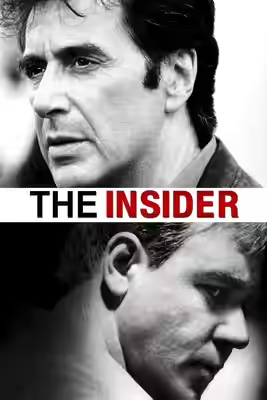
How does Capote compare to The Insider?
Capote and The Insider are both absorbing films about what somebody is owed once they agree to talk, but they work at different speeds. Michael Mann's film is a thriller, gripping and occasionally inclined to labour a point; Bennett Miller's is quieter and more concentrated, resting almost entirely on Hoffman. We think Capote the tighter film, though anyone wanting momentum should choose The Insider.
Is Capote based on a true story or a book?
Capote is based on a book by Gerald Clarke about the real writer Truman Capote, and it follows his research into the case that became In Cold Blood. The film does not attempt a whole life; it concentrates on the relationships behind that one book. You need no prior knowledge of Capote or of Clarke's account to follow it.
What should I watch after Capote?
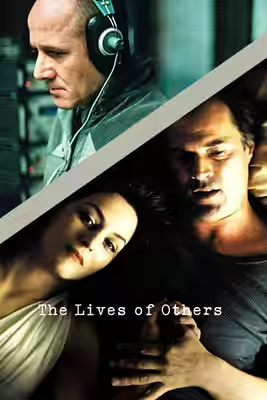
After Capote, try The Insider (1999, Fi1m 89): Another absorbing account of the obligations created when somebody agrees to talk. Then The Lives of Others (2006, Fi1m 84): For another unsettling study of listening, power and compromised personal loyalties; and An Angel at My Table (1990, Fi1m 87): A writer’s life given more room for work, friendship and awkwardness.

Cast

Awards

Academy Awards, 2006

Nominated
Best Director
Nominated
Best Picture
Nominated
Best Supporting Actress
Nominated
Best Writing, Adapted Screenplay
Won
Best Actor

If you liked this, try…

  1. The Insider (1999, Fi1m 89)Another absorbing account of the obligations created when somebody agrees to talk.

  2. The Lives of Others (2006, Fi1m 84)For another unsettling study of listening, power and compromised personal loyalties.

  3. An Angel at My Table (1990, Fi1m 87)A writer’s life given more room for work, friendship and awkwardness.

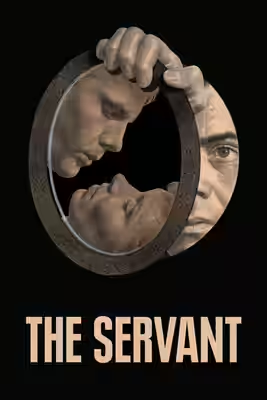
  4. The Servant (1963, Fi1m 89)For intimate power struggles, social performance and an increasingly uncomfortable dependence.

  5. Saint Omer (2022) · not reviewed yetA writer confronts the limits of what she can understand about someone else.

Free account

Know what to watch tonight

Two lists that know where things are streaming, collections you can share, your own score beside ours, and Discover that remembers what you have seen.

  • Want to see, sorted by what is streaming now
  • Seen, with your score out of ten
  • No adverts, ever