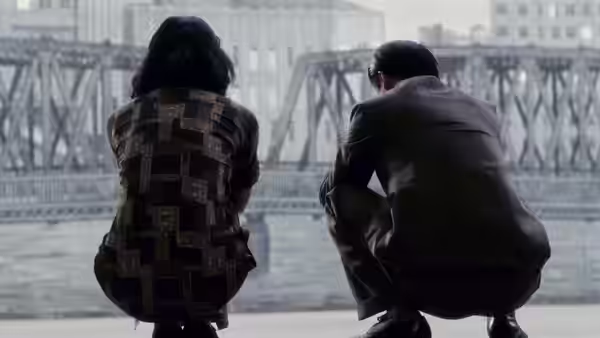
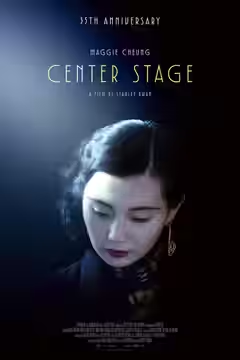
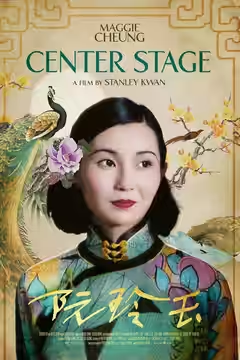
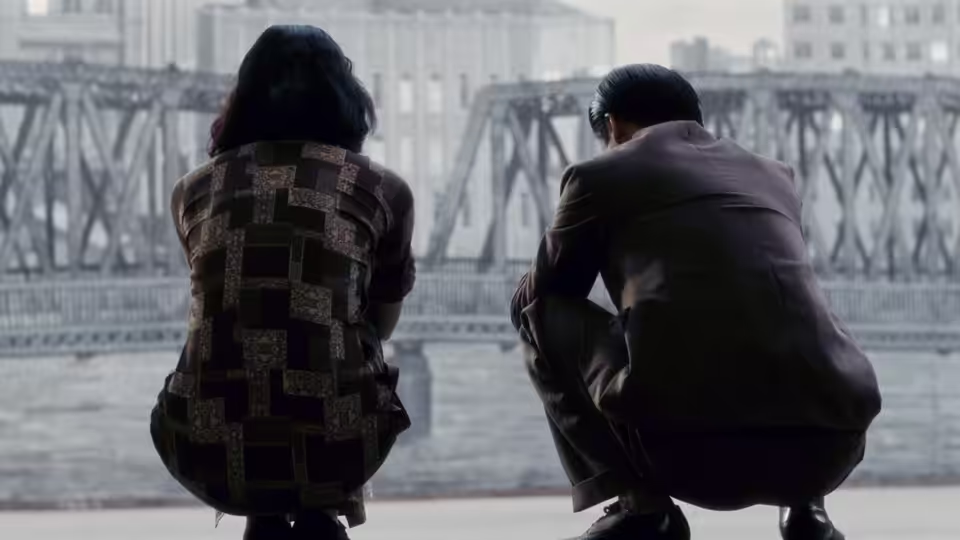
A woman and a man crouch beside a river, facing an iron bridge
Film review

Center Stage

1991 · Directed by Stanley Kwan Kam-Pang · 2h 35m

In a sentenceMaggie Cheung is worth interrupting a perfectly good discussion about acting for

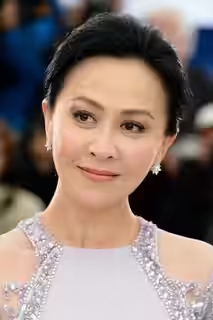
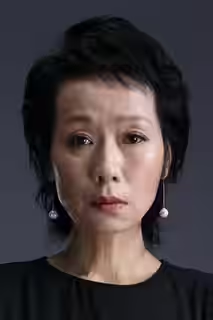
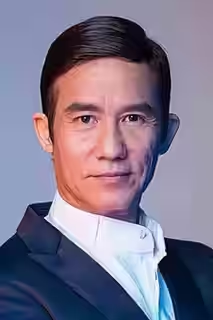
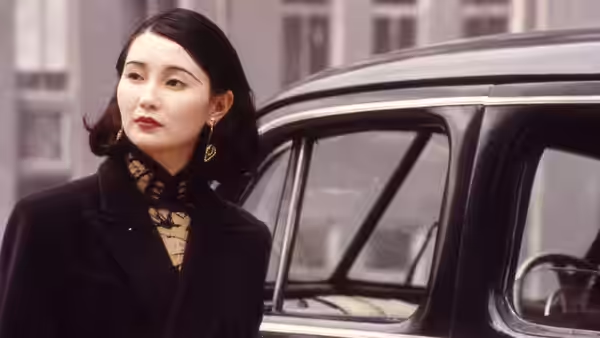
Ruan Lingyu (Maggie Cheung) is the subject of a biography that moves between dramatised episodes and documentary-style conversations about acting. Cai Chusheng (Tony Leung Ka-fai), Tang Jishan (Ronald Chin Han) and Li Lili (Carina Lau) are among the people around her. Nightclub scenes bring dancing and romantic conflict together, while the conversations consider how artists are seen by other people. The account of her life shares space with questions about how an actor approaches another person, and what an audience expects to find in the performance. The dramatisation repeatedly gives way to discussion of the work of portraying her.

Plays from YouTube when you press play; nothing loads from them until then.

Fi1m review

Maggie Cheung makes this reflective biography moving, even when its conversations about acting slow it down. Stanley Kwan Kam-Pang asks useful questions about portraying a life, but sometimes interrupts her too readily.

Stanley Kwan Kam-Pang’s Center Stage is a moving, thoughtful biography, carried by Maggie Cheung and occasionally slowed by its determination to examine how acting works. She plays Ruan Lingyu in a film that puts dramatised scenes alongside documentary-style conversations about performance. That gives us something more useful than the usual procession of important moments in a famous life. We are invited to watch a performance and then think about what we have accepted from it.

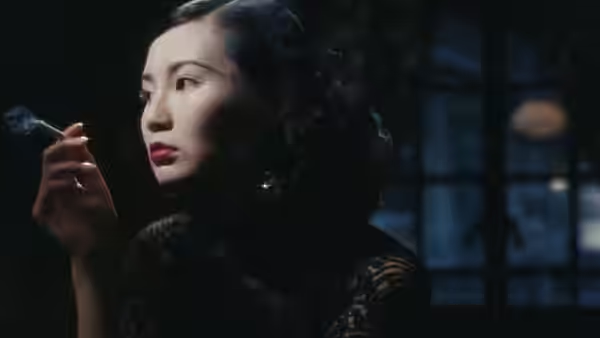
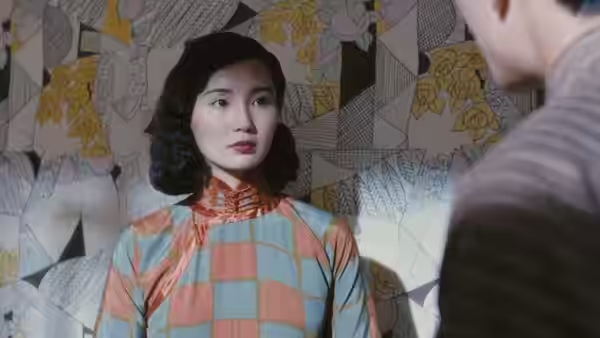
Maggie Cheung gives the romantic unhappiness enough weight to make those interruptions matter. There is a risk that an actress in a film about acting will seem to be demonstrating her profession, with every emotion offered for inspection. Her performance does not feel like that. We care about Ruan Lingyu before we begin considering how the portrayal has been put together, which keeps the discussions from becoming an academic exercise.

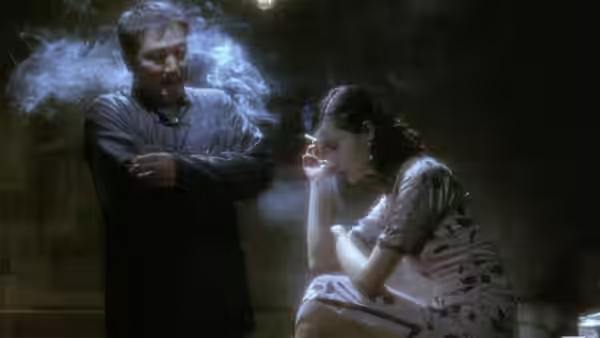
The nightclub scenes are where this works most directly. Poon Hang-Sang’s cinematography makes the dancing worth watching without letting it distract from the strain between the people doing it. We felt unexpectedly sad here, because the dancing offers no relief from the romantic unhappiness. Johnny Chen’s music helps sustain that sadness without doing all the performers’ work for them. These passages give the film an ease that the more talkative stretches cannot always manage.

Keung Chuen-Tak, Cheung Ka-Fai and Peter Cheung have the difficult editing job of moving between the biography and the discussions without making either feel disposable. The changes ask us to reconsider what an actor can know about the person being played. For the most part, that is absorbing, and the conversations earn their place beside the dramatisation. They also prevent the film from claiming to know everything about Ruan Lingyu simply because Maggie Cheung has made her believable.

But the interruptions are not equally rewarding. At 155 minutes, the film gives us time to notice when a discussion is prolonging a thought rather than changing it. Stanley Kwan Kam-Pang can be too reluctant to leave the subject alone, particularly when Maggie Cheung has already made its emotional weight clear. We occasionally wanted to stay with the dramatised scene instead of stepping back to consider it, and the pace suffers when the film insists otherwise.

Screen biographies can become impatient to explain every decision a person made, reducing the work of acting to a few recognisable mannerisms. This one allows us to think about the person being portrayed without pretending that a persuasive performance settles everything. The conversations are valuable because they leave room for doubt, and the dancing supplies the pleasure that a film about acting still needs. We recommend it warmly for Maggie Cheung, with the warning that its curiosity sometimes takes longer to satisfy than ours. Give it an evening when there is no need to hurry.
Critical consensus AI synthesised

3 of 6
Positive
3
Mixed
0
Negative
0
Slant Magazine
28 May 2021 · ★★★★ · Jake Cole
80

Cole praises the film as one of the finest works of Hong Kong’s ’90s golden age. He singles out its inventive use of documentary-style conversations to explore performance and the ways artists are projected upon.

Read the full review →
The New Yorker
75*

The capsule praises Kwan’s self-aware, formally inventive biopic as a hypnotic blend of romantic melancholy and social history. It singles out the nightclub musical scenes for merging languid dances with emotional conflict.

Read the full review →
Time Out
15 March 2012
70*

The available description presents the film positively. It singles out Maggie Cheung’s lead performance as a reason to swoon.

Read the full review →

Straight answers AI written, from our review

Is Center Stage worth watching?
Center Stage is worth watching for Maggie Cheung’s moving performance and its thoughtful approach to screen biography; we score it 82 out of 100. We recommend it warmly to anyone interested in acting, with the caveat that its documentary-style conversations sometimes interrupt the drama too readily and make the 155 minutes feel long.
How long is Center Stage, and what is it rated?
Center Stage runs 2h 35m. It is a drama and romance film.
Where can I watch Center Stage in Belgium?
Center Stage is not on any streaming or rental service in Belgium at the moment. It is available in 2 other countries; change your country at the top of the page to see where. Availability is checked daily.
How does Center Stage compare to Millennium Actress?
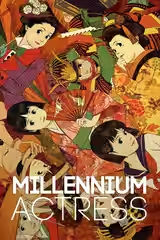
Center Stage is the more reflective choice beside Millennium Actress, which moves quickly through an actress’s life and films as memory disrupts the chronology. We favour Millennium Actress for pace and humour, though its central romantic pursuit is thinly drawn; Center Stage suits those who want to linger over a performance and consider how an actor portrays another person.
What should I watch after Center Stage?
After Center Stage, try Millennium Actress (2001, Fi1m 86): Another actress’s life unfolds through cinema, with memory disrupting the chronology. Then Close-Up (1990, Fi1m 92): More conversations about acting, belonging and the lives people wish to borrow; and The Passion of Joan of Arc (1928, Fi1m 94): Silent performance made painfully immediate through sustained attention to a woman’s face.

Cast

If you liked this, try…

  1. Millennium Actress (2001, Fi1m 86)Another actress’s life unfolds through cinema, with memory disrupting the chronology.

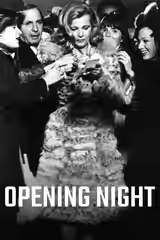
  2. Opening Night (1977) · not on Fi1m yetFor another performance that lets an actress’s private distress unsettle her work.

  3. Close-Up (1990, Fi1m 92)More conversations about acting, belonging and the lives people wish to borrow.

  4. The Passion of Joan of Arc (1928, Fi1m 94)Silent performance made painfully immediate through sustained attention to a woman’s face.

  5. The Souvenir Part II (2021) · not on Fi1m yetAnother patient film about turning private pain into cinema without tidying it.