Maggie Cheung makes this reflective biography moving, even when its conversations about acting slow it down. Stanley Kwan Kam-Pang asks useful questions about portraying a life, but sometimes interrupts her too readily.
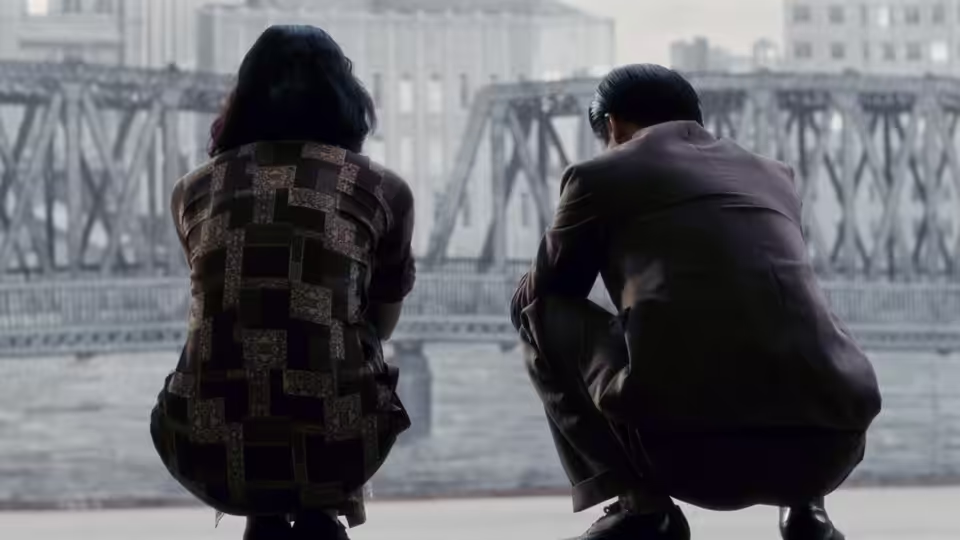
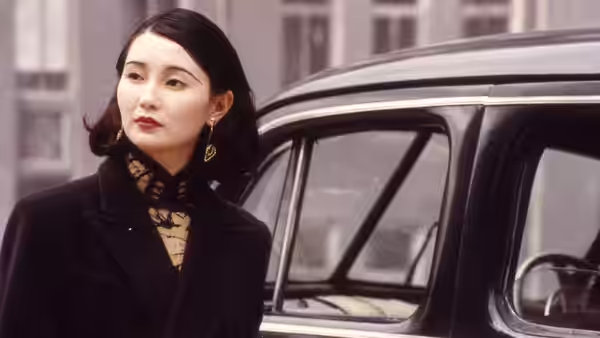
Stanley Kwan Kam-Pang’s Center Stage is a moving, thoughtful biography, carried by Maggie Cheung and occasionally slowed by its determination to examine how acting works. She plays Ruan Lingyu in a film that puts dramatised scenes alongside documentary-style conversations about performance. That gives us something more useful than the usual procession of important moments in a famous life. We are invited to watch a performance and then think about what we have accepted from it.
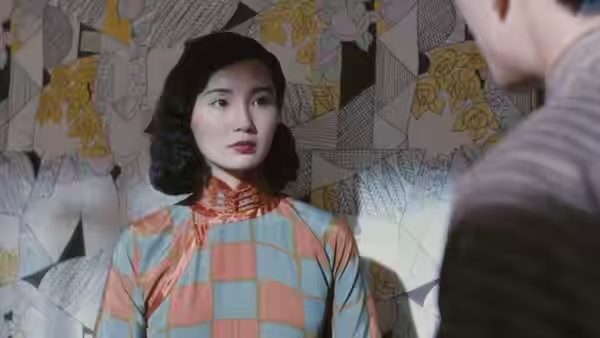
Maggie Cheung gives the romantic unhappiness enough weight to make those interruptions matter. There is a risk that an actress in a film about acting will seem to be demonstrating her profession, with every emotion offered for inspection. Her performance does not feel like that. We care about Ruan Lingyu before we begin considering how the portrayal has been put together, which keeps the discussions from becoming an academic exercise.
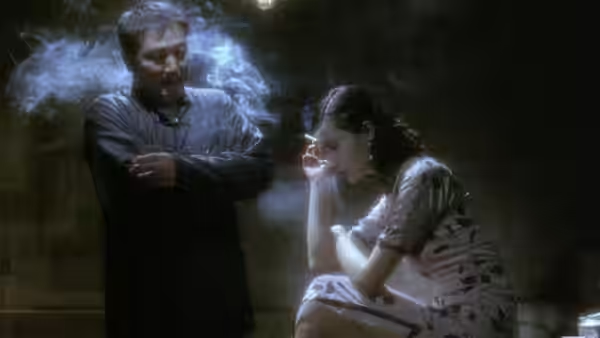
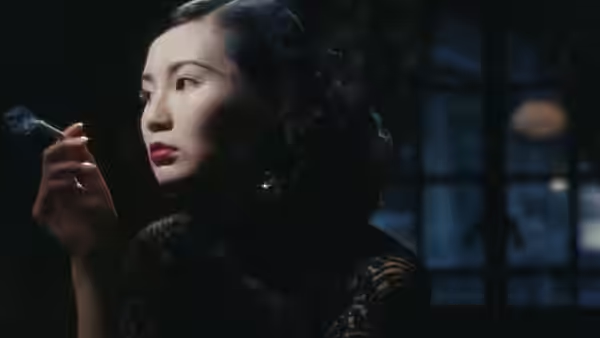
The nightclub scenes are where this works most directly. Poon Hang-Sang’s cinematography makes the dancing worth watching without letting it distract from the strain between the people doing it. We felt unexpectedly sad here, because the dancing offers no relief from the romantic unhappiness. Johnny Chen’s music helps sustain that sadness without doing all the performers’ work for them. These passages give the film an ease that the more talkative stretches cannot always manage.
Keung Chuen-Tak, Cheung Ka-Fai and Peter Cheung have the difficult editing job of moving between the biography and the discussions without making either feel disposable. The changes ask us to reconsider what an actor can know about the person being played. For the most part, that is absorbing, and the conversations earn their place beside the dramatisation. They also prevent the film from claiming to know everything about Ruan Lingyu simply because Maggie Cheung has made her believable.
But the interruptions are not equally rewarding. At 155 minutes, the film gives us time to notice when a discussion is prolonging a thought rather than changing it. Stanley Kwan Kam-Pang can be too reluctant to leave the subject alone, particularly when Maggie Cheung has already made its emotional weight clear. We occasionally wanted to stay with the dramatised scene instead of stepping back to consider it, and the pace suffers when the film insists otherwise.
Screen biographies can become impatient to explain every decision a person made, reducing the work of acting to a few recognisable mannerisms. This one allows us to think about the person being portrayed without pretending that a persuasive performance settles everything. The conversations are valuable because they leave room for doubt, and the dancing supplies the pleasure that a film about acting still needs. We recommend it warmly for Maggie Cheung, with the warning that its curiosity sometimes takes longer to satisfy than ours. Give it an evening when there is no need to hurry.