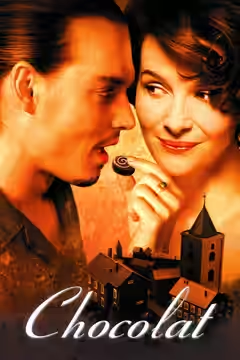
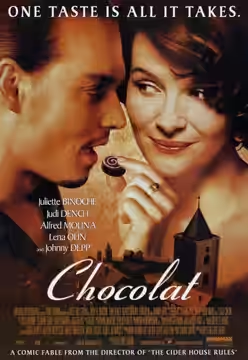
Lasse Hallström’s village fable is handsomely made and warmly acted, with Alfred Molina and Judi Dench doing far better work than the script requires. It argues that pleasure is good and self-denial bad, to an audience that arrived already agreeing.
Lasse Hallström, working from Joanne Harris’s novel in a screenplay by Robert Nelson Jacobs, has made a fable and says so at the start: a narrator, an old story, a village where nothing has changed for a long time. A woman opens a chocolate shop during Lent and the village, having been told for centuries that wanting things is a sin, begins to want things. That is the whole argument, and the film has made it inside twenty minutes. The remaining hundred are spent confirming it, one customer at a time.
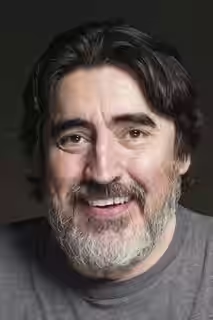
Alfred Molina is the reason to watch. His Reynaud is not a villain but a man who has decided that starving himself is a form of love, and Molina plays the starving: the tightened jaw at the shop window, the meals he does not eat, the sermons he writes for the boyish Father Henri (Hugh O’Conor) and then sits through from the front pew. The film wants us to laugh at him and Molina declines to make that easy. Whenever he is on screen the fable has an opponent worth the name.
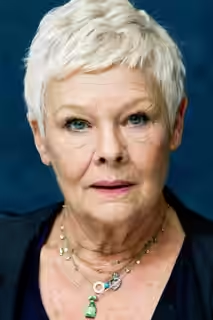
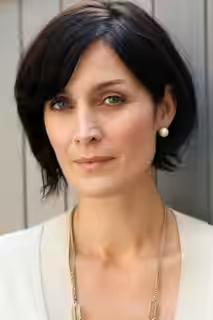
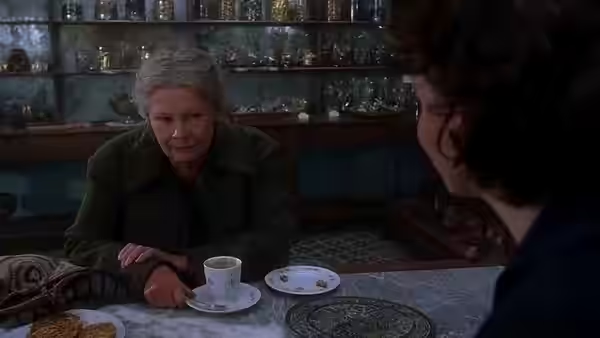
Judi Dench does what she does with a grouchy old woman and a bottle, which is to make her the most alive person on screen. Armande’s quarrel with her daughter Caroline Clairmont (Carrie-Anne Moss) over the grandson she is not allowed to see is one of two strands with any weight. The other is Lena Olin’s Josephine, married to Peter Stormare’s Serge, who drinks and hits her. We were more moved than we had any intention of being by Olin: the way Josephine holds her handbag with both hands as if someone might take it, and the moment she first laughs in the shop and looks round to see who heard. Nothing in the script asks for that. Olin brings it anyway.
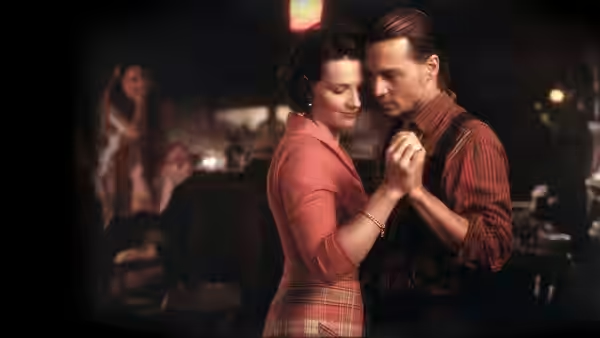
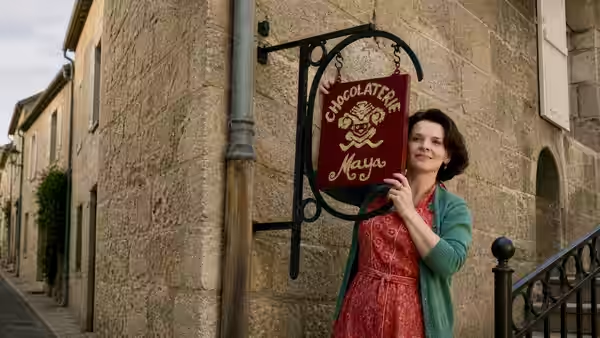
Juliette Binoche is serene and lovely and, as written, a saint with a spatula. Vianne has a trick with a spinning plate that tells her what each customer secretly craves, and she is right every time, which is a problem for a story. Nobody she helps is made worse by it. Johnny Depp arrives as Roux, the river traveller, with a guitar and an accent from somewhere a long way west of the village, and the film tells us the two of them are in love and then does little to show it. They stand near each other in firelight and the matter is considered settled.
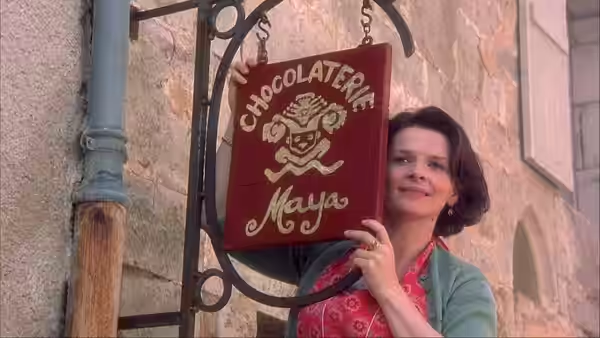
It is beautifully done. Roger Pratt shoots the village in slate greys and browns and lets the shop glow amber against them, so the chocolaterie looks like the one lit window on a cold street. David Gropman’s shop is a real place, copper pans and cocoa dust and a counter you could lean on; his village, though, is a picture book, with no mud, no poverty and a 1959 that seems never to have heard of a war. Renee Ehrlich Kalfus puts Vianne in colours the rest of the cast has been denied, in case we had missed the point. Rachel Portman’s score is pretty and never stops; every tender moment gets the same rising strings, so that by the hour mark we knew what we were meant to feel a bar before the picture told us. Andrew Mondshein cuts the eating in close-ups of mouths and melting, which is effective the first six times.
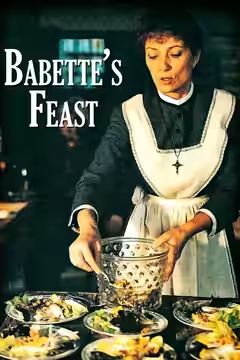
The trouble is that the film has no doubt. Jacobs’s script has decided that nobody in Lansquenet is wicked, only mistaken, and that a mistake is cured by a good ganache. Every problem in the village turns out to have a confection that fits it. A fable is allowed to be simple, but Babette’s Feast was simple and still let its Lutherans keep their dignity to the end. Here the case for pleasure is put to people who have bought a ticket to a film called Chocolat, and it is not a hard case to win.
At 121 minutes it is a long dessert, and it carries a 12. Watch it on a cold evening with someone who will not want to argue about it afterwards, and it will do what it sets out to do, which is to make you feel kindly for two hours and then hungry. Ask it anything harder and only Molina seems to have heard the question.