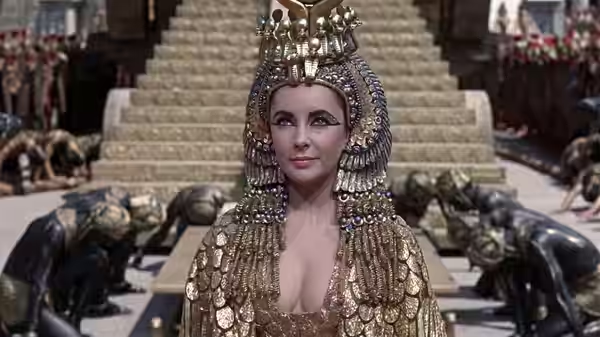
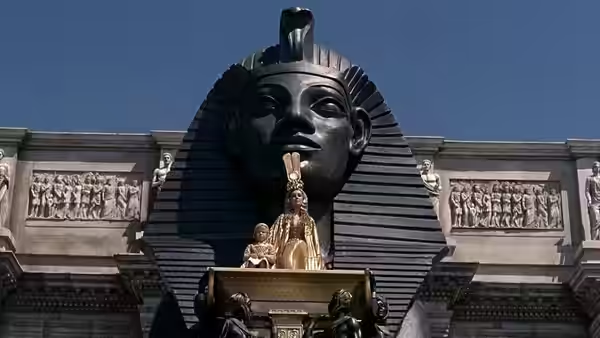
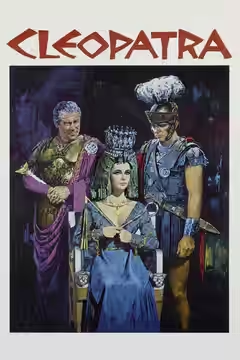
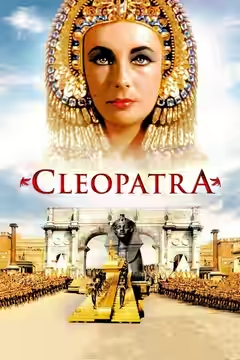
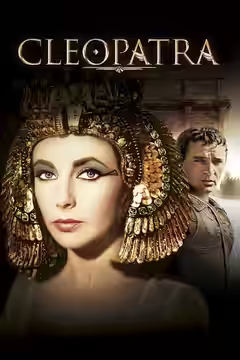
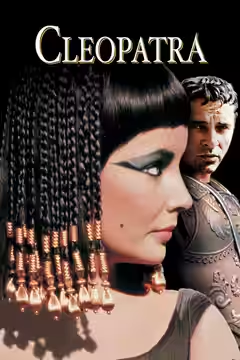
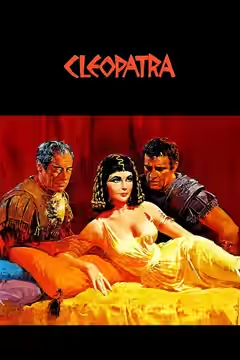
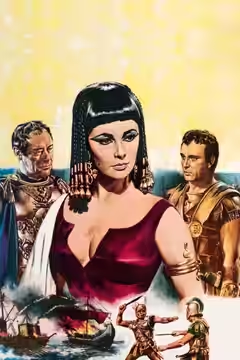
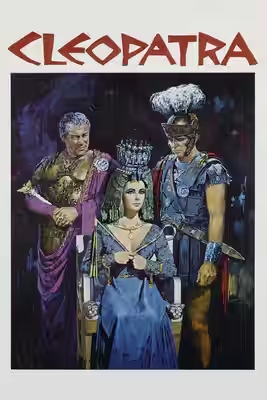
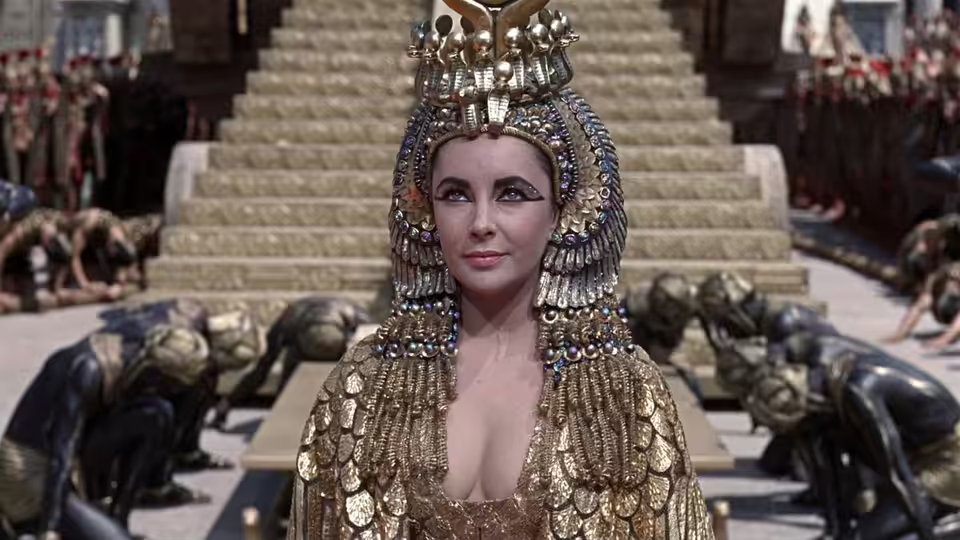
Cleopatra (Elizabeth Taylor) in golden headdress and scaled gown with kneeling attendants
Film review

Cleopatra

1963 · Directed by Joseph L. Mankiewicz · 4h 11m

In a sentenceFour hours, three screenwriters and a thousand extras, and the best scenes are two people arguing in a bedroom

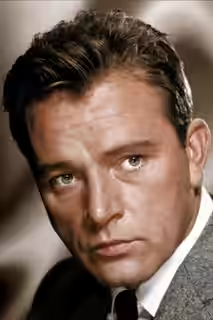
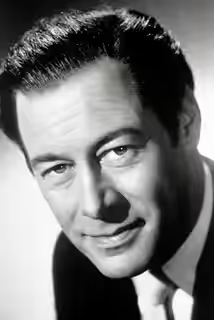
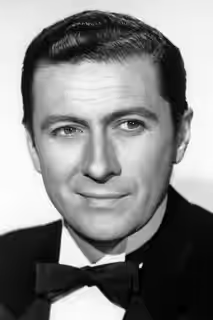
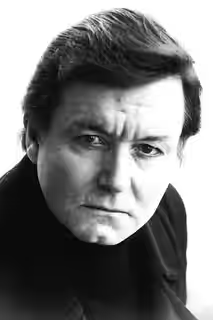
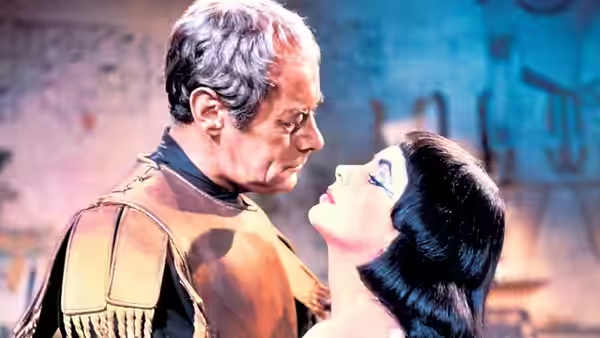
Egypt, 48 BC. Julius Caesar (Rex Harrison) sails into Alexandria after beating Pompey at Pharsalus and finds the country in the middle of a family war: the boy king Ptolemy holds the palace, and his sister Cleopatra (Elizabeth Taylor) has been driven out into the desert. She wants the throne, and she wants it alone. To get it she needs Caesar, so she has her bodyguard Apollodorus (Cesare Danova) roll her in a carpet and carry her past the Roman guards into Caesar’s bedroom. Her tutor Sosigenes (Hume Cronyn) counsels patience; Caesar’s officer Rufio (Martin Landau) counsels leaving. Fighting breaks out in the harbour, the great library catches fire, and Caesar, who came to collect a debt and settle a succession, finds he is staying. In Rome, Marcus Antonius (Richard Burton) and the young Octavian (Roddy McDowall) wait for news.

Fi1m review

Mankiewicz’s four-hour epic is two films joined at the interval: a witty, talkative one in which Rex Harrison has all the best lines, and a slower one in which Richard Burton broods in gold. The sets earn their keep; the second half does not.

Joseph L. Mankiewicz’s Cleopatra runs 251 minutes and is credited to three screenwriters, Mankiewicz, Ranald MacDougall and Sidney Buchman, which works out at roughly one an hour with change. It is one of the last of the big studio Roman pictures, and the one whose troubles behind the camera are better known than the film itself. For close to two hours, though, it is a good film. Rex Harrison’s Caesar arrives in Alexandria, Elizabeth Taylor’s queen arrives rolled in a carpet, and they spend the first half talking rings round each other. After the interval Richard Burton steps forward and the film slows to a march.

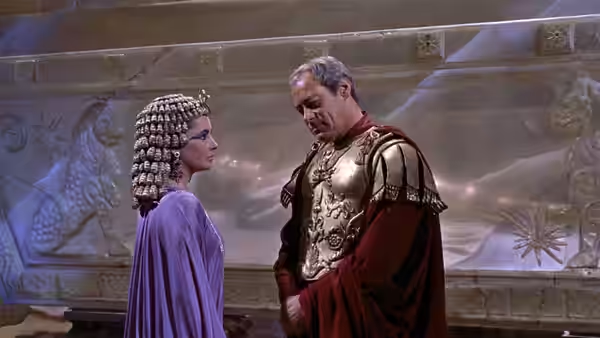
The first half is Mankiewicz’s kind of film, which is to say people being clever at one another in rooms. Harrison plays Caesar as a tired, amused administrator who finds Egypt absurd and says so, listening to each speech with his head on one side as if he had already written the reply. Taylor gives him a queen who is young, imperious and plainly enjoying the argument, and when she has Apollodorus (Cesare Danova) carry her into Caesar’s quarters inside a rug, the scene is played for comedy and gets the laugh. We laughed more than once, and at lines rather than at the film.

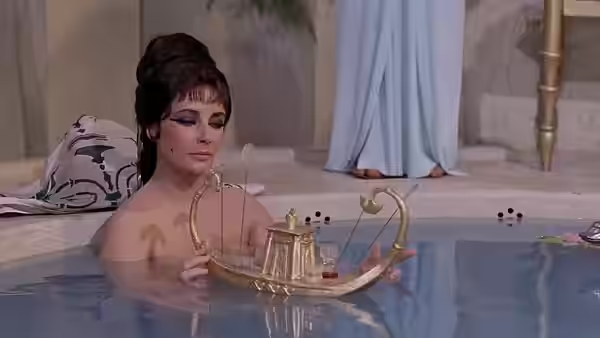
John DeCuir built Alexandria at something close to full size and Leon Shamroy photographs it accordingly: the camera sits back and level, and the frame fills edge to edge with columns, water and people. The palace is turquoise and gold; Rome is white stone and red cloth. Irene Sharaff, Vittorio Nino Novarese and Renié give Taylor a new gown for nearly every scene, each with more gold in it than the last, and put the Romans in leather and short red cloaks. Cleopatra’s entry into Rome, seated on a black sphinx hauled by hundreds of men with dancers and coloured smoke going before it, is the best piece of spectacle in the film, and we sat up for it. Alex North writes it a march for full brass and drums. Elsewhere his love theme for strings returns so often that we came to hear it as a warning.

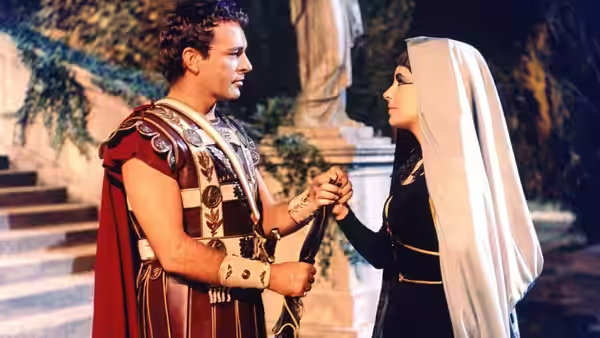
Then comes Antony. Burton is a fine actor handed a part written as a decline before it has been given a summit. He drinks, he broods, he shouts at Rufio (Martin Landau), and Taylor, so quick with Harrison, slows to his tempo. Their love scenes are the film’s weakest: two people declaring passion in long, balanced sentences that nobody in the grip of anything ever spoke. The script turns every exchange into a short essay, and in the first half Harrison’s timing hid it. Burton plays the words straight, at volume, and you hear every one.

Dorothy Spencer’s editing has a story of its own. The studio wanted a shorter film than Mankiewicz shot, and the second half shows the marks: scenes open as if we had missed their first minute, the sea battle at Actium is staged with real ships and burning models and then hurried off, and Roddy McDowall’s Octavian, the most interesting Roman in the film, keeps turning out to have gained power between scenes without our seeing how. Andrew Keir’s Agrippa and Kenneth Haigh’s Brutus get a scene or two apiece before the plot moves on. Somewhere in the third hour we caught ourselves wondering how much was left, and then were annoyed with ourselves, because the pictures were still handsome and it was not their fault.

Mankiewicz had done Rome before, in Julius Caesar (1953), with Shakespeare’s script to carry the weight, and his best films, All About Eve (1950) chief among them, are about people who talk well and know it. Cleopatra is that film for as long as Harrison is in it. After that it is a costume picture with a tragedy attached, and the tragedy is the weaker part.

See it at home, over two evenings, with the interval respected. The first evening is a witty film about an old man and a young woman working out who is using whom. The second is a studio putting its money back on the screen, and the barge at Tarsus is the one stretch of it we would not want you to miss. It carries a PG and opened in British cinemas on 12 July 1963. Its 251 minutes divide at the interval into the film we liked and the film we sat through.

Critical consensus AI synthesised

62
Positive
5
Mixed
2
Negative
3

Most critics land on the same point: the spectacle is the thing. Praise clusters on the scale of the production, the entry into Rome and the Battle of Actium most often named, and on Elizabeth Taylor, whom nearly every review treats as the reason to watch even where the film around her is found wanting. Several also credit Joseph L. Mankiewicz’s script for keeping four hours of history literate, and Variety and The New York Times admire how much scope he manages to hold together.

The reservations fall on the drama. The affair between Taylor and Richard Burton is called unconvincing more than once, the dialogue wordy or overblown, the narrative rambling. The spread is wide, from warm endorsements to outright dismissals. The New Yorker finds the film preposterous yet recommends it anyway for the pageantry, and Slant Magazine goes furthest, calling it banal rather than either a triumph or a fascinating catastrophe. Reviews of the 2013 restoration are as split as the 1963 ones.

The Guardian
11 July 2013 · Peter Bradshaw
90*

The restored big-screen version of the four-hour 1963 spectacle should not be missed as a colossus of the analogue-epic era and the high point of Elizabeth Taylor's global celebrity. It is a stately but sometimes mindboggling spectacle that breaks into two halves as Cleopatra bewitches and unmans two Roman alpha-males, with the jawdropping entry into Rome singled out as a sensational Busby Berkeley fantasy.

Read the full review →
The New York Times
16 June 1963
90*

The critic calls the film a stunning and entertaining achievement that confounds skeptics, crediting Mankiewicz's sophisticated script for bringing literate life and historical sweep to the epic tale of ambition, love, and power. The production delivers spectacle in the finest tradition despite its length.

Read the full review →
The Hollywood Reporter
13 June 1963 · James Powers
70*

The critic finds it not a great movie but a vast popular entertainment with outstanding performances, especially Elizabeth Taylor's, and spectacular production values. Praises the opulence and acting while noting it prioritizes broad appeal over artistic greatness.

Read the full review →
Variety
1 January 1963
70*

The review praises the film as a supercolossal yet remarkably literate recreation of history, highlighting Mankiewicz's achievement in managing scope and complexity, strong big scenes like the Roman entry and Battle of Actium, and overall sense of time and place despite weaker love scenes.

Read the full review →
Evening Standard
12 July 2013 · Derek Malcolm
60*

The film is no masterpiece but its lavish splendour compensates for a wordy screenplay and uneven acting; it became one of the biggest commercial successes despite its troubled production.

Read the full review →
Time Out
8 July 2013 · ★★★ · Trevor Johnston
60

The critic finds the film lacks much substance as drama but excels as unmatched Hollywood spectacle thanks to its thousands of real extras and recreation of the ancient world. Elizabeth Taylor's larger-than-life star presence is singled out for praise amid complaints of a rambling, purposeless narrative.

Read the full review →

Straight answers AI written, from our review

Is Cleopatra worth watching?
Cleopatra is worth watching for anyone who can give four hours to a Roman epic and forgive a slow second half, and we scored it 63. The first two hours, with Rex Harrison and Elizabeth Taylor talking rings round each other, are witty and handsome. After the interval Richard Burton broods and the film slows to a march, so watch it over two evenings.
How long is Cleopatra, and what is it rated?
Cleopatra runs 4h 11m. It is a drama and history film.
Where can I watch Cleopatra in Indonesia?
Cleopatra is not on any streaming or rental service in Indonesia at the moment. It is available in 29 other countries; change your country at the top of the page to see where. Availability is checked daily.
How does Cleopatra compare to Julius Caesar?
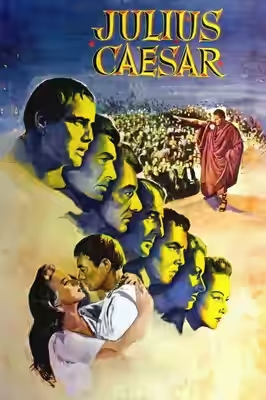
Cleopatra is the bigger and weaker of Mankiewicz's two Roman films, and Julius Caesar is the one we would send a stranger to first. The earlier film has Shakespeare's script and a cast that mostly holds, while Cleopatra has the sets, the gowns and the spectacle but only half a script worth hearing. Choose Cleopatra for the pictures and Harrison, Julius Caesar for the words.
What should I watch after Cleopatra?
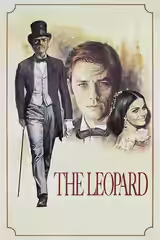
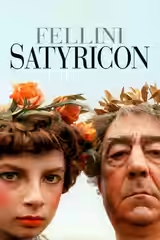
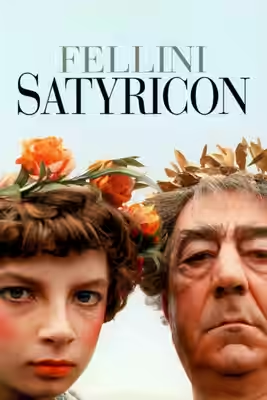
After Cleopatra, try Julius Caesar (1953, Fi1m 76): Mankiewicz’s earlier Rome, with Brando as Antony and Shakespeare doing the writing. Then The Leopard (1963, Fi1m 88): Visconti’s Sicilian aristocracy in decline, the same year, with a ballroom that outdoes the Forum; and Fellini Satyricon (1969, Fi1m 65): Ancient Rome as fever dream, for anyone who found this one too well behaved.

Cast

Awards

Academy Awards, 1964

Nominated
Best Actor
Nominated
Best Film Editing
Nominated
Best Original Score
Nominated
Best Picture
Nominated
Best Sound
Won
Best Art Direction, Color
Won
Best Cinematography, Color
Won
Best Costume Design, Color
Won
Best Visual Effects

If you liked this, try…

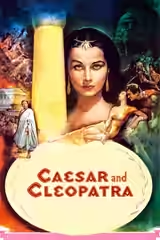
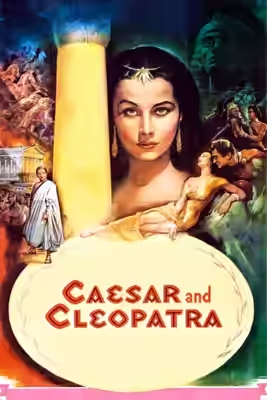
  1. Caesar and Cleopatra (1945) · not reviewed yetShaw’s version, with Claude Rains and Vivien Leigh, and it gets out in half the time.

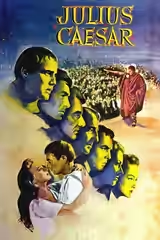
  2. Julius Caesar (1953, Fi1m 76)Mankiewicz’s earlier Rome, with Brando as Antony and Shakespeare doing the writing.

  3. Rome (2005) · not reviewed yetThe same century over two television series, with the sex and the knives left in.

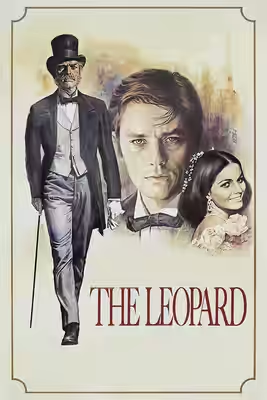
  4. The Leopard (1963, Fi1m 88)Visconti’s Sicilian aristocracy in decline, the same year, with a ballroom that outdoes the Forum.

  5. Fellini Satyricon (1969, Fi1m 65)Ancient Rome as fever dream, for anyone who found this one too well behaved.

Free account

Know what to watch tonight

Two lists that know where things are streaming, collections you can share, your own score beside ours, and Discover that remembers what you have seen.

  • Want to see, sorted by what is streaming now
  • Seen, with your score out of ten
  • No adverts, ever