Mike Nichols films Patrick Marber’s play with taste and a fine cast, and the taste is the problem. Clive Owen is savage and superb; the rest is handsome, watchable and a little too pleased with its own lines.
Closer began as a play by Patrick Marber, one that was rude about love to audiences who liked to think they were grown up about it. Mike Nichols’s film keeps Marber’s four characters and his lines and puts them in rooms so tastefully lit that the rudeness has nowhere to sit. It is a good film with a good cast and one great performance, and it is a few degrees cooler than the material wants to be.
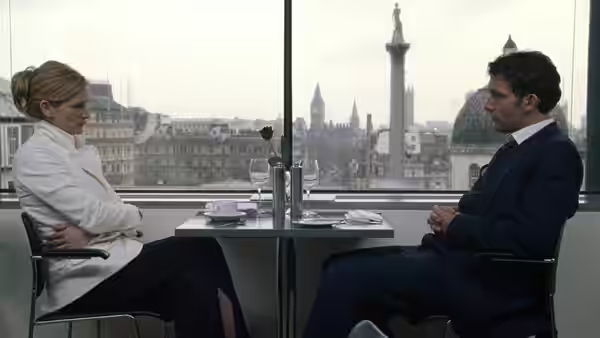
The pleasure is in the writing. Marber’s people say the unsayable in complete sentences, and the film is built from confrontations: two of them in a room, one asking questions, the other answering more honestly than is wise. Nobody in Closer lies for long, which is what makes it uncomfortable. Nichols and his editors, John Bloom and Antonia Van Drimmelen, let time pass between scenes without a caption, so we work out how long it has been from a haircut or a new flat.
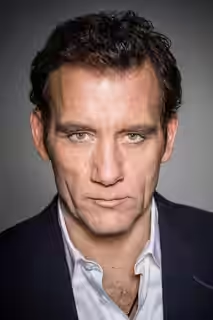
Clive Owen is the reason to see it. Larry is a man who has worked out that telling the truth is the cruellest thing he can do and has decided to enjoy it, and Owen plays him with his weight on the back foot and something close to a smile. There is a scene in which he asks a series of questions he already knows the answers to, quietly, one after another, and we flinched; we had braced for shouting and it was the calm that did it. He is also the only one of the four who looks as though he lives where the film is set rather than visiting it for the shoot.
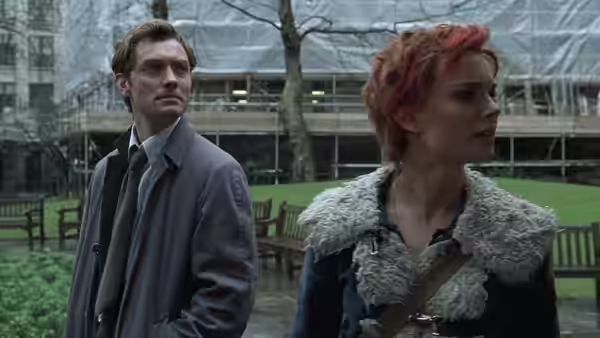
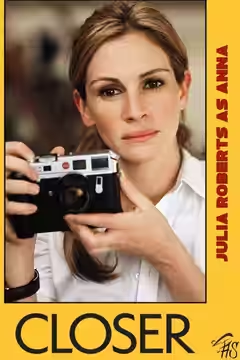
Natalie Portman gives Alice a hardness under the sweetness that pays off in ways we will not describe, and she recites the house rules to a man old enough to know better and wins every exchange. Jude Law is well cast as Dan, a man who wants to be interesting more than he wants to be kind, and that is not quite a compliment: he is charming in every scene and we could not find the person under the charm, and we are not sure the film could either. Julia Roberts has the hardest part. Anna watches and withholds, and Roberts plays her at a murmur, which is brave and often right, but when the script hands her its ugliest lines she says them as though apologising for them.
Stephen Goldblatt shoots it in cool greys and clean whites and keeps the camera still, so the actors have nowhere to go but each other. Tim Hatley’s flats are clean, pale and underfurnished. Ann Roth dresses Dan, Anna and Larry in the muted good taste of people with money and puts Alice in whatever was nearest, so she is the only one who looks as if she got dressed in a hurry. All of it is elegant. None of it is dangerous, and the play was.
Nichols has been here before. Carnal Knowledge (1971) followed two men through decades of wanting the wrong women and let nobody off. Closer is the same subject with better manners, and the manners cost it. The lines that shocked a theatre audience arrive here as quotations. We admired a good many of them and, some time in the last half hour, noticed that we had stopped caring who they were aimed at.
See it for Owen, and for a script that says out loud what most films about affairs only imply. Watch it with someone you trust, because it will start a conversation, and expect the conversation to outlast the film, which runs a brisk 104 minutes and carries a 15.