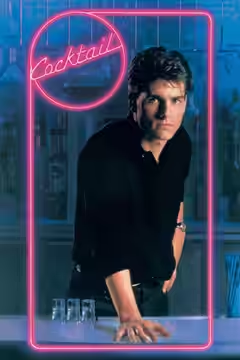
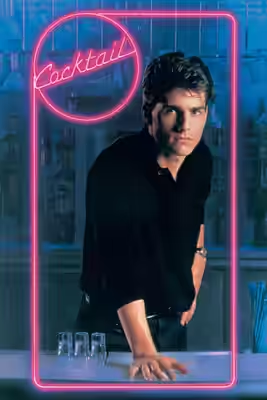
Tom Cruise’s bottle-juggling and Bryan Brown’s presence provide the few pleasures in a poor romance. Roger Donaldson keeps the glamour coming, but the shallow characters make its life lessons hard to take.
Roger Donaldson’s Cocktail is a poor romantic drama with an entertaining demonstration of bartending inside it. It wants the pleasure of watching an attractive man do a job impressively, then asks us to take his education in life and love seriously. Those aims could coexist, but the writing gives the people too little substance for the second to matter. At 104 minutes, it has room to establish more than charm, flirtation and a set of lessons we can see coming.
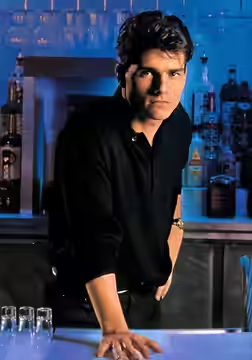
Tom Cruise, playing Brian Flanagan, does the bottle-juggling with enough assurance to make the work entertaining on its own terms. We enjoyed watching him handle the bottles, because the skill is visible and the film briefly stops asking charm to do every job. There is real effort here, and an appeal that does not depend on believing a word of the screenplay. Roger Donaldson keeps returning to his leading man’s attractiveness, though, until our interest in the performance begins to wear thin.
Bryan Brown, as Douglas “Doug” Coughlin, supplies another reason to keep watching: he can hold our attention when the characterisation will not. Elisabeth Shue, playing Jordan Mooney, gets less help from a romantic story that does too little to make her wants matter. Heywood Gould’s screenplay treats the women chiefly in relation to the man’s progress, and its lessons about relationships suffer accordingly. The sexism matters because we are being asked to accept the film as an account of growing up.
Dean Semler’s cinematography makes a spectacle of the bar work and gives Tom Cruise plenty of admiring attention. Mel Bourne’s production design supplies bars suited to these performances, though the glossy surroundings cannot make the people more interesting. There is nothing wrong with making this job look attractive, and the film is easy enough to look at. The Caribbean romance offers a change of setting without much improvement in how the relationships are written.
Neil Travis’s editing has an easier job with the bartending routines, where there is something definite to watch, than with the increasingly strained melodrama. The drama asks for feelings that the shallow characterisation has done little to earn. J. Peter Robinson’s music supports the shifts in mood, but cannot make them feel less forced. By the time the film is pressing its life lessons upon us, the screenplay has given us little reason to trust its judgement.
A glossy romance need not offer much wisdom, but it does need people whose attractions and disappointments we can believe. Here, the predictable writing and the increasingly overworked drama make that difficult, even with these performers. Most critics have little patience for the film, and we share their objection to the thin characters rather than begrudging anyone the pleasure of the bar routines. If convincing romance matters tonight, choose something else.