Carlos Saura’s film about a child who believes she has killed her father is quiet, exact and hard to shake, built on a performance from Ana Torrent that most adults could not give. It asks patience for twenty minutes and pays it back.
Carlos Saura made Cría cuervos in the year Franco died, and it is hard to watch it without knowing that. The film itself is smaller than the history around it: a big house in Madrid, three sisters, a dead father, an aunt who moves in, a grandmother who cannot speak, and a girl who believes she has committed a murder. Saura wrote it as well as directed it, and he keeps almost all of it indoors. It is among the best films we know about the inside of a child’s head, and it makes its case with a child’s face.
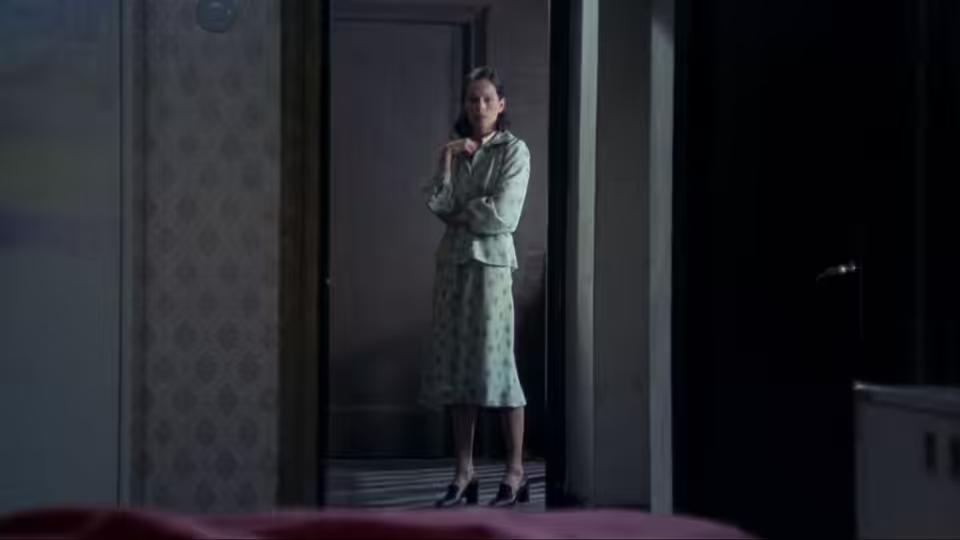
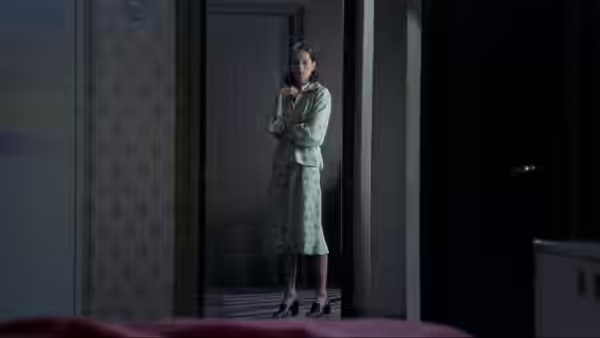
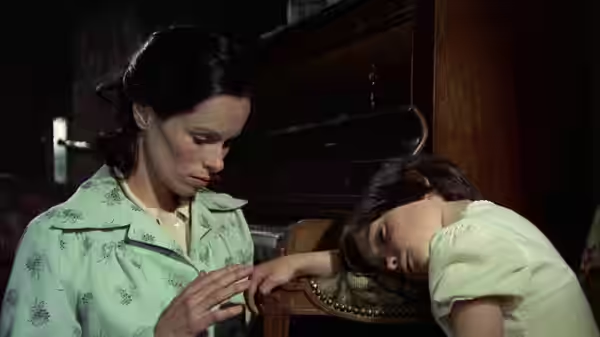
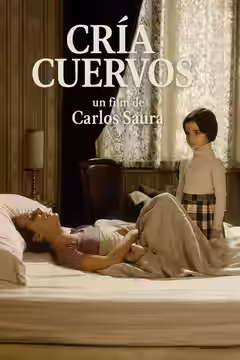
Ana (Ana Torrent) comes downstairs at night and stands outside her father’s door. A woman, Amelia (Mirta Miller), comes out doing up her blouse and hurries away. Ana goes in, looks at her father, Anselmo (Héctor Alterio), dead on the bed, and takes the glass of milk from beside him to the kitchen, where she washes it with care. She finds her mother, María (Geraldine Chaplin), in the kitchen, and it is some minutes before we learn the mother has been dead for a while. Saura does not signal the shift. He lets the dead woman make her daughter a snack.
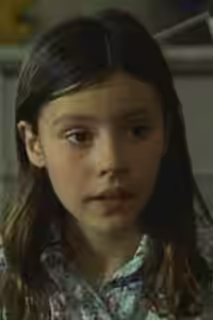
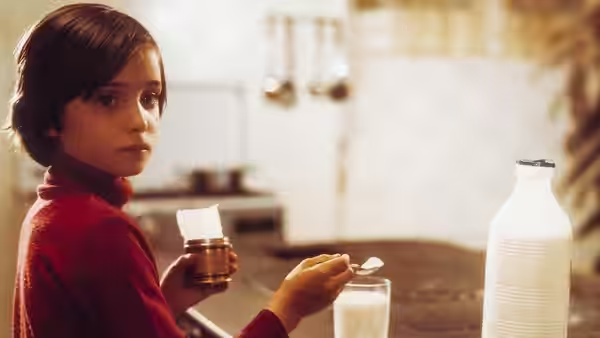
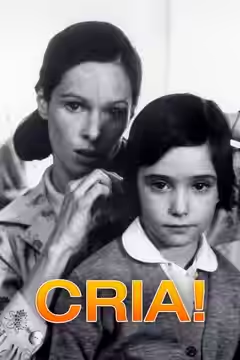
Torrent does not act. She watches. Her face is round, pale and still, and Saura holds on it for longer than most directors would trust a child to bear. We felt properly cold watching her rinse that glass, and it was the calm that did it: no fear, no hurry, a small girl tidying up after what she takes to be her own crime. She keeps a tin of white powder her mother once told her was poison, and the film lets her carry it round the house like a doll.
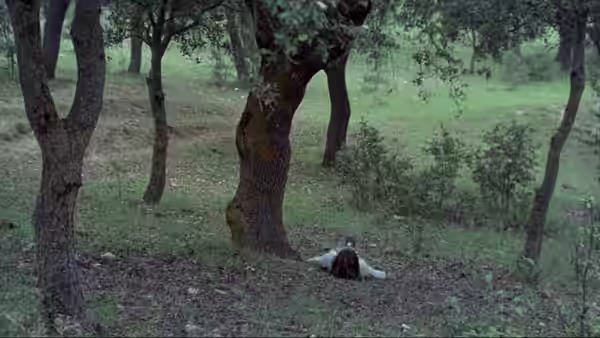
Teodoro Escamilla shoots the house dim, with the shutters half closed, so that the rooms are brown and the garden beyond the glass is bleached almost white. Rafael Palmero fills it with heavy dark furniture, photographs of men in uniform, and an empty swimming pool the girls sit in as if it were a room. Pablo González del Amo cuts between what is happening, what Ana remembers and what she imagines without a dissolve to warn us, which is confusing for twenty minutes and then exactly right, because the girl does not separate them either. The music is a pop song, Jeanette’s “Porque te vas”, which the sisters play and dance to in their black mourning dresses. The dancing moved us more than we expected: three children shut in a house with their dead, doing the one cheerful thing available.
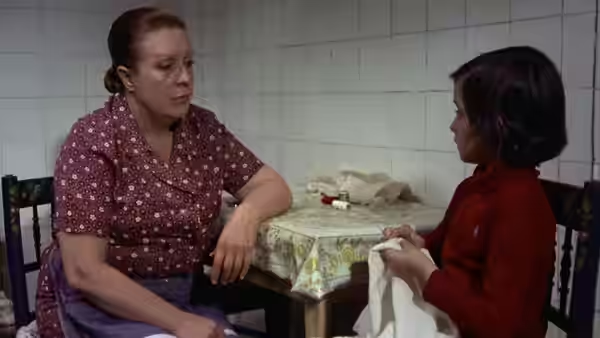
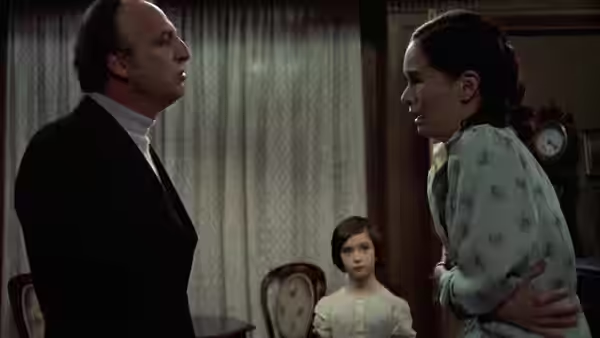
The grown-ups are not villains. Mónica Randall plays the aunt, Paulina, as a woman who is correct about everything and warm about nothing, and who is trying, which is the sad part. Florinda Chico Martín-Mora’s housekeeper Rosa tells the children things about their parents that no child should hear, and enjoys the telling. Josefina Díaz de Artigas is the mute grandmother in the wheelchair, gazing at old photographs pinned to a wall while Ana points at each one and asks who they were.
The device that works least well is the one Saura plainly cared most about. Chaplin also plays Ana as a grown woman, speaking to the camera from twenty years on, and these passages are stiff and a little explanatory, telling us about a childhood we are already watching. Conchita Pérez and Mayte Sánchez, as the sisters Irene and Maite, are natural and sparingly used; we would have taken more of them and less of the narration.
The reviews we have read take the film as a picture of Franco’s Spain, the children as the country and the adults as the regime, and that is there if you want it. It also works as a plain account of a house in mourning and a girl nobody is watching. It runs 105 minutes and carries a 12 certificate. See it at home, alone or with someone who will not talk, and give it the twenty minutes it needs to teach you how it moves.