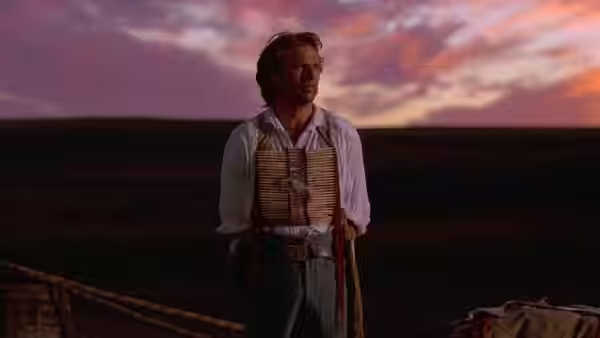
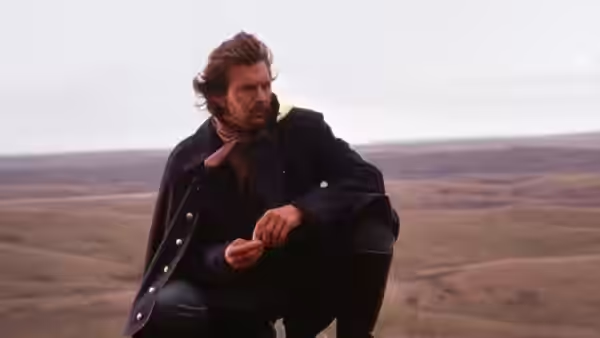
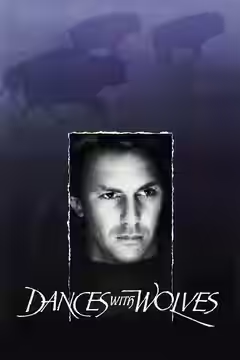
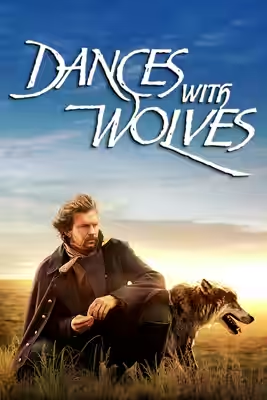
Lieutenant Dunbar (Kevin Costner) holding the American flag outdoors
Film review

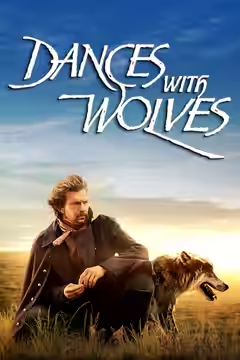
Dances with Wolves

1990 · Directed by Kevin Costner · 3h 01m

In a sentenceKevin Costner takes three hours to meet the neighbours, and we are surprisingly happy to wait

Lieutenant Dunbar (Kevin Costner), a Union soldier, encounters the Sioux on the Dakota plains. As he begins to learn about their way of life, his dealings with the community become the centre of his story. Among those he meets are Kicking Bird (Graham Greene), Wind In His Hair (Rodney A. Grant) and Stands With A Fist (Mary McDonnell). Ten Bears (Floyd ‘Red Crow’ Westerman) and Black Shawl (Tantoo Cardinal) are also part of the community Dunbar comes to know. The Western follows his growing involvement with the Sioux and his changing understanding of where he belongs.

Fi1m review

Kevin Costner’s patient Western earns its scale through character, landscape and a willingness to listen. Its view of Sioux life is too reassuring, but the warmth and spectacle make the long journey worthwhile.

Dances with Wolves is a generous, absorbing Western whose sincerity survives some fairly simple thinking about its hero. Kevin Costner directs and plays Lieutenant Dunbar, a Union soldier drawn into Sioux life on the Dakota plains. Michael Blake’s screenplay lets that growing interest develop slowly, giving us time to share it. We recommend it with a reservation: the film is so pleased by Dunbar’s willingness to learn that it does not always ask much else of him.

Costner is well suited to such a watchful part. His unforced screen presence makes curiosity credible, and he avoids acting as though every new experience ought to announce a personal revelation. Graham Greene’s Kicking Bird and Rodney A. Grant’s Wind In His Hair help give the Sioux community distinct personalities; the film works because we become interested in the people Dunbar meets. Mary McDonnell, as Stands With A Fist, supplies an emotional directness that prevents the warmth from settling into mere good manners.

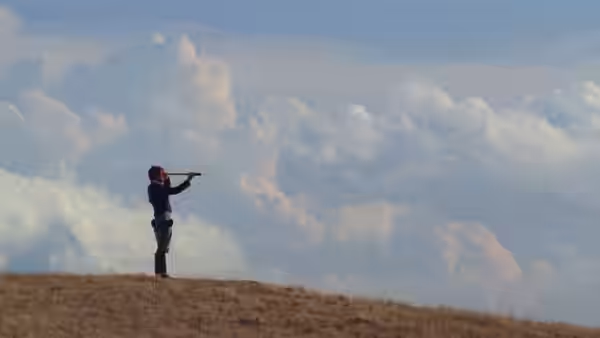
Dean Semler’s cinematography gives the Dakota plains the space they need. His wide views allow us time to look across the country, so Dunbar’s growing fascination with it becomes something we can share. The buffalo hunt shows how well Costner can organise action within those open spaces. We were thrilled by it: the movement across the plains makes the danger feel immediate, even within a film so willing to take its time.

Jeffrey Beecroft’s production design also matters to the film’s quieter success. The attention given to the Sioux community’s physical surroundings helps make daily life worth watching, and supports the actors when there is no grand action to carry a scene. John Barry’s score is less restrained, giving the landscape and Dunbar’s growing attachment a broad emotional emphasis. It is affecting music, though there are passages when we would prefer to recognise the feeling without quite so much help.

Editors Neil Travis, William Hoy, Steve Potter and Chip Masamitsu let the film settle into its long stretches of discovery. At 181 minutes, it makes a considerable demand on an evening, but the pace is usually part of the pleasure. The narration is less necessary: Dunbar’s interest is clear enough in Costner’s performance and in the attention paid to those around him. Explaining that interest can make the film feel anxious that we might not have noticed what a good man he is.

The larger reservation concerns the writing. Blake and Costner give Sioux life affection and detail, but their admiration sometimes makes the people seem less complicated than they should. Dunbar’s discovery remains the central concern, so the film’s sympathy does not quite free it from the Western’s habit of making a white man’s education everybody else’s business. The performances do much to soften that limitation, particularly Greene’s, but they cannot remove it.

Anyone looking for a Western driven chiefly by confrontation may find this one’s priorities frustrating. Costner is willing to let getting acquainted occupy the space another film would fill with threats, and that patience is what we value most here. The sentiment needs watching, but it need not spoil the pleasure of spending time with these characters. Set aside the full evening; this is poor material for a quick watch before bed.


Critical consensus AI synthesised

69
Positive
6
Mixed
0
Negative
2

Most critics respond warmly to Dances with Wolves, praising the ambition and assurance of Kevin Costner’s direction, the landscape photography and the attention given to Sioux characters and daily life. The favourable reviews find feeling and narrative sweep alongside the spectacle, with the buffalo hunt a recurring highlight. Costner’s restrained screen presence also earns praise, while Variety singles out John Barry’s score as part of the film’s appeal.

The spread is wide, however, and sentimentality divides even the admirers. Some find the Sioux idealised and the central character thinly drawn, without losing their affection for the film. The New Yorker takes those objections further, finding Costner bland and the film’s treatment of history lightweight. Slant Magazine likewise sees polished but generic Hollywood filmmaking, despite admiring the visuals and buffalo hunt. The central disagreement is over whether the film’s sincerity compensates for its limited complexity.

Empire
· Angie Errigo
85*

Dances With Wolves is a personal and artistic triumph for Costner as well as a box-office winner and hugely enjoyable epic. The critic singles out the affectionate and detailed portrayal of the Native American characters and their way of life for praise, while noting excessive sentiment in places.

Read the full review →
Los Angeles Times
9 November 1990 · Sheila Benson
85*

The critic hails Costner's directorial debut as a stirring epic with a clear-eyed vision of the frontier and the Sioux, rich in character, action, and spectacle like the buffalo hunt. It singles out the authentic, lyrical photography and the film's engaging focus on character over mere spectacle.

Read the full review →
Variety
12 November 1990 · Amy Dawes
80*

The review praises Costner's assured directorial debut for bringing grace and feeling to the elegiac tale of a hero's discovery among the Sioux on the Dakota plains. It highlights the fresh style, John Barry's score, and the film's potential as a word-of-mouth hit despite its length.

Read the full review →
Time Out
10 September 2012 · GA
75*

Costner's directorial debut is a genuinely impressive epic Western with a sincere dramatic sweep and strong historical authenticity. It lacks some complexity and political sophistication, with sentimentalised Sioux and a two-dimensional hero, but remains hard to resist.

Read the full review →
The New Yorker
17 December 1990 · Pauline Kael
40*

The review portrays the film as a bland, middle-of-the-road New Age social-studies lesson about a white man joining the superior Sioux culture, criticizing Costner as a bland megalomaniac who makes everything lightweight. It acknowledges some competence and the film's authentic vastness but finds it untroubled and not truly revisionist.

Read the full review →
Slant Magazine
7 June 2003 · ★/4
25

The critic finds the film a well-polished but generic example of epic Hollywood filmmaking that has not aged well and was overrated at the time of its Oscar wins. They single out the visual splendor and the buffalo hunt sequence as transcendent moments amid the lack of profundity.

Read the full review →

Straight answers AI written, from our review

Is Dances with Wolves worth watching?
Dances with Wolves is worth watching for anyone with a full evening to spare and a taste for a Western that prefers getting acquainted to gunfire, and we scored it 80. Kevin Costner's patient direction, Dean Semler's wide views of the Dakota plains and a well-drawn Sioux community carry its 181 minutes. Its view of the hero is a little too pleased with him.
How long is Dances with Wolves, and what is it rated?
Dances with Wolves runs 3h 01m. It is an adventure and drama film.
Where can I watch Dances with Wolves in Israel?
Dances with Wolves is not on any streaming or rental service in Israel at the moment. It is available in 10 other countries; change your country at the top of the page to see where. Availability is checked daily.
How violent or frightening is Dances with Wolves, and is it suitable for children?
Dances with Wolves carries a UK 15 certificate, so it is not a film for young children, and it is best kept for older teenagers and adults. The review notes real danger in the buffalo hunt, and the certificate implies violence beyond what a 12A would allow, but this is a slow, character-led Western rather than one built on confrontation or fright.
How does Dances with Wolves compare to Embrace of the Serpent?
Dances with Wolves is the warmer and more comfortable of the two, and Embrace of the Serpent the sterner. Costner's film lets a white visitor learn from the Sioux and is pleased that he does, while Ciro Guerra's black-and-white Amazon journey offers its visitors far less reassurance. Choose Costner for spectacle and company; choose Guerra for something graver and stranger.
What should I watch after Dances with Wolves?
After Dances with Wolves, try Dersu Uzala (1975, Fi1m 82): Another patient encounter across cultures, with landscape that makes human certainty look foolish. Then Embrace of the Serpent (2015, Fi1m 82): A sterner account of cross-cultural encounters, with less comfort for the visitor.

Cast

Awards

Academy Awards, 1991

Nominated
Best Actor
Nominated
Best Costume Design
Nominated
Best Production Design
Nominated
Best Supporting Actor
Nominated
Best Supporting Actress
Won
Best Cinematography
Won
Best Director
Won
Best Film Editing
Won
Best Original Score
Won
Best Picture
Won
Best Sound
Won
Best Writing, Adapted Screenplay

Silver nugget for the best foreign film, 1991

Won
Silver nugget for the best foreign film

Dallas-Fort Worth Film Critics Association Award for Best Film, 1990

Won
Dallas-Fort Worth Film Critics Association Award for Best Film

If you liked this, try…

  1. Dersu Uzala (1975, Fi1m 82)Another patient encounter across cultures, with landscape that makes human certainty look foolish.

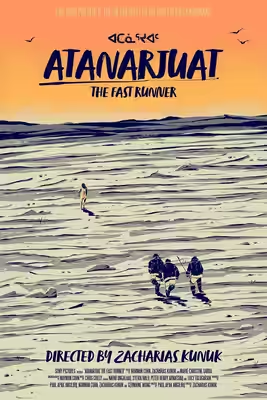
  2. Atanarjuat: The Fast Runner (2001) · not reviewed yetAn Indigenous perspective, with the dramatic weight resting inside the community.

  3. The New World (2005) · not reviewed yetFor more open country, cultural encounters and feeling carried by images.

  4. Embrace of the Serpent (2015, Fi1m 82)A sterner account of cross-cultural encounters, with less comfort for the visitor.

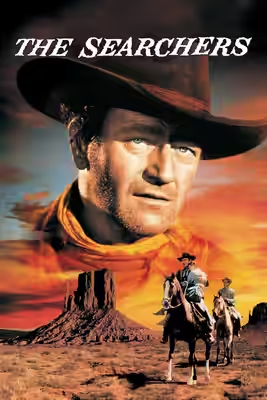
  5. The Searchers (1956) · not reviewed yetFor a harsher Western whose central outsider is considerably harder to embrace.

Free account

Know what to watch tonight

Two lists that know where things are streaming, collections you can share, your own score beside ours, and Discover that remembers what you have seen.

  • Want to see, sorted by what is streaming now
  • Seen, with your score out of ten
  • No adverts, ever