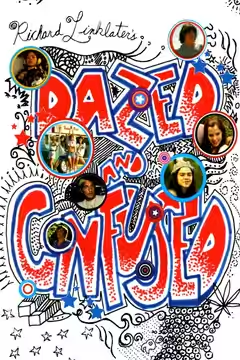
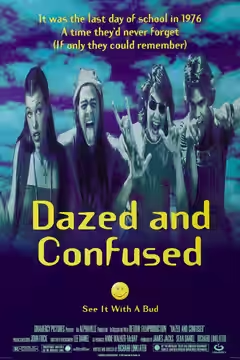
Richard Linklater’s last-day-of-school comedy is warm, funny and alert to the cruelty beneath the celebrations. Its wandering occasionally wears thin, but the ensemble and the music make spending time with these teenagers a pleasure.
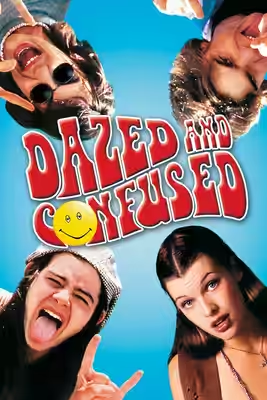
Richard Linklater’s Dazed and Confused is a funny, patient film about the last day of school in 1976, and we recommend it with one reservation: its drifting occasionally becomes repetition. The teenagers have time to fill, cars to cruise in and parties to think about, which is quite enough to occupy them. Linklater takes their wish to have a good evening seriously. He also notices how much of that evening can be spent waiting for something better to start.
As writer and director, Linklater is good at letting a conversation wander without losing track of the people having it. Sandra Adair’s editing keeps the separate groups within reach of each other, so a change of company can supply the lift another film would get from a plot development. The joins are easy to miss, which suits a comedy about people with little sense of urgency. We get time to notice the listener as well as the person holding forth.
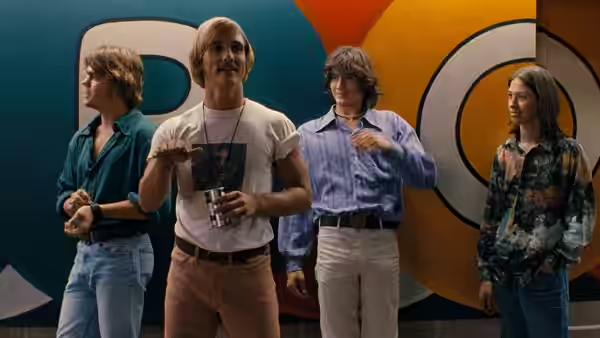
Lee Daniel’s cinematography gives the groups room, keeping the ensemble readable through all the hanging about. John Frick’s production design gives 1976 a comfortably used look, and Katherine Dover’s costumes help distinguish people whose plans for the evening are much the same. The clothes and surroundings never seem to need their own pause for appreciation. That leaves us free to watch the small adjustments people make when they want to fit in.
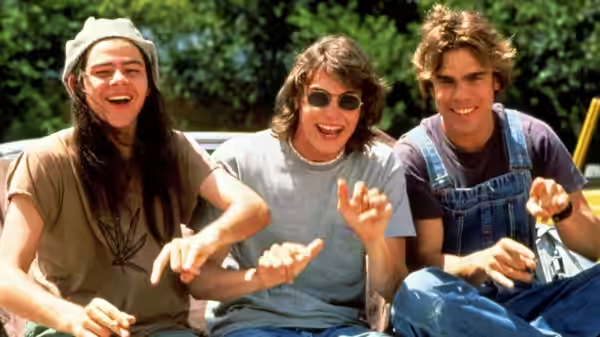
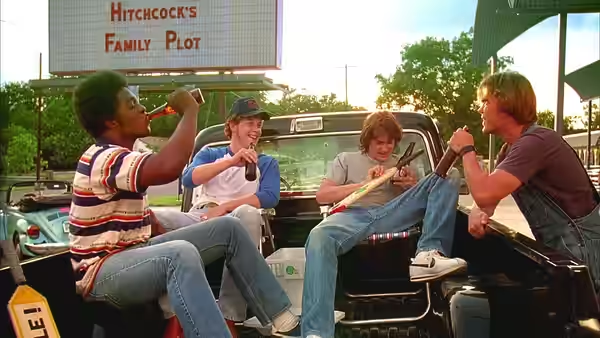
Jason London as Pink and Wiley Wiggins as Mitch give the film people to return to as it moves between groups. London’s ease and Wiggins’s more exposed awkwardness help distinguish two ways of getting through the same social evening. Rory Cochrane’s Slater has the slack concentration of someone whose next thought may take a while to arrive. Matthew McConaughey’s Wooderson is funny because he seems so satisfied with what little he needs from a conversation. Linklater gives the ensemble enough time for these differences to become the entertainment.
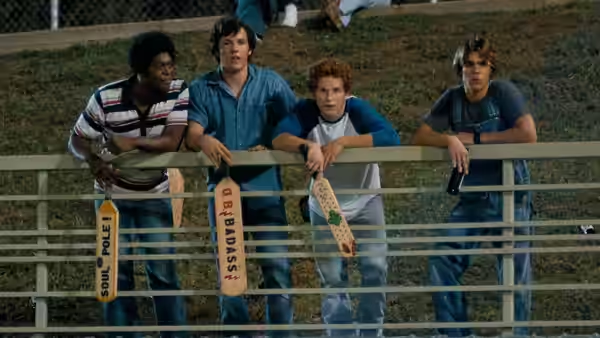
We winced at the hazing. Older pupils making newcomers suffer is an ugly way to celebrate their own freedom, and the casualness with which it becomes part of the day’s entertainment makes it worse. Linklater lets that cruelty remain unpleasant even in a film so ready to enjoy these people’s company. The younger pupils’ discomfort gives the social hierarchy consequences, and keeps the affection from turning into an excuse for everyone.
The drift does have a cost. Some exchanges continue after we have understood the person speaking, and the succession of loose encounters occasionally feels thin even at 102 minutes. The rock soundtrack helps, supplying energy when the talk settles into a familiar rhythm, though there are stretches where it is doing too much of the work. Adair and Linklater could have trimmed a little of the idle talk without spoiling the pleasure of having nowhere urgent to be.
Teen comedies often hurry towards a lesson, a declaration or a public humiliation. Linklater puts enough interest into small encounters that we seldom need any of those things, and he allows the prospect of adulthood to trouble the fun without stopping for a warning speech. Anyone who needs a strong plot should take the lack of one seriously. Watch it with someone who can enjoy an evening without asking what it achieved.