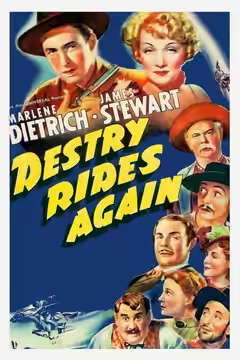
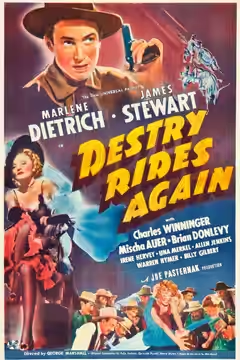
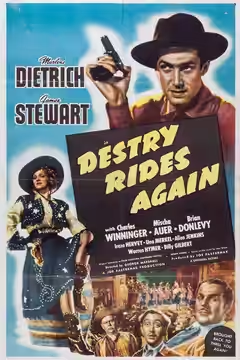
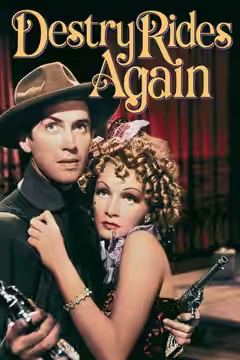
George Marshall’s comedy Western gives James Stewart and Marlene Dietrich room to be funny, difficult and persuasive. The broad slapstick occasionally wears thin, but the saloon bustle and the leads’ chemistry make this easy to recommend.
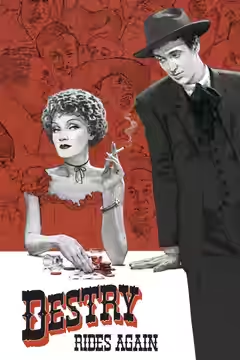
Destry Rides Again is a funny, warm Western with enough seriousness about violence to make its jokes matter. George Marshall takes the familiar business of restoring order to a lawless town and gives it to a man who would rather talk. Tom Destry Jr., played by James Stewart, makes patience look like a practical skill. The film enjoys the disruption this causes without treating decency as a joke. It is good company, with a small warning attached to the broader comedy.
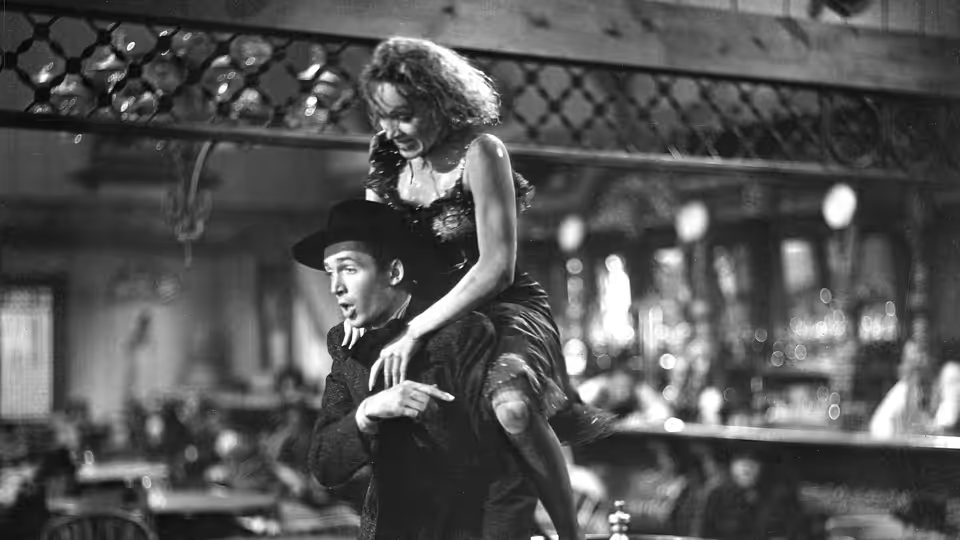
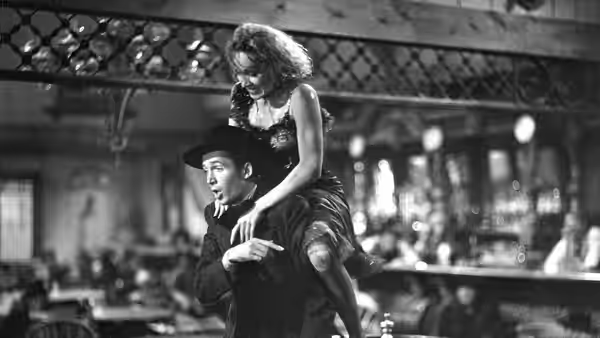
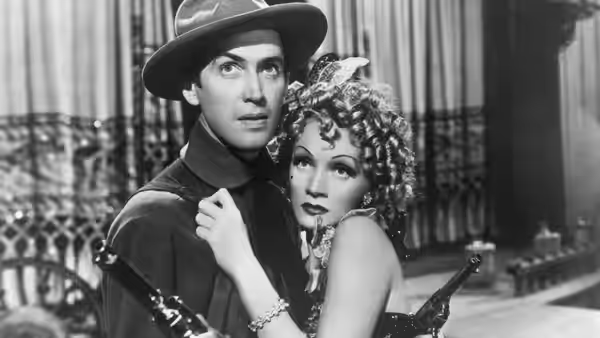
James Stewart is particularly good at making Destry’s mildness feel deliberate. His conversational manner holds our attention through the commotion, and the jokes never quite erase the sense that he is working something out. We laughed at the contrast between his patient delivery and the fuss in the saloon. It is a pleasure to watch a Western lawman whose efforts to calm people down are allowed to be entertaining in themselves, without the actor having to wink at us.
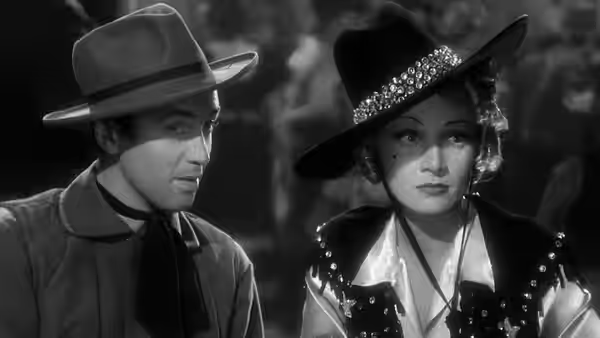
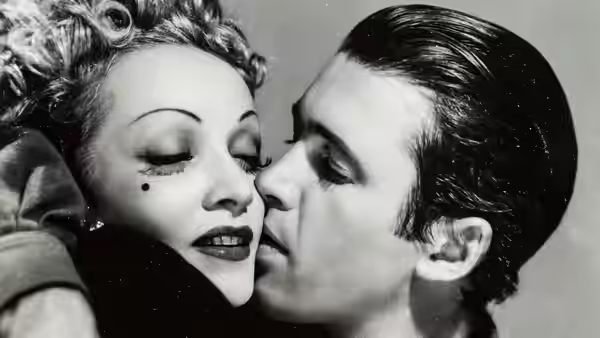
Marlene Dietrich makes Frenchy a convincing match for him, with a comic force that gives their scenes some friction. Their chemistry benefits from the sense that each finds the other difficult to account for; neither performance settles into easy admiration. The film has room for a woman’s impatience with masculine self-importance, and her performance keeps that impatience personal. It helps that neither lead appears to be politely waiting for the other to finish being charming.
George Marshall’s saloon staging gives the film much of its energy. Hal Mohr’s cinematography makes that busy space readable, so that the crowd remains interesting while the leads keep our attention. The setting matters because a man trying to keep the peace has an audience, and everyone else can see how he goes about it. The comedy benefits from having all those witnesses, with the saloon giving the actors somewhere to establish themselves through their behaviour towards one another.
Milton Carruth’s editing has a demanding mixture to manage: slapstick, wisecracks, songs and melodrama all want their turn. The changes of pace mostly work, allowing the film to become serious without making its earlier good humour seem misplaced. Frank Skinner’s music contributes to that amiability without removing the sense of trouble beneath it. The songs are part of the pleasure, giving the saloon more to do than provide a convenient place for men to quarrel.
The screenplay by Felix Jackson, Henry Myers and Gertrude Purcell is strongest when Destry’s manner unsettles the town’s expectations of a lawman. Some of the slapstick is less discriminating, inviting a broad laugh where the central performances have taught us to enjoy a smaller one. That is a modest but recurring irritation, particularly when the physical fuss delays another exchange between the leads. The supporting comedy is sometimes allowed to run beyond the point at which we have got the joke.
For a comedy Western, this has a satisfying seriousness about how men are expected to behave. Destry’s preference for persuasion keeps testing the assumption that authority has to announce itself through force, and the humour makes the question worth attending to. At 94 minutes, the film has space for both the saloon entertainment and the unease underneath it. Choose it for the two leads, and forgive the occasional joke that takes too long.