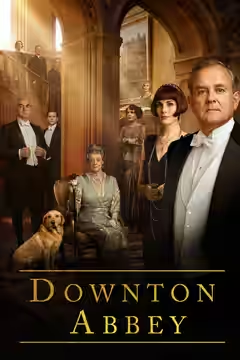
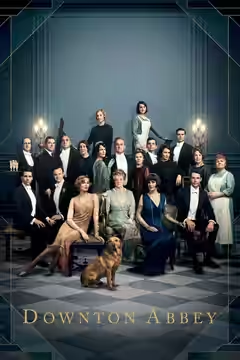
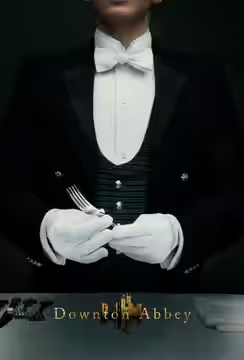
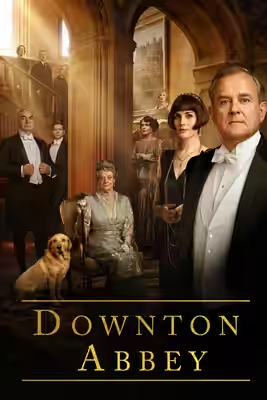
Downton Abbey offers careful craftsmanship and some welcome comedy, but its crowded script gives familiar characters too little room. It is a decent reunion for devotees, with limited appeal for anyone coming to the household fresh.
Downton Abbey is a pleasant but dramatically slight reunion, best suited to people who already care who gets to run the house. Michael Engler directs Julian Fellowes’s screenplay as though the chief obligation were to keep the familiar characters as their admirers remember them. There is sense in that: a return to familiar company need not justify itself by changing everybody’s life. Over 122 minutes, though, we wanted more than an opportunity to check that the household was still in working order.
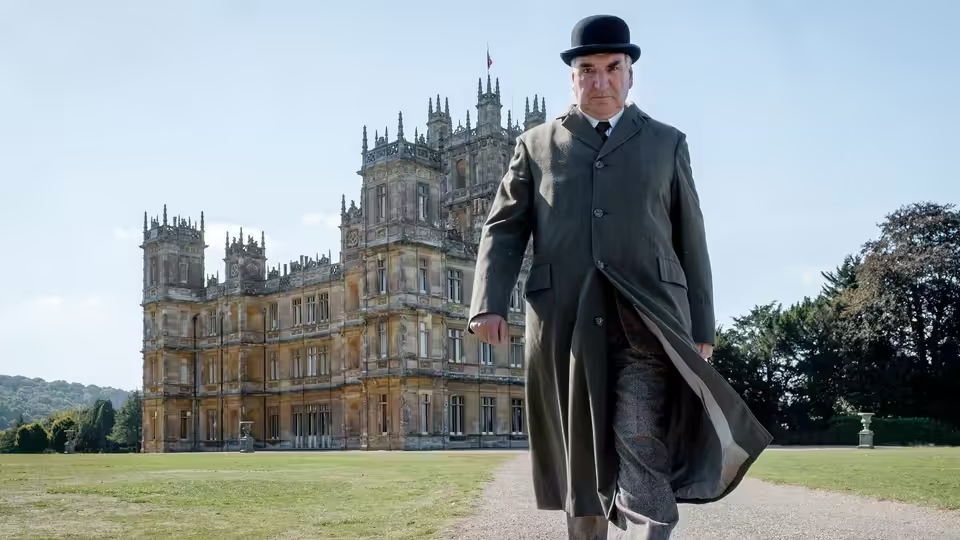
The useful disturbance is the arrival of royal servants, who take over from Downton’s own staff. We laughed at the affront of being told that somebody else would do the work, because the staff treat being displaced as an insult to their competence. It is a recognisable workplace grievance, and the film gets some welcome energy from it. Their determination to have a say gives the drama a practical concern: who is allowed to do the job, and who decides.
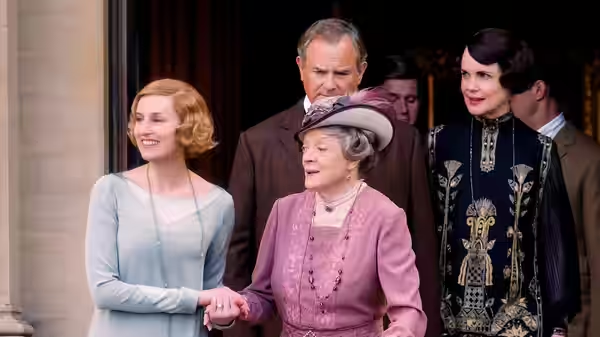
Michelle Dockery makes Mary Crawley’s composure entertaining, and Jim Carter gives Charles Carson enough weight to make the fuss worth attending to. Both are useful in a film where so much depends on accepting household protocol as a serious matter. The difficulty is finding enough time for them among all the competing demands on our attention. Julian Fellowes keeps bringing somebody else forward, and the crowded script allows too little space for an encounter to change how we see the people in it.
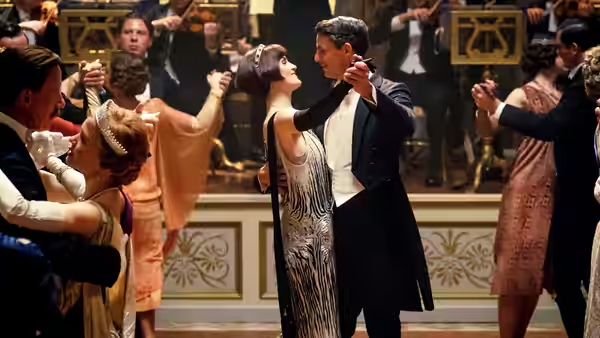
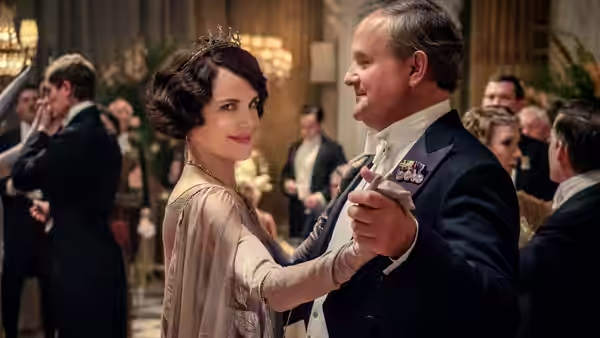
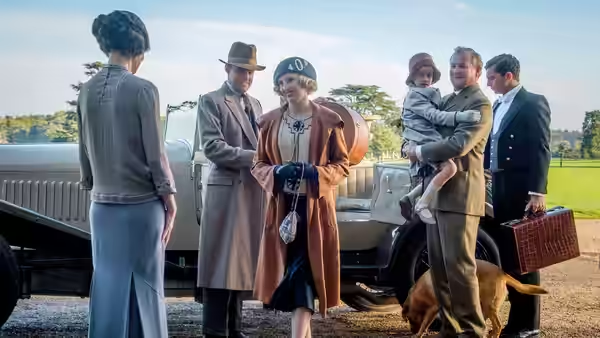
Ben Smithard photographs the interiors with a warmth that makes it easy to enjoy looking around while the story pauses. Donal Woods’s production design gives the household a convincing sense of being maintained, with the rooms looking cared for rather than merely available for filming. Anna Mary Scott Robbins’s costumes repay the attention the camera gives them; here, at least, the extra room of a cinema screen has a purpose. The care in these departments makes the thinness of the writing more noticeable.
Mark Day’s editing has to serve a large cast and too many small concerns, and the frequent changes of focus grow tiring. We seldom get long enough with a disagreement for it to become uncomfortable. John Lunn’s music encourages the sense of a reassuring return, but reassurance is already in plentiful supply. A little less insistence on how fondly these people should be regarded might have given their problems more room to register.
The film’s gentleness also limits what it can say about the class system that keeps this house running. There is comic mileage in employees defending their jobs, but their desire to serve makes the household hierarchy seem hardly worth questioning. A period drama is allowed to offer an agreeable evening without delivering a lecture on inequality. Here, though, rank matters constantly, and the script is reluctant to suggest that anyone might be better off without it.
The move from television makes the weaknesses harder to overlook. Familiarity does much of the work that a more substantial story ought to do, and the procession of small incidents never develops much urgency. There is enough craft and dry humour for those already attached to the household. Begin with the television programme if these people are new to you.