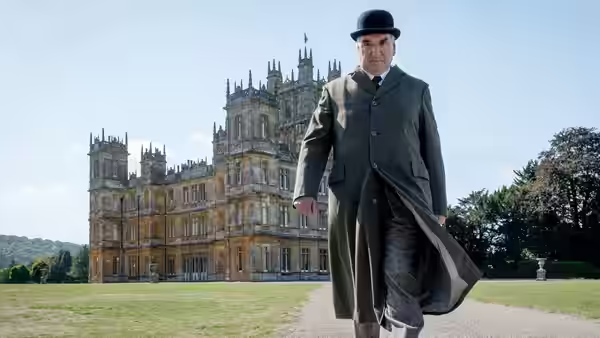
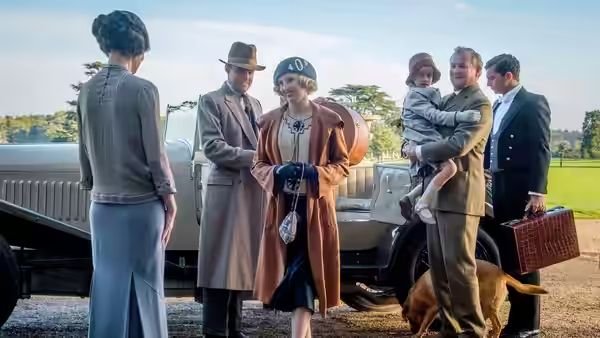
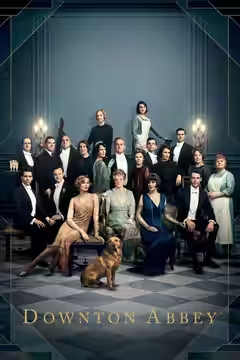
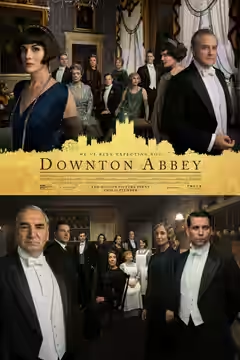
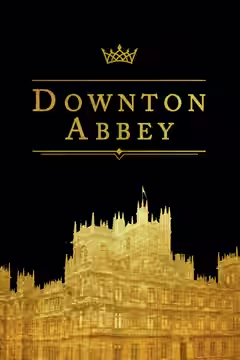
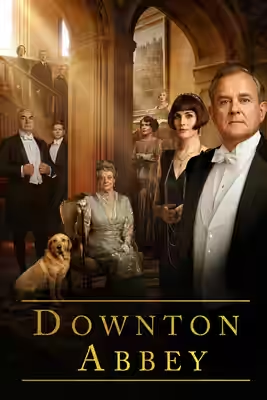
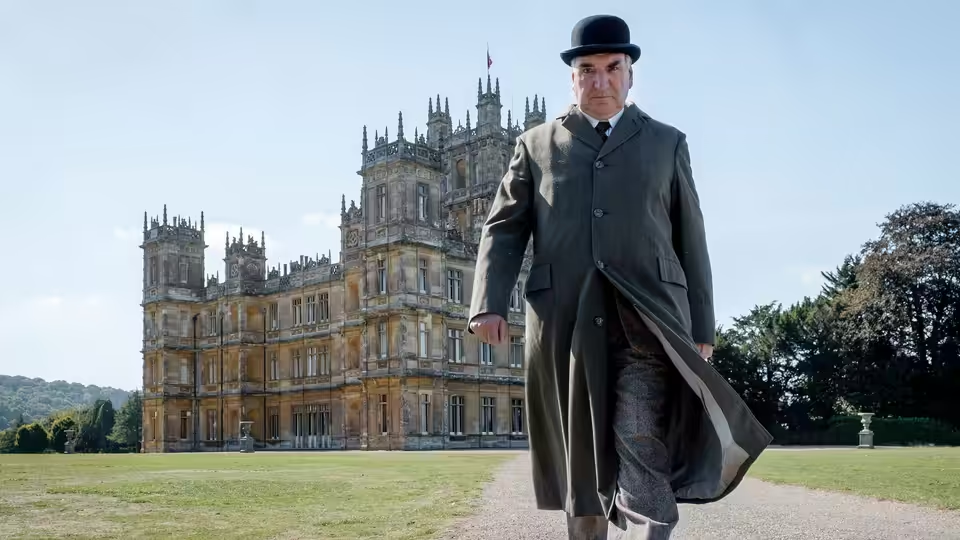
Robert Crawley (Hugh Bonneville) walks across the grounds toward Downton Abbey
Film review

Downton Abbey

2019 · Directed by Michael Engler · 2h 02m · FSK 0

In a sentenceThe servants are furious about being given less work, and the film expects us to understand

At Downton Abbey, Robert Crawley (Hugh Bonneville) and Mary Crawley (Michelle Dockery) face the arrival of royal servants who intend to take charge of the house. Charles Carson (Jim Carter) and Anna Bates (Joanne Froggatt) are among those caught up in the dispute over who gets to do the work. Downton’s staff want to carry out their duties; the visitors intend to run things themselves. Accommodating royalty means making room for employees who expect to set the rules, leaving the people who already work in the house to decide how much they will accept.

Plays from YouTube when you press play; nothing loads from them until then.

Fi1m review

Downton Abbey offers careful craftsmanship and some welcome comedy, but its crowded script gives familiar characters too little room. It is a decent reunion for devotees, with limited appeal for anyone coming to the household fresh.

Downton Abbey is a pleasant but dramatically slight reunion, best suited to people who already care who gets to run the house. Michael Engler directs Julian Fellowes’s screenplay as though the chief obligation were to keep the familiar characters as their admirers remember them. There is sense in that: a return to familiar company need not justify itself by changing everybody’s life. Over 122 minutes, though, we wanted more than an opportunity to check that the household was still in working order.

The useful disturbance is the arrival of royal servants, who take over from Downton’s own staff. We laughed at the affront of being told that somebody else would do the work, because the staff treat being displaced as an insult to their competence. It is a recognisable workplace grievance, and the film gets some welcome energy from it. Their determination to have a say gives the drama a practical concern: who is allowed to do the job, and who decides.

Michelle Dockery makes Mary Crawley’s composure entertaining, and Jim Carter gives Charles Carson enough weight to make the fuss worth attending to. Both are useful in a film where so much depends on accepting household protocol as a serious matter. The difficulty is finding enough time for them among all the competing demands on our attention. Julian Fellowes keeps bringing somebody else forward, and the crowded script allows too little space for an encounter to change how we see the people in it.

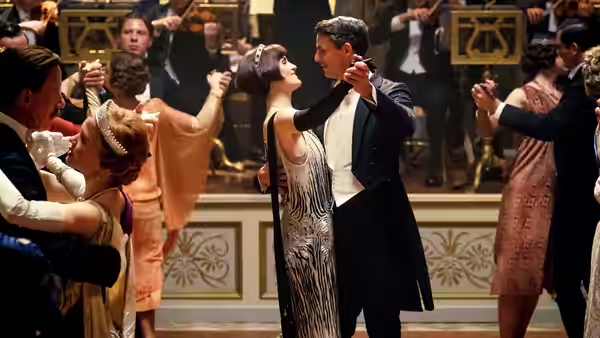
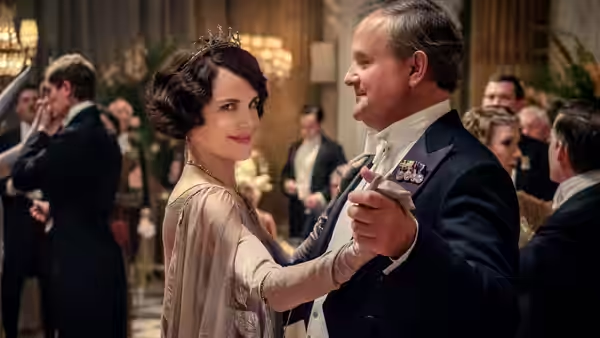
Ben Smithard photographs the interiors with a warmth that makes it easy to enjoy looking around while the story pauses. Donal Woods’s production design gives the household a convincing sense of being maintained, with the rooms looking cared for rather than merely available for filming. Anna Mary Scott Robbins’s costumes repay the attention the camera gives them; here, at least, the extra room of a cinema screen has a purpose. The care in these departments makes the thinness of the writing more noticeable.

Mark Day’s editing has to serve a large cast and too many small concerns, and the frequent changes of focus grow tiring. We seldom get long enough with a disagreement for it to become uncomfortable. John Lunn’s music encourages the sense of a reassuring return, but reassurance is already in plentiful supply. A little less insistence on how fondly these people should be regarded might have given their problems more room to register.

The film’s gentleness also limits what it can say about the class system that keeps this house running. There is comic mileage in employees defending their jobs, but their desire to serve makes the household hierarchy seem hardly worth questioning. A period drama is allowed to offer an agreeable evening without delivering a lecture on inequality. Here, though, rank matters constantly, and the script is reluctant to suggest that anyone might be better off without it.

The move from television makes the weaknesses harder to overlook. Familiarity does much of the work that a more substantial story ought to do, and the procession of small incidents never develops much urgency. There is enough craft and dry humour for those already attached to the household. Begin with the television programme if these people are new to you.
Critical consensus AI synthesised

60
Positive
10
Mixed
8
Negative
5

The reviews lean towards qualified affection for Downton Abbey, with praise concentrated on familiar faces, costumes and period detail. Maggie Smith’s comic timing and withering lines draw approval even from critics who find the film wanting elsewhere. Most critics see a comforting return for established fans, and the warmer notices value time spent with the characters more than a substantial new story. The interiors and finery also earn praise for giving the reunion a sense of occasion.

Opinion spreads widely over whether those pleasures sustain a feature film. Repeated reservations concern crowded yet slight plotting, low stakes and limited appeal for newcomers. Several reviews also question the indulgence towards aristocratic life and the avoidance of social conflict. Eye for Film offers a particularly sharp dissent, criticising washed-out cinematography and choppy editing as well as flimsy drama, while still finding merit in the costumes.

Vulture
10 September 2019 · Jen Chaney
85*

Chaney finds the film a satisfying, welcome return that delivers the pleasures of an extended episode for fans. She especially praises its beautiful cinematography and costumes, along with a late scene between Maggie Smith and Michelle Dockery that lands emotionally.

Read the full review →
Los Angeles Times
18 September 2019 · Kenneth Turan
80*

Turan finds the film a satisfying continuation of the series, especially for viewers already attached to its characters. He praises Maggie Smith, who steals scenes as the Dowager Countess.

Read the full review →
The i Paper
9 September 2019 · ★★★★ · Geoffrey Macnab
80

Macnab finds the film contrived but enjoyable, with its kitsch and snobbery part of the appeal. He particularly praises Maggie Smith’s impeccable comic timing and the sumptuous production values.

Read the full review →
IndieWire
9 September 2019 · B · Hanh Nguyen
77

Nguyen finds the film a satisfying, lavish return to the world of Downton Abbey and a fitting farewell for its characters. She especially praises its sumptuous visual details and warm nostalgia, while noting that plot takes a back seat to spending time with familiar characters.

Read the full review →
The Hollywood Reporter
9 September 2019 · Leslie Felperin
75*

Felperin finds the film satisfyingly sumptuous, though its many plotlines can make it feel like an extra-long episode. She particularly praises the costumes and finery, which make striking use of the big screen.

Read the full review →
Film Comment
· Michael Sragow
70*

The standfirst suggests the film succeeds in recreating the series’ charms. It singles out its upstairs-downstairs appeal, though the full review is not visible.

Read the full review →

Straight answers AI written, from our review

Is Downton Abbey worth watching?
Downton Abbey is worth watching for devoted followers of the television programme, but we find it a dramatically slight reunion and score it 64 out of 100. The carefully furnished interiors and dry workplace comedy offer pleasure, though the crowded script gives familiar characters too little room; newcomers are better off beginning with the programme.
How long is Downton Abbey, and what is it rated?
Downton Abbey runs 2h 02m and is rated 0 by the FSK in Germany. It is a drama and romance film.
Where can I watch Downton Abbey in Germany?
Downton Abbey is available to rent from Amazon Prime Video and Apple TV from €2.99. Availability is checked daily; the links above go straight to each service.
How does Downton Abbey compare to Gosford Park?
Downton Abbey offers a gentler reunion with a familiar household, while Gosford Park is the sharper, funnier film and our stronger recommendation for a country-house drama about class. We favour Downton Abbey for established affection and reassuring company; Gosford Park brings more suspicion to its servants and guests, although its mystery plotting can get muddled.
What should I watch after Downton Abbey?
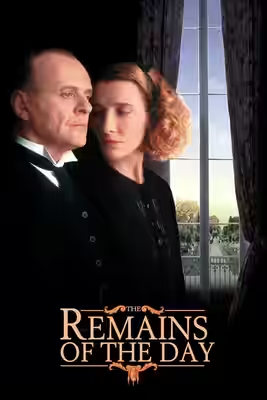
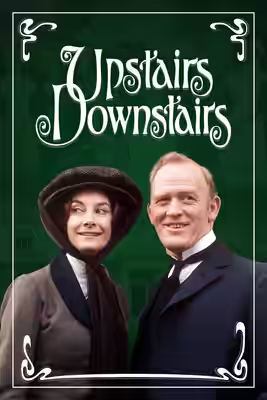
After Downton Abbey, try Gosford Park (2001, Fi1m 85): A country house full of servants, guests and sharper suspicions about both. Then The Remains of the Day (1993, Fi1m 88): For a harder look at what a life of impeccable service costs; and Upstairs, Downstairs (1971, Fi1m 83): Another household where the staff have lives worth following beyond their duties.

Cast

If you liked this, try…

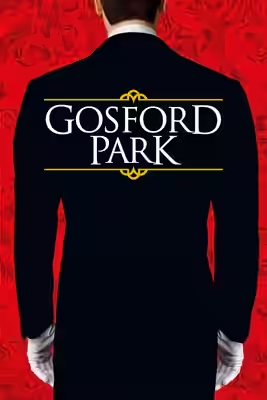
  1. Gosford Park (2001, Fi1m 85)A country house full of servants, guests and sharper suspicions about both.

  2. The Remains of the Day (1993, Fi1m 88)For a harder look at what a life of impeccable service costs.

  3. Upstairs, Downstairs (1971, Fi1m 83)Another household where the staff have lives worth following beyond their duties.

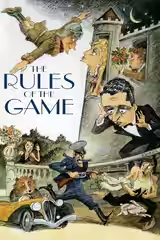
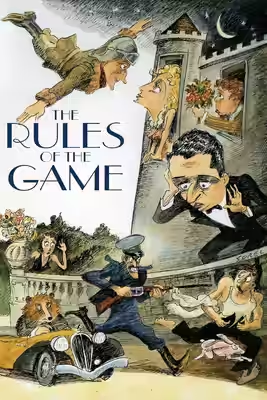
  4. The Rules of the Game (1939, Fi1m 91)Country-house manners turn uglier when the guests stop pretending to behave.

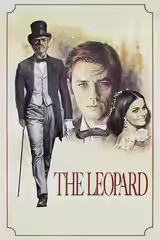
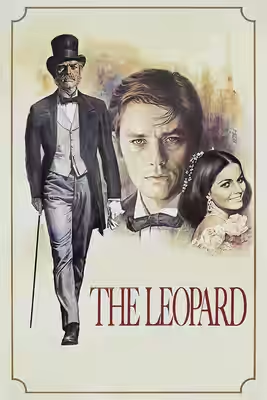
  5. The Leopard (1963, Fi1m 88)Aristocratic splendour meets social change that cannot be settled over dinner.

Free account

Know what to watch tonight

Two lists that know where things are streaming, collections you can share, your own score beside ours, and Discover that remembers what you have seen.

  • Want to see, sorted by what is streaming now
  • Seen, with your score out of ten
  • No adverts, ever