Fritz Lang’s crime thriller rewards patience with Rudolf Klein-Rogge’s unsettling villain and oppressive interiors. The pursuit drags, and 271 minutes is more than the story can comfortably sustain, but the menace makes it worth the effort.
Fritz Lang’s Dr. Mabuse, the Gambler is a good crime thriller that asks for more patience than it consistently rewards. Its 271 minutes make room for an imposing villain, a brooding atmosphere and passages that could use a firmer hand. Lang wants Mabuse’s criminal schemes to suggest something wrong with the society around him. The film is most persuasive when it lets Rudolf Klein-Rogge carry that suggestion. It becomes less compelling when it settles into the work of pursuit.
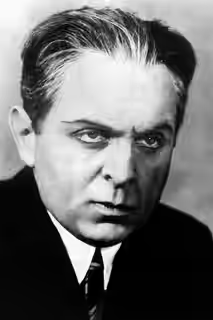
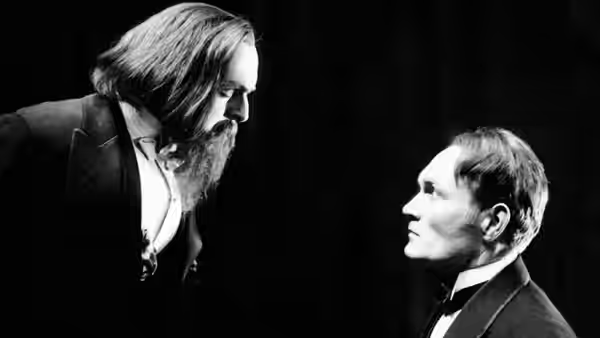
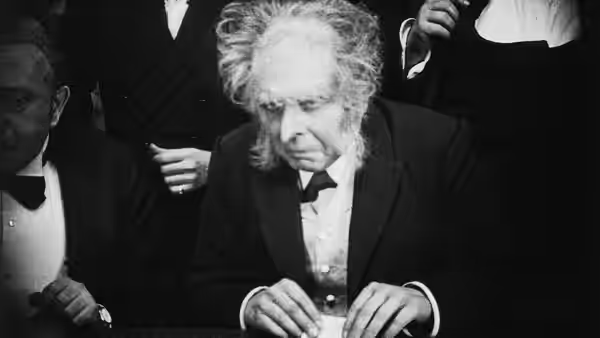
Klein-Rogge’s Dr. Mabuse is the main reason to stay. The performance makes his decadence ugly, with little invitation to mistake it for sophistication, and gives the criminal schemes a personal nastiness. Such a dominant villain can leave a film struggling to hold our interest whenever he is absent. That is a problem here, although Klein-Rogge earns the attention: we remain interested in him after the business of tracking him has begun to wear thin.
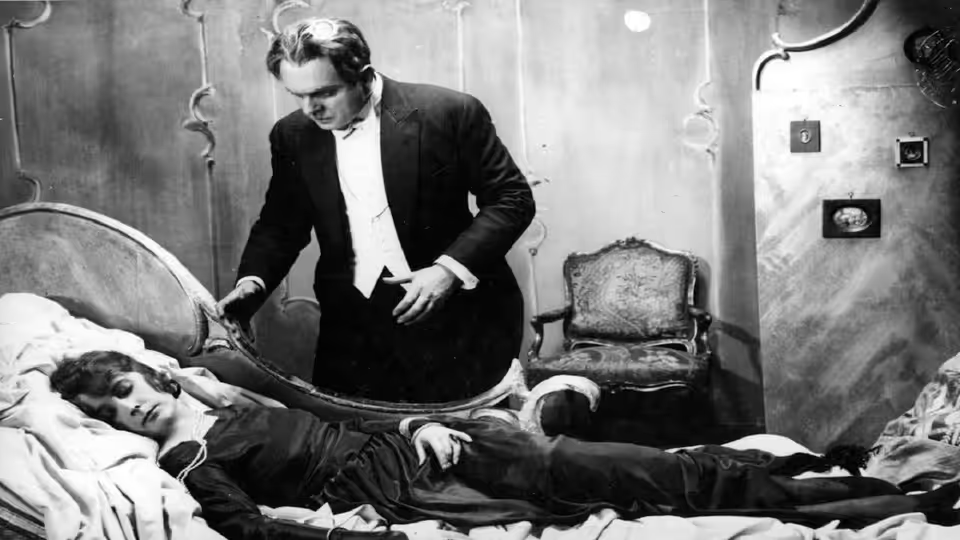
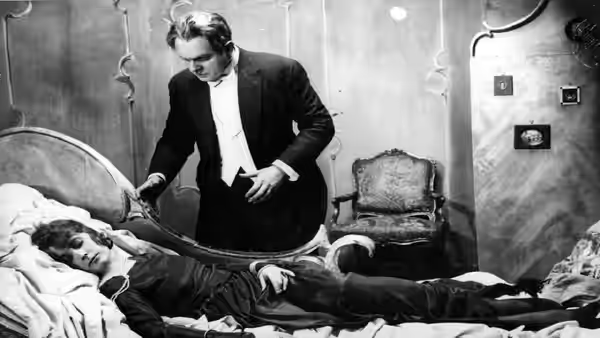
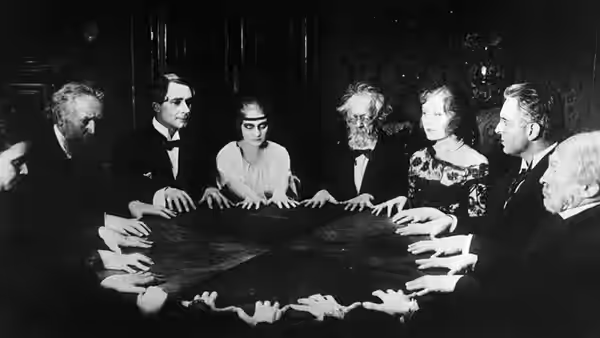
Carl Hoffmann’s cinematography is strongest in the interiors, where the lighting makes luxury feel oppressive. The rooms are sumptuous, but they do not look restful; their richness helps explain the attraction of the society Mabuse disrupts. Multiple exposures add to the disquiet without making the film’s effect depend entirely on visual tricks. Lang gives the décor enough attention for us to register it, and the brooding atmosphere survives even when the plot slows.
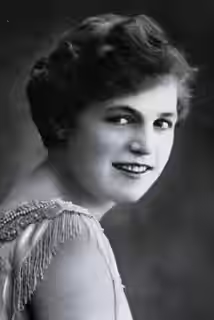
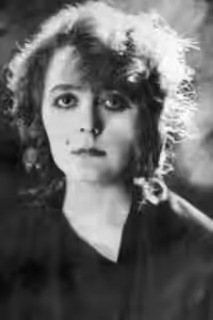
Bernhard Goetzke gives Prosecutor von Wenk a welcome firmness amid all this criminal excess. Aud Egede-Nissen, as Cara Carozza, and Gertrude Welcker, as Countess Dusy Told, also deserve attention for performances that hold their own beside Klein-Rogge. They help the film feel populated by people with separate concerns, even when the pursuit threatens to take over. The actors remain engaging through stretches of plotting that keep supplying business after we have understood the central conflict.
Thea von Harbou, Fritz Lang and Norbert Jacques share the screenplay credit, and the writing too often seems anxious to explain what the images have already made interesting. The wordy captions interrupt our attention to faces and rooms. We grew restless during the procedural passages, because the explanations keep delaying an investigation we want to see advance. The romantic pursuit also weakens the pressure, and at this length such diversions matter.
The music credited to Konrad Elfers and Osmán Pérez Freire supports the brooding tone, but it cannot hurry the more laborious passages. Those need fewer explanations and a shorter route through the investigation. As a thriller, the film gives us plenty to look at while leaving too much time to wonder when the pursuit will advance. Its precise direction makes that uneven pace more frustrating, since Lang plainly knows how to command attention.
A crime thriller needs its pursuers to interest us once the villain has left the screen. Lang does not always manage that, despite Goetzke’s efforts, and the long investigation exposes the weakness. Yet the oppressive interiors and Klein-Rogge’s performance give us good reasons to put up with the delays. Allow an evening for it, provided a sinister criminal and some carefully lit rooms can sustain your interest when the police are taking their time.