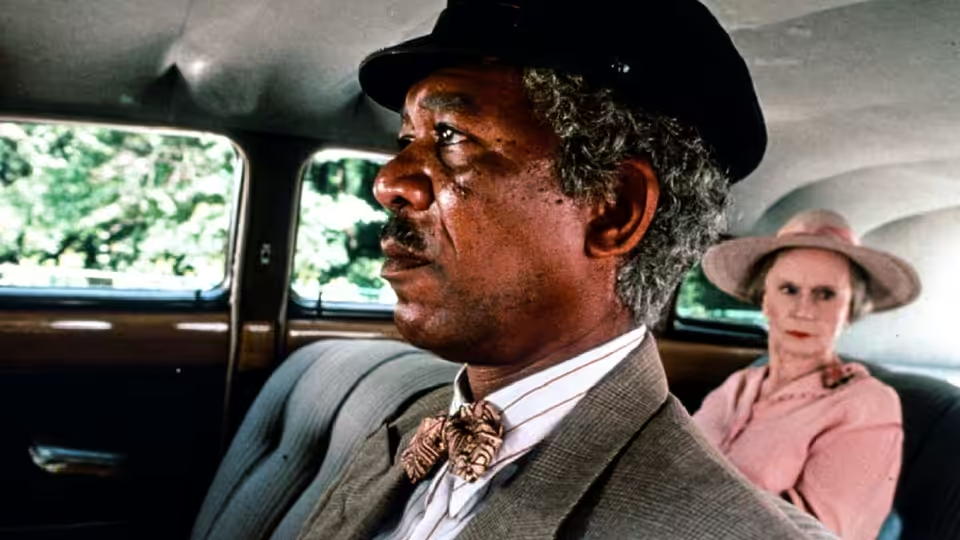
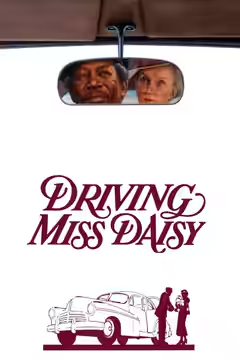
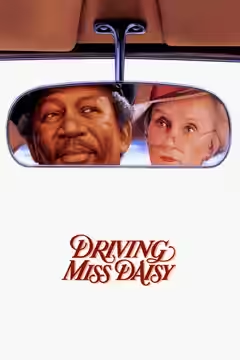
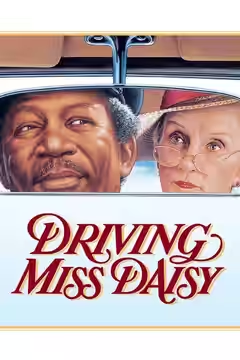
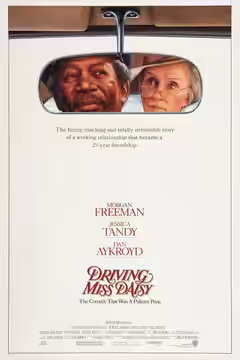
Morgan Freeman and Jessica Tandy are so good together that it takes a while to notice how little the film around them wants to say. It is warm, carefully made and a U certificate, and it treats twenty-five years of Georgia as scenery.
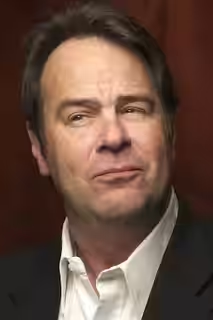
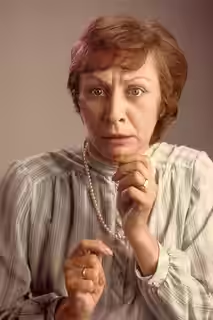
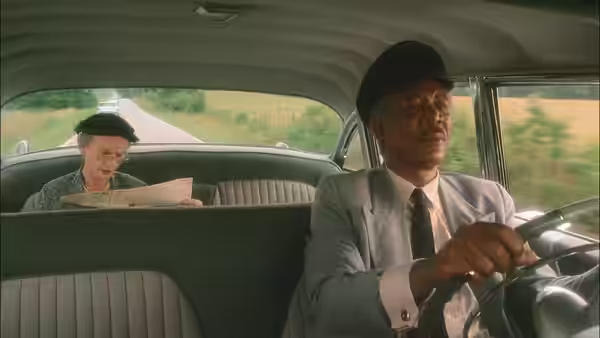
Alfred Uhry adapted his own play and Bruce Beresford has kept the size of it: three people, one house, one car, and twenty-five years going past the windows. Daisy Werthan (Jessica Tandy) is a widow who has just written off her car. Her son Boolie (Dan Aykroyd) hires Hoke Colburn (Morgan Freeman) to drive her whether she likes it or not, and she does not like it. The film is 99 minutes about how long it takes her to change her mind. The two lead performances are good enough that we would tell anyone to watch them; the film they are in is a smaller thing, and we think most critics have been kinder to it than it deserves.
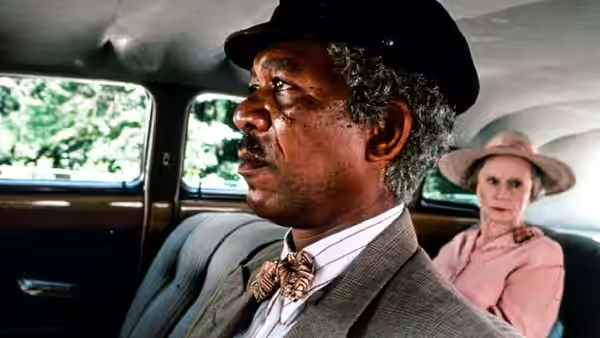
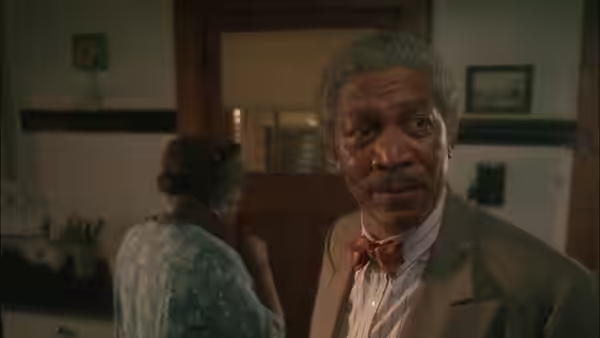
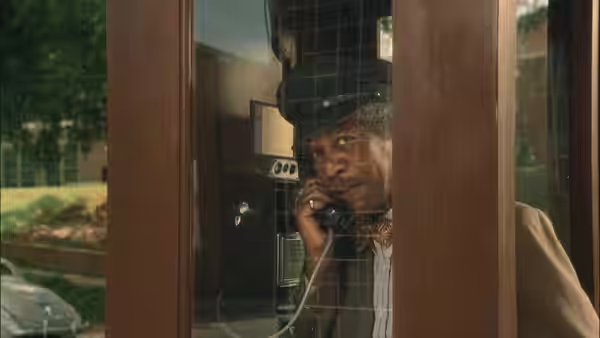
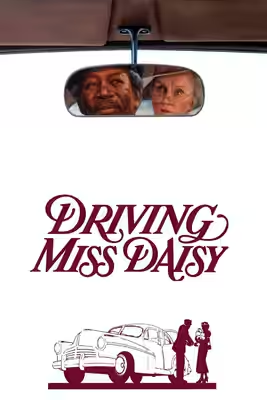
Freeman first. Hoke has spent his life being looked past, and Freeman plays him as a man who has turned that into a craft. He is patient, quietly amused, and never once servile, which is a harder trick than it sounds when every other line you are given ends in “ma’am”. The scene that decides the film comes early: Daisy sets off for the shops on foot and Hoke crawls the length of the street beside her at walking pace, talking through the open window, until the neighbours are watching and she has no dignified way to keep going. Beresford holds on it and lets it be funny at her expense. What got us, and we had not expected it, was Freeman’s face in the rear-view mirror afterwards. Tandy talks and he listens, and you can see him deciding how much of her he is going to forgive today.
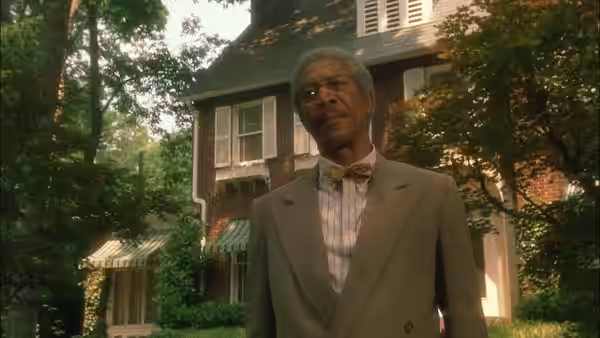
Tandy is doing something less lovable and more interesting. Her Daisy is tightfisted and suspicious, counts the tins in her own pantry, and is frightened above all of being thought rich. Elizabeth McBride keeps her in the same silhouette for twenty-five years, hat, gloves, handbag held against the stomach, and only the fabrics age. Bruno Rubeo’s house does the same job: heavy dark furniture, lace on every surface, and nothing moved from one decade to the next. We learn what year it is from the car in the driveway.
That is also the problem. Mark Warner cuts from one small scene to the next with years dropping between them, and the film becomes a run of anecdotes rather than a story. History arrives as a radio bulletin or a remark of Boolie’s over lunch, and then the car pulls away. Hoke’s life beyond the front seat is never shown; we know where he sits but not where he sleeps. Hans Zimmer’s score, a skipping tune on a synthesiser doing an impression of a clarinet, comes in over every transition to tell us everything is fine, and by the hour mark we were tired of being told. Peter James lights all of it, indoors and out, in the same warm yellow, so that even a bad afternoon in 1960s Georgia looks like a good one.
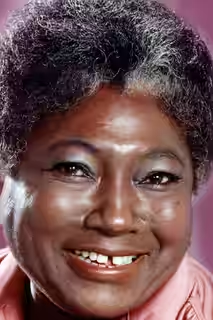
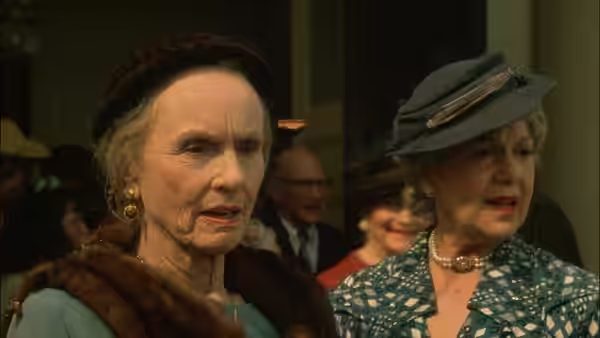
The supporting cast is better than the writing gives them room to be. Aykroyd plays Boolie entirely straight, a decent man who would rather write a cheque than have an argument, and it is the best thing we have seen him do. Patti LuPone’s Florine is given one note, loud and gaudy, and the film plays it twice. Esther Rolle’s Idella gets a kitchen, a soap opera and a handful of dry lines, and makes a whole person out of them.
Beresford made Tender Mercies, another quiet film about an older person and a stranger who turns up and stays, and this is the softer of the two. It wants to be liked, and it is easy to like, and we are not sure that is a virtue in a film about this subject in this place at this time. Anyone hoping it will get angry, or even curious, about what is happening outside the car will wait in vain.
The last scene, which we will not describe, is worth staying for, and it is the one moment where the film stops arranging things and simply lets the two of them be old together. Watch it with a grandparent. They will recognise Daisy, and deny it.