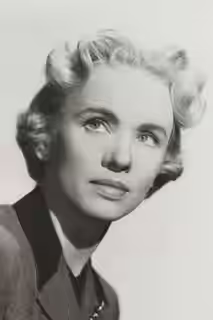
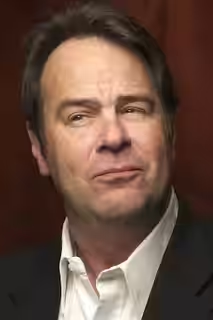
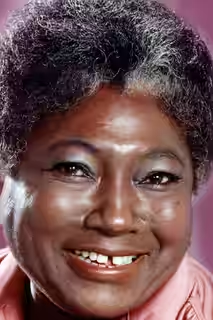
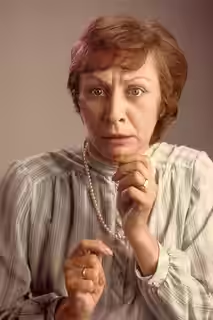
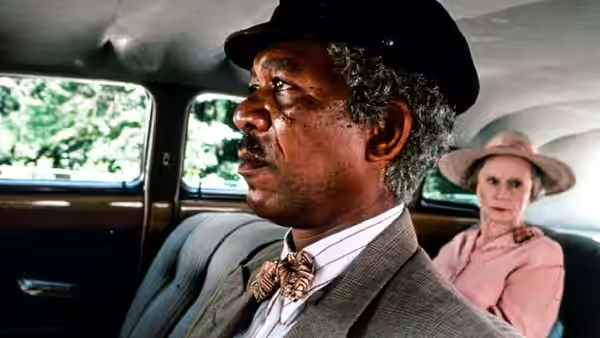
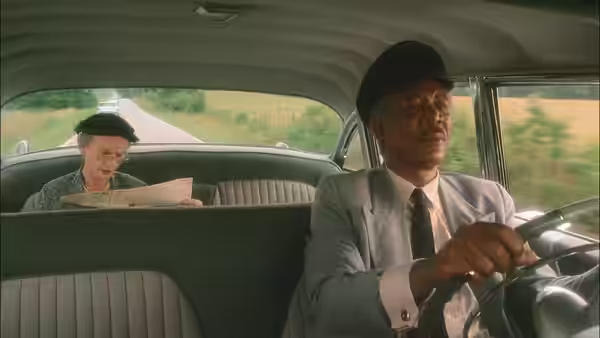
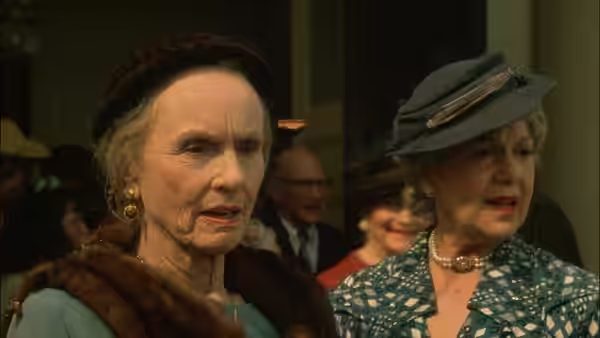
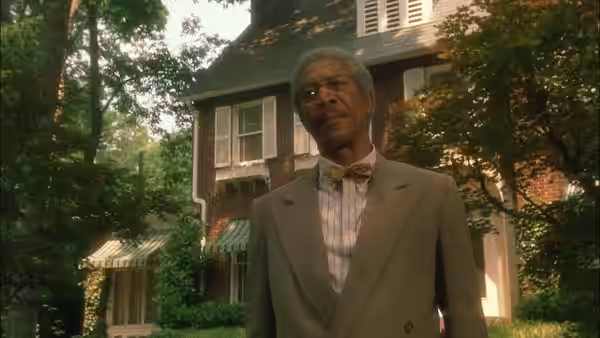
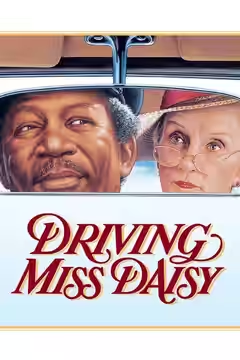
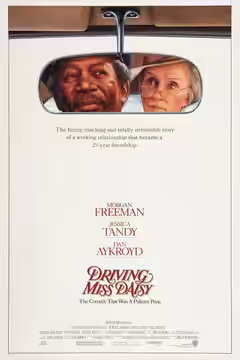
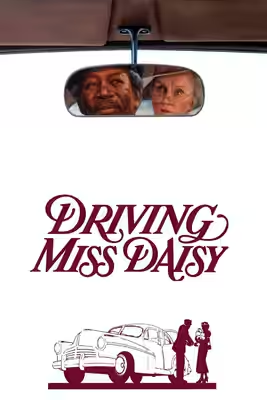
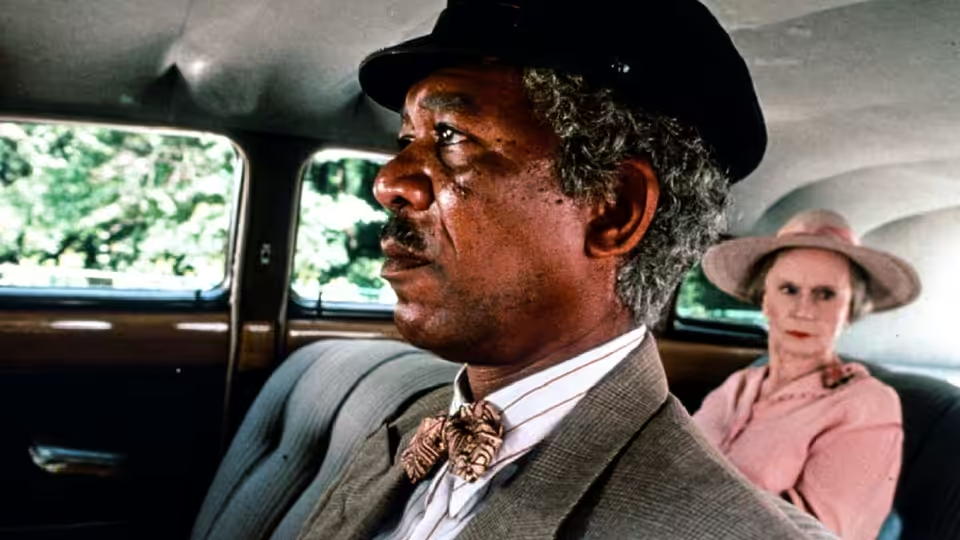
A scene from Driving Miss Daisy
Film review

Driving Miss Daisy

1989 · Directed by Bruce Beresford · 1h 39m

In a sentenceA quarter-century of the South goes past the windows and nobody rolls one down

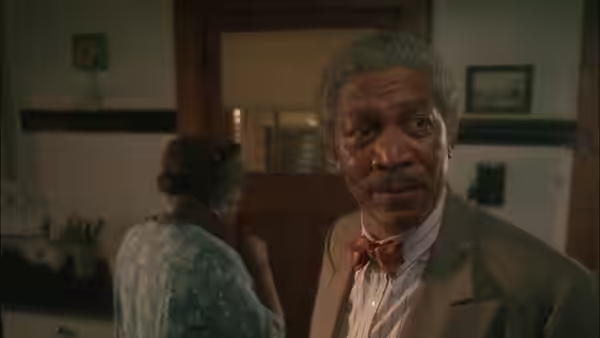
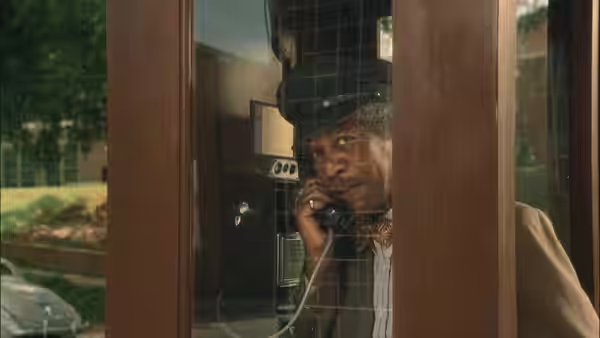
Daisy Werthan (Jessica Tandy), a widow, reverses her new car off the drive and into the neighbour’s garden. Her son Boolie (Dan Aykroyd) decides she is not to drive again and hires Hoke Colburn (Morgan Freeman) to take her wherever she needs to go. Daisy refuses to get in. Hoke is paid anyway, and for days he has nothing to do but wait in her kitchen alongside Idella (Esther Rolle). Then Daisy sets off for the shops on foot, and Hoke follows her down the street at walking pace, talking through the open window, until she has no dignified way to keep walking. It is the first of many drives in a working relationship that goes on for twenty-five years.

Plays from YouTube when you press play; nothing loads from them until then.

Fi1m review

Morgan Freeman and Jessica Tandy are so good together that it takes a while to notice how little the film around them wants to say. It is warm, carefully made and a U certificate, and it treats twenty-five years of Georgia as scenery.

Alfred Uhry adapted his own play and Bruce Beresford has kept the size of it: three people, one house, one car, and twenty-five years going past the windows. Daisy Werthan (Jessica Tandy) is a widow who has just written off her car. Her son Boolie (Dan Aykroyd) hires Hoke Colburn (Morgan Freeman) to drive her whether she likes it or not, and she does not like it. The film is 99 minutes about how long it takes her to change her mind. The two lead performances are good enough that we would tell anyone to watch them; the film they are in is a smaller thing, and we think most critics have been kinder to it than it deserves.

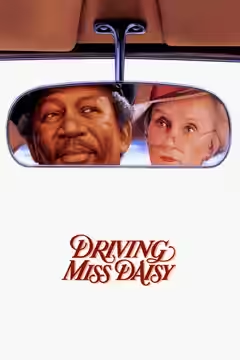
Freeman first. Hoke has spent his life being looked past, and Freeman plays him as a man who has turned that into a craft. He is patient, quietly amused, and never once servile, which is a harder trick than it sounds when every other line you are given ends in “ma’am”. The scene that decides the film comes early: Daisy sets off for the shops on foot and Hoke crawls the length of the street beside her at walking pace, talking through the open window, until the neighbours are watching and she has no dignified way to keep going. Beresford holds on it and lets it be funny at her expense. What got us, and we had not expected it, was Freeman’s face in the rear-view mirror afterwards. Tandy talks and he listens, and you can see him deciding how much of her he is going to forgive today.

Tandy is doing something less lovable and more interesting. Her Daisy is tightfisted and suspicious, counts the tins in her own pantry, and is frightened above all of being thought rich. Elizabeth McBride keeps her in the same silhouette for twenty-five years, hat, gloves, handbag held against the stomach, and only the fabrics age. Bruno Rubeo’s house does the same job: heavy dark furniture, lace on every surface, and nothing moved from one decade to the next. We learn what year it is from the car in the driveway.

That is also the problem. Mark Warner cuts from one small scene to the next with years dropping between them, and the film becomes a run of anecdotes rather than a story. History arrives as a radio bulletin or a remark of Boolie’s over lunch, and then the car pulls away. Hoke’s life beyond the front seat is never shown; we know where he sits but not where he sleeps. Hans Zimmer’s score, a skipping tune on a synthesiser doing an impression of a clarinet, comes in over every transition to tell us everything is fine, and by the hour mark we were tired of being told. Peter James lights all of it, indoors and out, in the same warm yellow, so that even a bad afternoon in 1960s Georgia looks like a good one.

The supporting cast is better than the writing gives them room to be. Aykroyd plays Boolie entirely straight, a decent man who would rather write a cheque than have an argument, and it is the best thing we have seen him do. Patti LuPone’s Florine is given one note, loud and gaudy, and the film plays it twice. Esther Rolle’s Idella gets a kitchen, a soap opera and a handful of dry lines, and makes a whole person out of them.

Beresford made Tender Mercies, another quiet film about an older person and a stranger who turns up and stays, and this is the softer of the two. It wants to be liked, and it is easy to like, and we are not sure that is a virtue in a film about this subject in this place at this time. Anyone hoping it will get angry, or even curious, about what is happening outside the car will wait in vain.

The last scene, which we will not describe, is worth staying for, and it is the one moment where the film stops arranging things and simply lets the two of them be old together. Watch it with a grandparent. They will recognise Daisy, and deny it.

Critical consensus AI synthesised

74
Positive
6
Mixed
3
Negative
0

Most critics like it, and the praise clusters almost entirely on the two leads. Jessica Tandy’s tightfisted, suspicious widow and Morgan Freeman’s patient chauffeur are named in nearly every review as the reason the film works, with several calling them among the best performances of either career. Bruce Beresford’s direction earns steady approval for opening up the stage play just enough to feel natural without losing its two-character shape, and the screenplay and period detail are noted warmly.

The reservations are about what the film says rather than how it is acted. Three of the nine reviews find it too cosy, musty or schematic to work as commentary on Southern race relations across its twenty-five years; Time Out and Collider in particular think it well made but thin on the subject it appears to be about. The Los Angeles Times shares the complaint yet still recommends it for Freeman. The spread is narrow: nobody dislikes it, and even the doubters concede the performances.

RogerEbert.com
12 January 1990 · Roger Ebert
90*

The film is a subtle, patient exploration of a 25-year relationship between an elderly Southern Jewish widow and her Black chauffeur, developing deep emotional stakes through nuanced performances and understated storytelling rather than dialogue. Ebert singles out the two lead performances by Morgan Freeman and Jessica Tandy for particular praise as among the best of their careers.

Read the full review →
The Hollywood Reporter
13 December 2017 · Henry Sheehan
90*

The critic praises the strong performances by Morgan Freeman and Jessica Tandy as the mismatched driver and passenger whose relationship evolves over decades, along with Bruce Beresford’s respectful direction that lets the material breathe while keeping the story moving efficiently. The film is seen as headed for popular and awards success thanks to its warm, nostalgic tone and the stars’ chemistry.

Read the full review →
The New York Times
13 December 1989 · Vincent Canby
85*

Bruce Beresford's gently opened-up screen version of the Pulitzer-winning play is one of the most successful stage-to-screen translations in years, carried with great style and supplemented effectively beyond the original three characters. Canby highlights the casting of Jessica Tandy and Morgan Freeman in the central roles as a spectacular match for the material's humor and humanity.

Read the full review →
Variety
13 December 1989 · Joseph McBride
85*

The film is a touching exploration of 25 years of Southern race relations through the individualized relationship of an elderly Jewish widow and her stalwart Black chauffeur, with sensitive direction and skillful adaptation that suggests large truths without pretension. McBride singles out the career-crowning performances by Morgan Freeman and Jessica Tandy for guaranteed Oscar nominations.

Read the full review →
The New Yorker
18 December 1989 · Pauline Kael
80*

Beresford's film improves on the stage version by opening it up just enough to feel natural while retaining its two-character sketch structure, creating stronger emotional involvement with a light, airy texture. Kael praises Jessica Tandy's tightfisted, suspicious portrayal of Miss Daisy and the way the film charts the deepening companionship over 25 years amid Southern social changes.

Read the full review →
Empire
1 January 2000 · Phil Thomas
70*

The critic praises the film's quality screenplay, period settings and attention to detail, along with the lead performances by Morgan Freeman and Jessica Tandy. The relationship between the characters is highlighted for its emotional depth and subtle handling of racial themes over the decades.

Read the full review →

Straight answers AI written, from our review

Is Driving Miss Daisy worth watching?
Driving Miss Daisy is worth watching for Morgan Freeman and Jessica Tandy, who are better than the film around them, and we scored it 68. It is warm, carefully made and a U certificate, but it treats twenty-five years of Georgia as scenery outside the car window. Anyone hoping it will get angry, or even curious, about that history will wait in vain.
How long is Driving Miss Daisy, and what is it rated?
Driving Miss Daisy runs 1h 39m. It is a drama film.
Where can I watch Driving Miss Daisy in Vietnam?
Driving Miss Daisy is not on any streaming or rental service in Vietnam at the moment. It is available in 20 other countries; change your country at the top of the page to see where. Availability is checked daily.
What should I watch after Driving Miss Daisy?
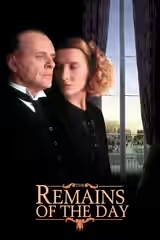
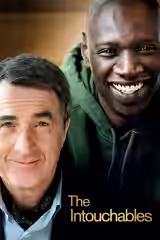
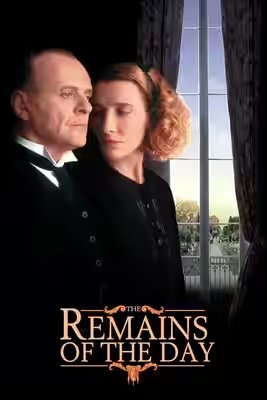
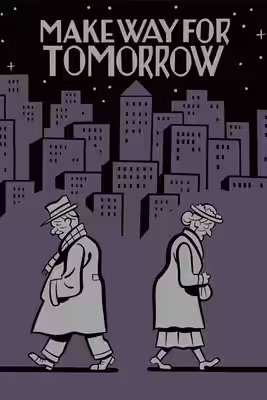
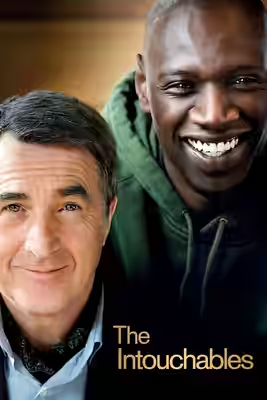
After Driving Miss Daisy, try The Remains of the Day (1993, Fi1m 88): Another servant who says nothing for decades; this one is allowed to regret it. Then Make Way for Tomorrow (1937, Fi1m 91): Old age and grown children, handled with a hardness Uhry never risks; and The Intouchables (2011, Fi1m 72): The French version of the odd-couple carer film, brasher and much funnier.

Cast

Awards

Academy Awards, 1990

Nominated
Best Actor
Nominated
Best Costume Design
Nominated
Best Film Editing
Nominated
Best Production Design
Nominated
Best Supporting Actor
Won
Best Actress
Won
Best Makeup and Hairstyling
Won
Best Picture
Won
Best Writing, Adapted Screenplay

If you liked this, try…

  1. The Remains of the Day (1993, Fi1m 88)Another servant who says nothing for decades; this one is allowed to regret it.

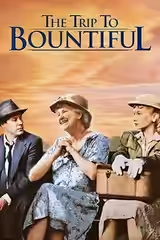
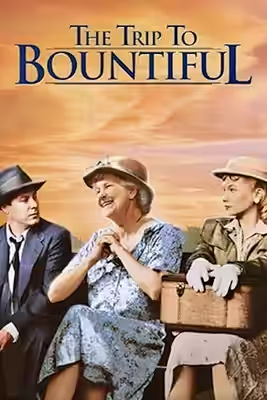
  2. The Trip to Bountiful (1985) · not reviewed yetGeraldine Page as a stubborn Southern widow who wants to go home, and does.

  3. Make Way for Tomorrow (1937, Fi1m 91)Old age and grown children, handled with a hardness Uhry never risks.

  4. The Intouchables (2011, Fi1m 72)The French version of the odd-couple carer film, brasher and much funnier.

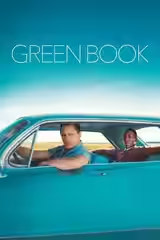
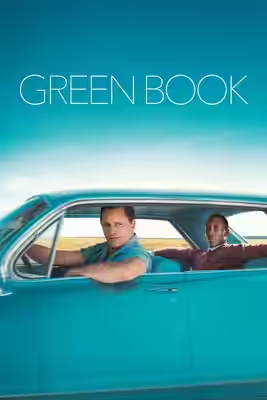
  5. Green Book (2018, Fi1m 64)The same car with the seats swapped; see what changed in thirty years, and what did not.

Free account

Know what to watch tonight

Two lists that know where things are streaming, collections you can share, your own score beside ours, and Discover that remembers what you have seen.

  • Want to see, sorted by what is streaming now
  • Seen, with your score out of ten
  • No adverts, ever