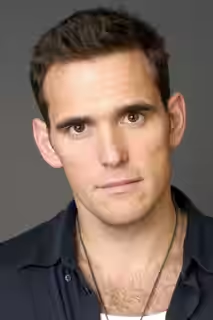
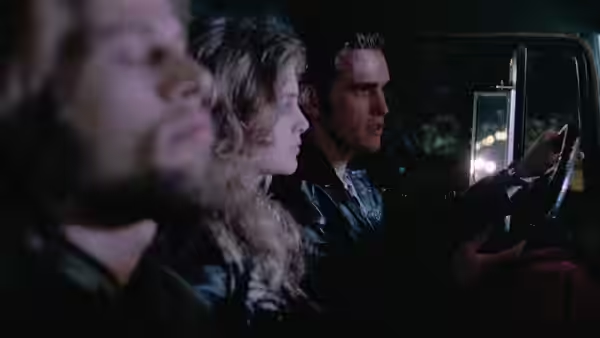
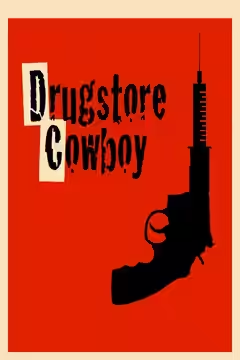
Gus Van Sant’s second feature follows four addicts robbing pharmacies in 1971 Oregon, and it is funny, exact and almost entirely free of lecturing. Matt Dillon and Kelly Lynch are exactly right for it, and the second half slackens; we recommend it all the same.
Portland, Oregon, 1971. Bob (Matt Dillon) runs a crew of four who rob pharmacies for whatever is in the locked cabinet, and Gus Van Sant’s film, written with Daniel Yost from James Fogle’s novel, watches them the way a film about carpenters would watch carpentry. Nadine (Heather Graham) throws a fit on the shop floor, the druggist (Eric Hull) runs to help, and Bob steps behind the counter and fills his pockets. Then everyone goes home, sorts the pills into piles on the carpet and gets high. It is the most honest film about drug use we know that is also, for most of its length, a pleasure to sit through, and we recommend it.
Van Sant does not lecture. Nobody explains why Bob uses; he uses because it is what he does, and because he is good at the part that comes before it. Dillon narrates in a flat, pleased-with-himself drawl, a small-time man who believes he has worked the whole thing out, and the film lets him be wrong without pointing at him. He has rules: no dogs, no talk of dogs, never look at the back of a mirror, and never, under any roof he sleeps in, a hat on a bed. When Nadine puts one there, we tensed more than we have at most gunfights, because Dillon plays the superstition as the one thing holding his world up.
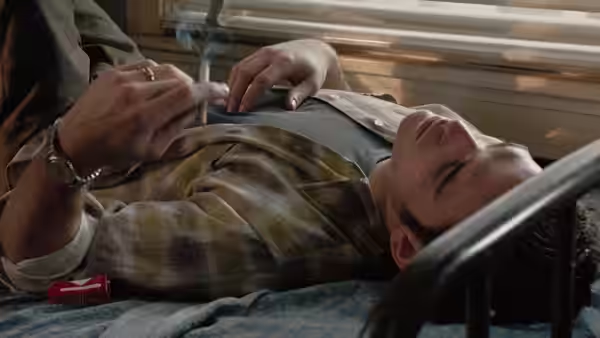
Robert Yeoman shoots Oregon in weak overcast light: rain on windscreens, brown carpet, wood-panelled rooms that David Brisbin has furnished with what a junkie could carry out of a rented house at short notice. When Bob shoots up, Van Sant floats things over his face against a moving sky, spoons, a cow, a hat, a small wooden house, like cut-outs from a children’s book. Editors Mary Bauer and Curtiss Clayton let them hang a beat longer than fashion allowed, so they read as what a man might see rather than as decoration. Elliot Goldenthal’s score is early work, spare and woozy, a few strings and something like a music box, and it mostly knows when to leave.
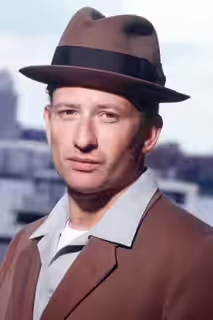
Kelly Lynch is the reason to see it twice. Dianne is Bob’s wife, drives the car, carries the gun she is told not to carry, and is angry for reasons she states plainly: he will not sleep with her any more, because the drugs have seen to that, and she always has to drive. We laughed out loud at the line and then noticed how unhappy she was. James LeGros gives Rick a slow, agreeable dimness that gets funnier the longer you look at it, and Graham makes Nadine’s neediness about her place in the gang rather than about the drugs. James Remar’s Gentry is not a villain. He is a tired detective who has made Bob his project, and their conversation outside the house, two men in the same trade, is among the best scenes in the film.
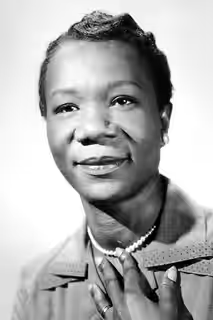
What moved us more than we expected was Grace Zabriskie as Bob’s mother, refusing to open her door to her son. She talks to him through the screen, lists what he has stolen from her, and will not let him past the step. Zabriskie never raises her voice, and Dillon, for once, has nothing to say.
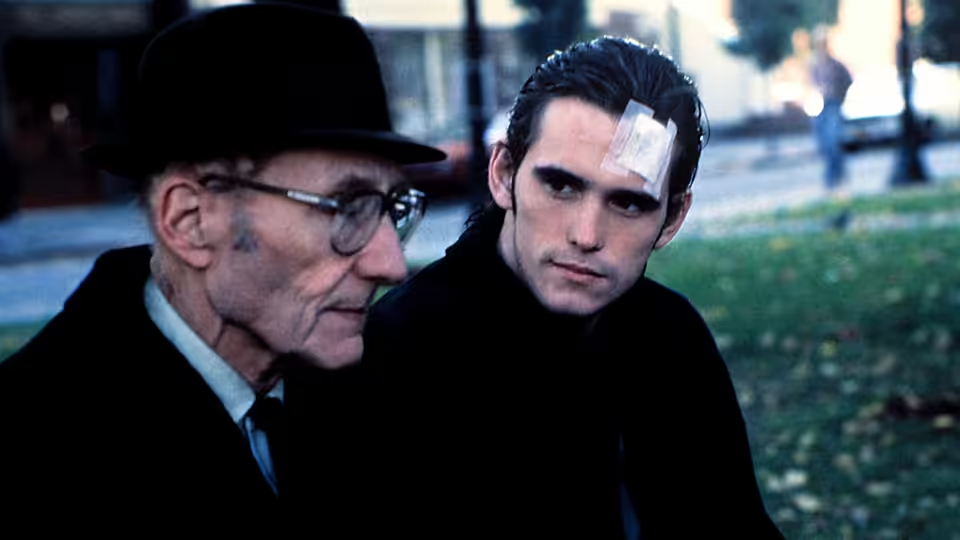
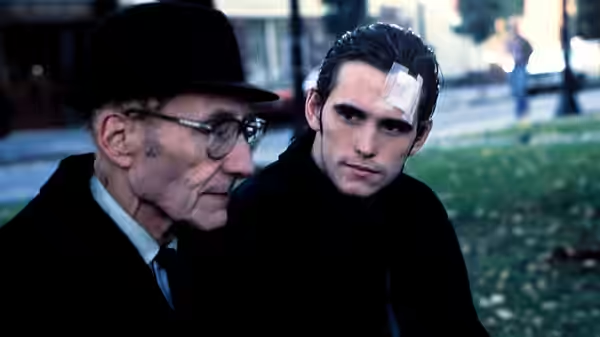
The second half moves Bob into a different building and a different tempo, and we will not say why. It is quieter and more talkative, and the film loses the drive the robberies gave it. Dianne and Rick thin out into visitors. Bob’s superstitions, which were character, start doing the work of plot. Several critics have grumbled about the ending, some because it is too tidy and some because it stops short; we think it is both and did not mind much. William S. Burroughs turns up in this stretch as Tom the Priest, an old junkie in a dressing gown prophesying about narcotics and the police in a voice like a door that needs oiling. He says his lines as if he had lived every one of them, which he had.
Van Sant made stranger films after this and more famous ones. He did not make one where the people were this easy to spend time with and this hard to excuse. It is an 18 certificate and 102 minutes, and it does not stint on the needles. Watch it with someone who thinks films about drugs are all the same. The hat will get them.