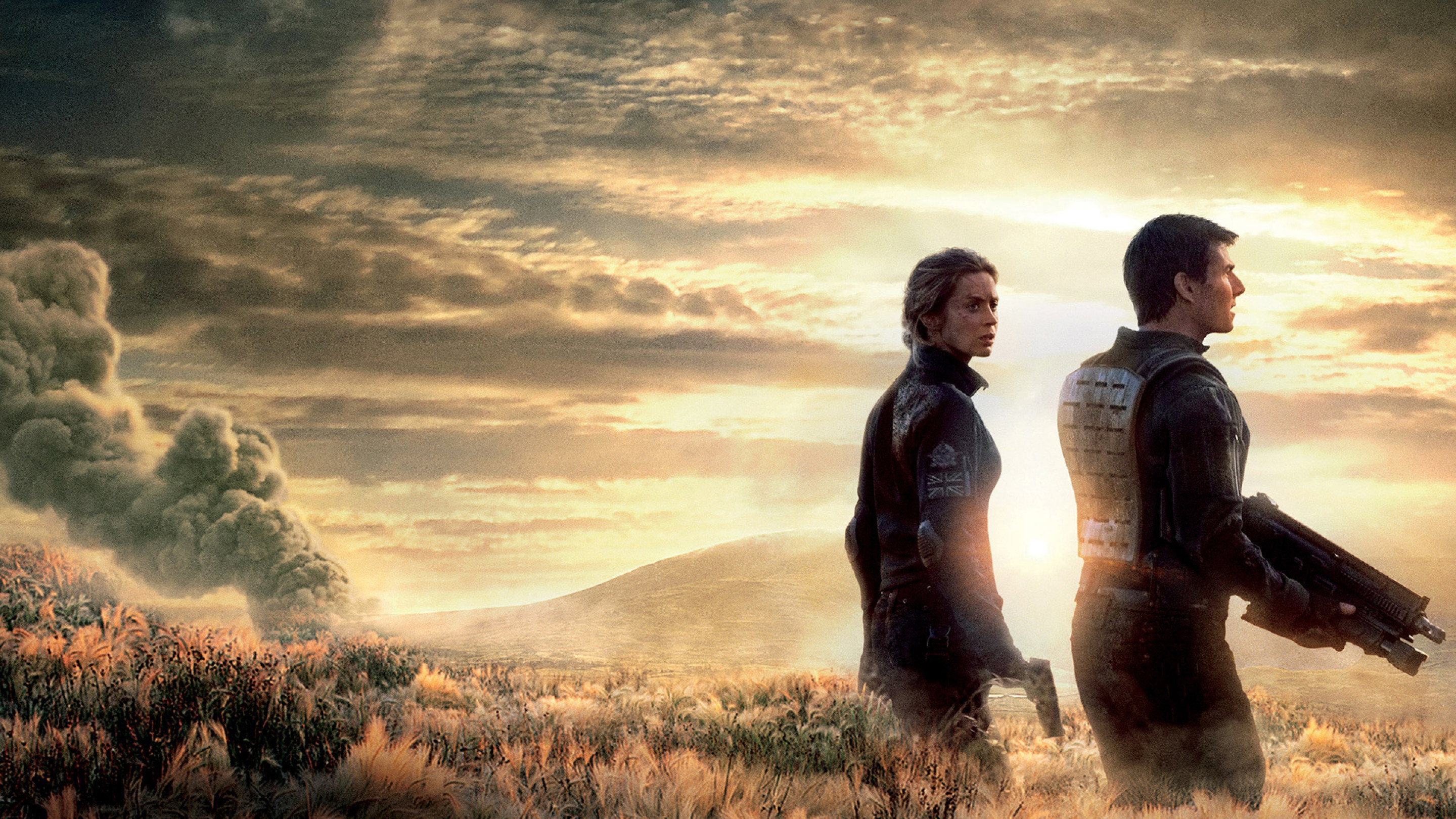
Tom Cruise makes repeated defeat funny, and Doug Liman keeps the action moving without exhausting the premise. The later plotting is shakier, but Emily Blunt helps make this an easy recommendation.
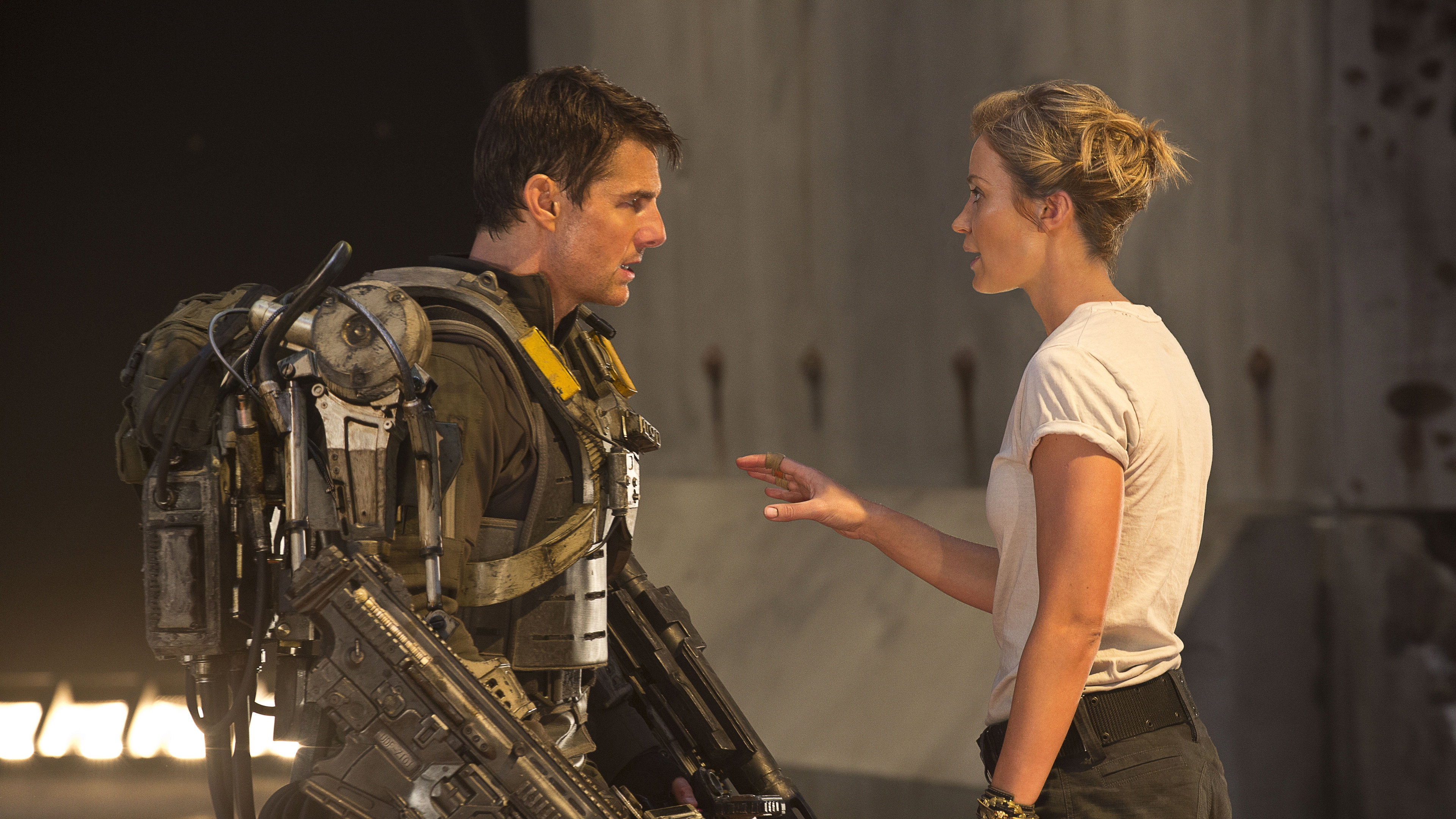
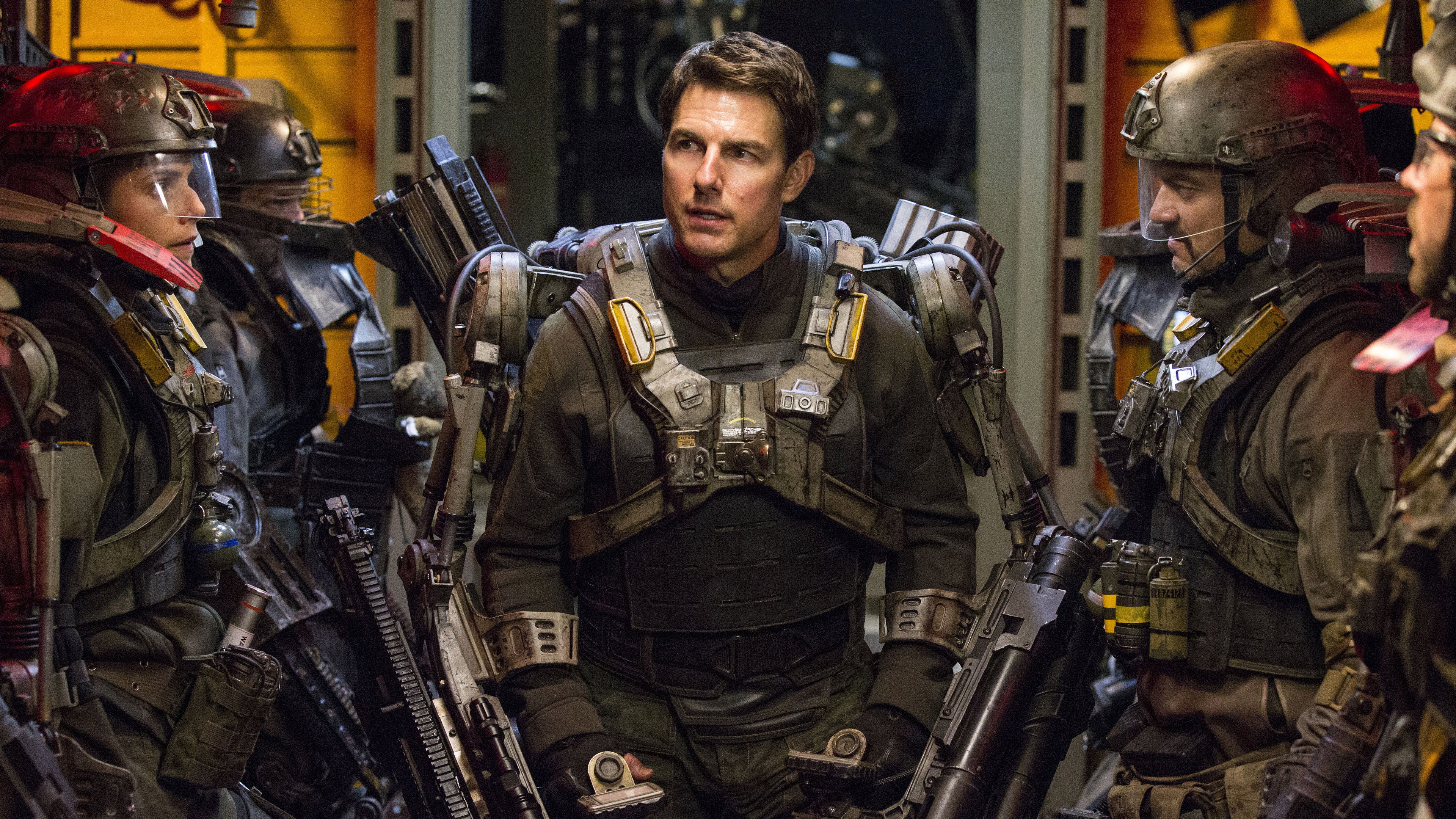
Doug Liman’s Edge of Tomorrow is a brisk, funny science-fiction action film whose cleverness survives most of its gunfire. Its good idea is to make an action hero learn the job, then make us watch the humiliating attempts he would prefer to forget. Tom Cruise plays Cage, a public-relations officer with a strong preference for remaining clear of actual combat. The alien war gives him nowhere useful to hide, and the repeating day prevents a bad performance from being his last. We recommend it, with reservations about the more ordinary action it eventually settles for.
Cruise’s early cowardice is the main pleasure. He makes Cage’s reluctance to fight look understandable, then lets his attempts at soldiering become embarrassingly funny. We laughed at his repeated failures in combat, then caught ourselves hoping he would be allowed a little dignity. The repetition keeps interrupting his progress before he can become comfortable, and Cruise lets the embarrassment register. His growing competence is satisfying because the film has made us sit through the learning.
The screenplay by Christopher McQuarrie, Jez Butterworth and John-Henry Butterworth understands that a repeated day needs a different emphasis each time. A stretch of fighting can be frightening once and funny when familiarity tells us where the mistake is coming. Editors James Herbert and Laura Jennings keep those changes clear, shortening the repetition as our understanding catches up. We are trusted to remember rather than given the whole sequence again. At 114 minutes, the film finds room for the frustrations of learning without making the audience feel it has been assigned the same exercise.
Emily Blunt’s Rita gives Cruise a partner who can hold our attention without competing for the jokes. Blunt is persuasive in the action and usefully direct in the scenes around it; she helps prevent Cage’s predicament from turning into an extended comic routine. The performances make the repeated attempts matter even when the mechanics threaten to take over. There is pleasure in watching the actors adjust their responses within a situation we think we already understand.
Dion Beebe photographs the fighting in gun-metal tones, making the battlefield look grim enough for Cage’s terror to seem sensible. That grey palette can also flatten the action, particularly when the effects become busy. Oliver Scholl’s production design gives the military setting a functional solidity, though its sober look contributes less to the humour. Christophe Beck’s score helps propel the combat without finding an equally distinctive character of its own. The film’s clearest changes of mood come from the cutting and the actors.
The weakness arrives when the script has to do more than vary the same predicament. The later plotting becomes less persuasive, and Liman increasingly leans on combat to carry us through it. Cage also loses some of his comic interest as he becomes the capable fighter the story requires. Nothing here needs a lecture about the meaning of repeated lives, but the film could have kept more of its early curiosity about a man who is frightened and ill-equipped.
Against the usual alien-war film, it is unusually attentive to how people learn, and unusually willing to let its leading man look useless. The resemblance to playing a difficult game is plain: failure gives information, and another attempt allows it to be used. That makes the fighting enjoyable long before success is likely. Choose it for the brisk construction and Cruise’s comic discomfort, and allow the final stretch a little less scrutiny than the set-up.