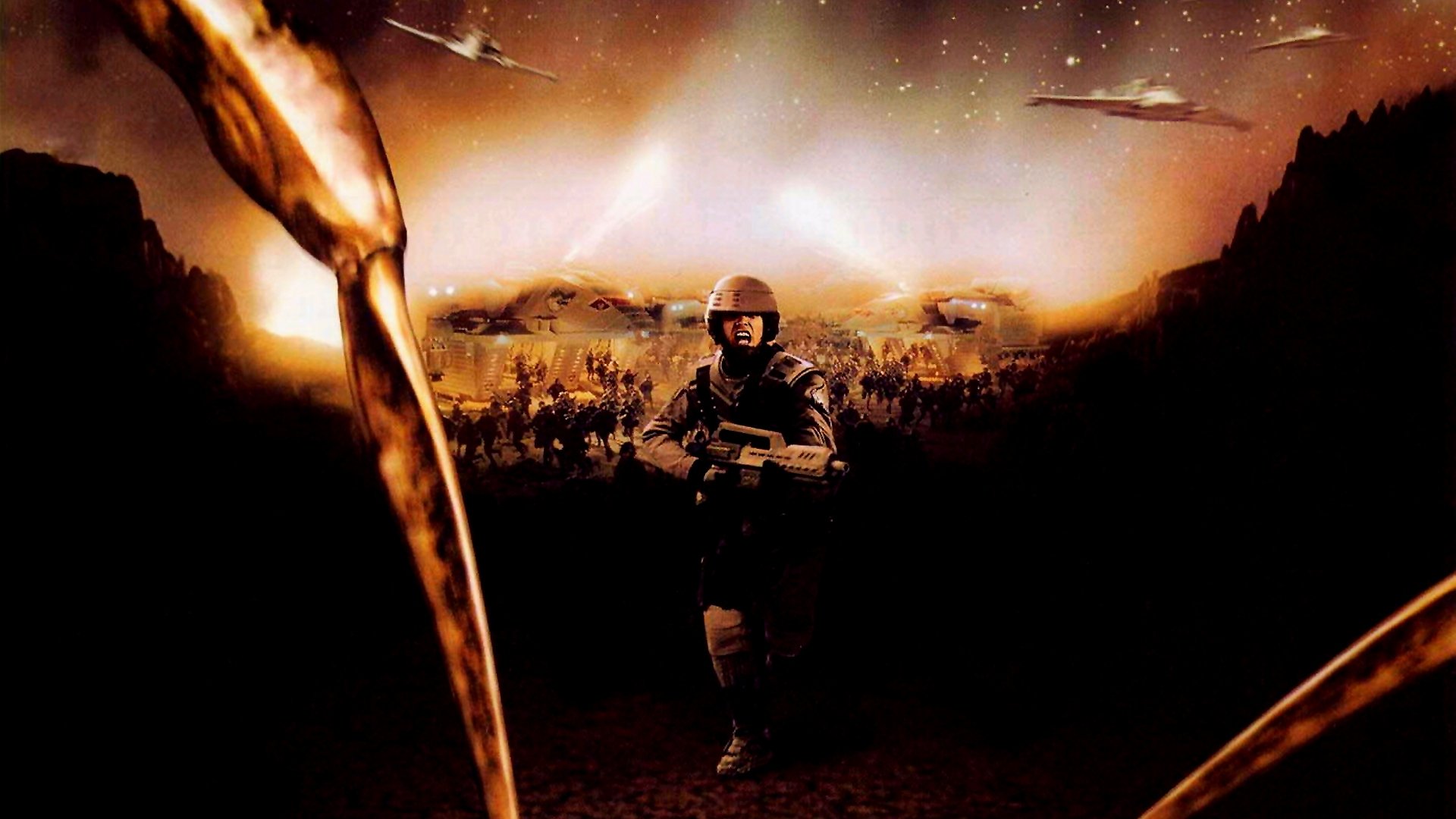
Paul Verhoeven’s savage science-fiction satire is worth seeing for its insect battles and its shameless military publicity. The teenage romance is a substantial drag, and some of the acting tests our patience.
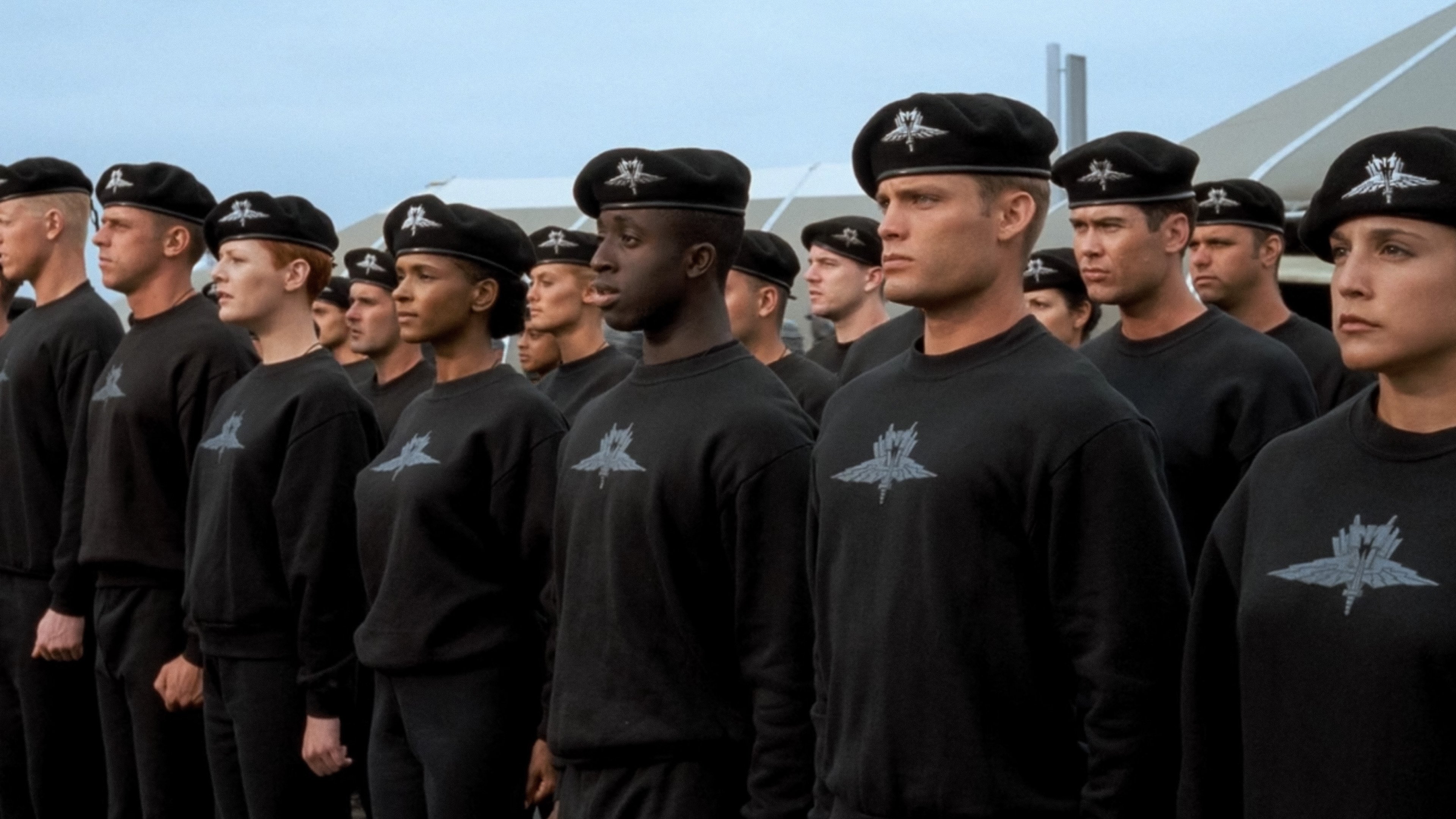
Starship Troopers is a good, deliberately unpleasant science-fiction film with a sizeable problem: the teenagers are much less interesting when they talk about love than when they talk about war. Paul Verhoeven and screenwriter Edward Neumeier adapt Robert A. Heinlein’s novel into a satire of people taught to mistake military enthusiasm for moral certainty. Their society looks clean, healthy and pleased with itself. The mock newsreels give its military message the brisk confidence of something nobody is expected to question.
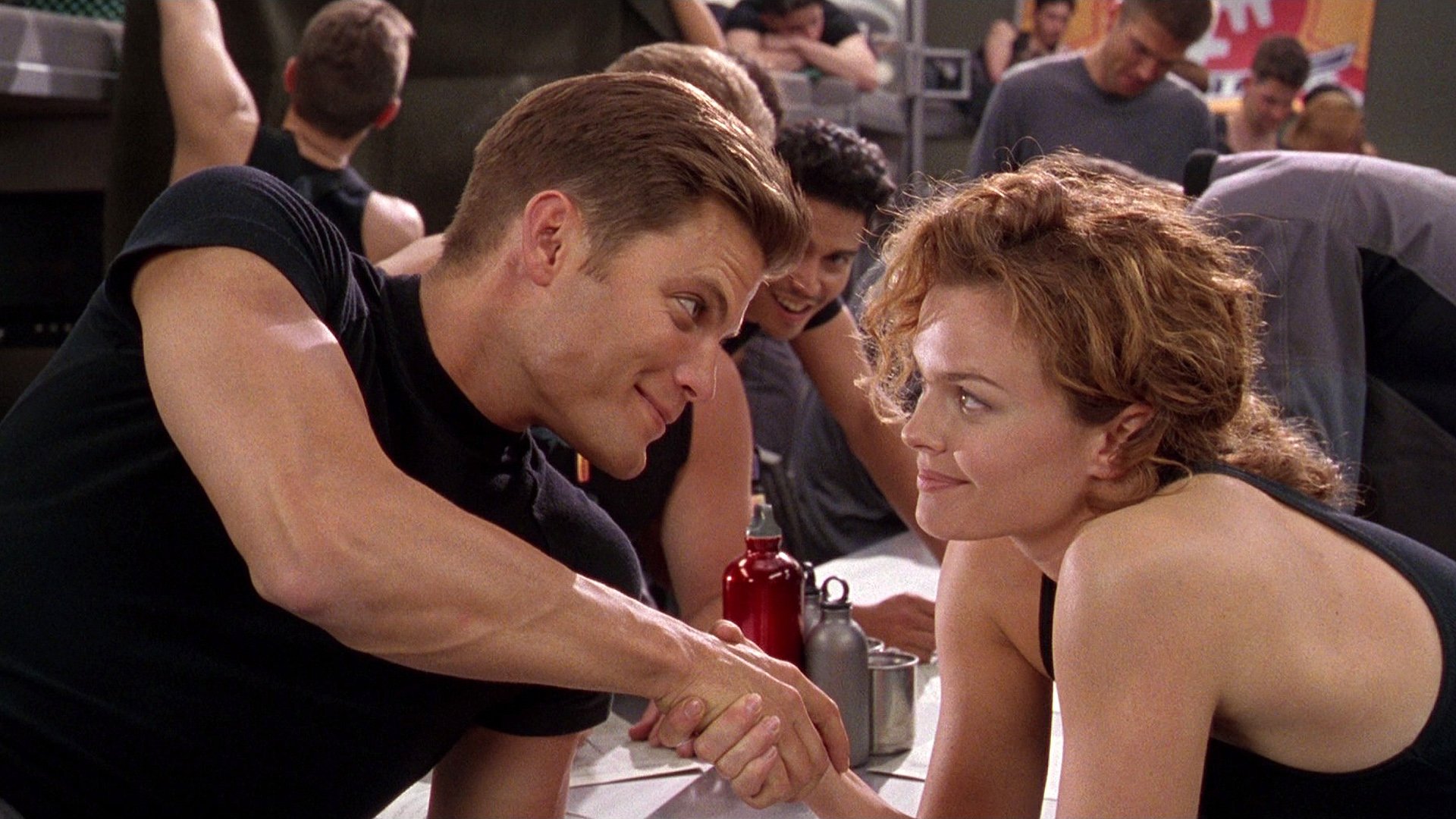
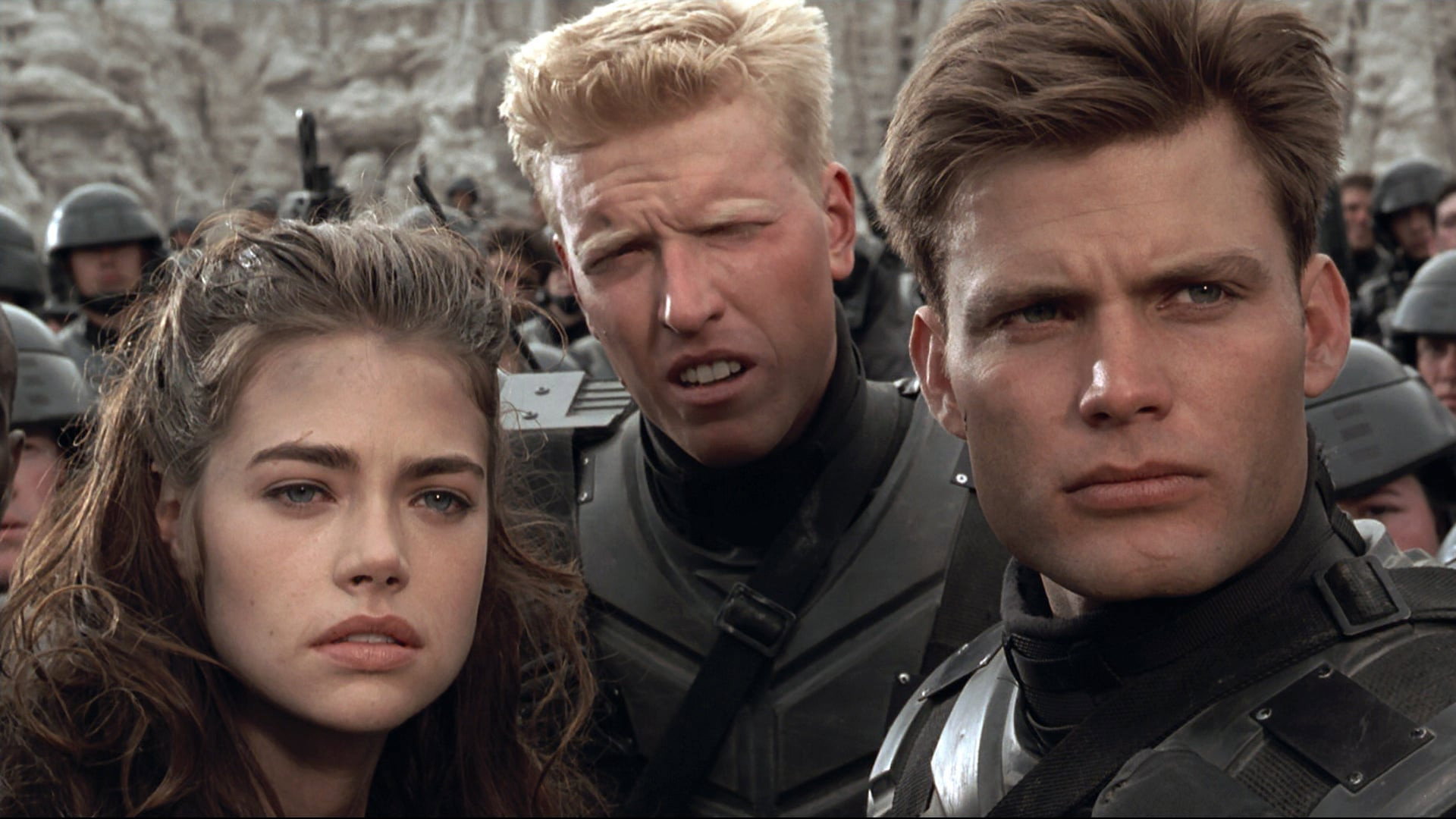
Casper Van Dien’s Johnny D. Rico, Denise Richards’s Carmen Ibañez and Dina Meyer’s Dizzy Flores supply the young faces at the centre of it. Van Dien and Richards have the polished appeal the film needs, though their stiffness is less useful in the romantic material. We understand why these people have so little capacity for questioning the society around them, but their private lives need more than attractive faces to hold our attention. The romance takes too long to do too little, and the film’s 129 minutes could use less of it.
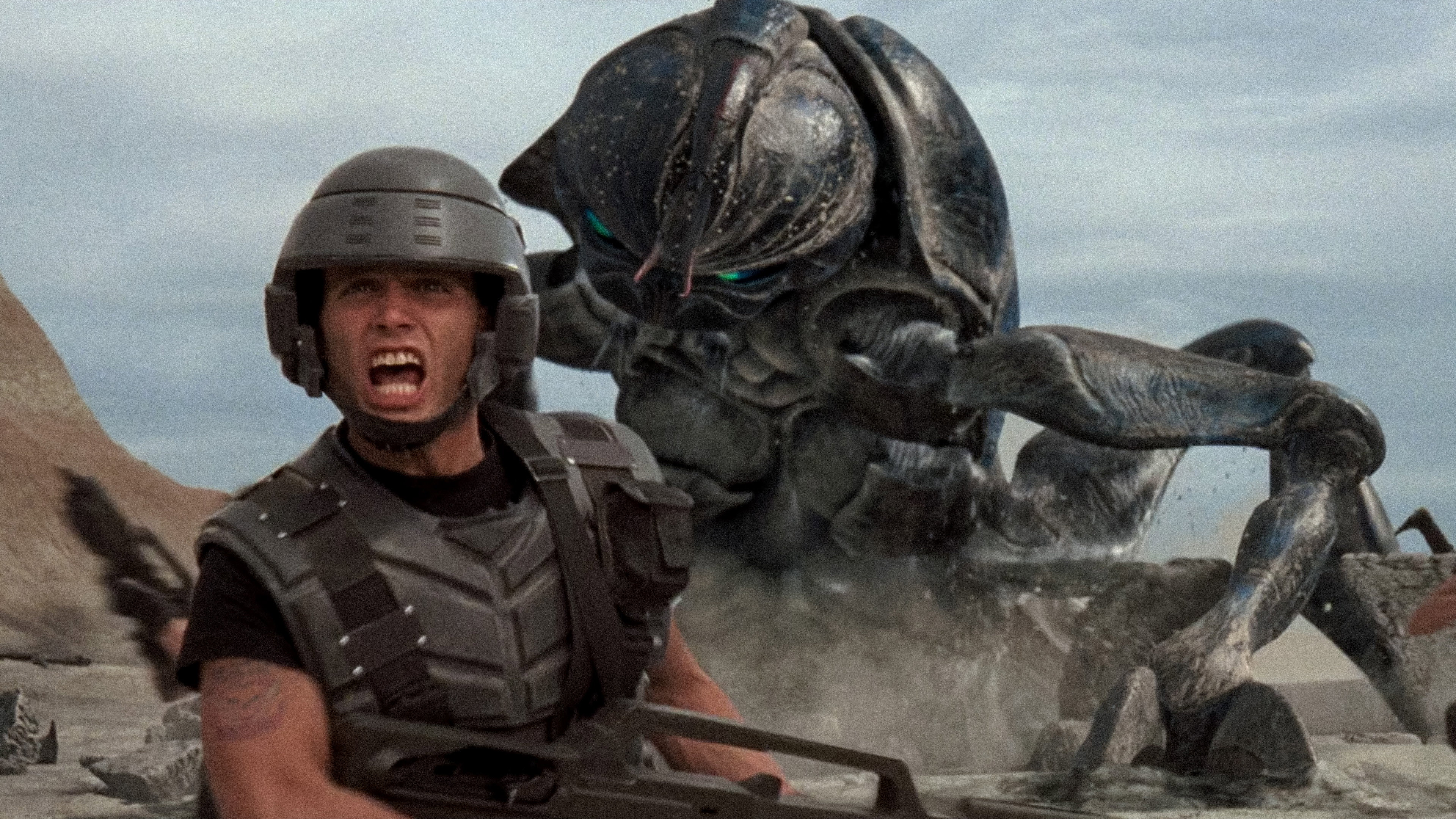
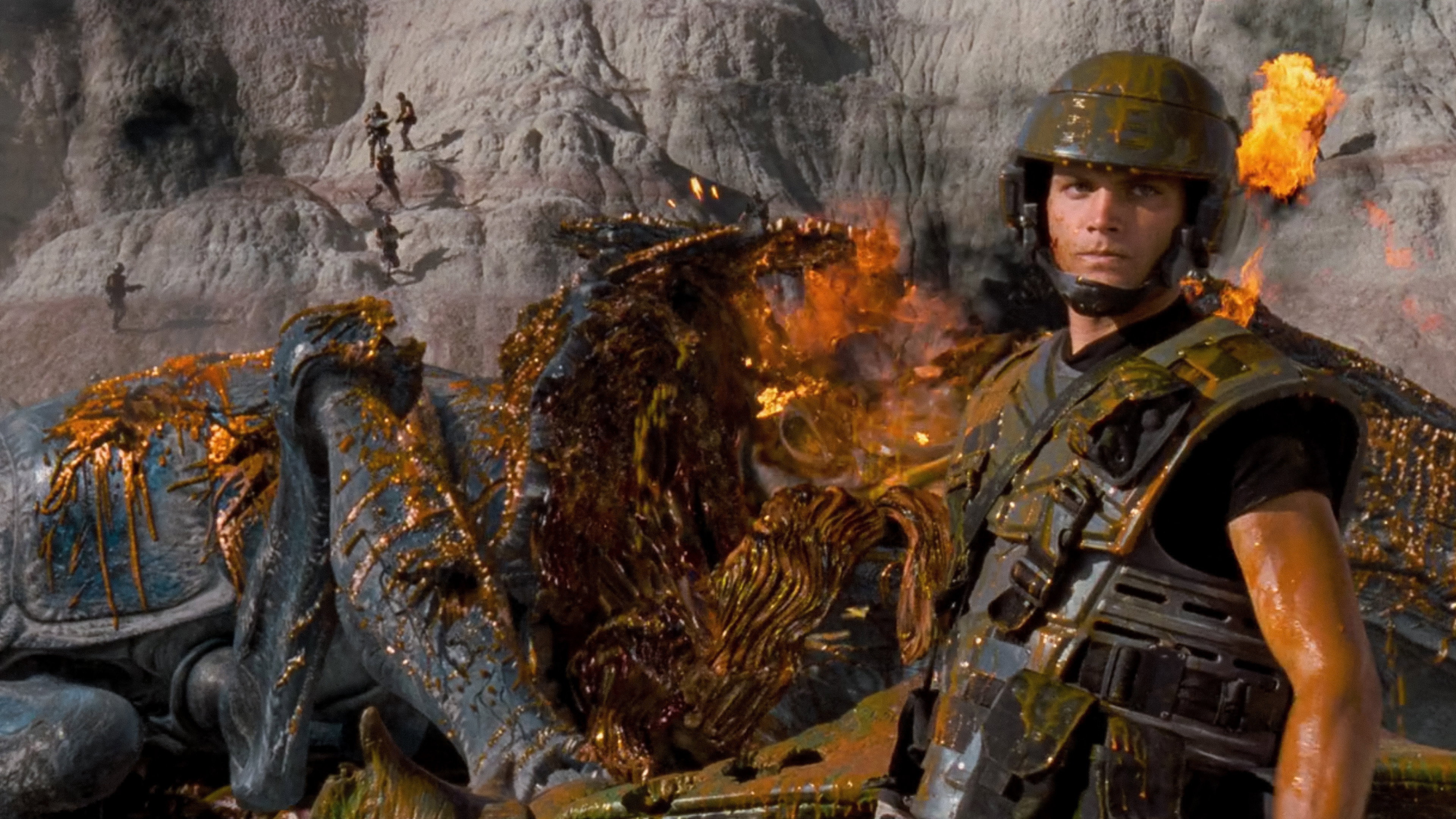
Jost Vacano’s cinematography gives the human world the reassuring finish of a television soap. That clean appearance matters because Verhoeven wants us to see how easily a brutal society can make itself look normal. Allan Cameron’s production design helps sell the apparent utopia, making its appeal easy to understand without asking us to approve of it. Against that polish, the gruesome insect battles are properly offensive, and the effects make the creatures convincing enough to sustain a sense of danger.
Editors Mark Goldblatt and Caroline Ross give the fighting a momentum the romantic scenes never acquire. The bug swarms feel overwhelming, and the action has enough force to make us momentarily forget our objections to the people conducting it. Basil Poledouris’s score contributes to that excitement rather too effectively for comfort; we felt ourselves responding to the military enthusiasm despite having ample reason to distrust it. This is where the film’s considerable skill at staging science-fiction warfare becomes essential to its satire.
We laughed at the mock military advertisements, then felt uncomfortable about how eagerly we responded to the fighting. The advertisements make obedience look inviting; the battles supply the excitement that helps explain why the invitation works. Verhoeven does not need to stop for a speech about propaganda, because he has already made its appeal apparent. The bloodshed is horrible enough to complicate the pleasure, and he allows us to sit with that discomfort without providing a reassuring explanation.
The limitation is that knowing what these blank young people represent does not always make them good company. Neumeier’s satire is broad, and the performance style gives us little relief from the joke when the pace drops. Military science fiction can get a long way with a stirring cause and somebody worth following into danger; here we are encouraged to question the cause and the people promoting it. That is a useful challenge to the genre, but it cannot excuse every flat exchange between the young leads.
It is worth an evening for anyone who enjoys science fiction that makes the cheering uncomfortable. Do not expect the romantic scenes to become more absorbing just because their blandness serves a purpose. The 18 certificate is a useful warning about how far the bloodshed goes. Choose company who will enjoy arguing about the military advertisements as much as watching the insects.