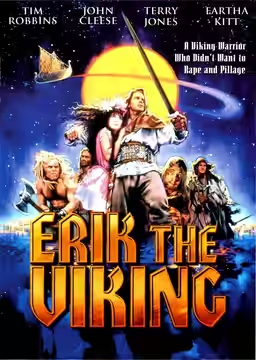
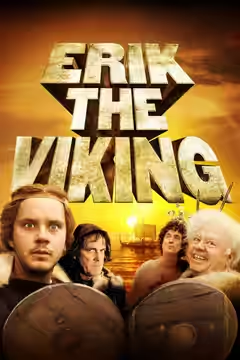
Terry Jones gives his Viking comedy a likeable assortment of eccentrics, but too few jokes worth the journey. Tim Robbins struggles at its centre; John Cleese makes better use of his smaller part.
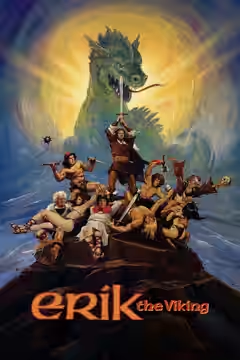
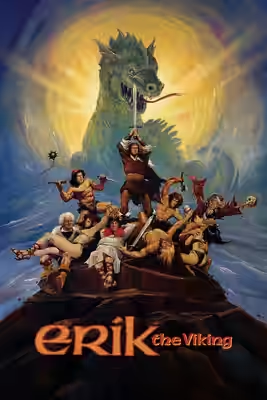
Erik the Viking has enough peculiar people for a good comedy and too little comic purpose to keep them busy. Terry Jones, who writes and directs, puts a peace-loving Viking at the centre of a fantasy adventure, then struggles to make either the jokes or the adventure work. The idea is appealing: a man unsuited to the life expected of him ought to have plenty to get upset about. The difficulty is finding enough funny things for him to do across 107 minutes.
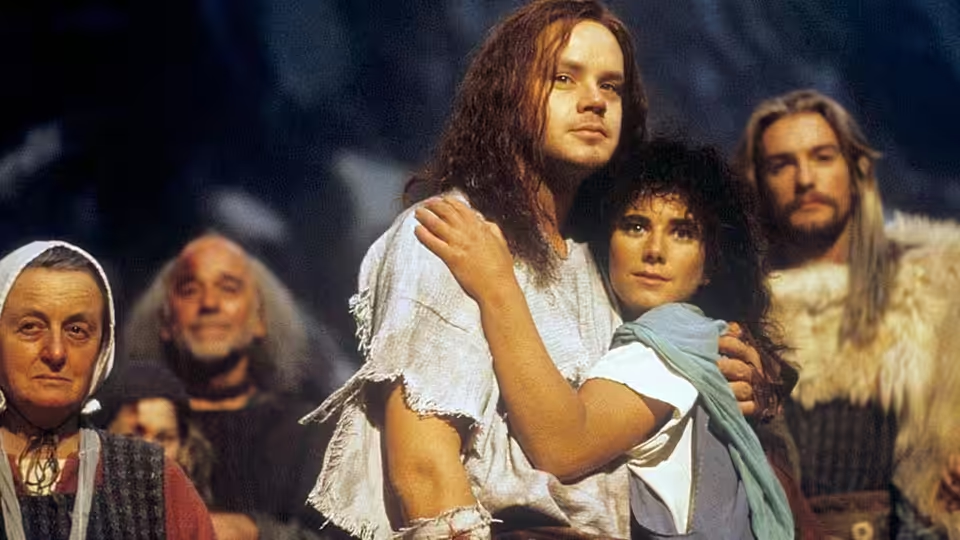
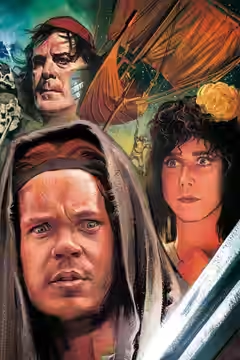
Tim Robbins plays Erik, and his gentleness is a reasonable starting point for the character. A reluctant participant can be good company when everyone around him takes the business of being heroic seriously. But Tim Robbins gives us too little beyond that initial incongruity, while Terry Jones’s screenplay seems to expect it to remain funny without much development. We understand why Erik belongs at the centre of this particular comedy, yet he rarely gives us a reason to look forward to his next contribution.
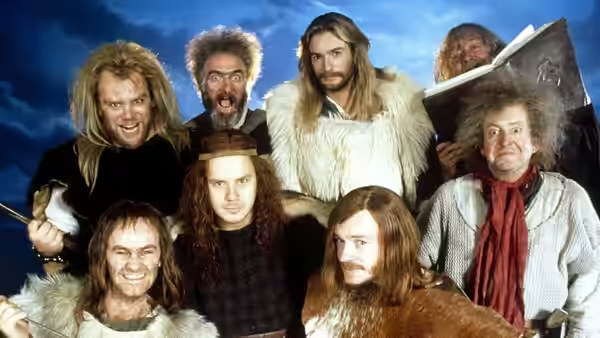
The Viking crew is more appealing. Tim McInnerny plays Sven the Berserk and John Gordon Sinclair plays Ivar the Boneless, two names that establish the sort of company we are keeping. Their collective eccentricity offers some pleasure, and there is enough affection for these characters to make the film’s failures disappointing rather than merely irritating. The trouble is that a promising collection of odd people needs good exchanges, and too much of the comedy stops at establishing that they are odd.
John Cleese, as Halfdan the Black, does better by holding back. We laughed at his restraint, and were relieved to laugh, because his performance does not insist on its own absurdity. He makes the part worth watching without pushing every moment towards a punchline. His limited appearance leaves us wishing for more, although a larger helping of one successful performance would not fix the writing elsewhere.
The fantasy offers little compensation. Ian Wilson’s cinematography and John Beard’s production design do not make the adventure visually engaging enough to sustain the stretches between laughs. That matters in a film asking us to enjoy an invented world as well as the peculiar people occupying it. The fantasy sequences feel flat, and Terry Jones’s direction supplies too little excitement to make us forget that the comedy has stalled.
George Akers’s editing has the difficult task of accommodating comic digressions while keeping an adventure moving. The result feels slack, with neither the jokes nor the action creating much urgency. Neil Innes supplies the music, but it cannot make these passages feel sufficiently playful or involving. The problem extends beyond individual pauses: the film keeps offering another opportunity for amusement without making enough of the opportunities it already has.
A comic adventure can take its time when we enjoy being with the company, and this crew occasionally earns that patience. The genre also allows considerable foolishness, but it still needs decisions about which jokes deserve to stay. Those particularly fond of eccentric supporting characters may find enough here for an undemanding evening. Choose it for that narrow pleasure, and do not expect the adventure to rescue the comedy.