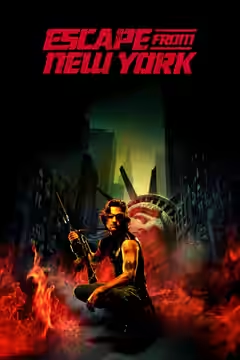
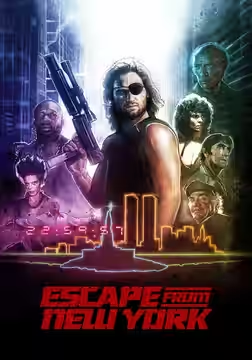
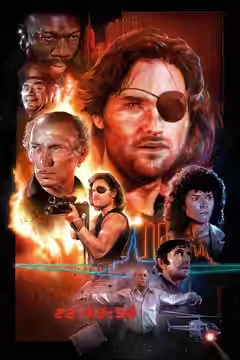
John Carpenter walls off Manhattan, sends Kurt Russell in after the President and lets the dark and a synthesiser do the rest. The plot is thin and the middle hour drifts, but the mood holds and Russell’s whisper carries it.
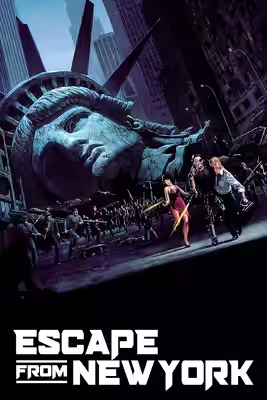
In 1997, the United States has given up on Manhattan. The island is walled off and the people inside are left to run it as they please. Then the President of the United States ends up on the wrong side of the wall, and the only man the authorities can think to send after him is a convict on his way in. That is the whole of John Carpenter’s idea, written with Nick Castle, and he films it as if the idea alone were enough. It nearly is. Escape from New York is a lean, dark, sardonic thriller with a thin plot and more atmosphere than it knows what to do with, and we recommend it to anyone who likes their science fiction cheap and surly.
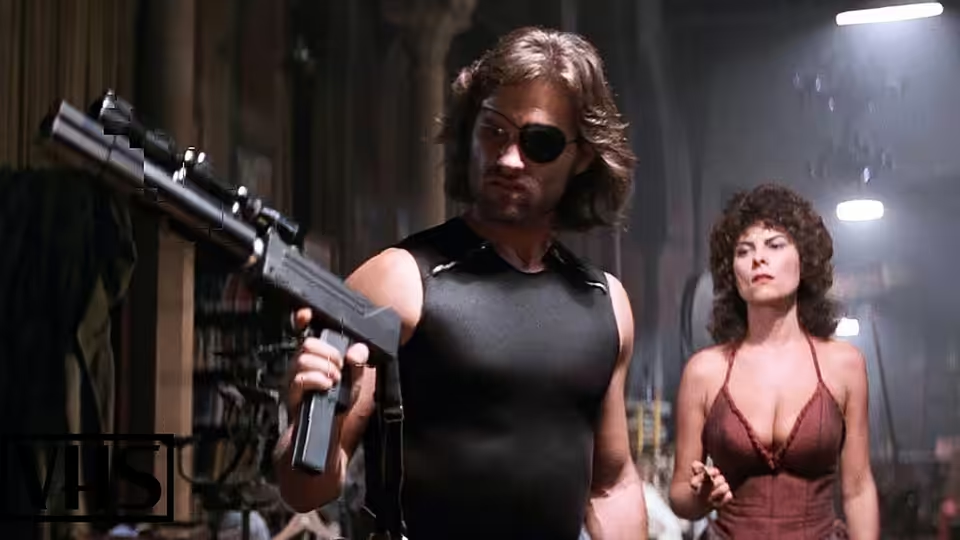
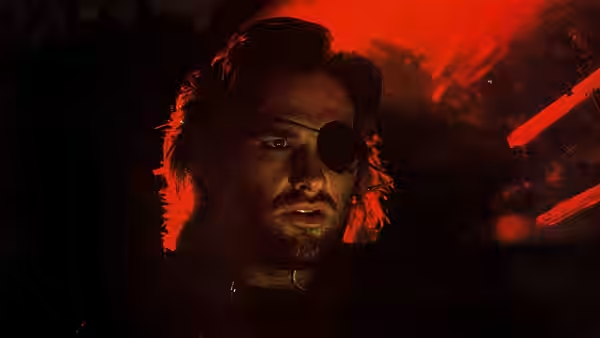
Dean Cundey shoots almost all of it at night, in a wide frame with a great deal of black in it. The streets are lit by fires in oil drums and the odd surviving headlamp, and the buildings behind them are shapes rather than places. Joe Alves’s production design fills the gutters with wrecked cars and stacked rubbish, and gives the convicts’ finery a look of looted grandeur, so you know what sort of people hold the place before anyone speaks. Carpenter lets the dark do most of the building.
The score, by Carpenter and Alan Howarth, is a few synthesiser notes over a bass line that walks rather than runs, and it does as much as the camera to make the place feel dangerous. The first time it drops out, when Snake is picking his way down an empty street and a grating lifts in the pavement, we flinched. It was nothing: a hand, a grate, a face. The film had earned the flinch with twenty minutes of quiet, and we were slightly embarrassed at how cheaply it got us.
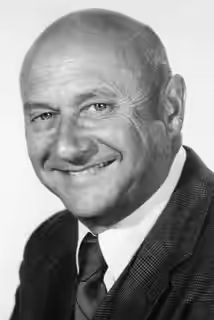
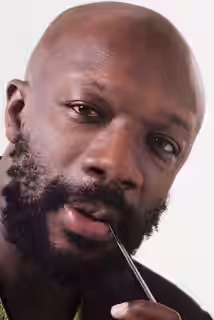
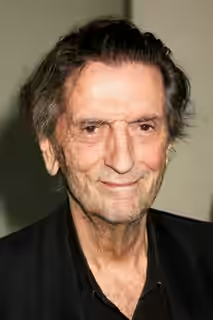
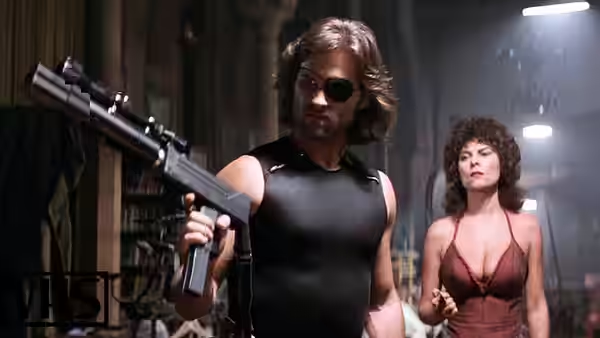
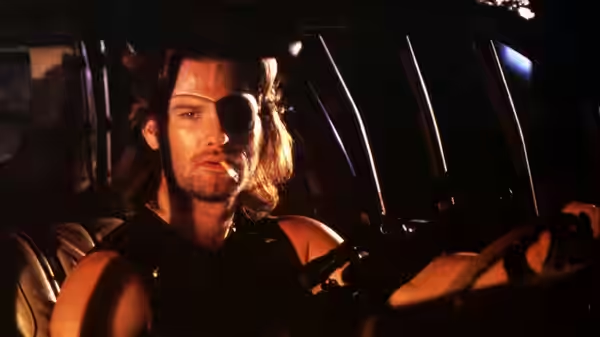
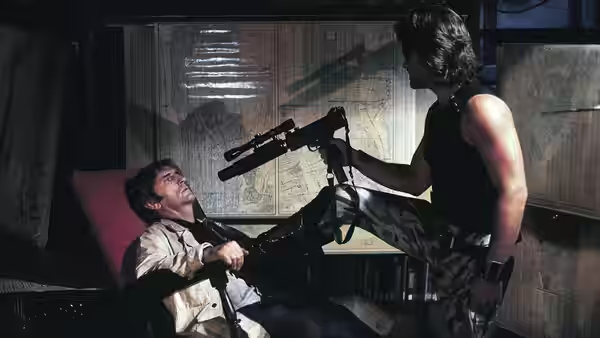
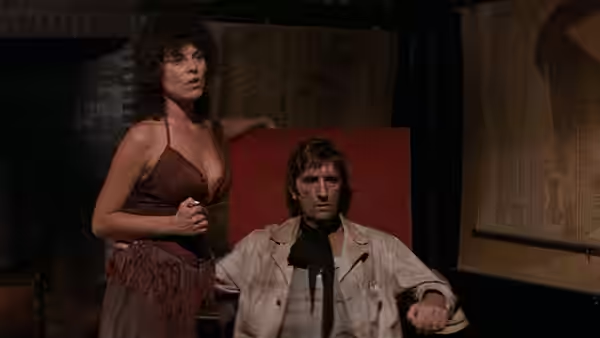
Kurt Russell plays Snake Plissken with an eyepatch, a leather jacket and a voice barely above a whisper, and it is a joke he keeps straight for 99 minutes. People keep telling him things he does not want to hear; he never once raises his voice back. Lee Van Cleef, as Police Commissioner Bob Hauk, gives the briefing scenes a dry authority, and the two of them, old gunfighter and new, barely look at each other. Ernest Borgnine’s Cabbie is the film’s one warm body, driving around the ruins with show tunes on the cab’s tape player. Harry Dean Stanton’s Brain is a frightened man pretending to be a clever one, and Isaac Hayes’s Duke of New York says little and is more frightening for it. Donald Pleasence plays the President as a small, damp man nobody would cross the street for.
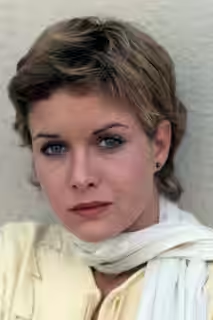
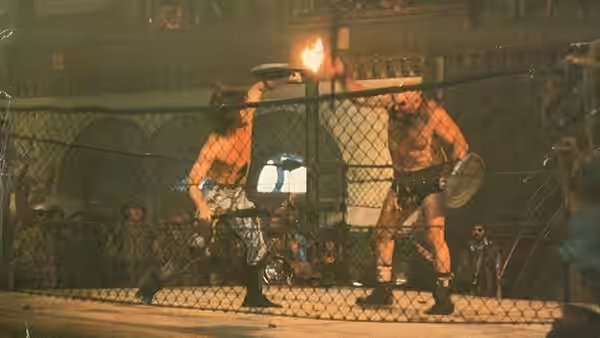
The plot is thin even by the standards of a chase film. Snake has a job and a reason to hurry, and the film forgets the hurry for long stretches, and so did we. The middle hour is mostly walking and talking in the dark, and Todd Ramsay’s editing cannot make a scene move when it has nowhere to go. The action, when it comes, is scrappy; a fight in a makeshift ring is staged flatly and shot too close. Adrienne Barbeau’s Maggie is written as scenery, and Season Hubley’s part is credited as Girl in Chock Full O’Nuts, which is about the measure of it. Stephen Loomis’s costumes do more for these people than the script does: you know what everyone is from what they wear, which is just as well.
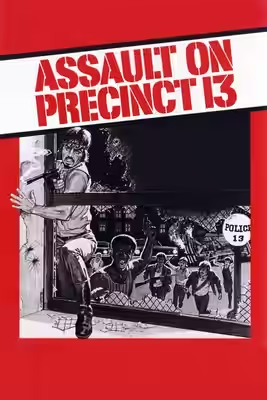
Set against Carpenter’s own work, it sits below Halloween and The Thing, which are tighter, and alongside Assault on Precinct 13, which it resembles: a few people, a hostile place, a long night. What it has that they do not is a sense of humour about its hero. Most critics put it near the top of his films. We would put it a rung lower, because the pictures and the music promise a film the script never quite gets round to writing.
Watch it late, with the lights off and the sound up, and do not expect much to happen. The point is the walk. Russell’s whisper, Cundey’s black frames and that bass line will get you to the end, and the end, which we will not describe, is better than the hour before it.