Vincente Minnelli’s wedding comedy is gentler than its tagline and sadder than it lets on. The jokes are period pieces and the wedding itself runs long, but Spencer Tracy, jealous, proud and bewildered, is reason enough to watch.
Vincente Minnelli made Father of the Bride from Edward Streeter’s novel, and the shape is as simple as the title. A daughter announces she is getting married, and her father spends the next 92 minutes losing control of his house, his bank balance and, he suspects, her. Albert Hackett and Frances Goodrich’s screenplay has almost no plot beyond that, only a run of ordeals: meeting the other parents, the engagement party, the guest list, the caterer, the rehearsal, the day itself. It is a good film and a modest one, worth an evening for Spencer Tracy and for the sadness underneath, which has lasted better than the jokes on top.
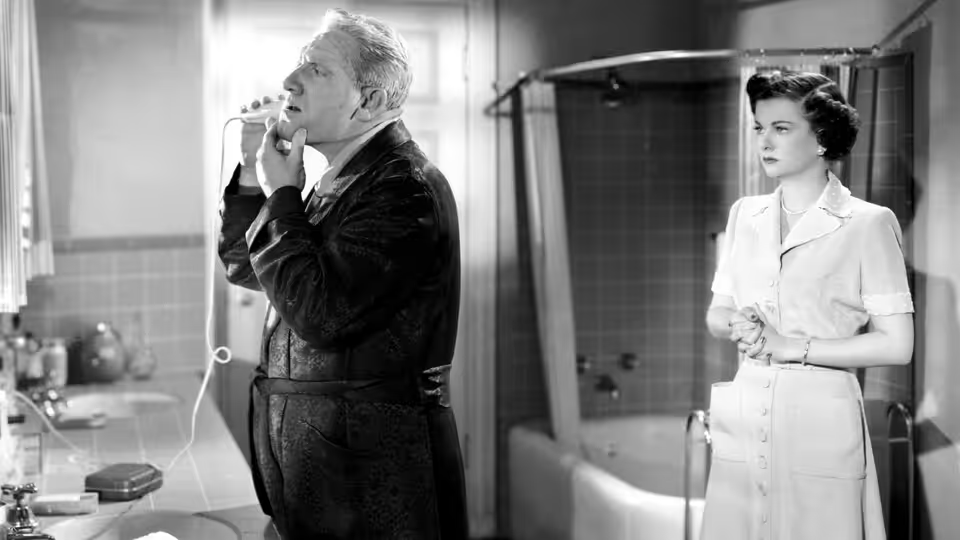
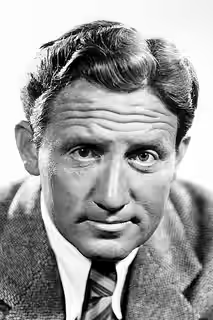
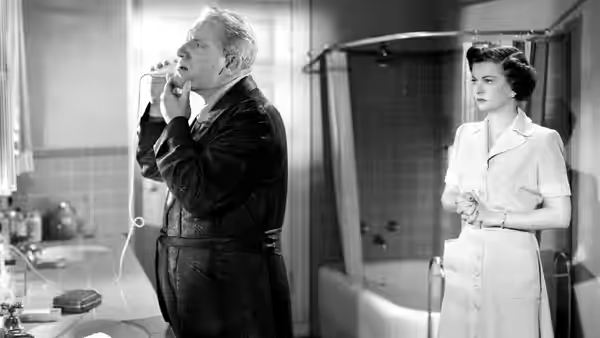
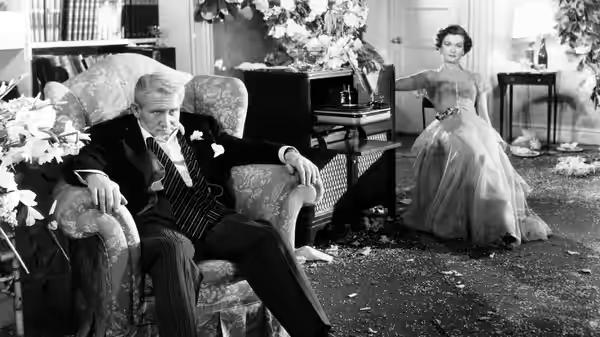
Tracy is the whole picture. He plays Stanley T. Banks as a man who has run his own life without interruption and finds, over a single dinner, that it is over. Watch him at the table when Kay first says the name Buckley: he does not move, and you can see him hear it. He narrates as well, in a voice of weary reason that the pictures keep contradicting, and most of the laughs live in the gap between what he says he felt and what we watch him do. He is jealous of the boy, ashamed of the jealousy, then jealous again, and Tracy carries all three at once without appearing to act.
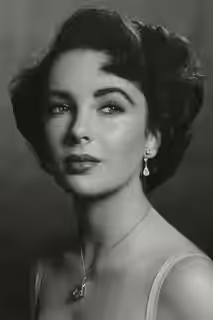
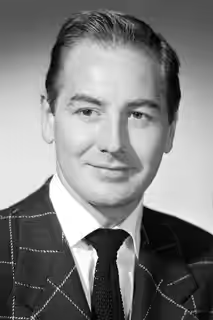
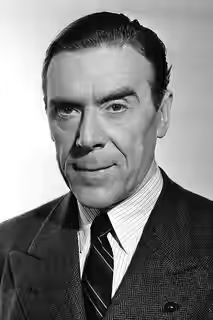
Joan Bennett gives Ellie the calm of a woman who has already seen how this ends and has decided to enjoy the road there. Elizabeth Taylor plays Kay as a girl who has not yet noticed how much she is asking of everyone, which is right for the part. Don Taylor’s Buckley is pleasant and a little blank, and the film knows it; he is the sort of young man a father cannot object to and cannot warm to either. Billie Burke flutters and frets as Buckley’s mother, and Leo G. Carroll, as the caterer Mr. Massoula, looks over the Banks living room with the pity of a man who has worked in larger ones.
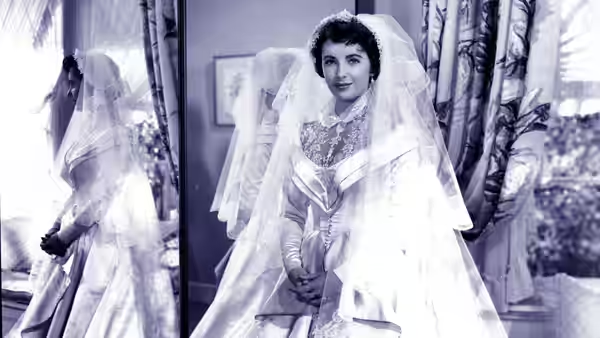
John Alton shot it, and his usual trade was crime pictures and shadow. He lights the Banks house evenly and brightly, and then, in a nightmare Stanley has as the wedding gets close, he is let off the leash. The aisle goes soft under Stanley’s feet, his clothes come apart, the guests’ faces swell towards him and the church tilts. We laughed at it, and then a shot of Tracy sinking through the floor while his daughter waits at the altar stopped the laugh, because it is the film’s whole worry in a single image: a father who cannot get to her in time. Minnelli stages it like a musical number with the music taken out, and it is the best thing he does here. The costumes by Helen Rose and Walter Plunkett save their one piece of spectacle for Kay’s wedding gown, Adolph Deutsch’s score stays out of Tracy’s way, and Ferris Webster cuts briskly enough that nothing overstays its welcome except the wedding.
Not all of it has kept. The jokes about the cost of a wedding and the horror of in-laws were old in 1950, and the film tells several of them twice. The engagement party leaves Stanley in the kitchen mixing drinks for guests he never gets to meet, which is funny once and then continues. The rehearsal, run by Paul Harvey’s Reverend Galsworthy, and the ceremony itself are played close to full length, and by the second walk down the aisle we were checking our watch. Variety made the same complaint at the time, and the one dissenting review, which gave up on the whole thing after half an hour, is wrong about the film and right about that stretch.
Set against Minnelli’s own Meet Me in St. Louis (1944), which also loved a family house and dreaded the day one of the family left it, this is a smaller and plainer thing, and the dread has been dressed as comedy. Tracy is there to let it show through, and he does. It carries a U certificate and runs 92 minutes. Watch it at home on a Sunday afternoon with someone who has paid for a wedding or expects to. They will laugh in different places from you, and near the end they may not laugh at all.