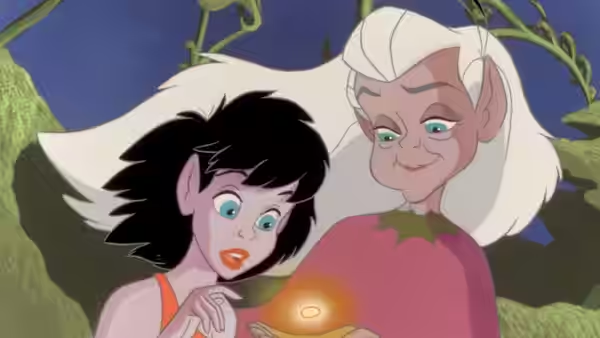
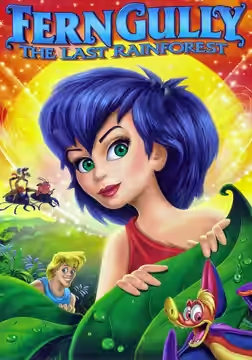
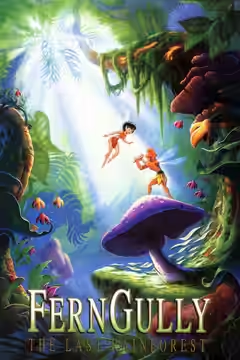
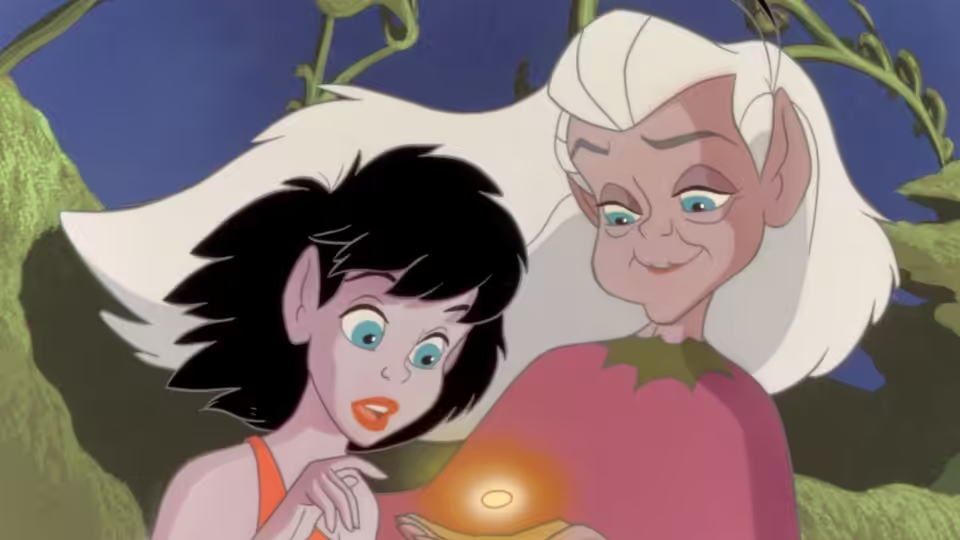
Crysta (Samantha Mathis) and Magi Lune (Grace Zabriskie) gazing at a glowing seed
Film review

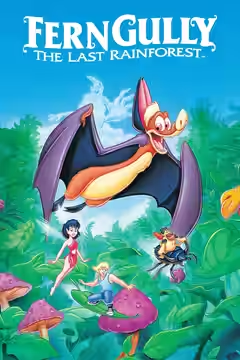
FernGully: The Last Rainforest

1992 · Directed by Bill Kroyer · 1h 16m · ACB G

In a sentenceA film about saving the rainforest whose best five minutes are the toxic sludge singing about how much it loves smog

FernGully is a rainforest glade where fairies live in the trees and humans are a bedtime story. Crysta (Samantha Mathis), a young fairy, should be learning from Magi Lune (Grace Zabriskie) how to coax a seed into a sprout, but she keeps flying above the canopy to stare at a column of smoke. Then Batty Koda (Robin Williams), a fruit bat with an electrode bolted to his skull and a laboratory in his past, crashes into the glade shouting that humans are real and near. Crysta flies out and finds Zak Young (Jonathan Ward), a young logger spraying red crosses on trunks marked for felling, and when a tree falls she shrinks him to her own size. Behind him a machine called the Leveler is chewing towards FernGully.

Plays from YouTube when you press play; nothing loads from them until then.

Fi1m review

Bill Kroyer’s animated plea for the rainforest is prettier than it is clever. The glade glows, Tim Curry’s smog-demon has the best tune, and Robin Williams talks faster than the script can think; the heroes and the sermon are duller than both.

Bill Kroyer’s film runs 76 minutes and wants every one of them to send a child home worried about trees. FernGully is a rainforest glade of fairies who believe humans died out long ago; a logging crew arrives with a yellow machine called the Leveler and proves them wrong. That is the whole of Jim Cox’s screenplay, and it is enough. The result is decent family fantasy with a lovely painted look and a villain worth the ticket on his own, and it goes slack every time it stops to say what it is for.

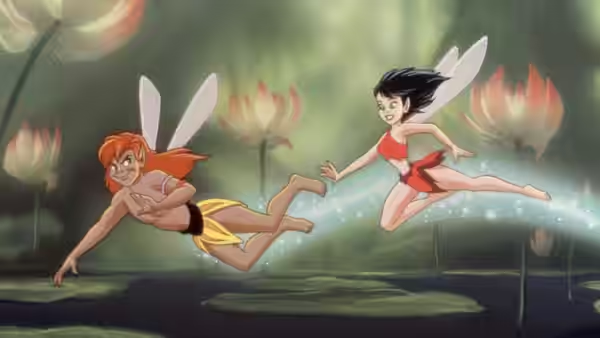
The glade earns the affection. The backgrounds are done in soft pinks, violets and mossy greens, with light falling through the canopy in visible shafts, and the fairies are drawn small enough that a fern frond is a staircase and a beetle is transport. Crysta’s first lesson, coaxing a seed into a sprout with her hands, is quiet and charming. Against all this the Leveler is built to be the ugliest object on screen: a squat yellow box on tracks with a mouth of blades at the front and chimneys pumping black smoke from the back. When it first pushes into frame the colour drains out of the picture around it.

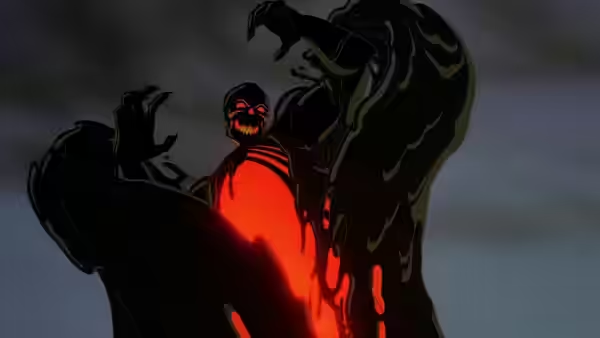
Then the smoke gets a voice. Hexxus, sealed inside a tree long ago, pours out of the Leveler’s exhaust as a black oil that gathers into shoulders and a grin, and Tim Curry sings to it about how much he loves sludge and soot and the taste of a chemical spill. We sat up. It is the only sequence in which the animation, the writing and the performer are all reaching for the same thing, and Curry plays it as a seduction rather than a threat, low and amused and in no hurry. The film is arguing that pollution is horrible and has made pollution the most attractive thing in it. We spent the rest of the running time waiting for the oil man to come back, and we suspect most children do the same.

Robin Williams plays Batty Koda, a fruit bat with an electrode still bolted to his skull who has escaped a laboratory and cannot stop talking. He hops between announcers, game show hosts and a nervous patient inside a single sentence, and it is plainly a rehearsal for the Genie he voiced in Aladdin, also from 1992. About a third of it lands. Gillian L. Hutshing cuts him into every gap in a scene so that he never seems to pause, which suits the character and tires the film. Cheech Marin and Tommy Chong, as the tree spirits Stump and Root, get two good exchanges, and Tone Loc’s Goanna delivers a growled number about the pleasure of eating a shrunken human that is nearly as good as Curry’s.

The trouble is the pair we are meant to care about. Samantha Mathis gives Crysta warmth, but Cox has written her as curiosity and nothing else, and Jonathan Ward’s Zak, the young logger she shrinks to her size, arrives with headphones, a spray can and a grin and never acquires a fourth thing. Their attachment is a few looks and a dance. Around them the script keeps stopping for instruction: Grace Zabriskie’s Magi Lune explains the balance of the forest, Crysta explains it again to Zak, and Zak repeats it aloud so we cannot miss it. By the third lecture we had stopped listening. Alan Silvestri’s score does its job, flutes and shimmer for the glade and brass for the machine, but the songs carry the film and the score fills in between them.

Set beside the Disney films of the same years this is a smaller thing, and it moves like one. The backgrounds are richer than the characters standing in front of them; the fairies drift in a way that feels like economy rather than flight, and their faces settle into two or three expressions. As a picture book about the rainforest it is better than most, because it lets the villain be exciting and the forest be beautiful before anyone says the word ecosystem.

It carries a U and deserves it, though Hexxus may cost a small child a night’s sleep, which is a compliment to Hexxus. Under-eights will take the message and the beetles and be content. Adults should stay for Curry, forgive Williams, and be glad the thing is done in 76 minutes.

Critical consensus AI synthesised

62
Positive
2
Mixed
2
Negative
1
Los Angeles Times
10 April 1992 · CHARLES SOLOMON
70*

Solomon finds the film enjoyable and promising, though weakened by a talky script and an underdeveloped environmental message. He singles out Hexxus’s final transformation as especially striking and frightening animation.

Read the full review →
Variety
31 December 1991 · Variety Staff
70*

The review finds the film colorful, lively, and tightly conceived, with enough hipness to keep it from becoming too saccharine. It praises the vivid animation and supporting voice performances, while calling the leads insipid.

Read the full review →
The New York Times
10 April 1992
64*

The page identifies this as a film review, but its critical verdict is unavailable. The blocked page provides no accessible praise or complaint to attribute to the critic.

Read the full review →
Time Out
· TCh
64*

The available page text does not reveal the critic’s verdict. Its description singles out the rainforest glade’s pretty, pastel-coloured appearance and harmony between plants and animals.

Read the full review →
Radio Times
★★ · Tom Hutchinson
40

Hutchinson says the film is well-meaning and entertaining for young viewers, though its preachiness may bore adults. He finds the criticism of its forceful environmental message somewhat unfair.

Read the full review →

Straight answers AI written, from our review

Is FernGully: The Last Rainforest worth watching?
FernGully: The Last Rainforest is worth watching for families with children under eight, and we scored it 64. The painted glade is lovely and Tim Curry's singing smog-demon Hexxus is the best thing in it, but the fairy heroine and the young logger are thin, and the film stops three times to lecture about the forest. Adults should stay for Curry and be glad it runs 76 minutes.
How long is FernGully: The Last Rainforest, and what is it rated?
FernGully: The Last Rainforest runs 1h 16m and is rated G by the ACB in Australia. It is a family and fantasy film.
Where can I watch FernGully: The Last Rainforest in Australia?
FernGully: The Last Rainforest is streaming on Amazon Prime Video in Australia. Availability is checked daily; the links above go straight to each service.
How does FernGully: The Last Rainforest compare to Princess Mononoke?
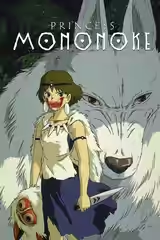
FernGully: The Last Rainforest is the smaller and simpler of the two, a 76-minute picture book with songs, while Princess Mononoke is the richer and better film. Miyazaki gives the humans destroying his forest real reasons and real sympathy, so the loss hurts; Kroyer's loggers are simply wrong, and his best character is the pollution. Choose FernGully for small children and Mononoke for anyone older.
What should I watch after FernGully: The Last Rainforest?
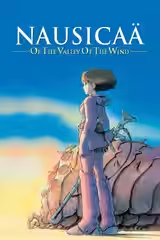
After FernGully: The Last Rainforest, try Princess Mononoke (1997, Fi1m 88): Miyazaki’s forest gods do not sing, and nobody in it is simply wrong. Then Nausicaä of the Valley of the Wind (1984, Fi1m 85): A poisoned world and a girl who flies; the message arrives without a lecture; and The Secret of NIMH (1982, Fi1m 74): Don Bluth’s laboratory escapees, drawn darker and with real fear in them.

Cast

Awards

Genesis Award, 1993

Won
Genesis Award

Annie Award for Best Animated Feature, 1992

Nominated
Annie Award for Best Animated Feature

If you liked this, try…

  1. Princess Mononoke (1997, Fi1m 88)Miyazaki’s forest gods do not sing, and nobody in it is simply wrong.

  2. Nausicaä of the Valley of the Wind (1984, Fi1m 85)A poisoned world and a girl who flies; the message arrives without a lecture.

  3. The Secret of NIMH (1982, Fi1m 74)Don Bluth’s laboratory escapees, drawn darker and with real fear in them.

  4. Watership Down (1978, Fi1m 81)Rabbits, a bulldozer and no comfort at all; keep the smallest away.

  5. Avatar (2009, Fi1m 70)Cameron rebuilds this plot at enormous size; the trees glow and the sermon stays.