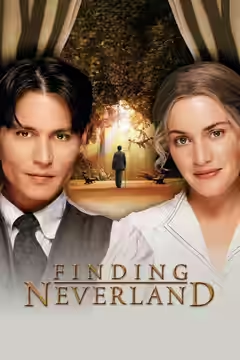
Marc Forster’s account of how J.M. Barrie came to write Peter Pan is gently acted, handsomely dressed and so well-mannered it barely dares look at its own story. Johnny Depp and Freddie Highmore make it worth an evening; the script keeps tidying up after them.
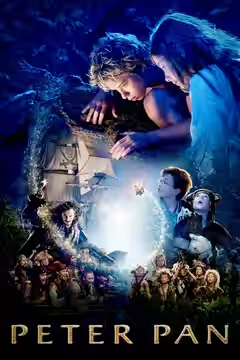
London, 1903. J.M. Barrie’s latest play has closed, his producer is out of pocket, and Barrie takes his dog to Kensington Gardens, where he finds four boys, their widowed mother and, over the summer that follows, the play that will make him. Marc Forster’s film, from a screenplay by David Magee, is about how a small man in a bowler hat turned those afternoons into Peter Pan. It is well acted, handsomely dressed and decent through and through, and it has decided before the first scene that nothing untoward will be allowed to happen in it. That is why it is pleasant company for its length and why it never becomes more.
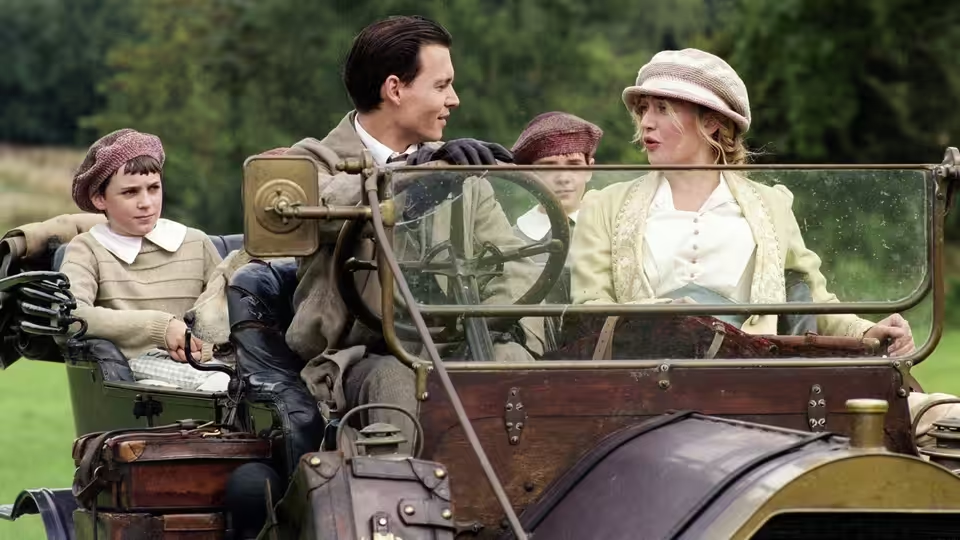
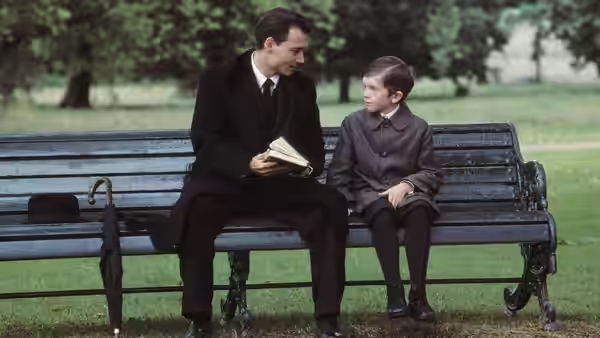
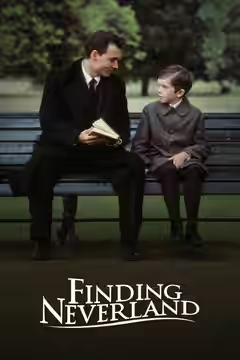
Depp plays Barrie with a soft Scots voice, a slight stoop and the attention of a man who watches children the way other people watch the weather. He does not play him as a child; he plays an adult who has kept the habit of pretending and knows how odd that looks. Freddie Highmore’s Peter is the film’s best asset, a solemn boy who has stopped playing since his father died and regards this new grown-up with more suspicion than his brothers can manage. Their scenes are the best written in the film, because Peter will not be charmed and Barrie has to work. Winslet gives Sylvia wit and a tiredness she keeps waving away, and Dustin Hoffman’s Frohman gets the drollest lines, most of them about money.
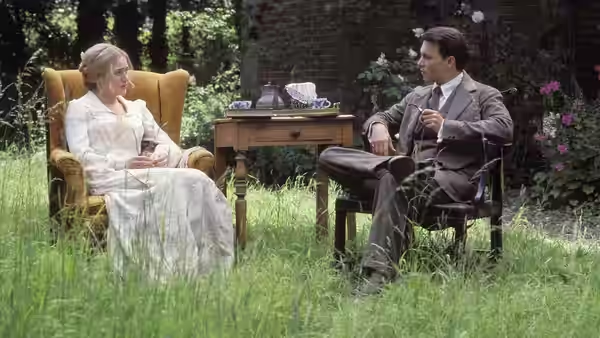
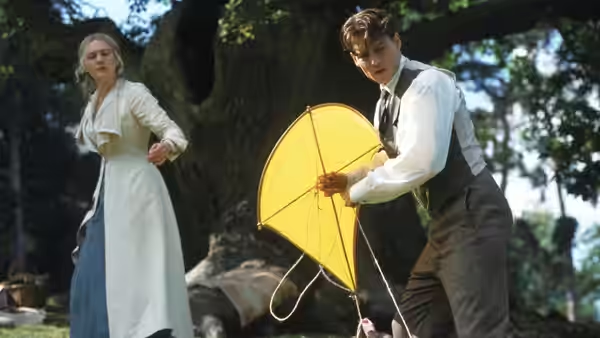
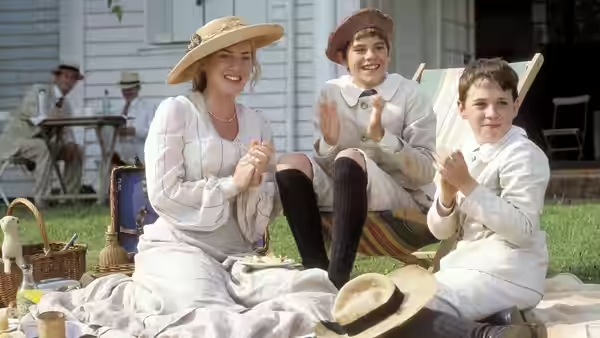
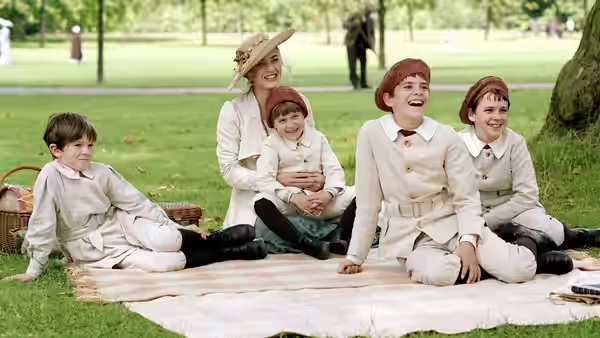
Gemma Jackson builds the fantasy as theatre. When the garden becomes a pirate deck, it is painted canvas and real rope; when Barrie imagines a stage he imagines flats and footlights. Roberto Schaefer keeps the London rooms brown and lamp-lit and the garden green and over-bright, and lets the two bleed together during the games. Matt Chessé cuts from the boys jumping on a bed to the boys in the air and straight back, so we never stay anywhere imaginary for long. Alexandra Byrne keeps Barrie in the same dark three-piece whether he is at his desk or up a tree, and puts Sylvia and the boys in white cotton. It is all careful, pretty and a little quiet.
The trouble is the good manners. A married man is spending his days with another woman’s sons; the film knows how that looks, has Julie Christie’s Emma du Maurier say so from the drawing room, has a dinner table say so, and then rules the subject out of order and moves on. Radha Mitchell’s Mary, the wife Barrie leaves at home, gets one good scene at a bedroom door and is otherwise an obstacle the plot needs cleared. Barrie’s own childhood, which explains him, is dealt with in a single speech. Jan A. P. Kaczmarek’s score, piano over strings with a waltz that keeps returning, arrives at every soft moment to make sure we have noticed it is soft.
For a film about a man inventing things, it invents surprisingly little. The Neverland sequences show us what the boys are imagining, and what they are imagining is fancy dress: pirates, cowboys, a circus, Barrie in a bear suit. The games are charming and they are not strange, and Peter Pan is strange, a play about a boy who refuses to grow up, a crocodile with a clock in it and children who fly out of a window away from their mother. The film’s idea of that play is a tea party with swords.
The reviews so far are split almost evenly between the charmed and the irritated, and for most of the running time we sat between them in polite regard. Then, late on, in a scene involving Highmore alone with something he has made, it got to us, against our will, because he plays it with his mouth shut and his face refusing to do what the score is begging it to do. We were cross about being worked on so plainly. We gave in anyway. The second half takes a turn we will not describe; the film handles it with the same decorum as everything else, and for once the decorum earns its keep.
It belongs to the lawns-and-lawn-dresses school of Edwardian pictures and is a well-behaved member of it; beside the play it is about, it is tame. It carries a PG and runs 106 minutes, and it will do for a Sunday afternoon with children old enough for a period drama and adults willing to be nudged. Barrie wrote a play in which growing up is the thing to fear. Forster has made a film in which nobody is allowed to misbehave.