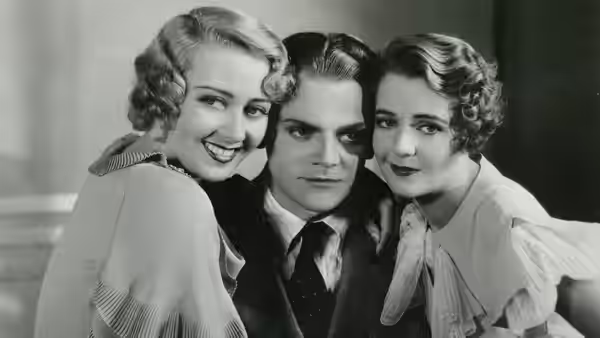
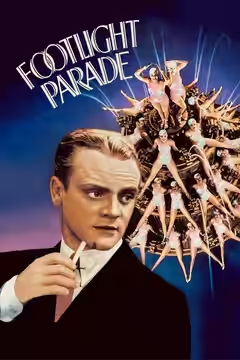
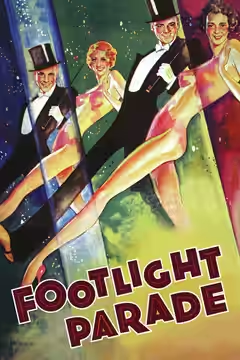
James Cagney and Joan Blondell are good company in Footlight Parade, though its first hour drags. The musical numbers earn a qualified recommendation, chiefly for anyone who will forgive loose plotting in exchange for a water ballet.
Footlight Parade is worth seeing for its musical numbers, provided a slack opening hour will not finish the evening for us. Lloyd Bacon takes longer than he should to make good on the film’s promise, and the wait is not consistently entertaining. We would forgive a thin story more readily if it moved briskly. Here, the comedy and the music keep offering different reasons to stay, with the music making the stronger case by some distance.
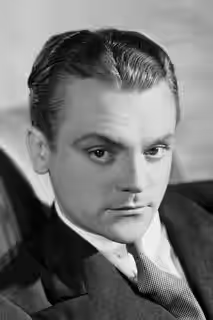
James Cagney, as Chester Kent, is the most persuasive reason to remain interested before the numbers take over. There is an alertness to his presence that makes even unpromising business feel briefly as though it might lead somewhere. Joan Blondell’s Nan supplies a welcome dryness beside him, without making the comedy feel laboured. The pair give us people to watch through a story that too often seems to be finding fresh ways to delay its own pleasures.
The screenplay by James Seymour and Manuel Seff has trouble making one passage matter to the next. A crowded cast can give a comedy momentum, but here it too often gives it another place to wander. George Amy’s editing leaves those joins exposed, and the first hour feels both busy and slow. That is a substantial reservation in a film running 104 minutes, with performers asked to keep us amused for too long without enough help from the writing.
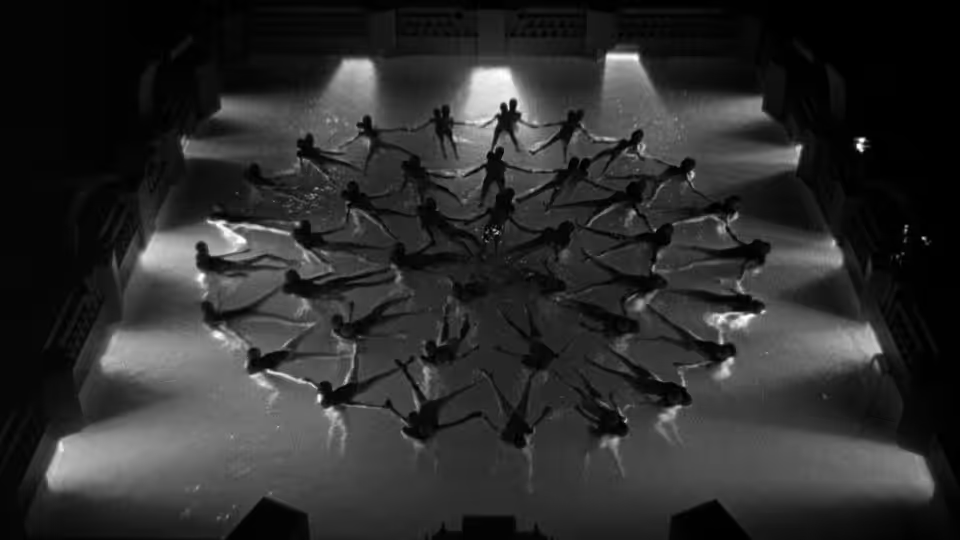
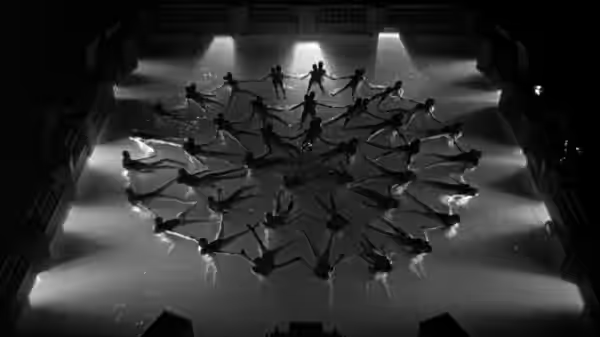
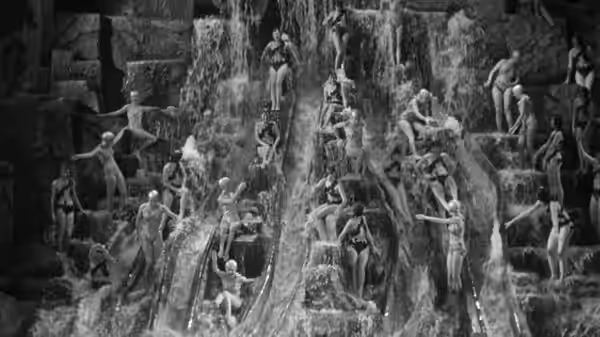
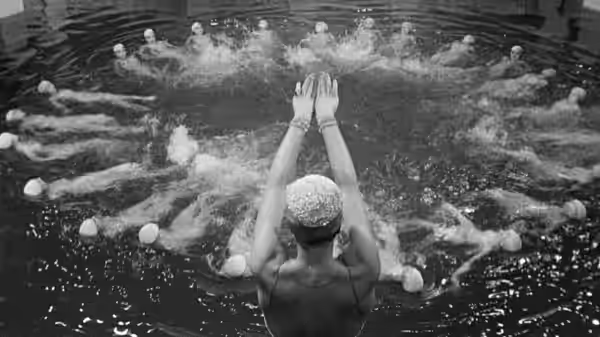
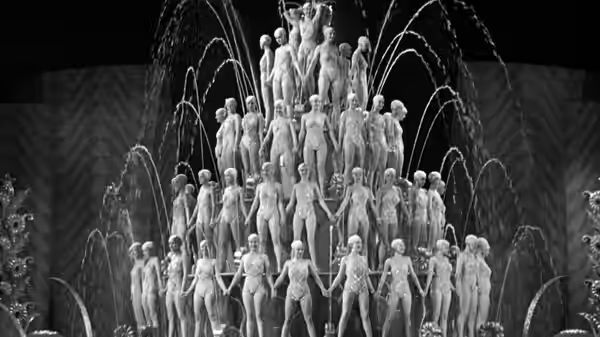
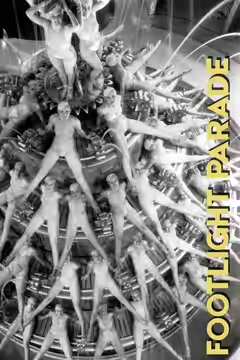
We were delighted by the water ballet, partly because it gave us something specific and absorbing to watch after so much aimless plotting. The pleasure is in watching a musical number take its visual possibilities seriously, with movement worth attending to for its own sake. George Barnes’s photography deserves attention here: the spectacle remains readable, so we can enjoy its scale without losing interest in the performers. For once, we stopped wondering how long the film was taking.
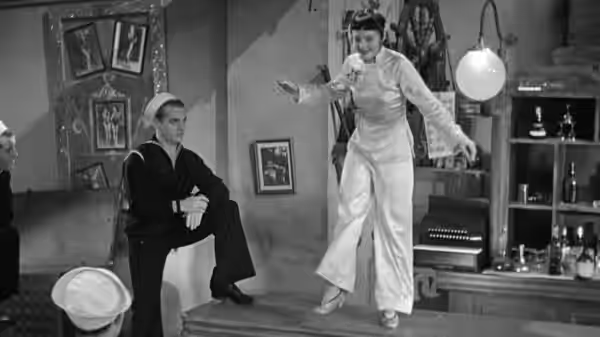
The music credits name Al Dubin, Sammy Fain, Irving Kahal and Harry Warren, and the songs make a better case for the film than the dialogue. Honeymoon Hotel and Shanghai Lil have a distinct identity that much of the surrounding comedy lacks. We remember the numbers individually, and would happily watch them again without needing the connecting scenes to prepare us. Their independence helps: there is no need to find the plotting compelling before enjoying what the musical performers can do.
Musical comedy allows a certain amount of loose plotting, and we are happy to grant it. This much dead time is harder to overlook, particularly at 104 minutes. Our recommendation rests on the numbers, which are the reason we would return. Anyone coming principally for a tightly worked comedy may reasonably be less forgiving. Choose it for a musical evening, with patience for the stretches when nobody is singing.