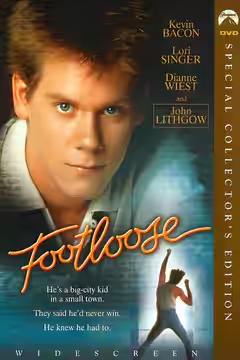
Footloose makes a thin rebellion story worth an evening through Kevin Bacon’s restless charm and Herbert Ross’s sympathy for the adults. The sentimentality takes some patience, but the dancing earns its place.
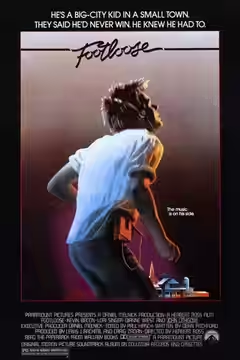
Herbert Ross’s Footloose is an energetic, sentimental teen drama that works better when somebody starts dancing. That is a limitation, but hardly a fatal one for a film so intent on making movement pleasurable. Its enthusiasm survives some clumsy persuasion, and we recommend it with a modest tolerance for emotional overstatement. Dean Pitchford’s screenplay gives its young people an immediately understandable grievance, then presses their case harder than it needs to.
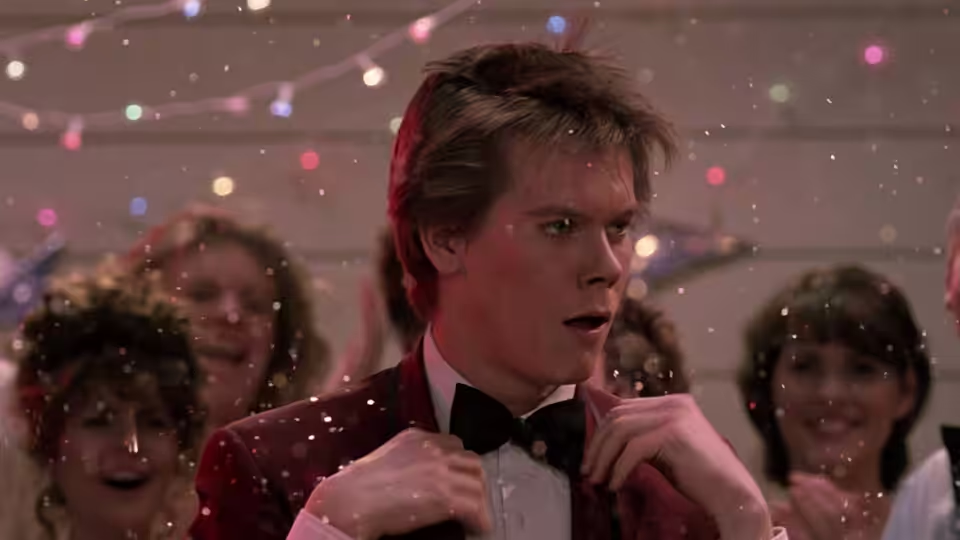
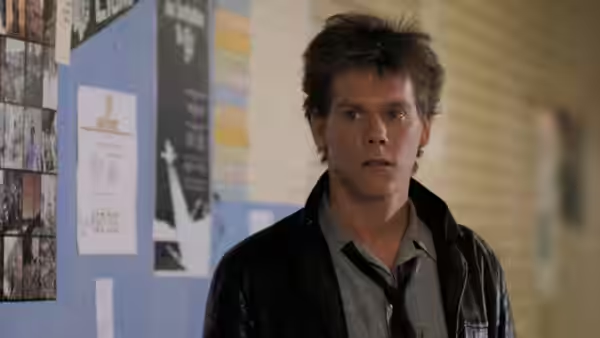
Kevin Bacon is the main reason that pressure remains bearable. His Ren has enough impatience to make the rebellion credible, without becoming such exhausting company that we start sympathising with restrictions on his social life. There is a useful awkwardness beneath the confidence: the performance lets us see the effort involved in being the newcomer who refuses to fit in. Kevin Bacon also understands that charm needs occasional restraint, and does not spend every scene asking to be liked.
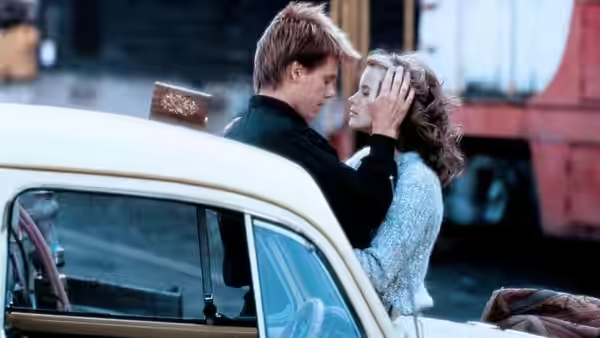
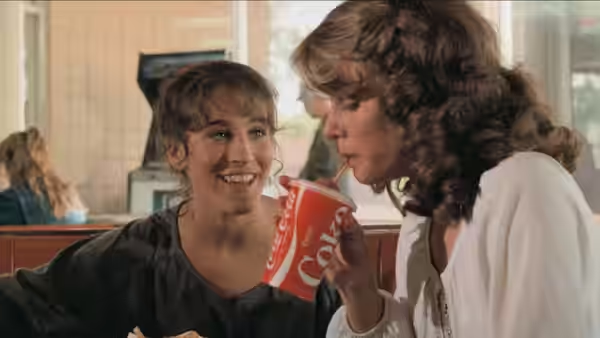
John Lithgow gives Rev. Shaw Moore sufficient seriousness to prevent the adult opposition becoming merely a queue of people waiting to be proved wrong. Herbert Ross allows that seriousness some space, which is an important kindness in a film pitched towards younger viewers. Dianne Wiest’s Vi Moore brings welcome quietness to material that can otherwise insist too loudly on its feelings. Lori Singer’s Ariel is less consistently served by the writing, though her restlessness makes sense alongside Ren’s. The performers make these people more credible than the screenplay always does.
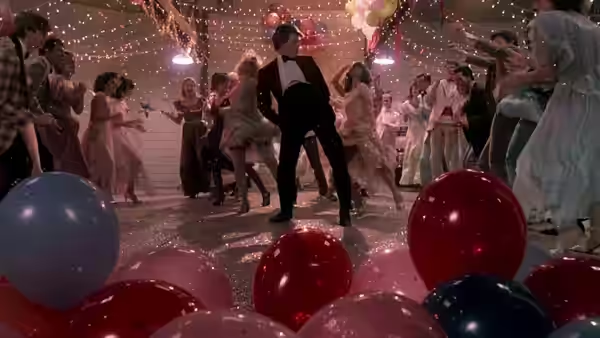
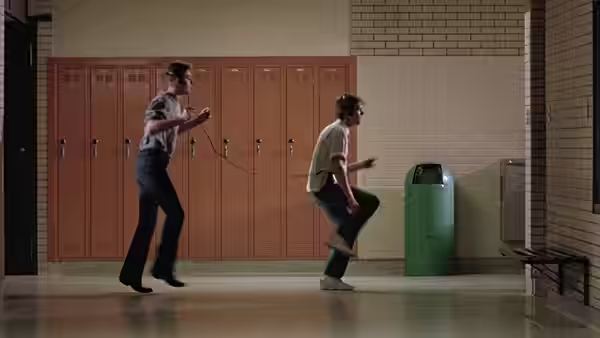
The warehouse dance is where Ric Waite’s cinematography and Ron Hobbs’s production design make their strongest impression. The space gives the movement scale, and the dancing gives us something more immediate to follow than the dispute. We were delighted by it, because the physical exertion makes frustration understandable without another speech explaining it. The sequence is extravagant, certainly, but its extravagance suits a young man with more energy than he knows how to use. The warehouse earns its place as a setting for that release.
Paul Hirsch’s editing keeps the musical passages moving with an assurance the dramatic passages do not always share. The transitions between argument and entertainment can feel abrupt, although the film rarely lingers long enough for the interruption to become a serious drag. Kenny Loggins’s songs help considerably: their directness suits a film whose pleasures depend on committing to the moment. The music is persuasive without requiring the story to become any more sophisticated, which is fortunate for both.
The weakness is how carefully Dean Pitchford manages our sympathies. Too often, an emotion arrives already explained, leaving the actors little to discover within it. Herbert Ross’s willingness to take adults seriously partly corrects this, but the sentimentality still makes some exchanges feel rehearsed for our benefit. We understand why everyone cares; we do not always believe they would express that care quite so neatly. The dramatic scenes need more of the uncertainty that Kevin Bacon brings to his performance.
Within the teen musical, that attention to adult feeling gives Footloose something worth keeping, even when the writing becomes laboured. It also means the quieter performances matter alongside the dancing, rather than simply filling the gaps between songs. The film asks for indulgence and supplies enough enjoyment to earn a reasonable amount of it. Choose it for an evening when music and an engaging cast matter more than a watertight script.