Marilyn Monroe and Jane Russell make this musical comedy funny, knowing and warmer than its interest in money might suggest. The plotting grows tiresome, but the women remain worth spending an evening with.
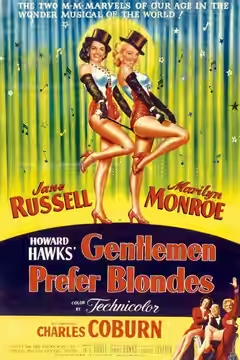
Howard Hawks’s Gentlemen Prefer Blondes is a funny, shrewd musical comedy whose central partnership is considerably better than its plot. Marilyn Monroe and Jane Russell make its interest in money and desire feel brisk and practical, even when the romantic complications grow laboured. The film allows its women to want things without asking them to become more modest or more apologetic. That permission is a good part of the pleasure.
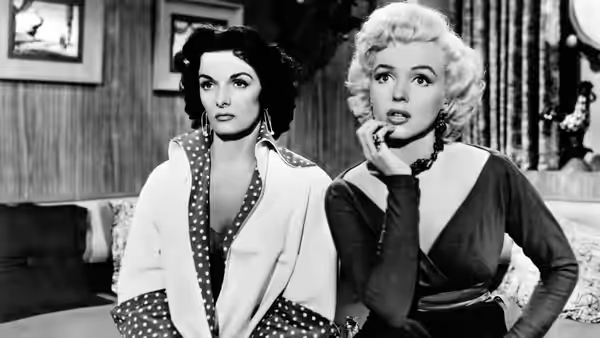
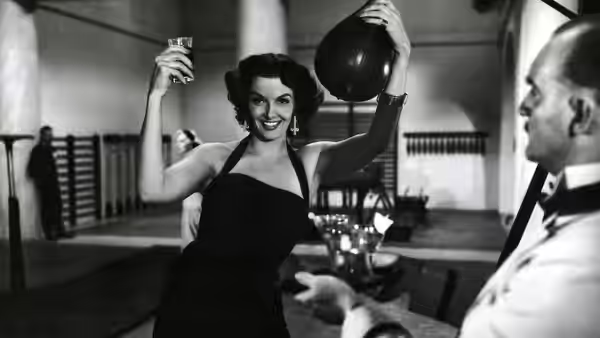
Monroe plays Lorelei Lee with a deliberation that can easily be mistaken for vacancy. Her comic timing asks us to wait for the thought, then reconsider who has understood the situation. Russell’s Dorothy Shaw is quicker and drier, with little interest in disguising her amusement. We laughed at the difference in their delivery: Monroe takes her time while Russell sounds ready to get on with things.
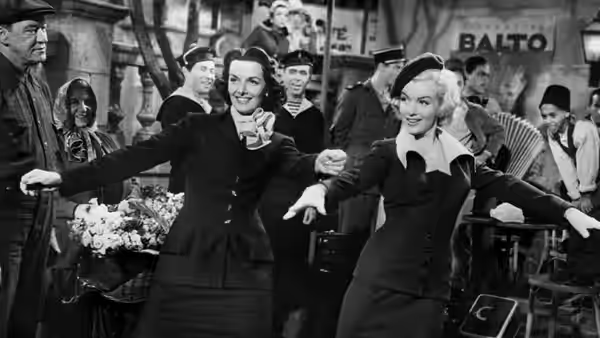
Russell also keeps the film from becoming a long exercise in admiring Monroe. She has her own comic authority, and their scenes together are lively because neither needs to diminish the other. We believe that these women enjoy one another’s company, which gives us a reason to care about them beyond the next joke or song.
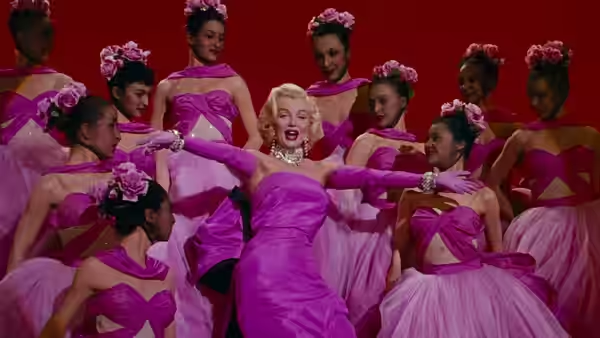
Harry J. Wild’s cinematography gives the colour sufficient force to suit the women’s confidence; a coy visual treatment would have been wrong for this comedy. William Travilla’s costumes are equally important, making the enjoyment of expensive-looking clothes part of a film that is frank about wanting expensive things. The display is pleasurable without making the women seem merely decorative. Hawks keeps their comic intelligence visible through the glamour.
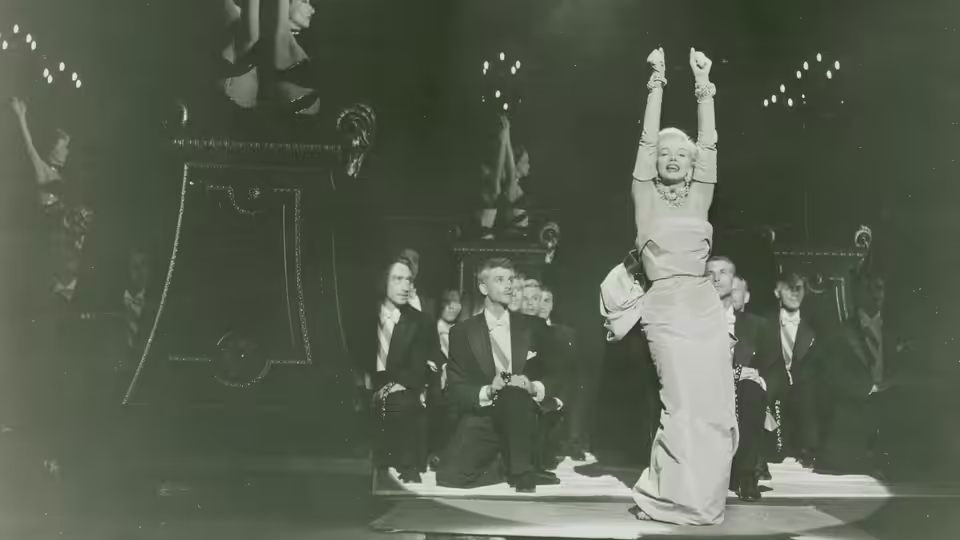
The music, credited to Jule Styne and Lionel Newman, is most effective when it lets a character make her case more boldly than ordinary conversation would allow. Diamonds Are a Girl’s Best Friend is the clearest example: the bluntness of the title is a substantial part of the joke. There is no need to apologise for enjoying possessions, and the comedy improves when it stops pretending otherwise. The number’s confidence suits the film better than its more laborious romantic entanglements.
The weakness is Charles Lederer’s plotting, which grows busy without becoming more involving. There are stretches when we can feel the screenplay arranging the next complication, and the ease of the performances has to compensate. Hugh S. Fowler’s editing cannot entirely solve that problem: the dialogue and songs have a cleaner comic rhythm than the story connecting them. At 91 minutes, the film is hardly indulgent, but it still has passages in which we find ourselves waiting to return to the women together.
As a romantic musical, it is unusually happy to let its heroines be calculating without demanding that we dislike them. Its warmth comes from their friendship, and that saves the frank interest in wealth from becoming exhausting. Come for both leads, not just Monroe. Russell is too funny to be treated as someone waiting beside the main attraction.